Between 1933 and 1937, an American friar lived atop a rocky summit in what was then Transjordan. He wasn’t searching for treasure or monumental tombs. He was seeking traces of a promise. His name was Sylvester Saller, and his work on Mount Nebo combined methodical excavation with quiet conviction. What he uncovered was not only ancient stone, but a terrain shaped by memory, pilgrimage, and the tension between history and tradition.
From Faith to Fieldwork: A Scholar in Transition
Born in Michigan in 1895 to a Catholic family of European descent, Sylvester John Saller joined the Franciscan Order at the age of eighteen. After ordination, he studied in Rome, training in biblical studies, ancient languages, and archaeology. There, he developed a keen interest in reading the past not only through scripture, but through material remains.
In 1932, Saller was assigned to Jerusalem as a lecturer at the newly established Studium Biblicum Franciscanum (SBF). At that time, interest in biblical archaeology was reaching a peak. Catholic and Protestant institutions were actively excavating sites across the region, often driven by the ambition to validate theological claims.
But Saller approached archaeology differently. He was not a polemicist. His excavations, writings, and teaching revealed a scholar committed to understanding sacred spaces on their own terms. In an era when archaeology was often deployed ideologically, Saller chose scientific humility and reflective inquiry.
Franciscan Memory as Archaeological Practice
For centuries, the Franciscan Custody of the Holy Land had served as guardian of Christian sacred sites across the region. By the early 20th century, it had adopted a new role: that of researcher and interpreter. The SBF was established to train friars capable of engaging modern scholarship without abandoning religious tradition.
Saller embodied this transition. He taught archaeology, Greek, and exegesis, but more fundamentally, he trained his students to observe with precision. For him, the land was not merely a backdrop to biblical events; it was a text of its own, requiring careful and respectful interpretation. Archaeology, in his view, was not subordinate to theology, but a parallel language—capable of enriching and even challenging it.
Mount Nebo: Landscape, Narrative, and Symbol
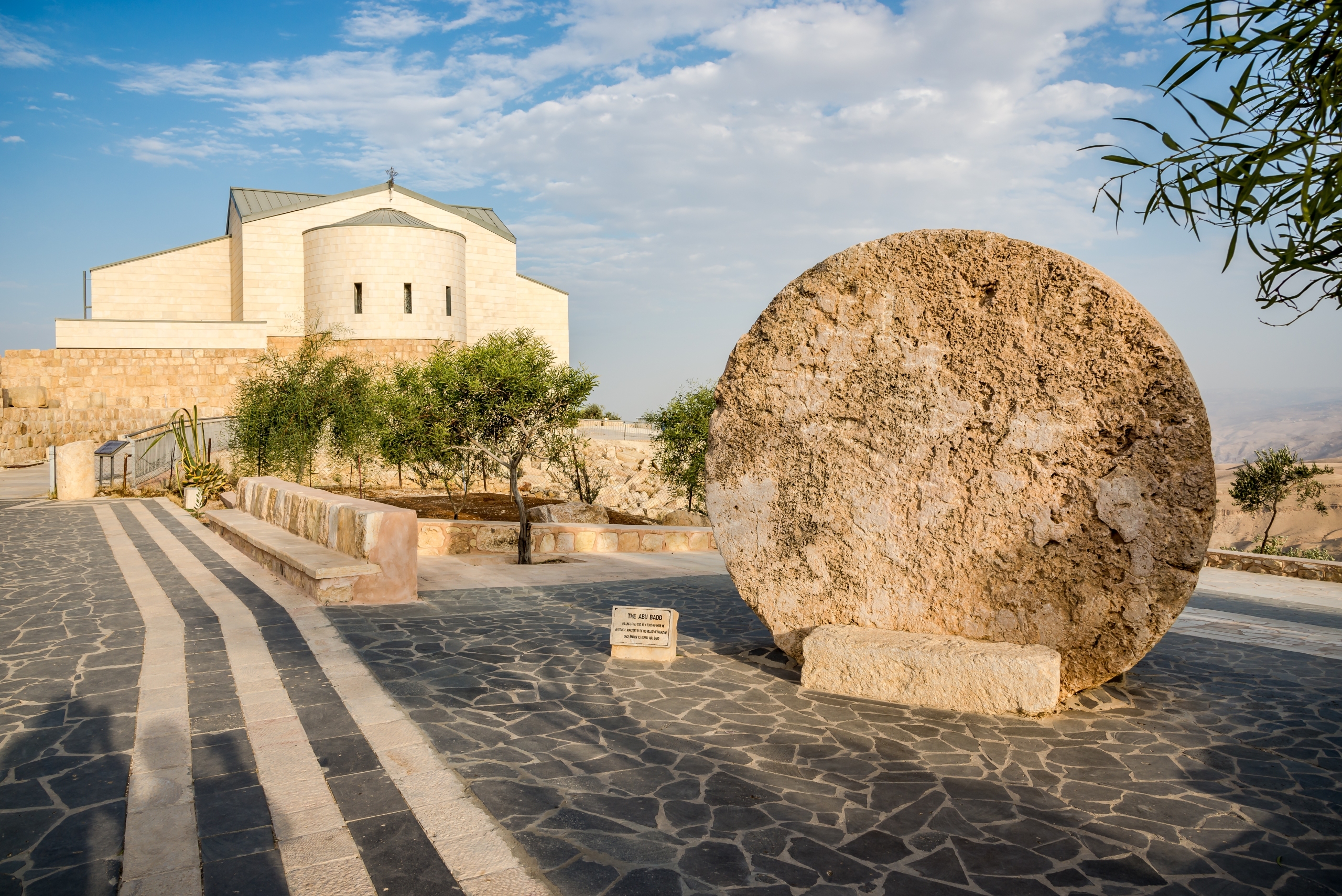
In 1932, the Franciscan Custody acquired a hilltop west of Madaba known as Ras Siyagha—long associated with the biblical Mount Nebo. According to the Book of Deuteronomy, this was the site where Moses glimpsed the Promised Land before his death. While the precise location of the event remained uncertain, the hill had been venerated since at least the 4th century CE.
One of the earliest descriptions came from Egeria, a late Roman pilgrim from the Iberian Peninsula. She wrote of a church staffed by monks and a tomb-like structure—empty, but central to the community’s devotional practice. Saller treated her account not as legend, but as a working hypothesis. He set out to determine whether the topography preserved material evidence of this long-standing tradition.
The land acquisition was made possible through diplomatic negotiation by Girolamo Mihaic, another Franciscan friar, with the support of Emir Abdullah of Transjordan. The Custody did not act as proprietors in the modern sense, but as stewards mediating between tradition, archaeology, and local governance.
Mount Nebo was not simply a site to excavate. It was a symbolic elevation—a place of vision without possession. As Moses had looked upon the land without entering it, so the archaeologist observes the landscape of history without claiming to master it. This metaphor shaped Saller’s entire approach.
Excavating Absence: The Basilica and Its Silent Core
From 1933 to 1937, Saller led three excavation campaigns on the site. Conditions were harsh: limited tools, rugged limestone terrain, and extreme weather. Yet his methodology was meticulous. He divided the site into quadrants, documented each layer photographically, and catalogued every artifact, no matter how fragmentary.
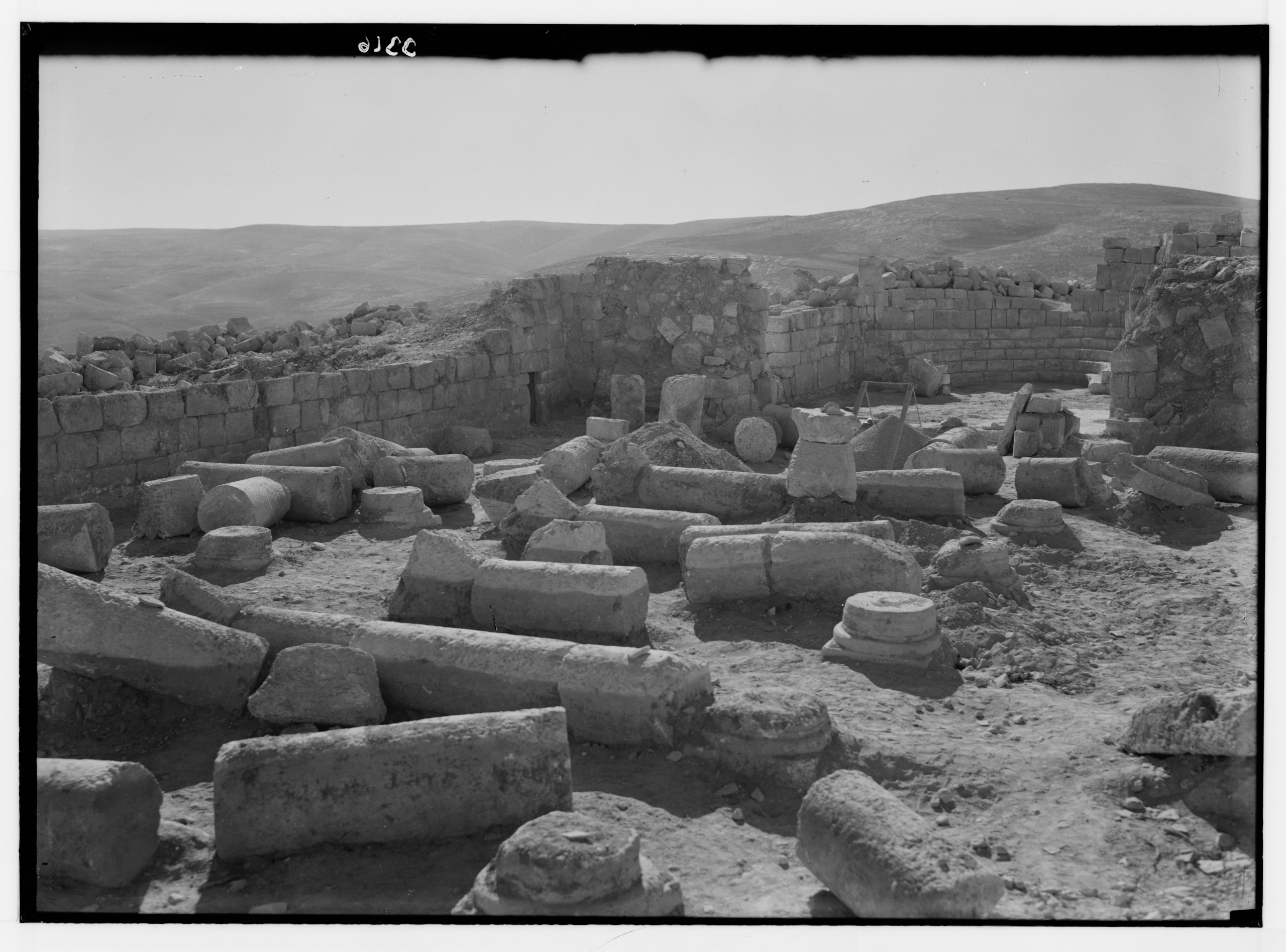
His most significant find was a 4th-century basilica with a triconch layout, side chapels, and multiple construction phases. Beneath the main altar, Saller discovered a deliberately empty chamber—seemingly designed not for burial, but as a symbolic space commemorating Moses’s death. It was a striking architectural void, made meaningful by its very absence.
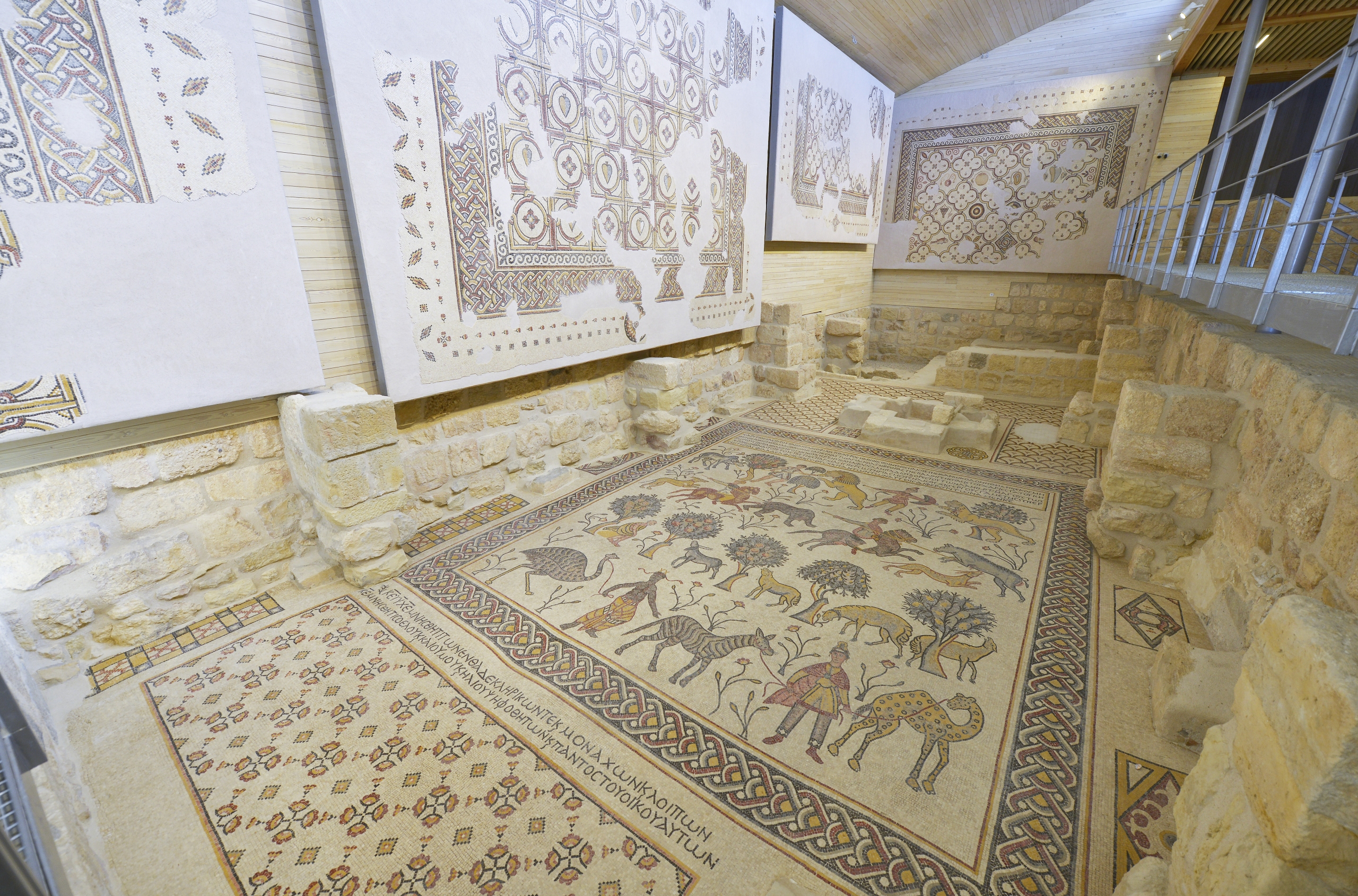
Mosaics, Greek inscriptions, and ceramics from an adjoining monastery revealed a liturgical and monastic presence. Mount Nebo had been a site of worship and pilgrimage for centuries before archaeology substantiated its significance.
Writing as Continuation of Excavation
In 1941, Saller published The Memorial of Moses on Mount Nebo, a comprehensive volume detailing every wall, inscription, and artifact. The project was completed during wartime, with scarce resources, but remained anchored in his belief that excavation means little without communication.
His prose is technical yet accessible, structured with clarity and a pedagogical instinct. More than a site report, the book is a lasting scholarly contribution—still cited by archaeologists, historians, and those working in heritage preservation.
A Legacy That Shaped a School
Saller was not a solitary figure. He became the foundation of a Franciscan archaeological tradition. His successors—Virgilio Corbo, Michele Piccirillo, Eugenio Alliata—built upon his methods and attitude, founding institutions like the Collectio Maior and the journal Liber Annuus, which continues to publish research from the SBF today.
More than any institutional legacy, Saller left behind a way of seeing the land—not as static terrain, nor as a fixed religious map, but as a living palimpsest. Every inscription, every mosaic fragment, every carved stone contributed to an ongoing story.
Kathleen M. Kenyon, herself a pioneering archaeologist, wrote in his obituary:
“Thanks to his public lectures and deep love for all things concerning Jerusalem, Father Saller was a well-known figure, and even in his later years he could always be seen wherever excavations were taking place. His innate simplicity and profound faith in both religion and humanity made him a much-loved member of the Jerusalem community.” — Levant, 1977, Vol. 9
Vision Without Possession
Saller died in Jerusalem in 1976, after more than four decades of excavation and teaching. Beyond Mount Nebo, he worked at Bethany and Ein Kerem, and compiled the most comprehensive catalog of ancient synagogues in Palestine of his time.
But his lasting lesson was not a single discovery—it was an approach. For him, science and belief were not adversaries but partners in a shared pursuit: to understand truth embedded in material reality.
Mount Nebo, as he uncovered it, remains a powerful metaphor: to see without owning, to remember without dominating, to excavate without erasure. In a time increasingly driven by possession and extraction, Saller’s reverent, methodical, and reflective gesture offers a model of inquiry rooted in responsibility.
He did not find the tomb of Moses. But he traced its memory—etched in mosaics, carved in stone, and preserved in the silence of a chamber built to remain empty.
AI Transparency Notice
PilgriMaps uses artificial intelligence tools to assist in the research, drafting and translation of editorial content. All AI-assisted content is reviewed, edited and verified by our editorial team before publication. We contrast information against primary sources, specialist literature and on-the-ground knowledge to ensure accuracy, cultural sensitivity and editorial integrity.
AI is one tool among many in our workflow. The judgement, curation and responsibility for everything published on this platform remain entirely human.
Viator Media S.L. — in compliance with the EU Artificial Intelligence Act (Regulation EU 2024/1689).
This post is also available in: