In August 870 CE, as much of medieval Europe remained unaware, a fleet of Aghlabid ships moved across the central Mediterranean. On board were not only soldiers and commanders, but also sacks of dates, pungent spices, and recipes that would indelibly shape the culinary heritage of a rocky island soon to fall under foreign rule.
That island was Malta. What its Byzantine residents could not anticipate was that, alongside swords and banners, the invaders would introduce a dessert that would become an enduring part of the island’s cultural identity: mqaret.
Geometry of conquest
The Aghlabids, a Muslim dynasty from what is now Tunisia, arrived not just to occupy, but to implant a richly developed food tradition. Among their culinary exports were diamond-shaped pastries filled with date paste, known in North Africa as makroudh.
The Maltese word mqaret is the plural of maqrut, meaning “diamond-shaped.” But beyond its geometry, maqrut conveyed a broader cultural code, one that traveled through the Maghreb in countless regional adaptations—each a localized expression of a shared aesthetic and taste.
A lost heritage from Kairouan
While Malta was being subsumed into the Aghlabid realm, their cultural heartland – particularly the city of Kairouan – was nurturing one of North Africa’s most refined sweet traditions. There, makroudh pastries, crafted from semolina and filled with dates, figs, or almonds, became both festive centerpiece and everyday staple.
Tunisia’s diversity of makroudh includes the oven-baked makroud el koucha from Constantine, the orange blossom-scented makroud wahrani from Oran, and even savory versions like makrout malah, made with spiced potatoes. Each variation spoke to the adaptability of a core idea: encase memory and flavor in an edible diamond.
The Maltese metamorphosis
When the makroudh crossed the Mediterranean, it encountered a different environment. Malta’s rocky terrain lacked the agricultural resources of the North African plains. Semolina, abundant in Kairouan, was replaced by wheat flour and butter. The result was not a dilution but a transformation.
Imqaret, as the pastries became known, evolved into something singular. Their dough, thinner and more delicate, allowed the sweetness and texture of the date filling to emerge more vividly. A process of adaptation unfolded – culinary migration at work.
Anise and alchemy
The defining signature of Maltese mqaret, however, came not from shape or filling, but from scent. As the pastries fry, they release the unmistakable aroma of anise and bay leaf – a combination that links monastic herb gardens of the Byzantine world with Andalusian kitchens.
The aroma, sharp and haunting, often announces the presence of mqaret before they’re even seen. It functions almost like a code—a sensory marker of cultural continuity and place-specific identity. Mdina’s streets, once part of the island’s Arab core, still carry this scent when mqaret are prepared.
Survival beyond empire
In 1091, the Norman conquest of Malta brought an end to centuries of Arab rule. Mosques were converted into churches, Arabic names were Latinized, and Islamic traditions were suppressed. Yet the mqaret survived.
As often occurs with food, culinary traditions proved more resilient than political regimes. Passed from mother to daughter, the recipe remained intact, preserving a memory that no archive could erase. Mqaret became a domestic staple – present at weddings, religious festivals, and family gatherings.
From household treat to street icon
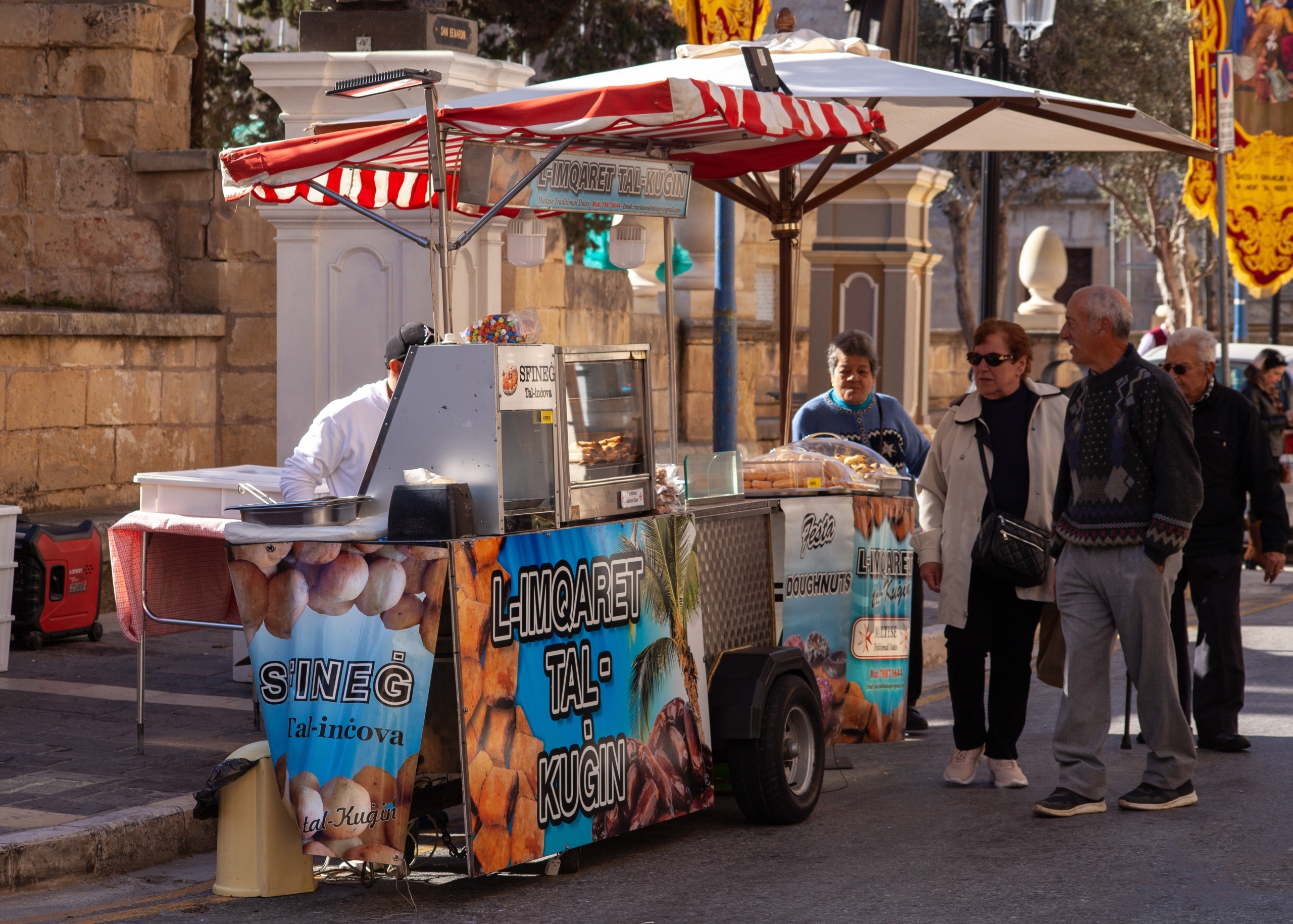
For centuries, mqaret were made in private homes. That changed in the 20th century. Just outside Valletta’s bus terminal, a chrome-clad stand called the “Dates Kiosk” began selling freshly fried mqaret to workers and travelers alike.
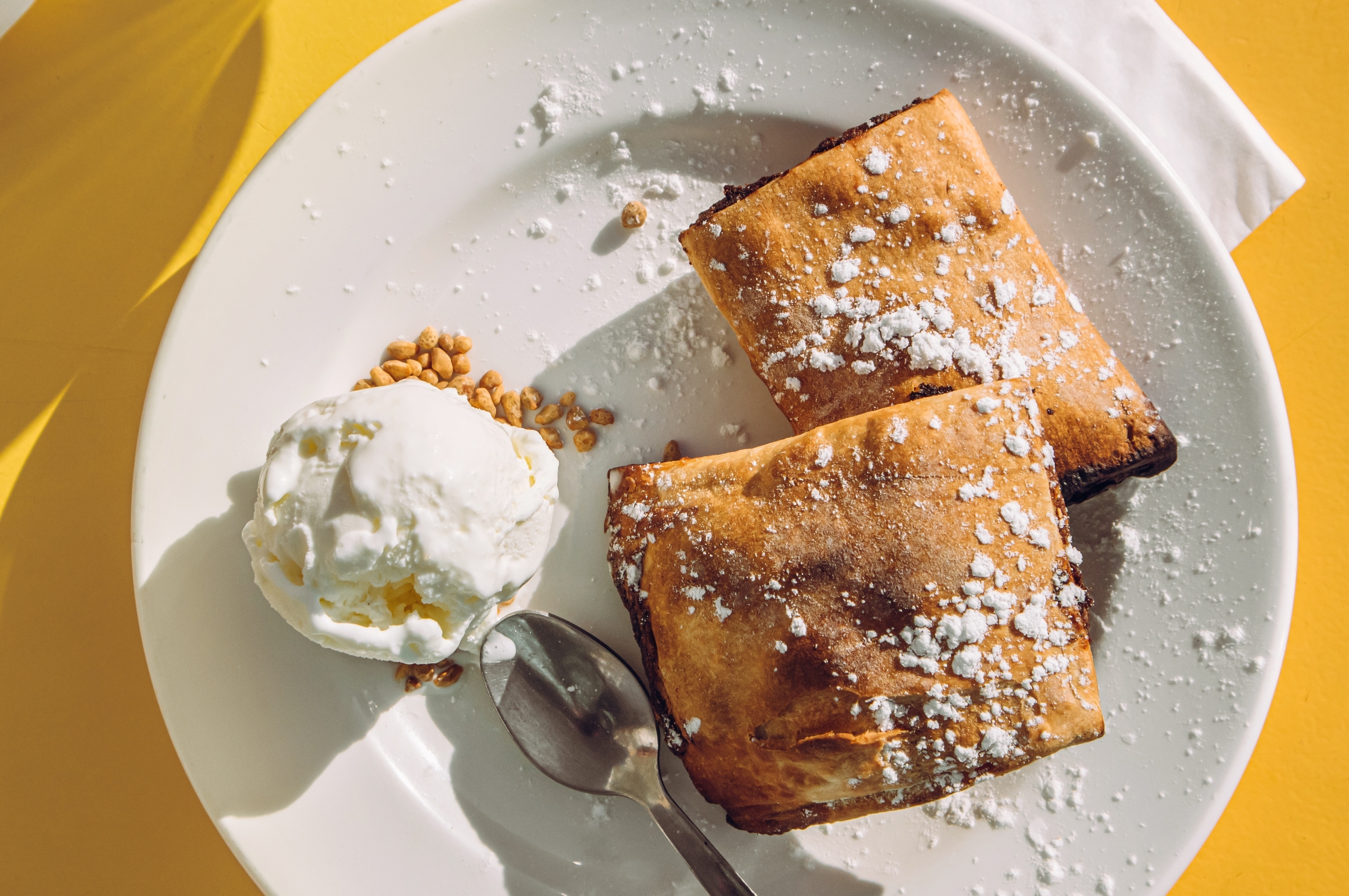
Sold for a few cents, often paired with vanilla ice cream, they quickly became an icon of Maltese street food. The kiosk transformed a private memory into a public ritual, drawing queues of both locals and tourists. It helped define the flavor of the capital itself.
A diaspora of diamonds
As Maltese emigrants settled in Australia, Canada, and the United Kingdom, they carried mqaret with them. In Melbourne’s Little Malta, the pastries were made with local dates. In Toronto, anise was sometimes replaced with more readily available spices. In London’s Smithfield Market, a vendor shyly introduced “diamond pastries” to curious British passersby.
Each reinterpretation reflected the availability of ingredients, but also the persistence of tradition across time zones and generations.
The science of frying
Behind the simplicity of mqaret lies technical precision. Dough is filled with a mixture of dates, orange zest, cinnamon, and sometimes chopped nuts, then sealed and sliced into diamonds.
But the transformation occurs in the frying. The oil must be at the right temperature – hot enough to crisp the dough, but not so hot as to char it before the filling warms through. Experienced cooks use wooden spoons to test the oil: gentle bubbling signals the moment to begin.
Regional variants and culinary secrecy
As with all culinary heritage, mqaret developed variations. Though traditionally fried, some modern bakers prefer baking for a lighter texture. Other innovations include versions with saffron (“golden mqaret”), pistachios (“green mqaret”), or a rare addition of fresh ricotta to balance the date sweetness.
Often, these variants remain family secrets, shared only with trusted relatives. The result is a patchwork of practices that defies uniformity while preserving continuity.
A contemporary revival
Today, mqaret enjoy a renaissance. As interest in local foodways and culinary heritage intensifies, Maltese chefs are reimagining the pastry in new forms. Some serve it with prickly pear gelato; others transform it into plated desserts with mascarpone and wine reductions.
There are miniature versions for aperitifs, and even mqaret-flavored ice creams. In fine dining or street kiosks, the pastry has re-entered Malta’s public imagination as a living artifact.
A Mediterranean web of cousins
Mqaret are not unique. Across North Africa and the Mediterranean, close relatives persist: makroudh in Tunisia, makrout in Algeria, hybrid versions in Morocco, and cuccidati in western Sicily. Each speaks to a shared history of date cultivation, semolina craft, and cross-cultural exchange.
While the ingredients may shift, the logic remains: filling encased in dough, shaped with care, and preserved through time.
Memory in a mouthful
Walking through Valletta or Marsaxlokk, the scent of anise and frying oil still drifts from roadside stalls. Mqaret remain integral to Malta’s festive calendar—present at family gatherings, religious feasts, and market days.
Each bite carries traces of conquest, resilience, and adaptation. The scent of Kairouan’s spice markets, the crunch of centuries-old technique, the sweetness of dates echoing across caravan routes. These are edible histories, encoded in flavor and form.
A legacy in dough
More than a dessert, mqaret are a document of Mediterranean history – a blend of migration, transformation, and cultural synthesis. In an era of culinary homogenization, they stand as a testament to how small communities safeguard identity through the simplest ingredients.
As the sun dips behind Valletta’s bastions and the air fills with the scent of anise, Malta reveals one of its most enduring secrets. The golden diamonds of mqaret – crisp, fragrant, and filled with memory – continue to tell the story of an island that has long known how to turn invasion into invention.
This content has been brought to you in partnership with VisitMalta
AI Transparency Notice
PilgriMaps uses artificial intelligence tools to assist in the research, drafting and translation of editorial content. All AI-assisted content is reviewed, edited and verified by our editorial team before publication. We contrast information against primary sources, specialist literature and on-the-ground knowledge to ensure accuracy, cultural sensitivity and editorial integrity.
AI is one tool among many in our workflow. The judgement, curation and responsibility for everything published on this platform remain entirely human.
Viator Media S.L. — in compliance with the EU Artificial Intelligence Act (Regulation EU 2024/1689).
This post is also available in: