Kong Qiu was born in 551 BCE in the state of Lu, in what is now Shandong province, China. The world knows him as Confucius.
He was a remarkable man — one of the rare thinkers who, without ever inventing a recipe or working in an imperial kitchen, profoundly shaped Chinese food culture, because he gave the act of eating a depth, a moral significance, that it had not previously possessed.
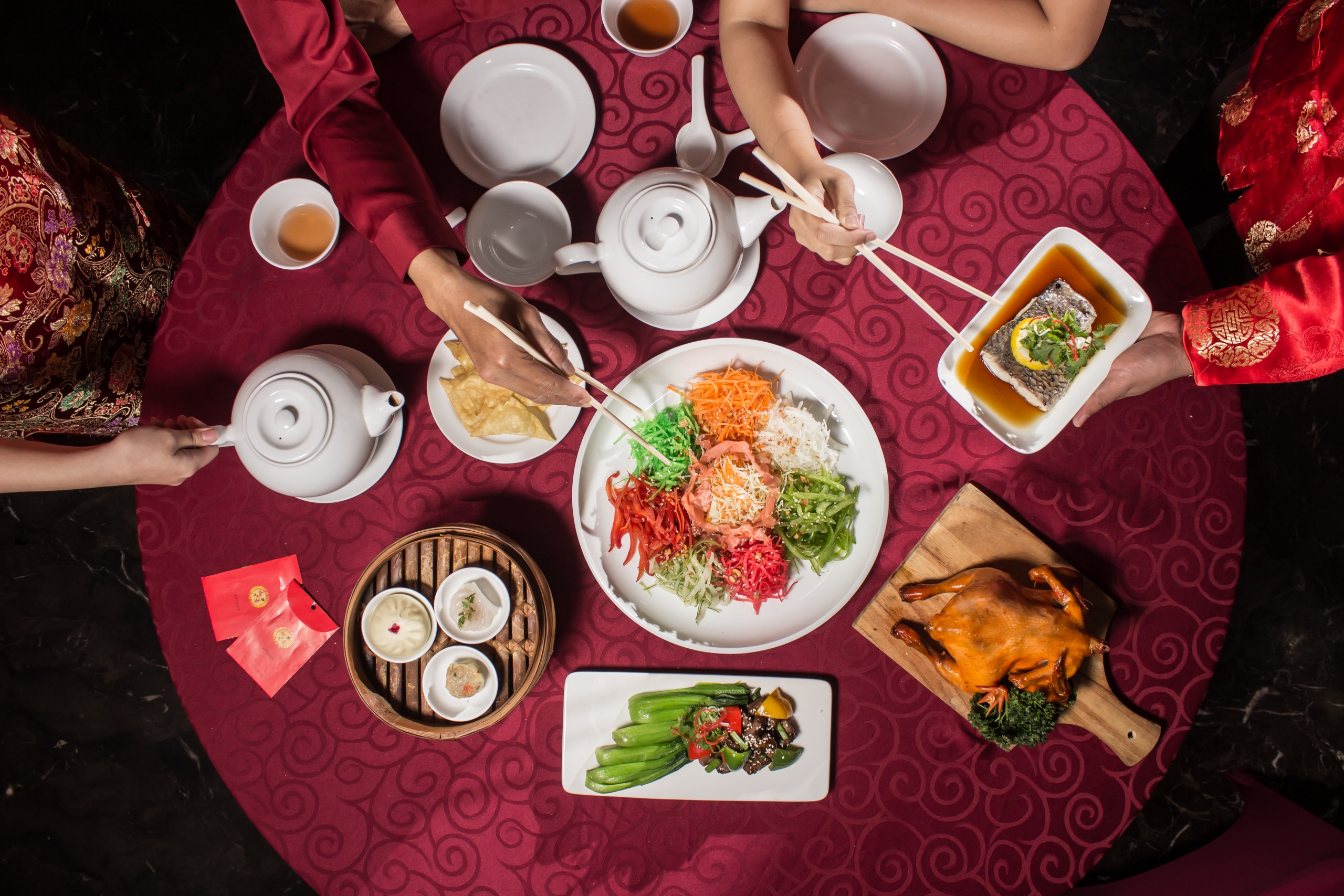
For Confucius, the meal was not mere sustenance. It was an ethical scene — a place where order, measure, respect, and self-control revealed themselves. The table, in his thinking, belonged to politics, to the family, to inner discipline. It nourished not only the body.
In the Analects — the collection of his words transmitted by his disciples — food appears with surprising precision, as living matter of civilization. When asked what is needed to govern a state, Confucius names three conditions: sufficient food, military defense, and the trust of the people. He then clarifies the hierarchy: one can first give up weapons, then even food, but never trust. Without trust, a state cannot stand.
It is a political answer. But it begins with bread, with rice, with subsistence. Confucius understood that no moral order can endure if people have nothing to eat. Before abstract virtue comes nourishment. Before stability comes hunger.
New Confucianism and the pilgrim self: Walking as moral cultivation
A small code of the table
Book X of the Analects preserves what reads almost like a personal dietary code attributed to the Master. Confucius refused food that was discolored, malodorous, poorly cooked, or out of season. He would not eat rice spoiled by heat or moisture, nor fish or meat that had gone bad. But he would also not eat meat cut incorrectly, or dishes served without the appropriate seasoning. Even when meat was abundant, rice was to predominate.
Read today, the passage resembles a page on food hygiene. But to interpret it only that way would be reductive. For Confucius, precision was not fastidiousness — it was discipline. Food should reach the body in its correct state, at the correct time, in the correct form. Measure was a form of order.
In this vision, the meal educates. It teaches one to distinguish excess from fullness, care from ostentation, hunger from voracity. Meat must not overwhelm the rice. Flavor must not dissolve proportion. Pleasure must not dissolve lucidity.
Confucius was a moralist, and in his worldview, in a certain sense, also a gastronome. In ancient China the two dimensions went hand in hand: eating well also meant being correctly in the world.
The silence of eating
One of the most striking rules in the Analects is almost brutal in its simplicity: while eating, Confucius did not converse. This was, for him, a form of presence. The meal had its own time, its own dignity. It was not to be dispersed in noise. Food deserved attention — as a rite, as an act of governance, as a family ceremony.
Here the table becomes a laboratory of awareness — not in the contemporary, often consumerist sense of “mindfulness” applied to food, but in an older and more demanding sense. To eat was to inhabit an order. To recognize the value of what one receives. To govern the gesture. Not to turn the meal into a scene of distraction. Cuisine, in this perspective, is a grammar of attention.
The knife and the chopstick
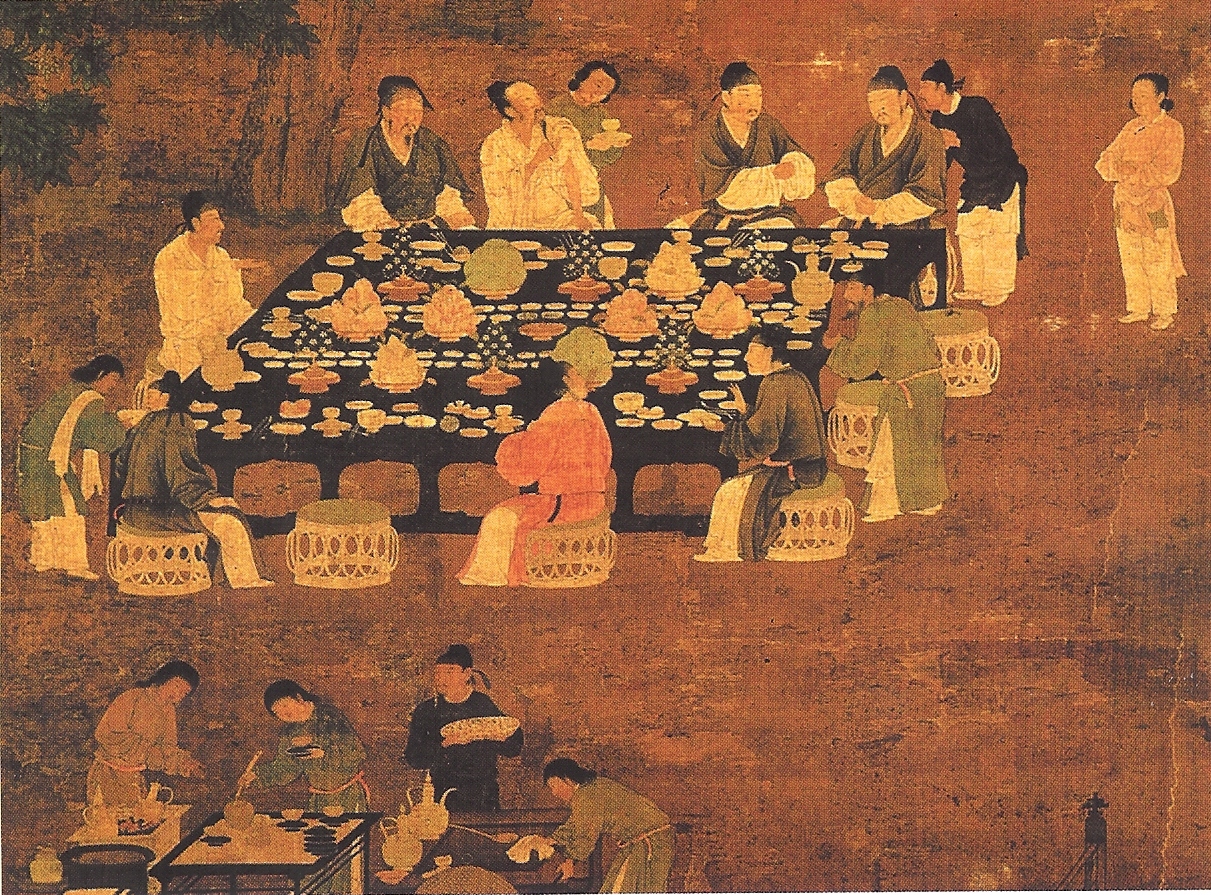
There is a powerful image often associated with Confucius: the refusal of the knife at the table. According to a widely held interpretive tradition, the knife evoked the slaughterhouse, war, violence; chopsticks, by contrast, embodied measure, delicacy, self-control.
Precision is required here. Chopsticks were already present in ancient Chinese material culture, and their prevalence also depended on practical reasons: food cut into small pieces cooks more quickly, consumes less fuel, and arrives at the table already ready to be eaten, shared, and distributed.
But it is true that the Confucian world provides a perfect symbolic framework for this gesture. The knife stays in the kitchen. The cutting — the potentially violent act — happens beforehand. What arrives at the table is the pacified morsel: small, ordered, manageable. The chopsticks gather. It is a technical difference, but also a moral one. Chinese cuisine has built part of its identity on this separation: the work of cutting belongs to preparation; the moment of the meal belongs to relationship.
The harmony of the dish
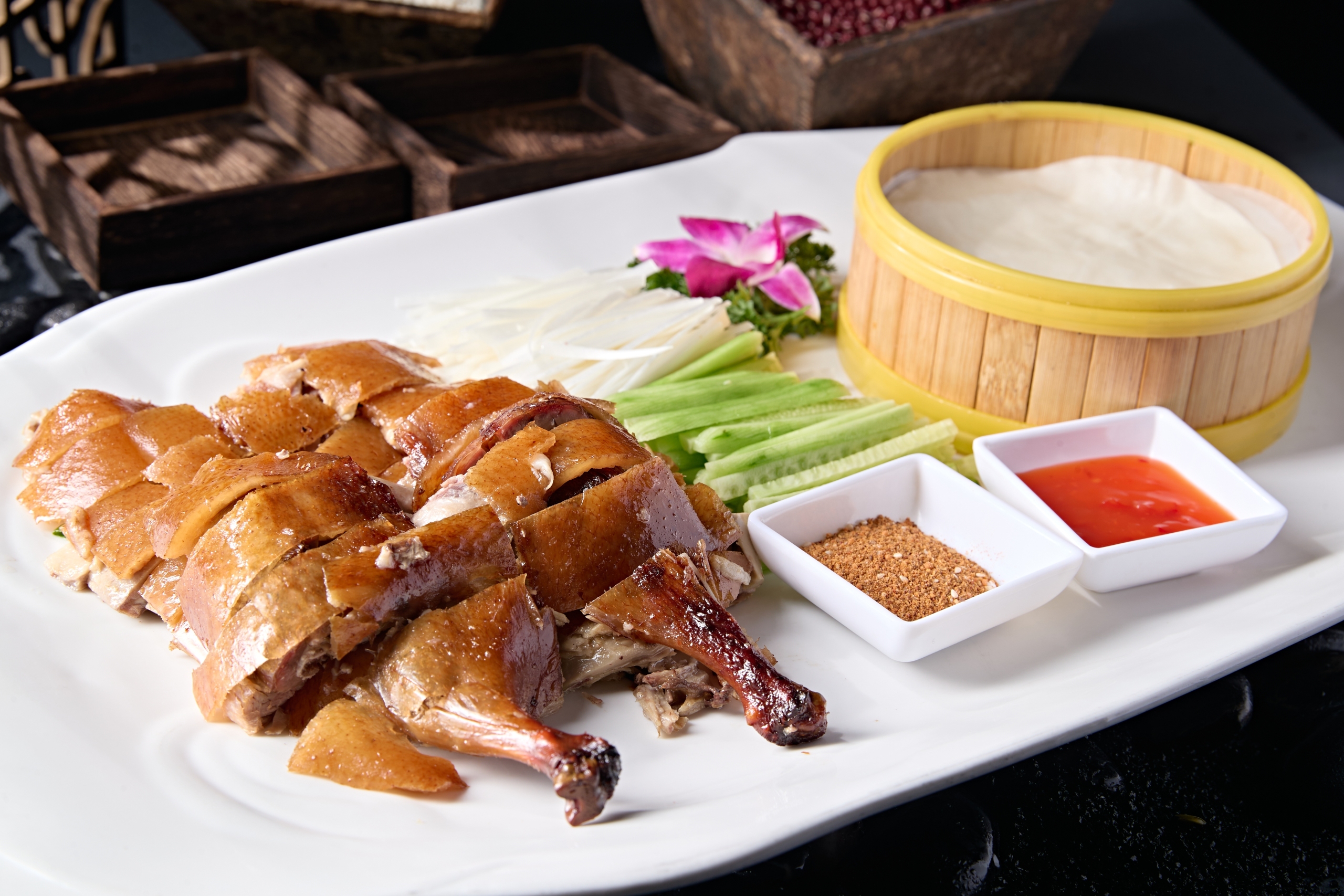
The great principle of the Confucian table is harmony. In Chinese cuisine, flavor rarely presents itself as a solo. It is relationship. Sweet, salty, sour, bitter, spicy, umami: each note must find its place. No ingredient should dominate to the point of erasing the others. The successful dish is the one in which differences are ordered.
It is difficult not to see in this grammar of taste a resonance with Confucian thought. Family, state, ritual, music, language: everything must tend toward a form of equilibrium — a hierarchy tempered by reciprocity, an ensemble capable of producing meaning. In the dish as in the polity, harmony does not arise from uniformity. It arises from composition.
Ginger and wine: two lessons in measure
Among the dietary habits attributed to Confucius, two stand out for their contemporary relevance. The Analects record that the Master never went without ginger when he ate, though always in small quantities. It is a small, almost domestic detail. In subsequent centuries, Chinese medicine would attribute an important role to ginger in digestion and the body’s internal balance — and contemporary research, while cautious, does recognize a possible benefit, particularly against nausea and mild gastrointestinal complaints.

On wine, Confucius offers a lesson in measure. He drank without imposing a rigid limit, but the guiding principle was to maintain lucidity — which meant maintaining governance of oneself. It is a distinction that remains entirely current: virtue consists in preserving autonomy, in not being possessed by what one consumes.
The table as transmission
The scholar Kwang-chih Chang observed that few cultures are as oriented toward food as the Chinese. The table declares who we are, where we come from, what place we occupy. In the traditional family, eating together meant acknowledging parents, honoring ancestors, transmitting roles and belonging. Food was memory, hierarchy, care, the language of affection.
Confucius transformed the table into a site of daily education. Respect for food became respect for those who prepared it, for those who offered it, for those who shared it. Discipline of the body became discipline of character.
In a celebrated passage of the Analects, the Master says that even with plain rice, water to drink, and a bent arm for a pillow, one can find joy; wealth and honors obtained without justice are, to him, like passing clouds.
It is a praise of sufficiency. The good life grows from the rectitude with which one inhabits what one has.
A cuisine of relationships
Confucius demonstrated that the way one eats reveals the way one lives. Seasonality, correct cutting, the rejection of spoiled food, the proportion of meat to rice, silence during the meal, sobriety with wine, the presence of ginger, the composed gesture of the chopsticks: all of this, across the long arc of Chinese culture, became more than a collection of habits. It became a language.
The cuisine of Confucius is a cuisine of relationships — between body and mind, between family and society, between pleasure and measure, between hunger and justice.
This is why his thought continues to live even where it is not named: in a balanced dish, at a shared table, in a morsel gathered with precision, in the silent respect for what nourishes. Confucius taught China — and the world — that eating is far more than satisfying hunger.
AI Transparency Notice
PilgriMaps uses artificial intelligence tools to assist in the research, drafting and translation of editorial content. All AI-assisted content is reviewed, edited and verified by our editorial team before publication. We contrast information against primary sources, specialist literature and on-the-ground knowledge to ensure accuracy, cultural sensitivity and editorial integrity.
AI is one tool among many in our workflow. The judgement, curation and responsibility for everything published on this platform remain entirely human.
Viator Media S.L. — in compliance with the EU Artificial Intelligence Act (Regulation EU 2024/1689).
This post is also available in: