At some point during the early hours of Monday, May 25, when exhaustion has already erased any precise sense of time and the sandy streets of the village begin to carry an almost physical tension, it will happen again. No one knows the exact second. There is no official countdown. No visible protocol marks the most anticipated moment of the Romería del Rocío.
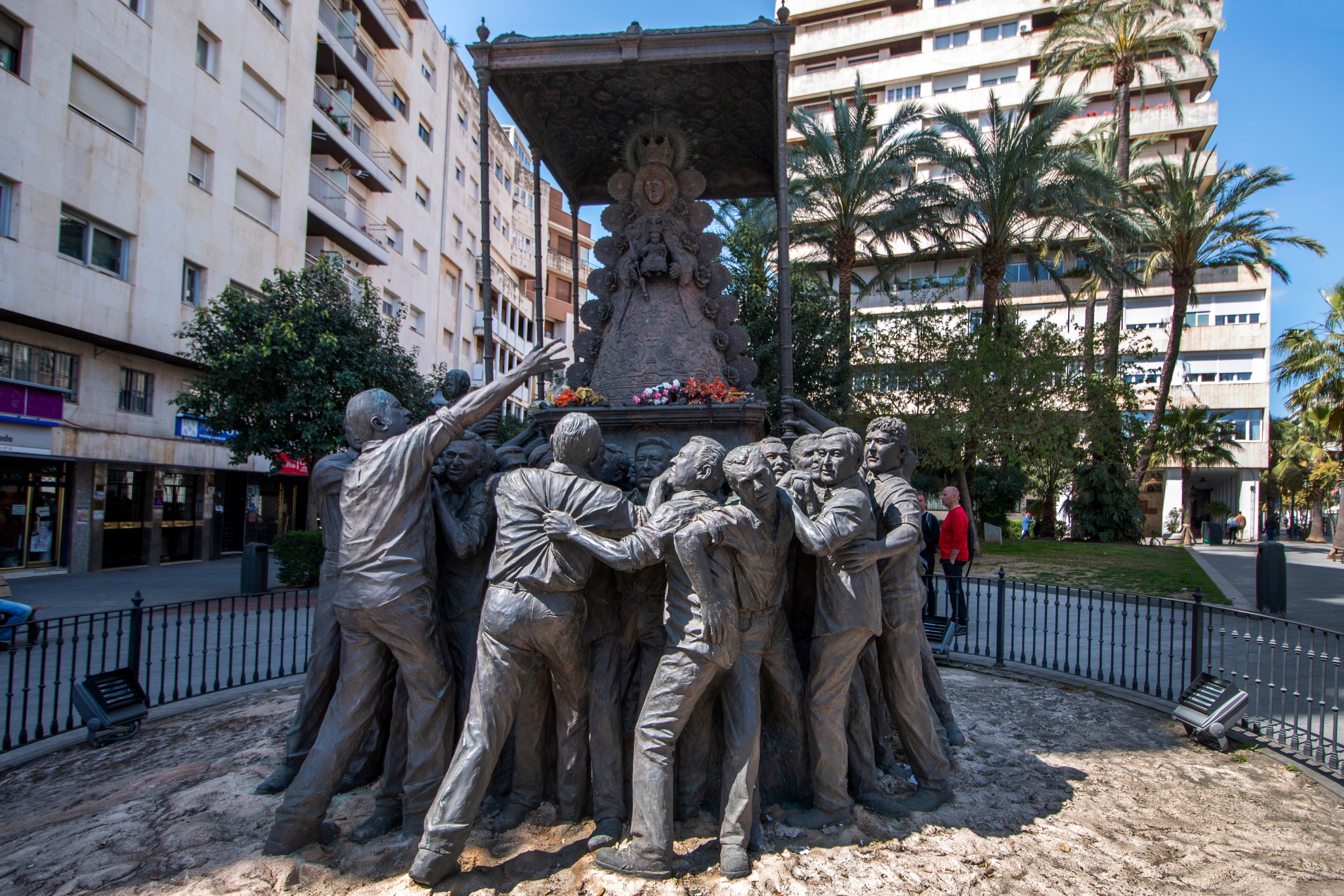
Inside the sanctuary, the Virgin of El Rocío will still stand elevated behind the metal rail separating the presbytery from the rest of the shrine. Outside, thousands of people will wait for the slightest movement. Then, abruptly, several men from Almonte will leap over the rail. The crowd will erupt. The Virgin will begin to descend from her altar, and Andalusia’s most intense procession will once again move through the village.
The so-called salto de la reja — the “jump over the rail” — is probably one of the most difficult religious rituals to explain in Western Europe. Not only because of its emotional intensity or the number of people it mobilizes, but because it seems to operate outside the logic of conventional ceremony. This is not a perfectly ordered liturgy. It does not follow the solemn and distant language associated with many historic processions. Everything unfolds at the edge of overflow: pushing crowds, tears, cries, sudden silences, physical strain, and a collective emotion that completely transforms the perception of space.
Symbolically, the scene carries extraordinary force. The rail represents a boundary: between the human and the sacred, between contemplation and contact, between the community and its image. The leap breaks that distance literally. The body crosses the barrier before the ritual itself does.
Although many visitors now assume it to be an ancient custom, the current form of the ritual dates only to 1975, when a group of men from Almonte spontaneously decided to bring forward the Virgin’s departure from the sanctuary. That improvised gesture eventually became the emotional core of the contemporary Rocío pilgrimage.
But to understand why this moment continues to provoke such collective intensity, it is first necessary to understand what El Rocío actually is.
Much more than a pilgrimage
The Romería del Rocío is often described from the outside as a major Marian pilgrimage in Andalusia. The definition is accurate, but incomplete. El Rocío is also a physical experience, a cultural construction, a shared identity, and an extraordinarily complex ritual system in which religious, rural, festive, and emotional elements coexist.
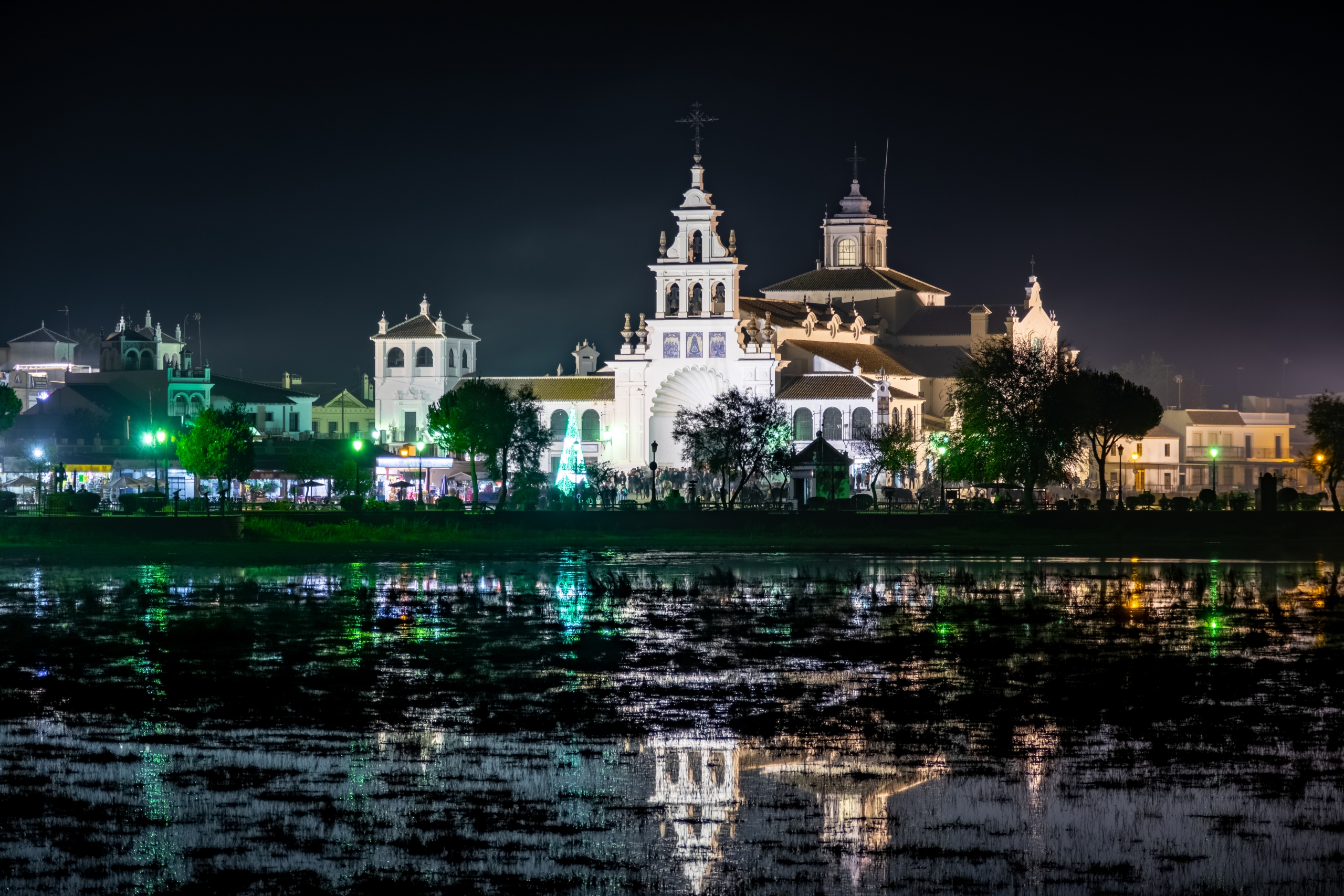
During these days in May, as the 2026 pilgrimage moves toward its central celebrations, thousands of people travel historic routes through the marshlands, pine forests, and sandy tracks of Doñana National Park on their way to the village of El Rocío, which belongs to the municipality of Almonte.
The scene remains difficult to compare with any other contemporary European pilgrimage. Decorated wagons, horses, tractors, pilgrims on foot, improvised prayers, devotional sevillanas, dust suspended in the air, and temporary camps all form part of a ritual landscape that seems to belong simultaneously to past and present.
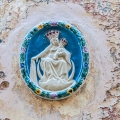
El Rocío also possesses a highly distinctive spatial dimension. For a few days, the village functions as a settlement organized around a single image: the Virgin of El Rocío, popularly known as the Blanca Paloma — the White Dove. Everything revolves around her. The movement of the confraternities, the organization of space, schedules, collective emotion, and even moments of silence appear structured according to physical proximity to the Virgin.
In 2026, 127 affiliated confraternities are taking part, arriving from across Andalusia, other regions of Spain, and several countries abroad. That international expansion has become one of the major transformations of the contemporary Rocío. Devotion associated with the pilgrimage no longer belongs exclusively to southern Spain. In recent years, events and gatherings connected to El Rocío have appeared in Latin America and elsewhere. In April this year, Buenos Aires hosted the First Continental Rocío Gathering in the Americas, within a broader context shaped by efforts to secure UNESCO Intangible Cultural Heritage recognition for the pilgrimage.
Yet despite this global reach, El Rocío remains deeply tied to Andalusian identity, particularly to the culture of Huelva and Almonte.
The journey as spiritual experience
For many participants, the pilgrimage does not begin upon arrival at the village. The true Rocío begins on the road.
Since the beginning of the week, confraternities have been leaving their towns and cities accompanied by their Simpecados — embroidered Marian banners representing each brotherhood spiritually. Some travel dozens of kilometers. Others spend several days crossing Doñana.
In Huelva, the city’s two major confraternities once again set the emotional rhythm of these days. The Emigrants Brotherhood traditionally departs on Wednesday, May 20, while the Brotherhood of Huelva begins its journey on Thursday, May 21. The first to set out onto the sands, however, are usually the confraternities of Ayamonte and Isla Cristina, which begin their pilgrimage on May 18.
The journey itself occupies a central place within the Rocío experience. It is not understood simply as movement toward a sanctuary, but as a temporary rupture with ordinary life. Many pilgrims speak simply of “making the journey,” as though everything else — arrival, Mass, even the procession — were a natural consequence of that shared passage.
Along the route, pilgrims participate in outdoor Masses, Angelus prayers, nighttime rosaries, and traditional stops in places saturated with collective memory. Communal life forms an essential part of the ritual. Entire families, groups of friends, and different generations spend several days together outdoors, crossing a landscape symbolically transformed into sacred territory.
This is one of El Rocío’s major anthropological singularities: the natural environment functions not merely as scenery, but as an active component of the religious experience.
Pentecost and the logic of encounter
The liturgical core of the pilgrimage will unfold over the weekend and into the early hours of Monday. On Sunday, May 24, the great Pentecost Mass — the official religious center of the celebration — will take place. In Christian tradition, Pentecost commemorates the descent of the Holy Spirit upon the apostles. That association helps explain one of El Rocío’s central symbols: the white dove linked to the Virgin.
Each year, the Mass gathers tens of thousands of people before the sanctuary. Yet El Rocío operates according to its own logic. While the liturgical ceremony represents the official climax from an ecclesiastical perspective, for many pilgrims the true emotional peak comes hours later, during the madrugada — the deep night leading into dawn.
Before the jump over the rail, the Rosary of the Confraternities takes place, one of the most atmospheric rituals of the pilgrimage. The village changes register completely. After the daytime noise comes a nocturnal landscape of torches, distant drums, slow chants, and Simpecados moving through the sandy streets.
The contrast is essential to understanding El Rocío. The pilgrimage constantly alternates between celebration and recollection, excess and silence, official liturgy and popular expression. That tension explains both its enormous appeal and the criticism it occasionally receives from more rationalist observers or more strictly liturgical sectors. Yet this tension is also central to its cultural singularity.
A crowd gathered around an image
The procession of the Virgin of El Rocío begins after the jump over the rail and can continue well into Monday morning. The image moves slowly through the village, visiting the houses of the affiliated confraternities. The gesture contains a powerful symbolic inversion. In many pilgrimages, the faithful travel toward the sacred image. At El Rocío, the opposite also occurs: the Virgin goes out to meet the pilgrims.
That is why physical proximity carries such intensity here. Ceremonial distance almost disappears. The Virgin advances literally above a crowd accompanying her with tears, chants, applause, and pressure from all sides.
The experience resists translation into strictly religious or strictly festive categories. El Rocío merges both dimensions until they become almost inseparable. For several hours, the village ceases to function as an ordinary space. It becomes a kind of emotional city organized around a single collective event.
Doñana: A natural, historical and spiritual sanctuary of Southern Europe
Eyes already turned toward August
One element giving the 2026 pilgrimage a distinct emotional atmosphere is the proximity of the Venida de la Virgen — the transfer of the Virgin to Almonte — scheduled for August.
Every seven years, the Virgin leaves the village and is carried to Almonte, where she remains for several months before returning to the sanctuary of El Rocío. The documented tradition dates back at least to the seventeenth century and remains one of the most singular rituals of popular religiosity in Europe. The transfer is scheduled for the night of August 19–20.
Unlike the Pentecost pilgrimage, the Venida possesses a far more intimate tone, deeply linked to Almonte’s local identity. The Virgin appears dressed as the Shepherdess and moves slowly through the night among prayers, devotional songs, and moments of charged silence. The most anticipated moment usually comes at dawn in El Chaparral, when the image is uncovered at sunrise before entering Almonte.
Symbolically, the Venida completely reverses the logic of El Rocío. If the pilgrimage represents people traveling toward the Virgin, the August transfer represents the opposite movement: the Virgin returning to her people.
That shift completely alters the emotional geography of El Rocío. The village is temporarily left without its spiritual center, while Almonte becomes, for several months, the heart of the devotion.
A phenomenon difficult to reduce to a single explanation
Explaining El Rocío solely as a religious tradition would be insufficient. Reducing it to folklore would also fail. The pilgrimage continues to resonate because it activates many layers of meaning simultaneously: family memory, territorial identity, collective emotion, physical experience, shared landscape, and spiritual feeling. All unfold at once
Perhaps that is why El Rocío continues to overflow conventional categories. Something profoundly contemporary and profoundly archaic coexists on the sands of Doñana.
As the 2026 pilgrimage approaches its decisive hours, the village waits for Monday dawn. Thousands of people know exactly what will happen and, at the same time, experience the moment as fundamentally unpredictable. Because the jump over the rail functions not simply as a ceremony. It acts as a collective emotional release — a moment in which the distance between crowd, tradition, and sacred image briefly disappears.
Then the Virgin begins to move through the people, and El Rocío once again becomes something difficult to translate outside Andalusia: a shared experience in which emotion ultimately exceeds rational explanation.
AI Transparency Notice
PilgriMaps uses artificial intelligence tools to assist in the research, drafting and translation of editorial content. All AI-assisted content is reviewed, edited and verified by our editorial team before publication. We contrast information against primary sources, specialist literature and on-the-ground knowledge to ensure accuracy, cultural sensitivity and editorial integrity.
AI is one tool among many in our workflow. The judgement, curation and responsibility for everything published on this platform remain entirely human.
Viator Media S.L. — in compliance with the EU Artificial Intelligence Act (Regulation EU 2024/1689).
This post is also available in: