The Church of Nosso Senhor do Bonfim stands on a hill in Salvador, Bahia, above the city and the bay. It was built beginning in 1745, when a Portuguese naval captain named Theodózio Rodrigues de Faria brought an image of the Good Jesus of Bonfim from Portugal and founded a devotion around it. The church is not the grandest in Salvador — Dorival Caymmi sang that the city has 365 churches, one for every day of the year — but it has become the most famous, and the most layered, and the one whose history best encodes the religious and racial complexity of Brazil.
What made the Bonfim church central to Bahian life, and eventually to Brazilian life, was not architecture but syncretism. Over the course of the eighteenth and nineteenth centuries, the enslaved African population of Salvador — who were Catholic by coercion and by their own practiced negotiation between two religious worlds — began to identify the Lord of Bonfim with Oxalá, the Candomblé orisá associated with creation, purity, and peace. The identification was not random: both figures were clothed in white, both represented a kind of supreme spiritual authority, and both attracted intense personal devotion from people seeking healing and protection. The fusion that resulted was not a confusion of two traditions but a survival strategy that became, over time, a genuine spiritual synthesis.
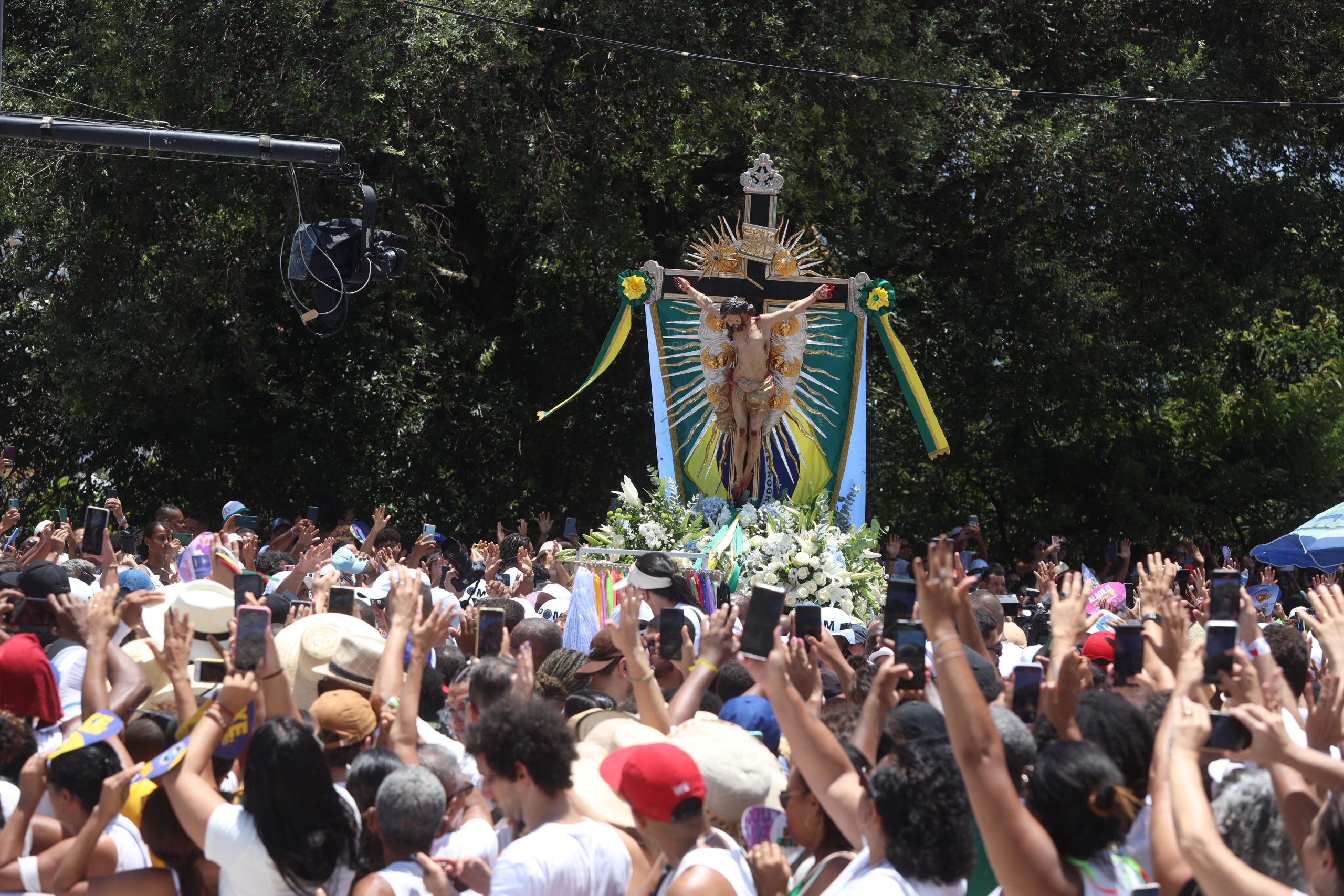
The Lavagem do Bonfim — the Washing of Bonfim — is the ritual that makes this synthesis visible every January. It began, in 1773, as a practical act: the enslaved washed the church in preparation for the feast day. The Archdiocese of Salvador eventually prohibited the washing of the church’s interior, when Candomblé devotees began incorporating the ceremony into the rite of the Waters of Oxalá. The prohibition moved the ritual outside.
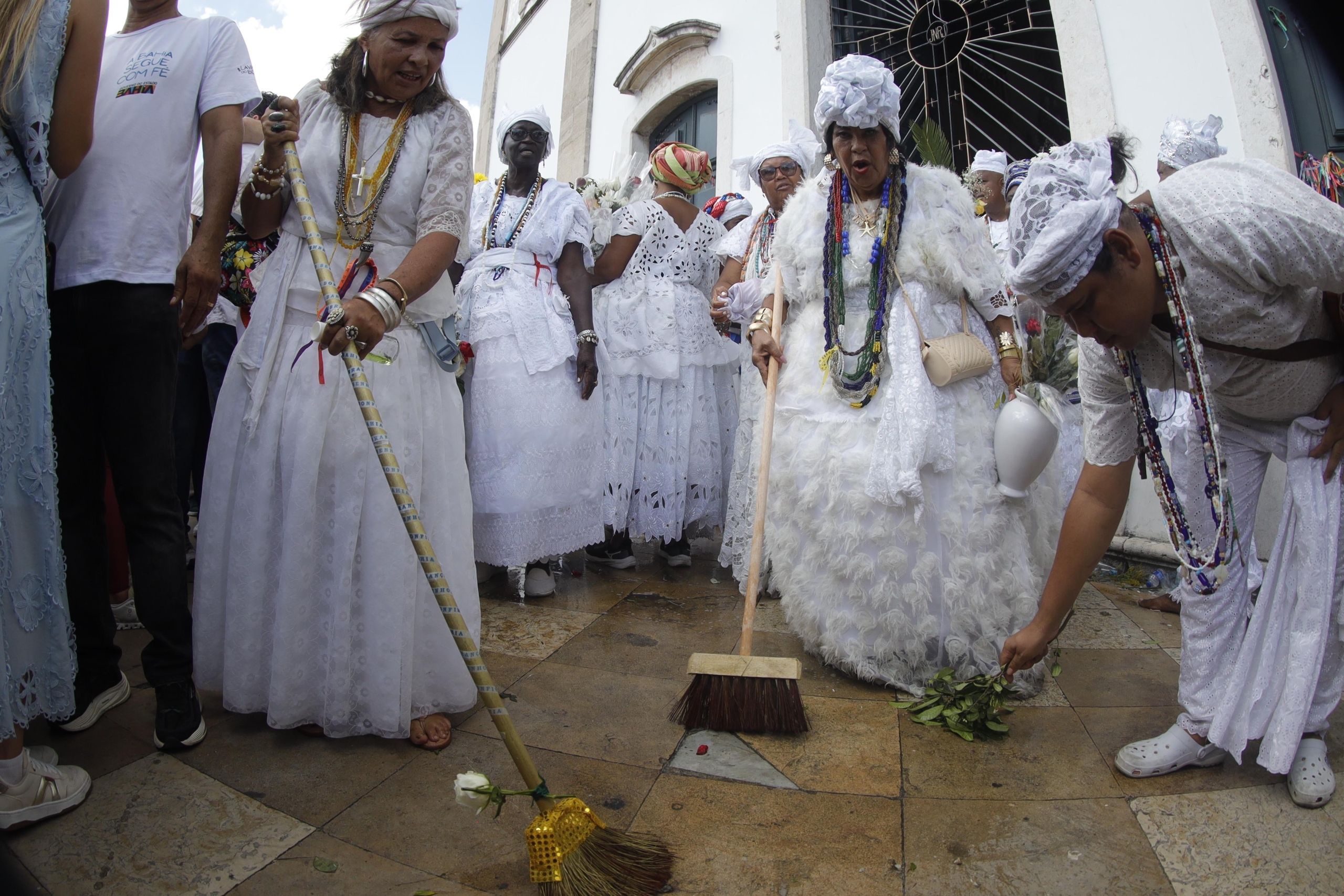
The baianas — women in white dresses, turbans, and bead necklaces, carrying pitchers of scented water — now process eight kilometers from the Church of Nossa Senhora da Conceição da Praia up to the hilltop sanctuary, accompanied by afoxé music, and wash the exterior steps and courtyard. The church doors remain closed during the washing. This arrangement, produced by ecclesiastical prohibition, has endured for over two centuries and has become one of the most recognizable images in Brazilian visual culture.
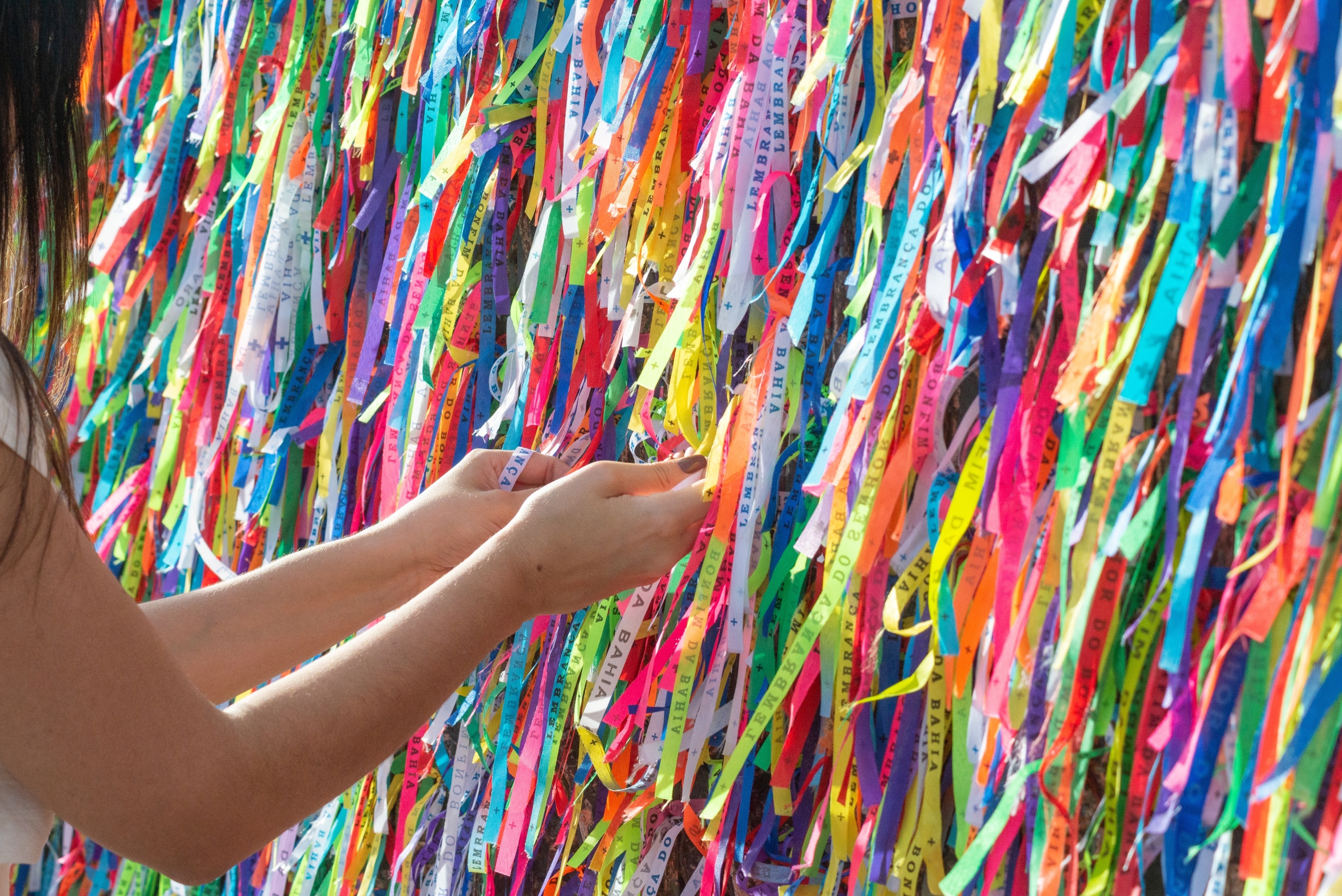
The ribbon of Bonfim is the ceremony’s portable extension. First distributed in 1809, the ribbons — originally called medidas because they measured forty-seven centimeters, the length of the right arm of the image of Bonfim — are tied to the wrist with three knots, each knot a wish. They are worn until they fall off naturally, at which point the wishes are said to be granted. They are sold by the thousands at the church gates, tied onto wrists by vendors, tourists, and devotees in roughly equal proportion, and have migrated from Bahia to become a recognizable Brazilian symbol internationally.
The ex-voto room inside the church tells the more private side of the same story. The sala dos milagres is lined floor to ceiling with offerings left by pilgrims in gratitude for graces received: photographs, crutches, wax figures cast in the shape of healed limbs, handwritten letters, paintings on wood depicting accidents survived and diseases overcome.
It is one of the densest archives of popular faith in Brazil — a room where the distance between the sacred and the bodily collapses entirely, where what is offered is not prayer but evidence. Many of the objects are old enough that the people who left them are long dead. The accumulation is itself a kind of testimony: that the devotion has been, for many generations and across every social stratum of Bahian life, not merely cultural affiliation but serious petition.
What the Lavagem demonstrates is something that pilgrimage traditions elsewhere have also discovered: that a ritual can carry more than one meaning simultaneously, that the same act can be Catholic devotion and Candomblé ceremony and cultural affirmation and civic occasion at once, and that this multiplicity, far from weakening the ritual, is precisely the source of its durability. The two million people who attend in a given year are not all there for the same reason. They are all there.
AI Transparency Notice
PilgriMaps uses artificial intelligence tools to assist in the research, drafting and translation of editorial content. All AI-assisted content is reviewed, edited and verified by our editorial team before publication. We contrast information against primary sources, specialist literature and on-the-ground knowledge to ensure accuracy, cultural sensitivity and editorial integrity.
AI is one tool among many in our workflow. The judgement, curation and responsibility for everything published on this platform remain entirely human.
Viator Media S.L. — in compliance with the EU Artificial Intelligence Act (Regulation EU 2024/1689).
This post is also available in: