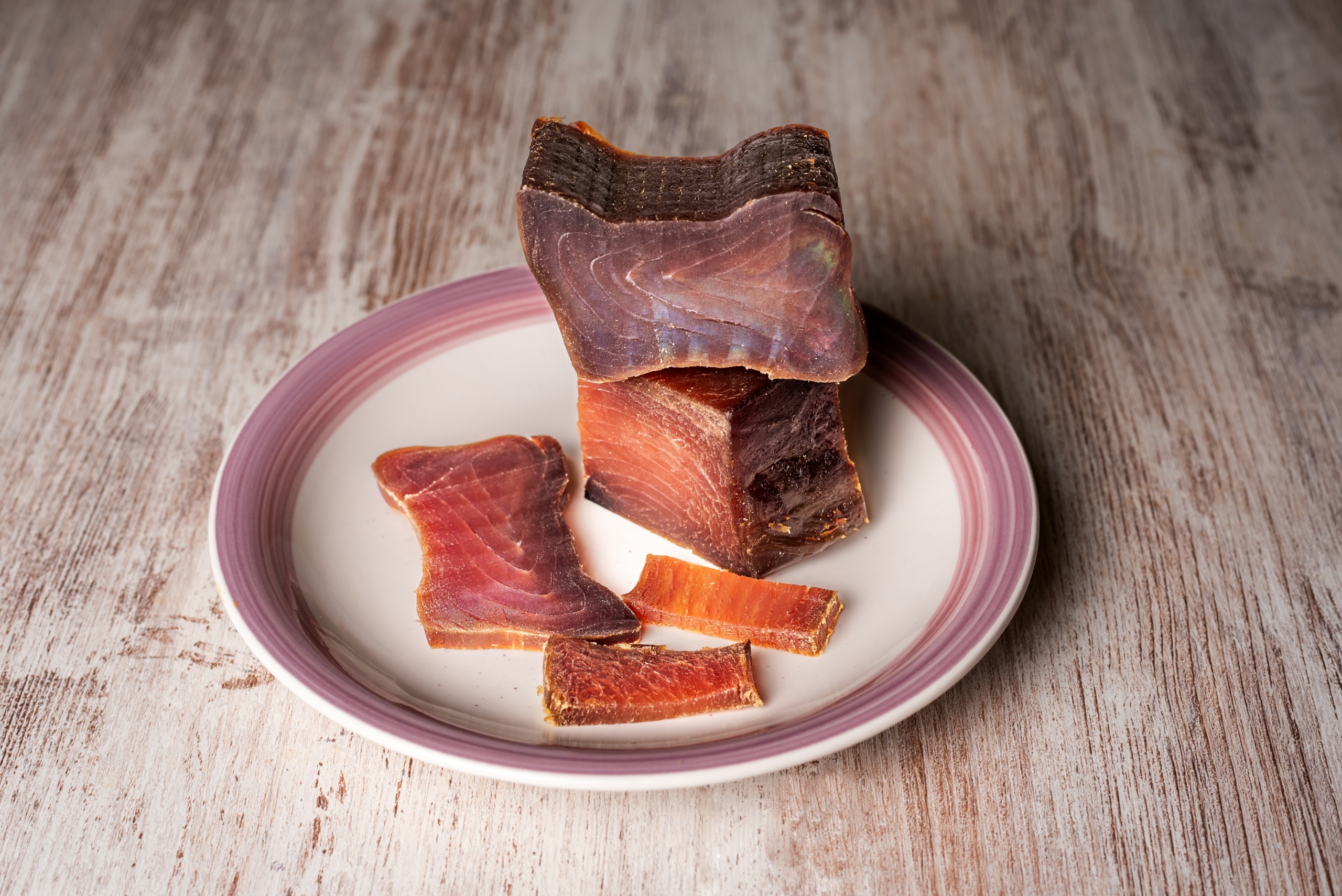
Along the Atlantic and Mediterranean coasts of southern Spain, particularly in Andalusia, mojama occupies a distinctive place within the broader tradition of salazón – the preservation of foods through salting and drying. Often described colloquially as the “serrano of the sea,” mojama consists of cured tuna loin, typically from Atlantic bluefin (Thunnus thynnus), prepared through methods that predate the modern Spanish state and reflect a layered history of Mediterranean exchange.
This article situates mojama within that longue durée, examining how techniques, dietary frameworks, and patterns of movement – commercial, cultural, and possibly religious – contributed to its development. The question of halal influence, while not directly documented in prescriptive sources, provides a useful lens through which to consider continuity and adaptation in Iberian foodways.
Deep roots in Mediterranean preservation
The practice of salting fish in southern Iberia extends at least to Phoenician and Roman periods. Archaeological remains of fish-salting installations along the coasts of Cádiz and Málaga attest to an industry that processed tuna and other species for regional consumption and long-distance trade. Under Roman administration, products such as garum and salted fillets circulated widely across the empire.
Mojama, as a specific preparation of salted and air-dried tuna loin, likely crystallized later, but it draws on this established technical base: selection of dense muscle, heavy salting to extract moisture, rinsing, and controlled drying in maritime air. The result is a firm, concentrated product that can be stored and transported with relative ease—qualities essential in pre-modern economies.
Al-Andalus and dietary frameworks
Between the 8th and 15th centuries, much of southern Iberia formed part of Al-Andalus. During this period, culinary practices reflected both local continuities and influences from across the Islamic world. Fish occupied a notable place in these dietary systems: unlike terrestrial animals, fish generally did not require ritual slaughter to be considered permissible under Islamic dietary law. This made preserved fish products especially adaptable within halal frameworks.
While no surviving medieval Andalusi texts explicitly describe mojama in its current form, they do document salted and dried foods, as well as sophisticated approaches to seasoning and preservation. The permissibility and practicality of fish would have supported the continued refinement of salting techniques along the coast.
The hypothesis of halal influence, therefore, rests not on a single identifiable origin point, but on compatibility. In regions where Muslim communities formed a significant part of the population, preserved tuna products would have aligned with dietary norms while also serving economic needs. This convergence may have encouraged their sustained production and circulation.
Techniques and the almadraba system
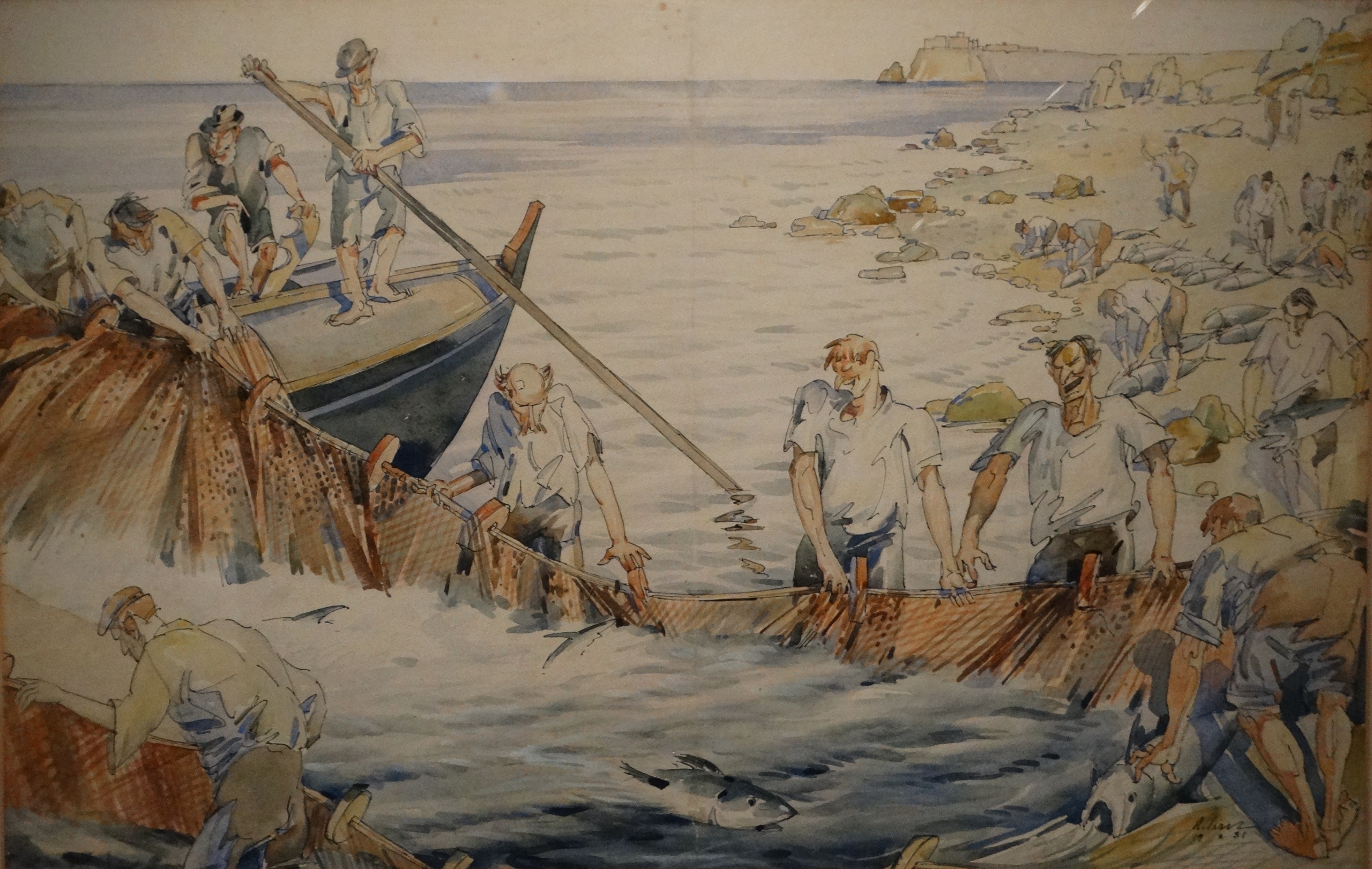
The production of mojama is closely tied to the almadraba, a system of fixed tuna traps used along the coasts of Cádiz, particularly near Barbate and Conil. This method, with roots possibly extending to antiquity and refined over centuries, captures migrating tuna as they move between the Atlantic and the Mediterranean.
Once caught, the tuna are processed quickly. The loins are cut into elongated pieces, heavily salted, and then left to cure under controlled conditions. After desalting and drying, the resulting product develops a dense texture and deep flavor profile.
This process parallels other Iberian salazón traditions, including jamón serrano and cecina. All rely on salt, air, and time, transforming raw protein into a stable, transportable food. The comparison underscores a shared technological logic rather than a shared ingredient base.
Circulation across cultural boundaries
Following the Christian conquests of southern Iberia, many culinary practices associated with Al-Andalus persisted, often detached from their original social contexts. Techniques were retained because they worked – economically and environmentally – within the region.
Mojama exemplifies this continuity. Its production continued in areas that underwent political and demographic transformation, suggesting that preservation methods transcended confessional boundaries. Artisans, fishers, and merchants – regardless of religious affiliation – participated in its making and distribution.
Trade networks further extended its reach. Salted tuna products could be transported inland or shipped across the Mediterranean, linking coastal Andalusia with broader commercial circuits. In this sense, mojama belongs to a category of foods shaped by mobility: of fish stocks, of techniques, and of people.
A “Serrano of the Sea”?
The comparison of mojama to jamón serrano is modern but analytically suggestive. Both are products of dehydration and concentration, valued for their intensity and longevity. Yet their cultural trajectories differ. Jamón serrano is closely tied to pastoral economies and, in some historical contexts, to markers of Christian identity in post-medieval Spain. Mojama, by contrast, emerges from maritime environments where dietary boundaries were more permeable.
Framing mojama as the “serrano of the sea” highlights its place within a shared Iberian repertoire of cured foods while also pointing to distinct ecological and historical conditions.
Interpreting halal influence
The idea that halal frameworks “made” mojama would overstate the case. The technique predates Islamic rule in Iberia and continues independently of it. However, the presence of Muslim communities in Al-Andalus likely contributed to the normalization and persistence of fish-based preserved foods within regional diets.
Rather than a direct line of causation, it is more accurate to speak of convergence: existing preservation methods aligned with dietary systems that favored fish, reinforcing their relevance. This alignment may have shaped patterns of consumption and transmission, even if it did not generate the technique itself.
Mojama thus encapsulates a history of continuity across changing cultural landscapes. Rooted in ancient preservation practices, refined in medieval coastal societies, and sustained through shifting political regimes, it reflects the interplay of environment, technique, and exchange.
Seen from this perspective, mojama is not simply a regional delicacy. It is an artifact of movement – of fish through migratory routes, of knowledge across generations, and of culinary practices across cultural boundaries. Its place within the salazón tradition situates it alongside other cured foods of Iberia, while its maritime origins and adaptability underscore the diversity of pathways through which such traditions endure.
AI Transparency Notice
PilgriMaps uses artificial intelligence tools to assist in the research, drafting and translation of editorial content. All AI-assisted content is reviewed, edited and verified by our editorial team before publication. We contrast information against primary sources, specialist literature and on-the-ground knowledge to ensure accuracy, cultural sensitivity and editorial integrity.
AI is one tool among many in our workflow. The judgement, curation and responsibility for everything published on this platform remain entirely human.
Viator Media S.L. — in compliance with the EU Artificial Intelligence Act (Regulation EU 2024/1689).
This post is also available in: