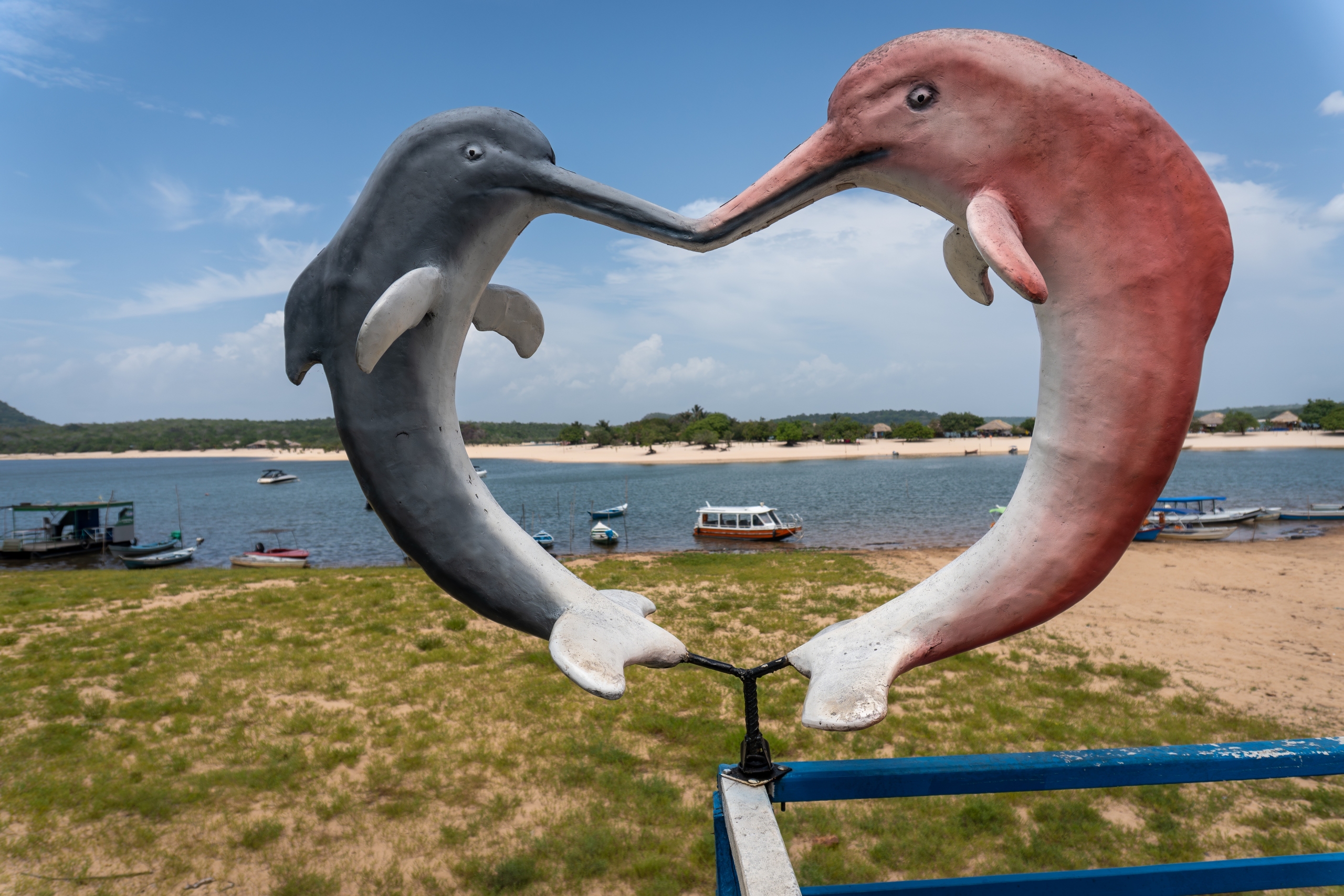
Alter do Chão is a village on the Tapajós River in the state of Pará, roughly thirty kilometers from Santarém, where the clear blue water of the Tapajós meets the brown Amazon. In August and September, the river level drops and white sand beaches emerge from the water, giving the place its reputation as the Caribbean of Amazonia. In September, it also hosts the Sairé — a festival three hundred years old, suppressed for three decades, revived by its community, and now one of the most distinctive cultural events in the Brazilian Amazon.
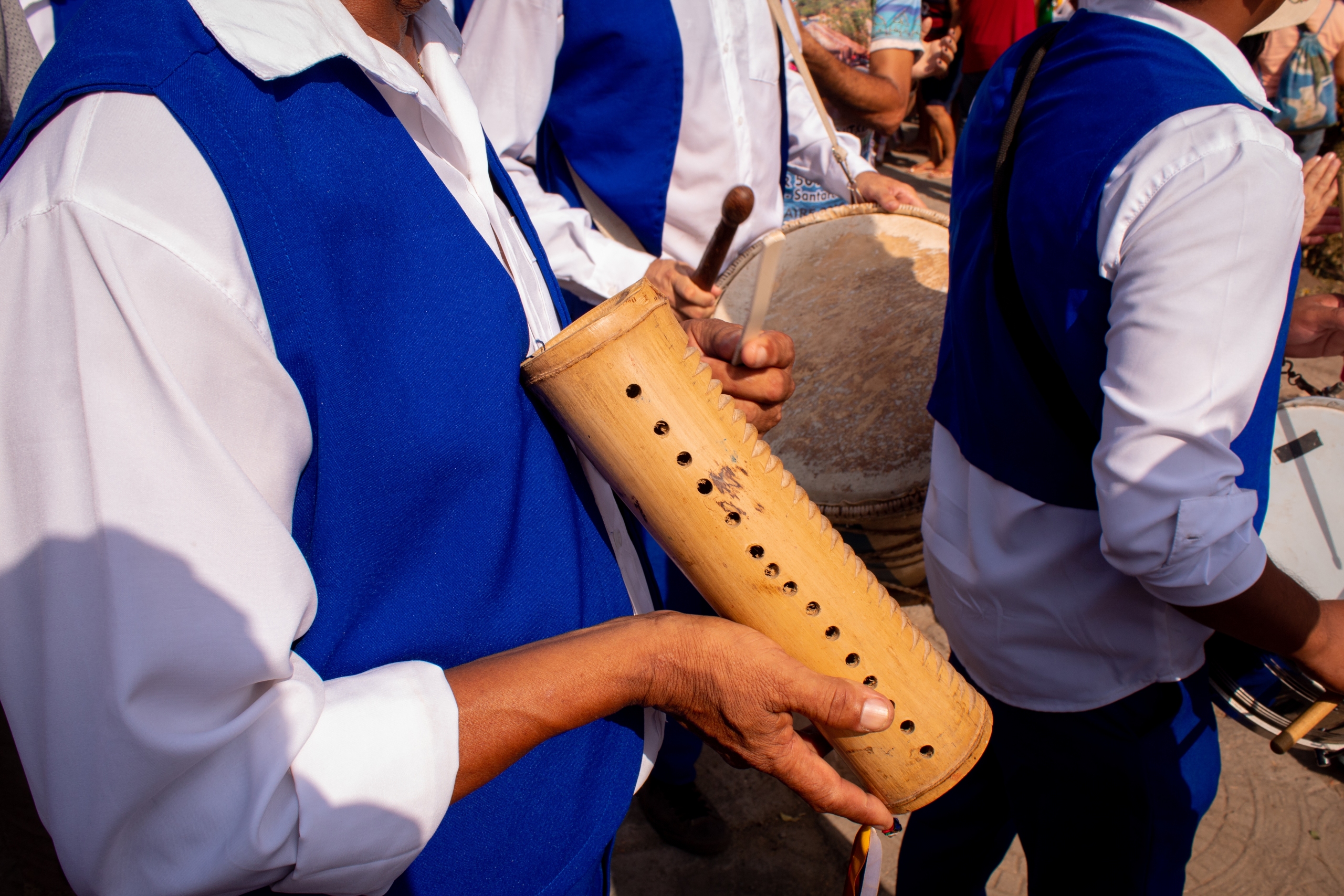
The Sairé began as a Jesuit instrument of evangelization. In the seventeenth and eighteenth centuries, Jesuit missionaries in the Amazon used the festival — a processional ceremony centered on a symbol of twisted vines wrapped in cotton, ribbons, and flowers — to introduce Catholic devotion to the Borari and Tapajós peoples of the region. The ceremony traveled between missions along the great rivers, carried by the missionaries and adapted at each stop to the local culture it encountered. Its spiritual center, at least in the Jesuit design, was the patroness of the mission at Alter do Chão: Our Lady of the Remedies.
In 1943, the Franciscan authorities who had inherited the region’s ecclesiastical care banned the Sairé. The reasons were practical as much as theological: the festival had accumulated gambling, alcohol, and commerce, and the religious core had been displaced by the festive periphery. The ban held for nearly thirty years. When the festival returned in the 1970s, it returned differently — no longer under Church authority, now claimed by the community of Alter do Chão as a folkloric and cultural event rather than a religious one. The spiritual and the festive had been separated, or at least renegotiated.
The element that transformed the modern Sairé into what it is today arrived in 1997: the Festival dos Botos, the Festival of the River Dolphins. The boto — the Amazon river dolphin — is one of the central figures of Amazonian legend. There are two species in the Tapajós: the boto-cor-de-rosa, the pink dolphin, and the tucuxi, smaller and gray. The legend, older than the festival, tells of a boto who transforms at night into a young man, rises from the river, and seduces human women. The Sairé’s boto festival stages this legend as a competition between two groups — Tucuxi and Cor-de-Rosa — who parade with allegories, costumes, and music, competing for the crowd’s allegiance in something structurally similar to the samba school competition of Rio’s Carnival or the boi-bumbá rivalry of Parintins. Families divide along boto lines. The result is a village of approximately four thousand residents that, during Sairé week in September, receives around a hundred and fifty thousand visitors.
What is worth pausing on is the particular role the boto legend plays in holding the festival together. The story of the river dolphin who rises from the water in human form to move among people undetected belongs to a much older layer of Amazonian cosmology than anything the Jesuits introduced — a world in which the boundary between the river and the human, between the animal and the person, is permeable and morally charged. That this legend migrated into the structure of a festival whose symbol is a colonial missionary object, and that the combination now draws a hundred and fifty thousand people to a village of four thousand, is not a paradox so much as a compressed image of how Brazilian cultural transmission actually works: not by replacing old layers with new ones, but by superimposing them until the surface and the depth are no longer easily distinguished.
What the Sairé’s long history makes visible is the layering that characterizes so many Brazilian sacred traditions: a Jesuit ceremony planted in indigenous soil, suppressed by the institutional church, revived by the community without the church, and then fused with an indigenous river legend to produce something that is simultaneously older and newer than any of its components. The symbol at the center of the festival is still the twisted-vine arc of the original Jesuit ritual, carried in procession. The crowd dancing around it is cheering for a dolphin.
AI Transparency Notice
PilgriMaps uses artificial intelligence tools to assist in the research, drafting and translation of editorial content. All AI-assisted content is reviewed, edited and verified by our editorial team before publication. We contrast information against primary sources, specialist literature and on-the-ground knowledge to ensure accuracy, cultural sensitivity and editorial integrity.
AI is one tool among many in our workflow. The judgement, curation and responsibility for everything published on this platform remain entirely human.
Viator Media S.L. — in compliance with the EU Artificial Intelligence Act (Regulation EU 2024/1689).
This post is also available in: