In central San Antonio, a bronze monument stands quietly beneath the Texas sun. It depicts four figures: a Native man facing forward, a Franciscan friar holding a cross, a Spanish soldier resting a musket, and, slightly apart, a couple with a goat.
At first glance, it may resemble a typical tableau of colonial foundations. Yet the rural couple – identified by their clothing, posture, and livestock – represent a lesser-known origin: Canary Islanders who helped shape early Texas society.
Colonial migration from the Canary Islands
The sculpture commemorates the arrival, in 1731, of 16 families from the Canary Islands—56 people in total—who crossed the Atlantic under sponsorship from the Spanish Crown. After brief stops in Havana and Veracruz, they traversed the interior of New Spain on foot, arriving months later at the Presidio of Béjar. There they established the Villa de San Fernando de Béxar, the nucleus of what would become San Antonio.
These settlers were not adventurers but transatlantic migrants from a region with deep Mediterranean, African, and Iberian ties. The Canary Islands, long a strategic hub between continents, had developed a hybrid agricultural and culinary tradition shaped by arid volcanic terrain and Atlantic trade routes. The settlers brought with them skills suited to the demanding climate of South Texas: dry farming, livestock herding (particularly goats), and water conservation. These were essential tools for survival in the eighteenth-century frontier.
The bronze monument serves not as an emblem of conquest but as a visual reminder of overlapping cultural presences in early Texas. The inclusion of the Canary Island couple signals how foundational their presence was—not only in settlement but in the development of local lifeways, including food.
Canary influences in Texan food traditions
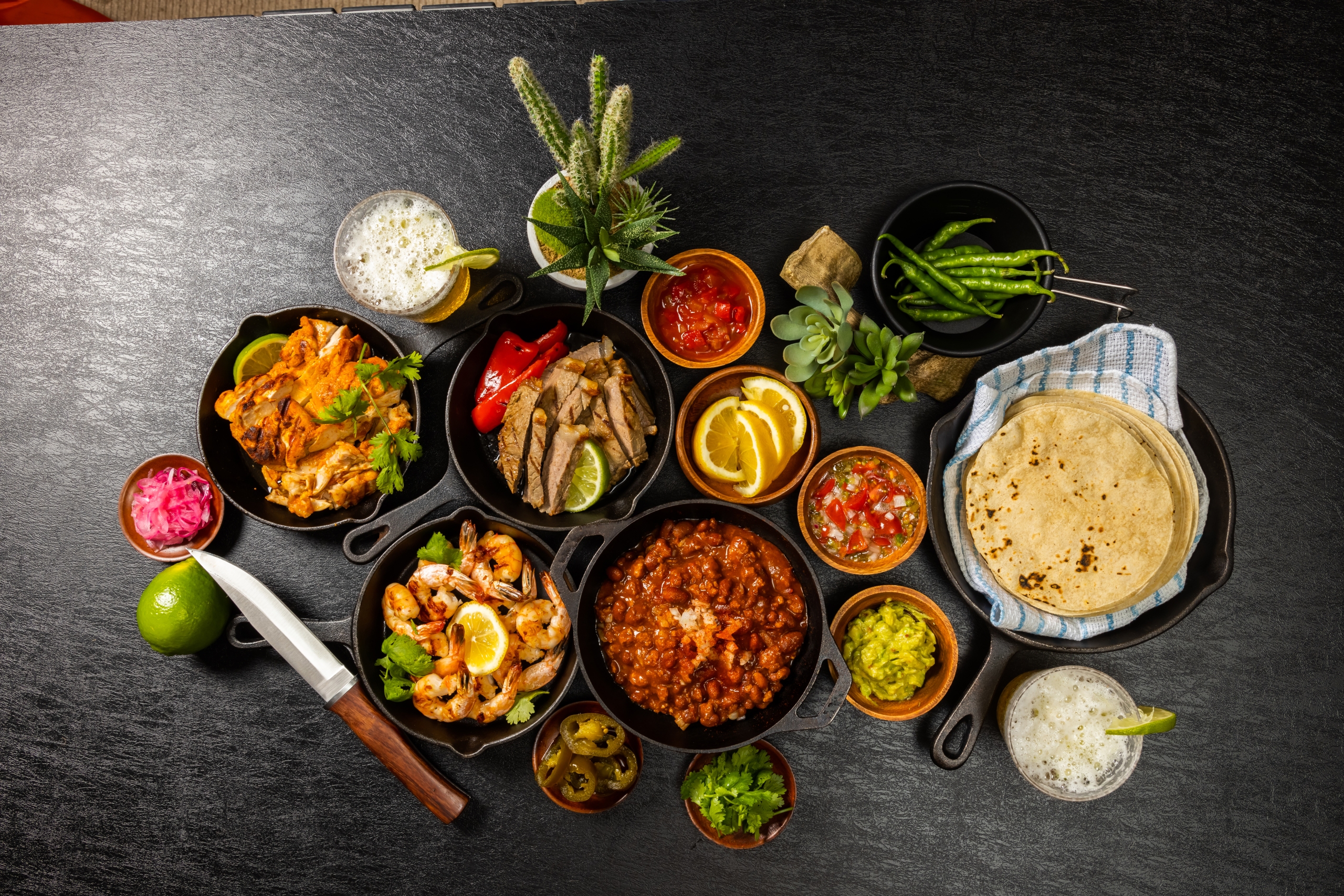
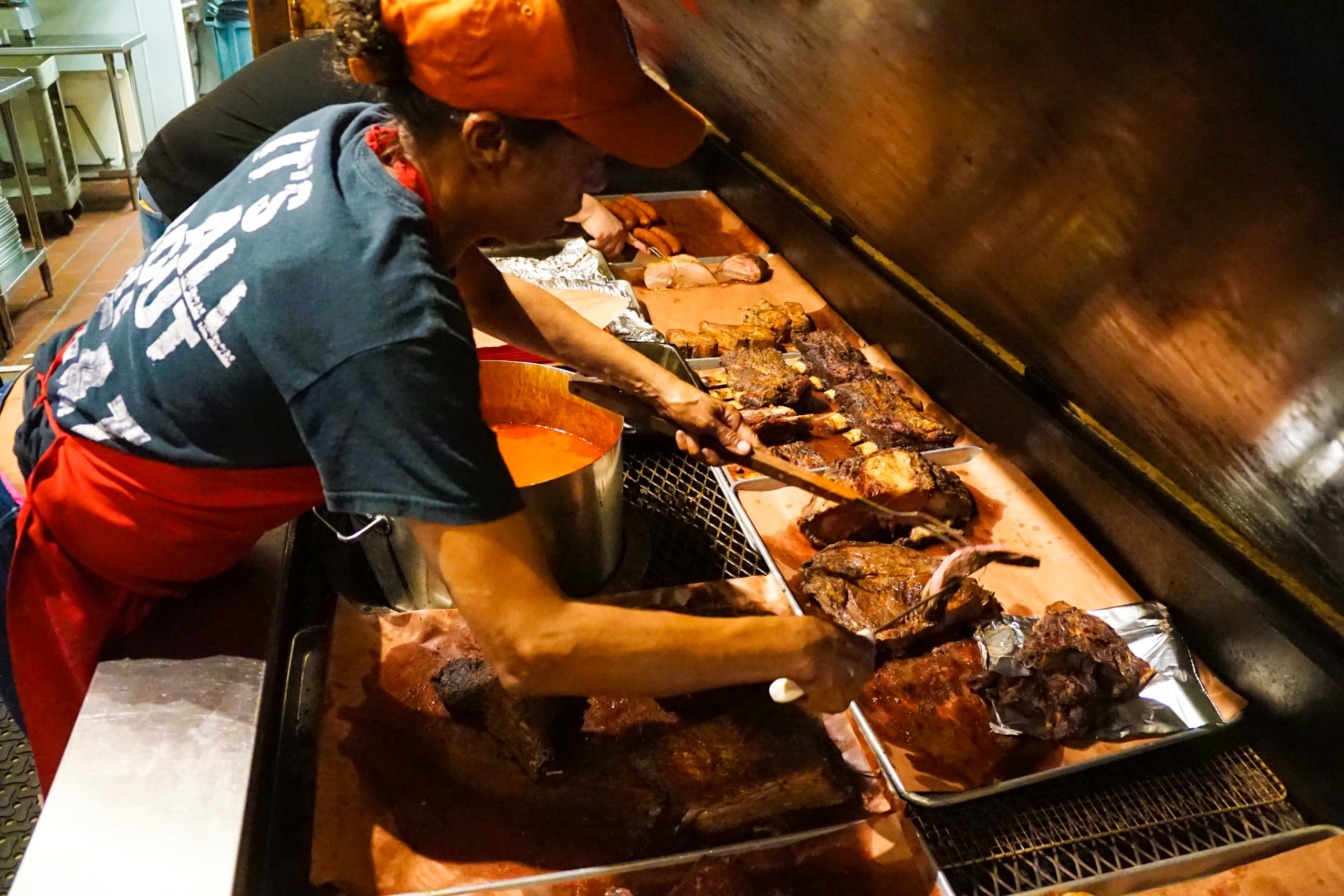
The Canary Islanders brought with them foodways informed by centuries of convergence: Iberian staples, North African seasonings, and adaptive techniques for harsh environments. Their culinary practices featured chickpeas, garlic, goat cheese, preserved meats, and spices such as cumin, coriander, and cinnamon. These flavors were rare in central Mexico at the time but found resonance in Texas, where Indigenous food staples like maize, beans, chiles, and pecans were already established.
Tex-Mex cuisine, as it came to be known, evolved from these exchanges. The widespread use of cumin in Texas stews and meat dishes traces more directly to Canary traditions than to central Mexican ones. Chili con carne—a canonical Texan dish—echoes the slow-simmered, spice-forward meat dishes of the islands. Mojo sauces, common in the Canaries and made with garlic, vinegar, and peppers, share culinary logic with Texas’s salsas and barbecue marinades.
Goat’s milk cheeses, vinegar-based pickling, and meat preservation—all common in the Canary Islands—also found a place in the regional diet. Over time, these techniques mixed with Indigenous, Spanish, and later Anglo-American food traditions to shape the broader palette of Texan cooking.
A regional cuisine emerges
Throughout the 19th century, food traditions in southern Texas continued to evolve. Following Mexican independence and later U.S. annexation, culinary influences merged further. Mexican ranch-style dishes met Anglo-American preferences—especially for wheat-based tortillas and cheese-heavy preparations.
The name “Tex-Mex” did not emerge until the late 19th century, when the Texas-Mexican Railway (abbreviated “Tex-Mex”) connected towns such as Laredo and Corpus Christi. The term was first used in rail contexts, but by the mid-20th century it came to describe a culinary style characterized by borderland hybridity.
It was only in the 1970s, with the publication of The Cuisines of Mexico by British food writer Diana Kennedy, that “Tex-Mex” gained mainstream culinary recognition. While Kennedy used the term to distinguish it from traditional Mexican cuisine, subsequent food historians and regional experts highlighted its legitimacy. Figures such as Robb Walsh and scholars from the University of Texas emphasized that Tex-Mex was not a recent invention or a simplified “Americanized” derivative, but a coherent regional cuisine with deep historical roots.
Culinary history as cultural history
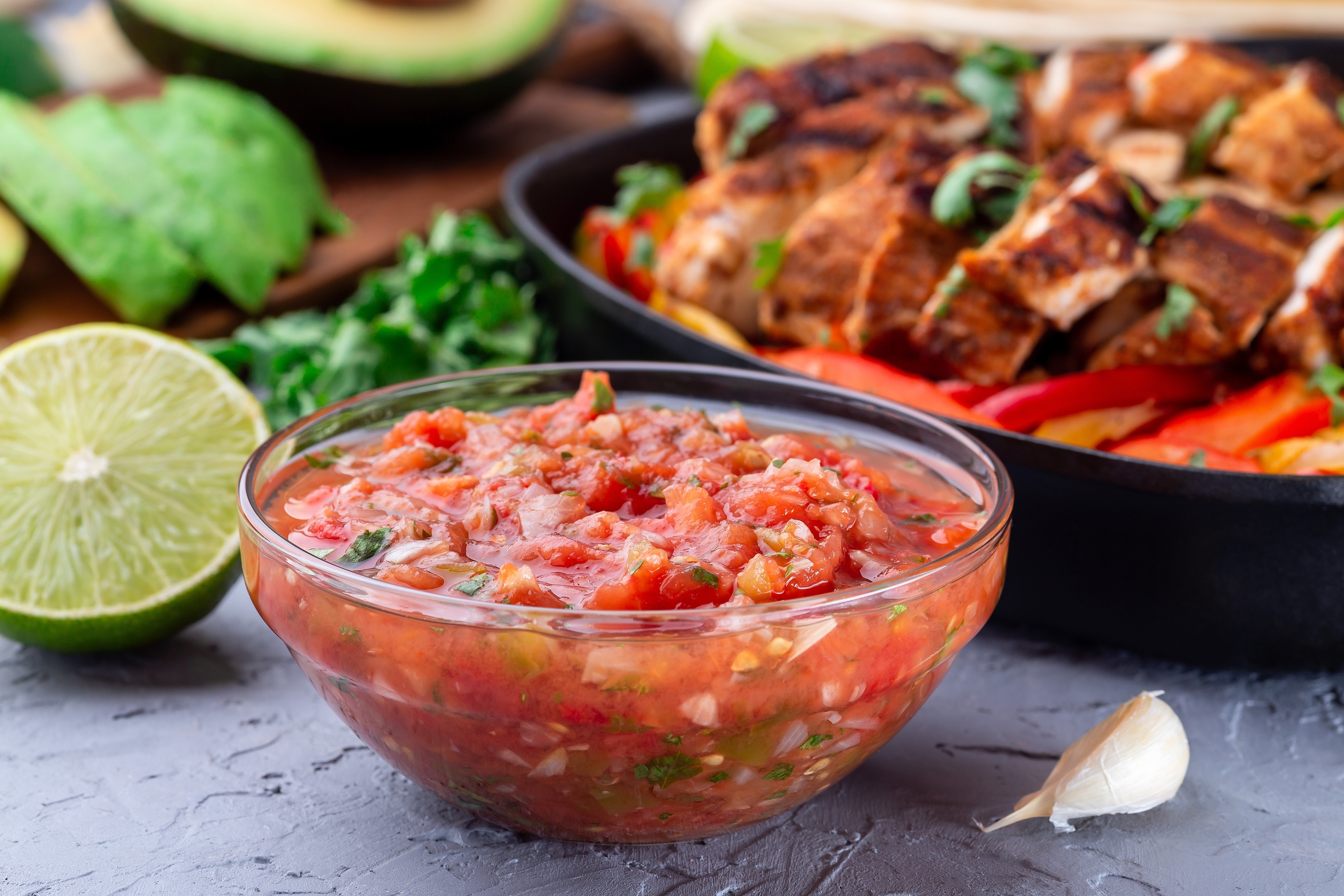
Today, Tex-Mex food is globalized. Fajitas, nachos, and chili con carne appear on menus from Houston to Helsinki. Yet behind the commercial success lies a longer history of agricultural adaptation, cultural contact, and culinary innovation. In San Antonio neighborhoods, and among families with Mexican, Anglo, and Canary heritage, these dishes began as local fare before becoming international staples.
Understanding Tex-Mex as a product of multiple migrations—Indigenous, Spanish, African, and later Anglo-American—helps broaden the narrative of U.S. history. While mainstream accounts often focus on the northeastern colonies, the culinary heritage of the U.S.–Mexico borderlands reveals another dimension of national formation. Long before U.S. independence, communities in the Southwest were already negotiating language, law, belief, and food across cultural lines.
The legacy of the Canary Islanders is part of that broader story. Though small in number, their agricultural knowledge, culinary techniques, and community organization left an imprint on the Texan landscape—both literal and cultural. Their experience illustrates how food can serve as a durable archive of human movement and adaptation.
Remembering through taste
Tex-Mex is often associated with melted cheese, bold flavors, and casual dining. But within each dish—whether a plate of enchiladas or a bowl of chili—are the echoes of migration histories. The maize of Indigenous peoples, the cumin of Atlantic settlers, the cattle of Iberian colonizers, and the portioning habits of American diners all coexist in these culinary forms.
To taste Tex-Mex is to engage, however unconsciously, with this complex heritage. It is a cuisine born not of fusion but of coexistence—sometimes tense, often creative—along a frontier that shaped the American Southwest as much as any colonial outpost or Revolutionary battlefield.
When a diner dips a chip into chili con queso, they participate in a layered cultural memory: of transatlantic crossings, of desert agriculture, of borderland survival. In that bite, the legacy of those 16 Canary Island families persists—not as folklore, but as a living ingredient in the evolving story of the region.
AI Transparency Notice
PilgriMaps uses artificial intelligence tools to assist in the research, drafting and translation of editorial content. All AI-assisted content is reviewed, edited and verified by our editorial team before publication. We contrast information against primary sources, specialist literature and on-the-ground knowledge to ensure accuracy, cultural sensitivity and editorial integrity.
AI is one tool among many in our workflow. The judgement, curation and responsibility for everything published on this platform remain entirely human.
Viator Media S.L. — in compliance with the EU Artificial Intelligence Act (Regulation EU 2024/1689).
This post is also available in: