What experienced walkers already know — and what beginners discover by kilometre three
At kilometre four of my first long-distance route, I realized I had made an avoidable mistake. My backpack weighed 14 kilograms. I weighed 58. As I walked, I did the calculation: I was carrying nearly a quarter of my body weight. Pack animals are usually limited to roughly one fifth.
A pilgrim in his seventies passed me with an ease I found almost aerodynamic. He also carried a backpack. I asked, half in disbelief, “How much does yours weigh?”
“Six kilos,” he said, smiling. “And three of them are water.”
That evening in the hostel, I emptied my pack and confronted the excess. Three shirts instead of two. A heavy novel. A beach towel comparable in weight to a small pet. Full-size toiletries. Jeans. As if the Camino required evening attire.
Like many beginners, I placed half my possessions in a donation box and walked away lighter. From that moment, I began learning the quiet, almost meditative logic of packing — a process that many describe, without exaggeration, as a form of practical “zen”: clarity through subtraction.
Five principles for a balanced pack
Guidelines that protect your back, your rhythm, and your attention
- Ten Percent Is Ideal; Twenty Percent Is a Lesson in Gravity
Most experienced pilgrims aim to keep their pack at 10% of body weight. Some stretch to 15%. At 20%, the journey becomes a negotiation with physics.
Marco, who runs an albergue in Roncesvalles, summarizes it succinctly: “A young walker once started with 18 kilos. Three days later, he had shipped nearly half of it home. Pilgrimage math compounds: one kilo multiplied by every step.”
The solution is transparent: weigh yourself, weigh the pack, then remove items until the numbers align with what your body can sustain.
- “Maybe I’ll Need It” Is the Most Expensive Phrase on the Route
Beginners often overpack out of hypothetical scenarios: oversized pocket tools, expedition-level first aid kits, changes of clothes for events that never occur.
“‘Maybe’ is the enemy of the pilgrim,” says Laura, who has walked eight times. Pilgrimage routes form their own micro-economies. Pharmacies, donation boxes, shops, and fellow walkers create a reliable network of supplies. When you truly need something, you will find it. The operative question is not Could this be useful? but Will I be in real difficulty without it?
- Weight Lives High and Close, Not Low and Swaying
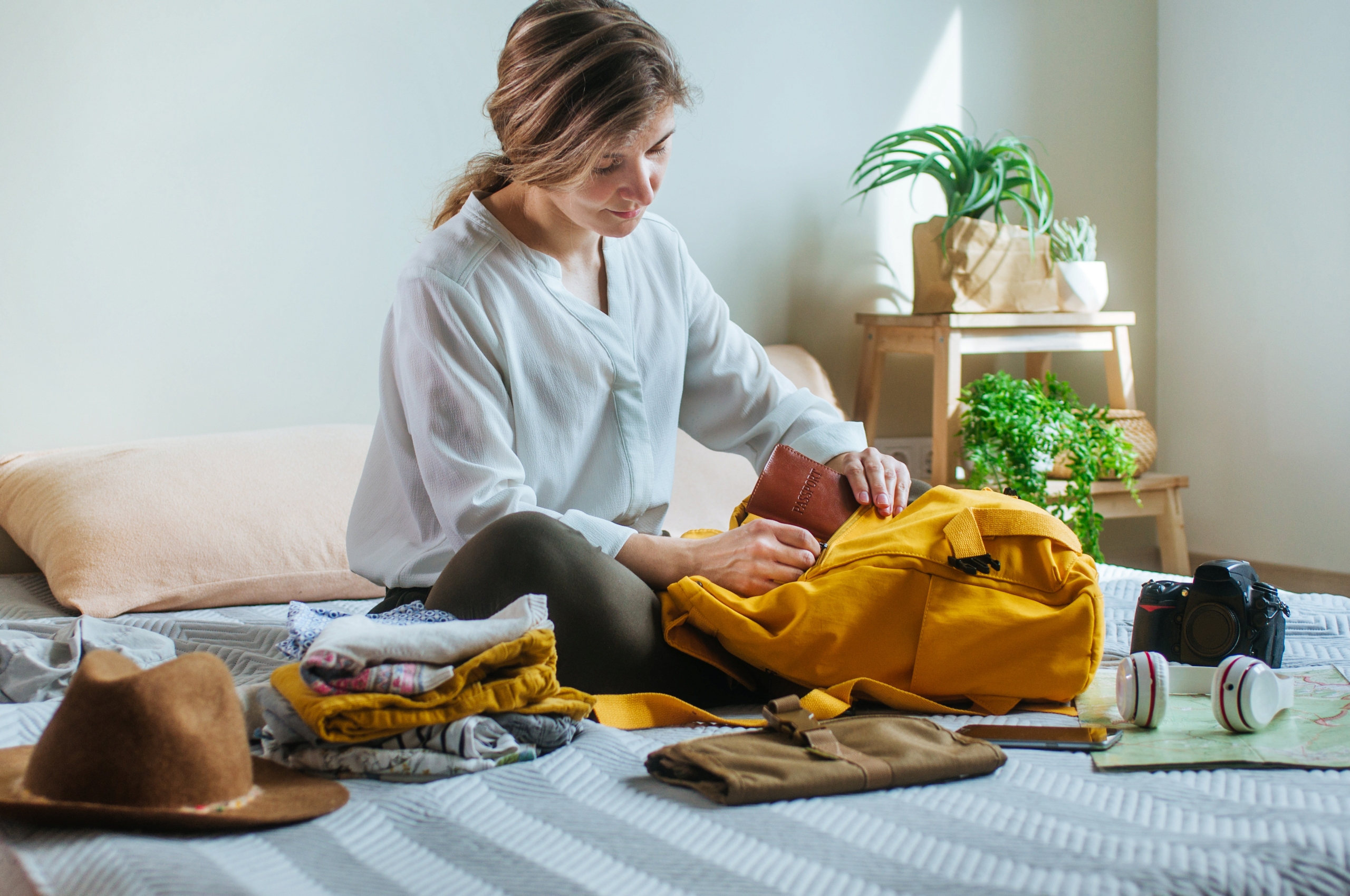
Packing is not only about mass; it is about distribution. Heavy items belong high in the pack and close to the spine. Low or outward-facing loads pull the walker off balance.
“Spare shoes at the bottom,” says guide Alberto, “turn the pack into a lever against your posture.” The pack’s centre of gravity should align with yours — between the shoulder blades. Anything that swings or protrudes magnifies its effect over thousands of steps.
- Every Object Should Earn Its Place Twice
On a long route, versatility matters more than quantity. A buff becomes headband, sleep mask, sun shield. A rain jacket becomes wind layer, picnic groundsheet, and temporary seat cover. Trekking poles stabilise joints, hold laundry lines, and extend reach for group photos.
Francesca, 55, reduced her pack by half through this principle: “My phone replaced my torch. My sarong replaced my towel and became a skirt, blanket, and shawl.”
Before packing, ask: What else can it do?
- Pack Three Times; Walk With the Third
The first pack belongs to anticipation — full and anxious. The second belongs to reason — lighter but cautious. The third is the closest to “zen” — stripped of extras, shaped by necessity.
Giovanni, who guides walking groups, calls this “the three-pack method”: “Pack it. Leave it closed for a day. Reopen it and remove 20%. Repeat. When removing more makes you uneasy, you’ve reached equilibrium.”
Age and Rhythm: How Needs Shift Over Time
20–30: The Energetic Walker
- Light recovery hides the strain of overpacking.
- Ideal weight: 6–8 kg
- Common mistake: technology excess — laptop, camera, drone.
- Adjustment: the phone is enough.
30–45: The Pragmatic Walker
- Responsibilities spill into the pack.
- Ideal weight: 7–9 kg
- Common mistake: carrying an “office” — large chargers, extra devices, formal clothes.
- Adjustment: minimal tech, streamlined toiletries.
45–60: The Experienced but Comfort-Oriented Walker
- Experience guides decisions, but comfort can become weight.
- Ideal weight: 6–8 kg
- Common mistake: bringing multiple supports — braces, wraps, cushioning.
- Adjustment: choose one essential item; rest more often.
60+: The Minimalist Walker
- Time, clarity, and necessity refine the gear list.
- Ideal weight: 5–7 kg
- Common mistake: acquiring souvenirs early.
- Adjustment: essentials only until the final town; split important medications between pockets and pack.
The Lesson No One Mentions: Balance Emerges Only After the First Days
Backpacks are rarely correct on day one. Donation boxes in hostels form an unintentional ethnography of excess: unused layers, half-read books, full camping kits, even the occasional hairdryer.
Lucia, who manages a hostel in Pamplona, says: “What people bring and what people abandon — that difference is the pilgrimage.”
On my last route, my backpack weighed 6.2 kilos. On my first, 14. The reduction changed the journey. Lightness sharpened attention; carrying less made room for noticing more. The process resembled a quiet discipline: remove what obscures, keep what supports, and accept that the essentials are fewer than imagined.
In the words of an older walker who passed me during that first demanding day: “The route is not only where you arrive. It is the way you arrive.” With a lighter pack, arrival becomes presence rather than endurance.
Universal Packing Checklist
A distilled, essential list aligned with the principles above
Clothing (max 2 kg)
- 2 technical shirts
- 2 trousers/shorts
- 3 technical underwear
- 3 trekking socks
- 1 lightweight fleece
- 1 waterproof jacket
- 1 swimsuit/boxer (also serves as spare underwear)
- Lightweight sandals
- Hat or bandana
Toiletries (max 500 g)
- Solid multi-use soap
- Toothbrush + small toothpaste
- Sunscreen stick
- Lip balm
- Small deodorant
First Aid (max 300 g)
- Blister plasters
- Anti-inflammatory medication
- Antihistamine
- Probiotics
- Small disinfectant
- Personal essential medications
Technology (max 500 g)
- Phone
- Small power bank
- Cables
- Earphones
- Ear plugs
Other
- ID + health card
- Pilgrim credential
- Small-amount cash
- Water bottle
- Lightweight sleeping liner
- Trekking poles
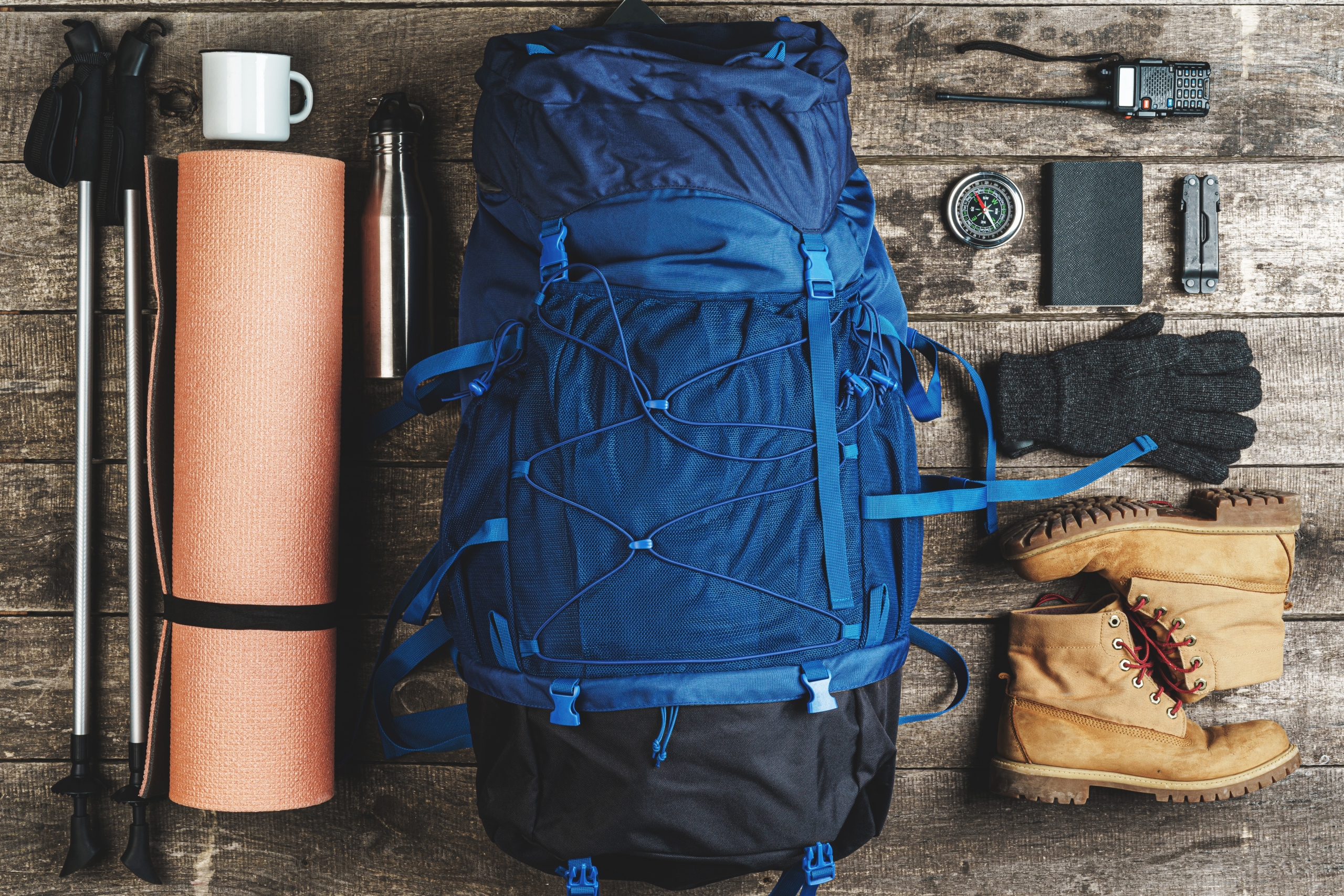
Target weight: 5–7 kg
Upper limit: 9 kg
Beyond 10 kg: open the pack, ask a stranger to choose what to remove — and trust their judgement.
AI Transparency Notice
PilgriMaps uses artificial intelligence tools to assist in the research, drafting and translation of editorial content. All AI-assisted content is reviewed, edited and verified by our editorial team before publication. We contrast information against primary sources, specialist literature and on-the-ground knowledge to ensure accuracy, cultural sensitivity and editorial integrity.
AI is one tool among many in our workflow. The judgement, curation and responsibility for everything published on this platform remain entirely human.
Viator Media S.L. — in compliance with the EU Artificial Intelligence Act (Regulation EU 2024/1689).
This post is also available in: