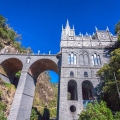
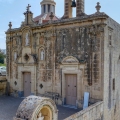
The Basilica of St Paul in Rabat is one of the most revered Pauline sites in Malta. Beneath the church lies St Paul’s Grotto, traditionally identified as the place where the apostle lived and preached during the three months he spent on the island after the shipwreck described in the Acts of the Apostles. Whether every detail can be historically proven or not, the site has long held enormous spiritual significance in Maltese Christianity.
The present church dates from the 17th century, but it stands on a much older sacred site at the edge of the ancient Roman city of Melite. Medieval records already refer to it as ecclesia Sancti Pauli de crypta, showing that devotion linked to the grotto was firmly established centuries ago. Construction of the current church began in 1653 with plans by Francesco Buonamici and was completed by Lorenzo Gafà in 1683. Attached to the complex is the smaller Church of St Publius, also closely tied to the history and access of the grotto.
St Paul’s Grotto also gave rise to a remarkable healing tradition. Powdered stone taken from the site, known as “St Paul’s Earth,” was once believed to protect against poison, snakebite, fever and even smallpox, especially during the time of the Knights of St John. Over the centuries, the shrine has drawn pilgrims and distinguished visitors alike, including Pope John Paul II, Pope Benedict XVI and Pope Francis. Today it remains one of Malta’s most important places of prayer and memory connected with Saint Paul.
- Address
64 Triq Ir-Rebha, Ir-Rabat, Malta - Web
None - Visiting Hours
Unknown - What to see
St Paul’s Grotto, the Basilica of St Paul
AI Transparency Notice
PilgriMaps uses artificial intelligence tools to assist in the research, drafting and translation of editorial content. All AI-assisted content is reviewed, edited and verified by our editorial team before publication. We contrast information against primary sources, specialist literature and on-the-ground knowledge to ensure accuracy, cultural sensitivity and editorial integrity.
AI is one tool among many in our workflow. The judgement, curation and responsibility for everything published on this platform remain entirely human.
Viator Media S.L. — in compliance with the EU Artificial Intelligence Act (Regulation EU 2024/1689).
This post is also available in: