Rising on the northern slope of Mount Royal, Saint Joseph’s Oratory is one of the most visited pilgrimage sites in North America. Its dome, visible from across Montreal, marks a place where personal narratives, collective memory, and urban geography intersect. Each year, millions of visitors ascend its terraces—some as tourists, others as pilgrims, many occupying a space between the two.
The Oratory is not defined by a single path. Like many contemporary pilgrimage destinations, it functions as a point of convergence, drawing individuals from varied cultural, religious, and secular backgrounds. What unites them is less a shared doctrine than a shared gesture: the decision to approach the site with intention.
Origins: a modest chapel and a persistent figure
The origins of the Oratory are closely tied to André Bessette (1845–1937), commonly known as Brother André. Born into a working-class family and employed as a porter at a local college, he became known for his attention to the sick and for acts of care that many visitors later described as healing.
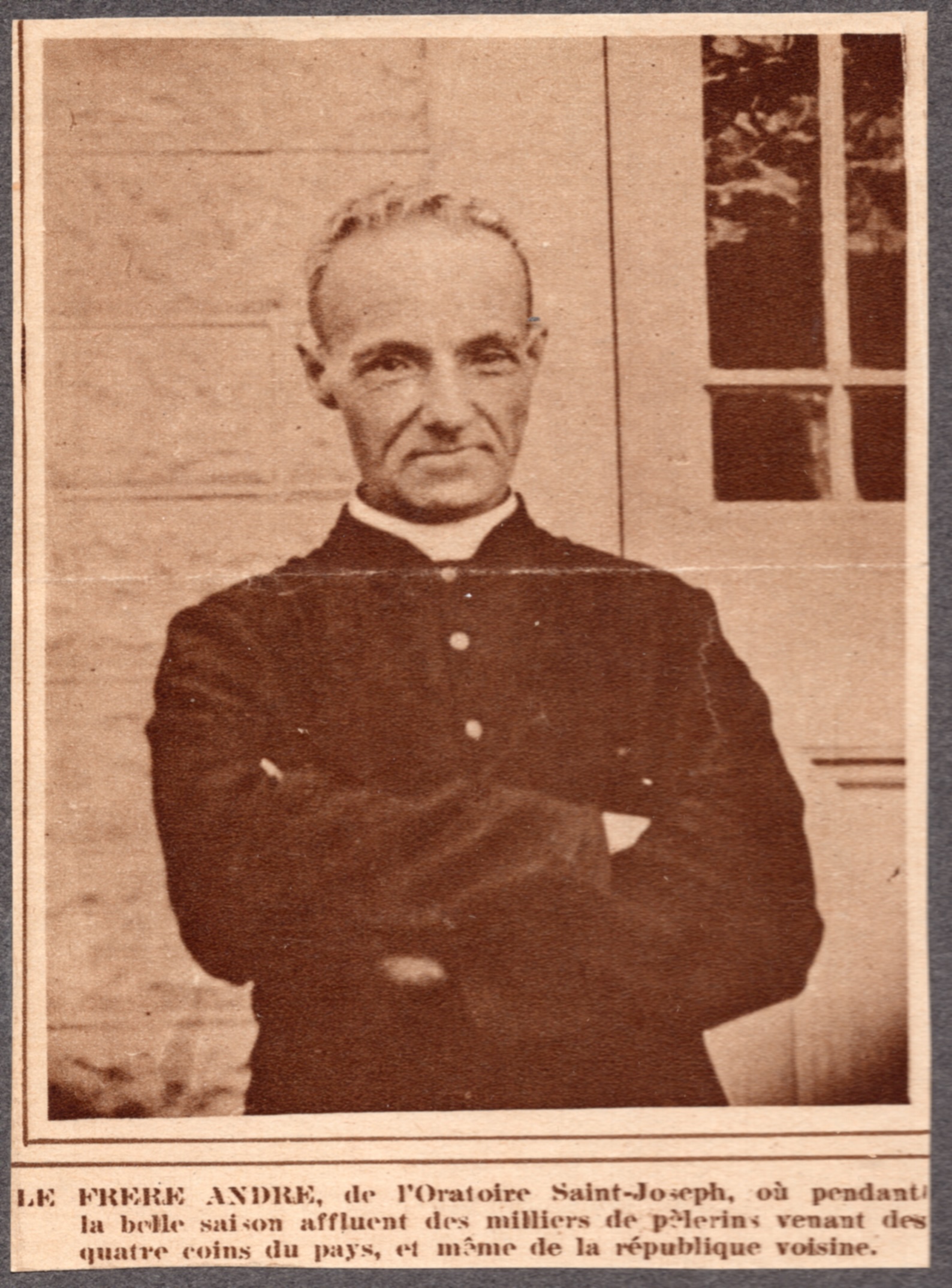
In 1904, with limited resources but growing support, he established a small chapel dedicated to Saint Joseph. At the time, the site stood at the edge of the city, on a wooded slope. What began as a modest structure gradually expanded in response to increasing numbers of visitors. The present basilica, completed in stages during the twentieth century, reflects this cumulative process: an architecture shaped not by a single design moment, but by decades of gradual construction.
Brother André’s influence persists not only through historical accounts, but through the continued association of the site with healing—physical, emotional, and existential.
Architecture and ascent
The Oratory’s physical layout plays a central role in the pilgrimage experience. Visitors approach via a long staircase of 283 steps, a portion of which is traditionally climbed on the knees by some pilgrims. This embodied ascent—slow, repetitive, and physically demanding—functions as a preparatory act, marking a transition from the city below to the quieter space above.
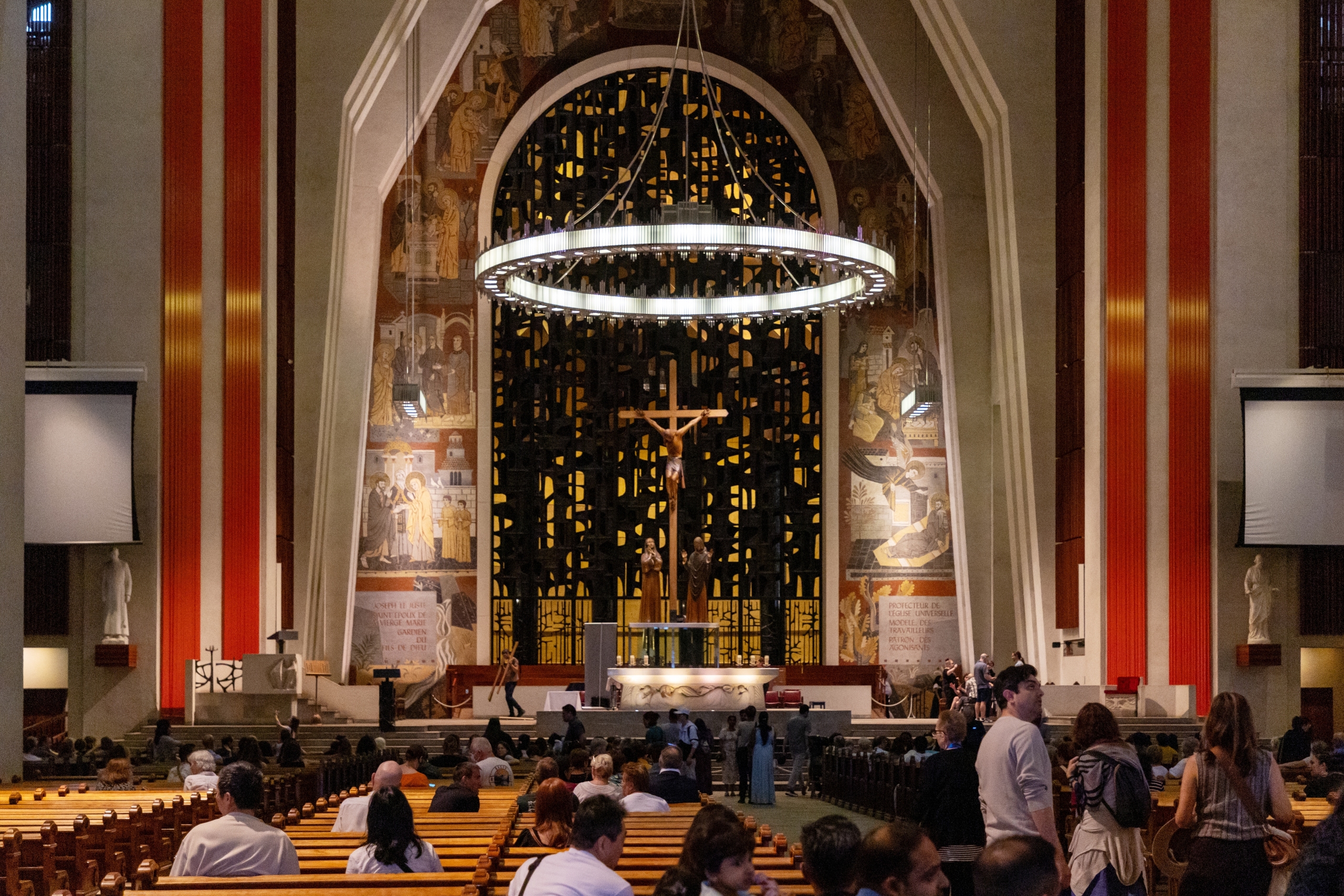
Inside, the basilica’s scale contrasts with the intimacy of the original chapel, which remains preserved nearby. The interior is characterized by restrained decoration, large volumes of light, and a focus on spatial clarity rather than ornamentation. Ex-votos—crutches, canes, and written testimonies—line certain areas, offering a material record of personal stories associated with the site.
The dome, one of the largest of its kind, frames the Oratory within the skyline of Montreal. Yet from within, attention is often directed downward and inward: toward candles, gestures, and moments of pause.
Rituals and practices
Pilgrimage at Saint Joseph’s Oratory unfolds through a combination of structured and informal practices. Liturgical celebrations take place daily, but many visitors engage in personal rituals independent of formal schedules.
Lighting candles is among the most common gestures, performed as an act of intention or remembrance. The ascent of the steps, whether on foot or on the knees, remains a visible expression of commitment. Periods of silence—within the basilica, in the crypt church, or in the surrounding gardens—form another central element.
The Oratory also hosts seasonal gatherings, with March 19, associated with Saint Joseph, marking a peak moment in the annual calendar. During these periods, the site becomes a dense field of movement, sound, and shared presence.
A site of healing and interpretation
Accounts of healing have been associated with the Oratory since its earliest years. While interpretations of these experiences vary, the site continues to function as a place where individuals articulate needs related to health, transition, and uncertainty.
From a contemporary perspective, such experiences can be understood in multiple ways: as expressions of faith, as psychological processes supported by ritual and environment, or as forms of meaning-making within a structured setting. The Oratory accommodates these interpretations without requiring a single framework.
This openness contributes to its relevance in a context where pilgrimage increasingly includes participants who do not identify with a specific religious tradition, but who seek spaces for reflection and reorientation.
The urban pilgrimage
Unlike remote sanctuaries, Saint Joseph’s Oratory is embedded within a major city. This proximity shapes the nature of the pilgrimage. Visitors may arrive by public transport, on foot through residential streets, or as part of organized groups. The transition from urban noise to relative quiet is immediate, rather than gradual.
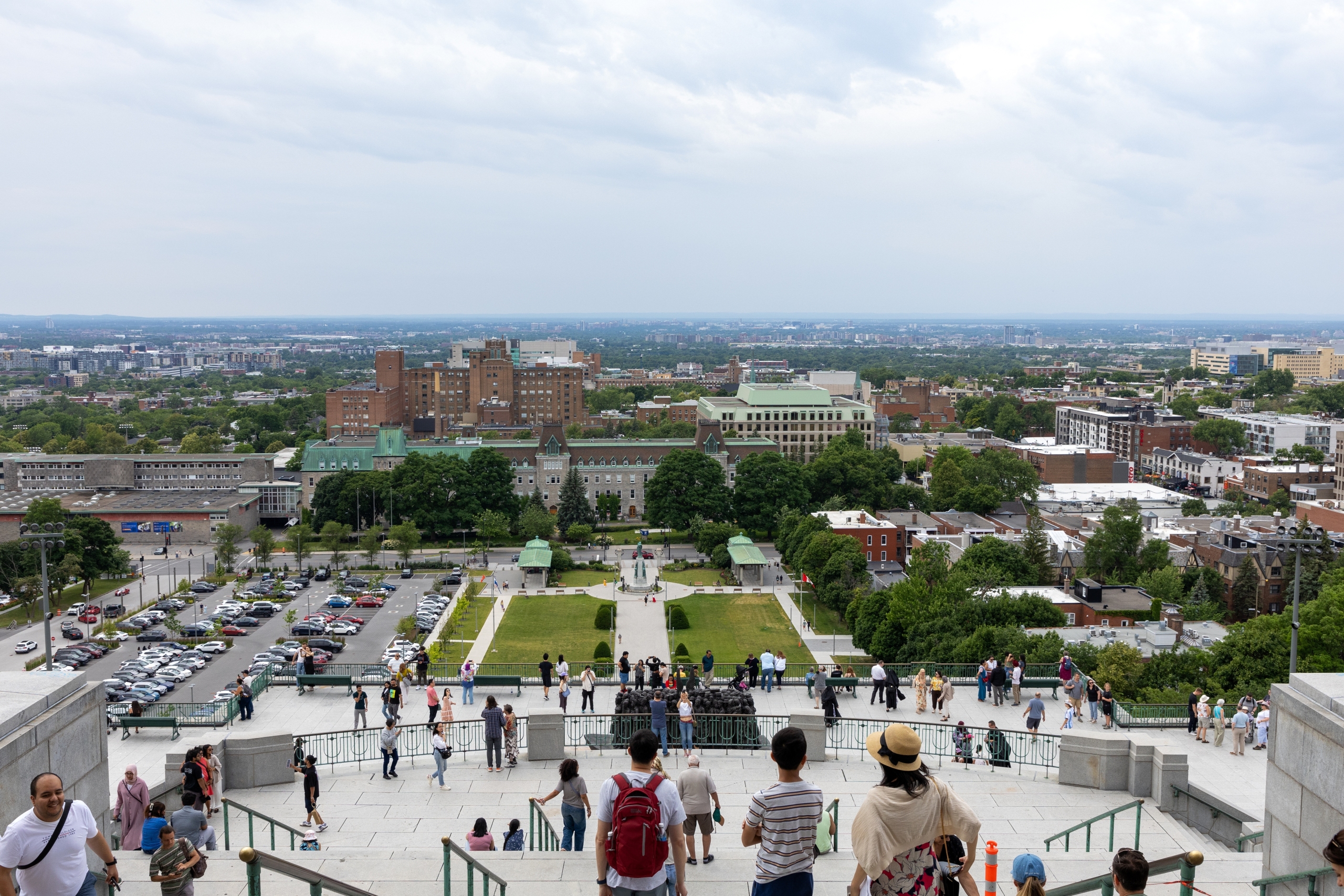
Mount Royal itself provides a broader landscape context. The Oratory’s gardens, pathways, and viewpoints extend the experience beyond the interior spaces, allowing for forms of walking that echo longer pilgrimage routes, albeit on a smaller scale.
This integration of urban and contemplative space reflects a broader trend: pilgrimage sites adapting to contemporary patterns of mobility while maintaining distinct zones of attention and pause.
Practical orientation
Saint Joseph’s Oratory is accessible year-round and does not require advance booking for general visits. Its location on Mount Royal places it approximately 15–20 minutes by car from central Montreal, with public transport options available.
Visitors planning a longer stay may find accommodation in nearby neighborhoods, while those seeking quieter conditions often choose early morning or weekday visits. Seasonal variation affects both climate and atmosphere: winter introduces snow and reduced foot traffic, while summer brings larger crowds and extended daylight.
As with many pilgrimage sites, one recommendation remains consistent: approach with attentiveness. The Oratory functions simultaneously as a place of worship, a historical monument, and a living social space. Awareness of this layered identity shapes the quality of the visit.
Continuity and return
At the end of the ascent, the city remains visible. Montreal stretches outward below the terraces, its streets and rhythms continuing uninterrupted. Yet the experience of the Oratory often introduces a shift in perception—subtle, but persistent.
Pilgrims and visitors descend the same steps they climbed. Some return regularly, integrating the site into the rhythm of their lives. Others visit once, carrying away a memory that resists easy classification.
Saint Joseph’s Oratory does not impose a single narrative. It offers a structure—architectural, spatial, and symbolic—within which individuals construct their own. In this sense, it reflects a broader evolution of pilgrimage: a practice that continues to gather people, even as the meanings they bring with them remain diverse.
AI Transparency Notice
PilgriMaps uses artificial intelligence tools to assist in the research, drafting and translation of editorial content. All AI-assisted content is reviewed, edited and verified by our editorial team before publication. We contrast information against primary sources, specialist literature and on-the-ground knowledge to ensure accuracy, cultural sensitivity and editorial integrity.
AI is one tool among many in our workflow. The judgement, curation and responsibility for everything published on this platform remain entirely human.
Viator Media S.L. — in compliance with the EU Artificial Intelligence Act (Regulation EU 2024/1689).
This post is also available in: