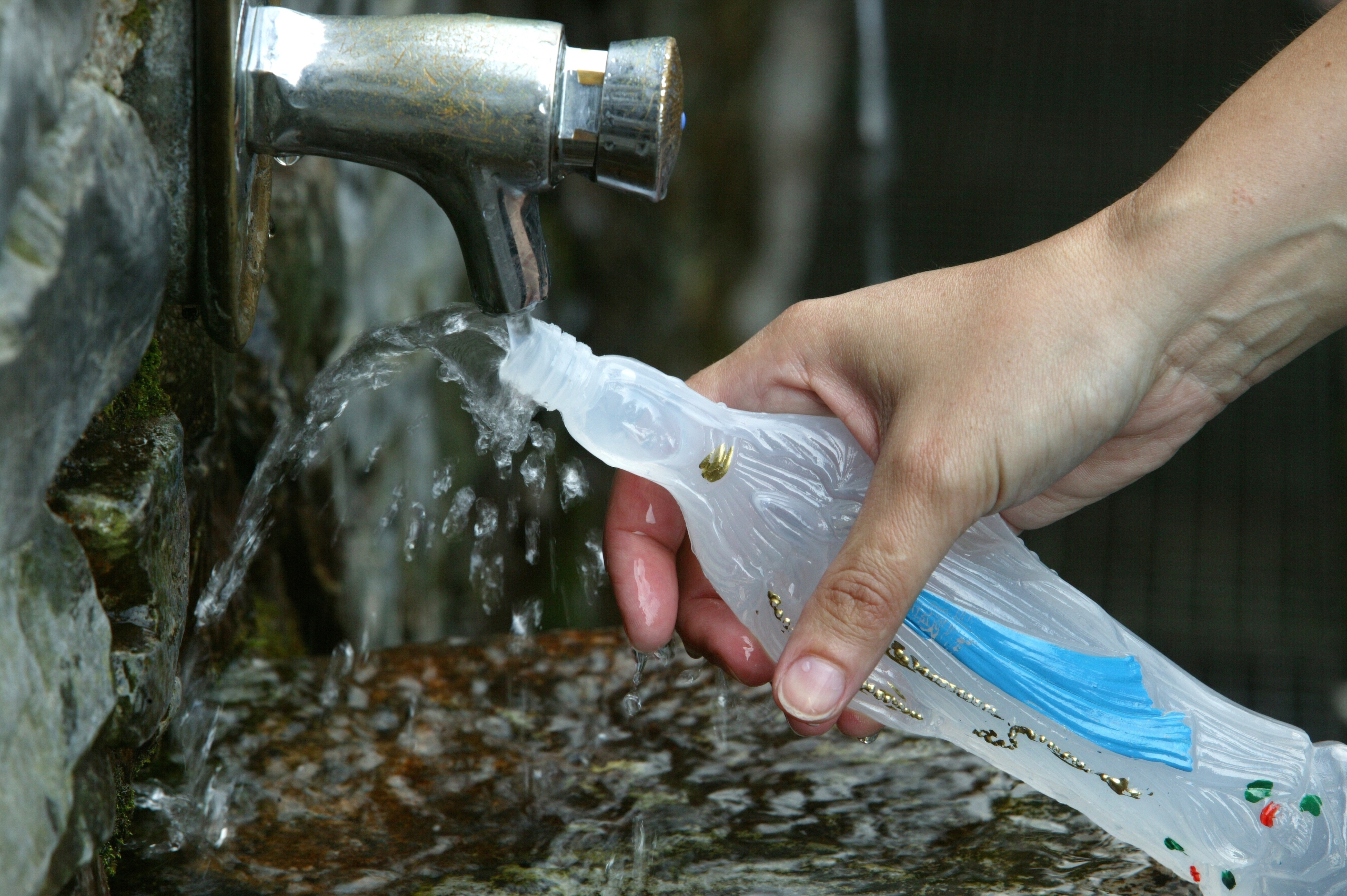
Each day in Lourdes, France, hundreds approach a spring in quiet reverence. Some kneel, others pray. Many fill small bottles; others carry jugs for entire parishes. This daily ritual has unfolded for over 150 years at the Grotto of Massabielle, near the Pyrenees. The spring is modest, but its reputation immense: this is the water of Lourdes.
More than just liquid, the spring has become a symbol. For some, it represents healing; for others, mystery. Universally, it is a phenomenon at the intersection of modern history, Catholic spirituality, and popular culture.
What Lourdes water is not
Before exploring its significance, it’s useful to clarify what Lourdes water is not—especially given common misconceptions.
First, it is not holy water. Unlike water from a liturgical source, Lourdes water must be blessed by a priest before it can be considered sacramental. This distinguishes it from holy water used in rites like baptism or blessing rituals.
Second, Lourdes water is never sold. It is freely available to all pilgrims. What is sold in religious shops are containers, and occasionally, the service of filling and shipping them.
Third, Lourdes water is not considered magical. Neither the Lourdes Sanctuary nor the Catholic Church claims it has inherent healing powers. Its value lies in the pilgrim’s act of faith and the intention behind it.
A spring unearthed by hand
The spring’s story begins in February 1858, when Bernadette Soubirous, a 14-year-old girl from a local family, reported a series of visions in the grotto near the River Gave. During the ninth encounter, on February 25, the figure—whom Bernadette described simply as a “Lady in white”—asked her to drink and wash in a spring. But no spring was visible.
Bernadette obeyed. She began digging with her hands. Water appeared—initially muddy, but by the following day, it flowed clear and steady. That flow has continued without interruption ever since.
Shortly after, reports of unexplained healings began circulating. Following investigations by medical and ecclesiastical authorities, the local bishop officially recognized the apparitions in 1862. Lourdes became a site of international pilgrimage.
Healing or suggestion? Medical review and belief
Since 1858, over 7,000 cases of healing have been documented in connection with Lourdes. Of these, only 72 have been officially recognized as “miraculous” by the Catholic Church. The small number reflects the scrutiny applied: the validation process is intentionally strict.
Cases are first reviewed by the Lourdes Medical Bureau. If initial findings suggest the event is medically inexplicable, it is escalated to the International Medical Committee of Lourdes. Only if a cure is found to be immediate, complete, lasting, and scientifically unaccountable can it be recognized as a miracle by the Church.
Chemical analyses confirm that the water is potable and relatively pure, but it contains no exceptional minerals or elements. Medical professionals and scholars often attribute beneficial outcomes to the placebo effect, emotional relief, or the supportive context of pilgrimage, which may encourage psychological resilience and hope.
Yet many pilgrims report transformations beyond the reach of diagnostics: a sense of peace, a return to inner balance, or renewed purpose. As Bernadette herself once said, “This water would have no virtue without faith.”
Rituals of touch and movement
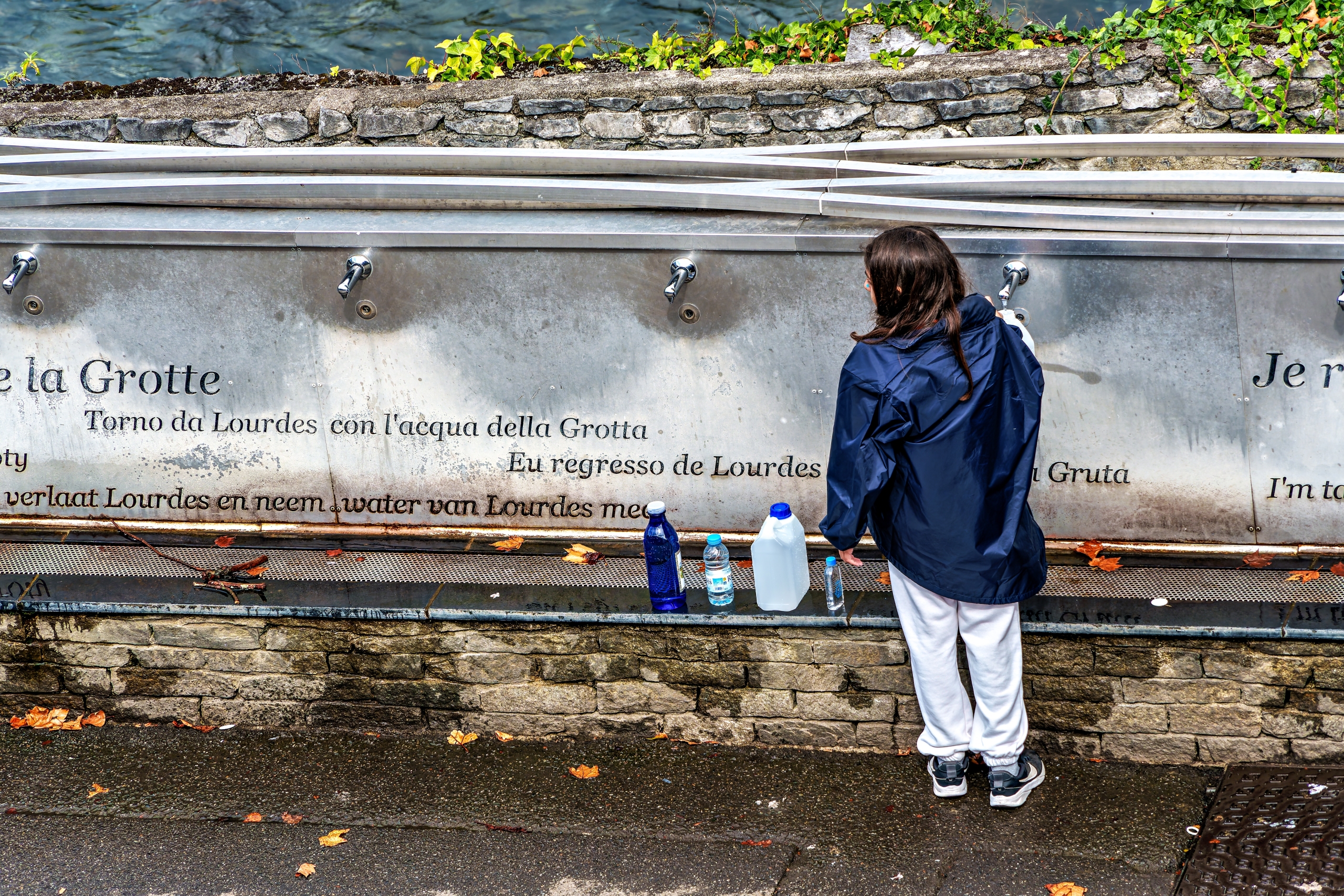
The Lourdes spring produces approximately 40 liters per minute. Its waters are channeled to various points across the sanctuary grounds, all freely accessible. Eighteen outdoor taps allow pilgrims to drink or collect water directly.
Seventeen immersion baths—separated by gender—permit visitors to briefly enter the spring water. This practice, while often likened to baptism, is symbolic rather than sacramental. It reflects the request made during the apparitions to “wash” as an act of openness and trust.
More than 300,000 people used the baths annually before COVID-related restrictions. In recent years, adapted protocols remain in place for public health reasons.
Many pilgrims take water home, often to share with parishioners, hospital patients, or family members. While the water itself remains free, religious shops offer containers—some prefilled—and online outlets sell bottles and shipping services. Some associations also distribute Lourdes water without charge in healthcare settings and religious communities.
Water in Christian tradition
Water has long functioned as a central motif in Christian symbolism—associated with life, purification, and transformation. From the waters of Genesis to the River Jordan, it marks the transition from chaos to order, illness to restoration.
Holy water, used to bless persons, places, and objects, echoes baptism. Yet Lourdes water, unless specifically blessed by a priest, is not sacramental. Its significance is performative: to drink it or wash with it is a gesture of personal commitment and inner openness.
In this way, Lourdes presents a tactile spirituality—one that invites direct interaction. The action of touching water becomes an enactment of belief, regardless of doctrinal interpretation.
A city where hope flows
Once a quiet Pyrenean village of 4,000 inhabitants, Lourdes now welcomes 5 to 6 million visitors annually. It is France’s second-largest hotel hub after Paris. Most arrive seeking physical, emotional, or spiritual healing.
The city is uniquely equipped to accommodate the ill and disabled. Volunteer organizations such as the Hospitalité Notre-Dame de Lourdes coordinate travel, accommodation, and ritual participation for those needing assistance. The infrastructure includes adapted bath facilities, processions, and support services designed with accessibility in mind.
Religious tourism drives much of the local economy. Yet Lourdes also holds a prominent place in cultural history. It has inspired literary works by Émile Zola and Franz Werfel, a 1943 Oscar-winning film (The Song of Bernadette), and countless documentaries. In popular language across many countries, “like something from Lourdes” often signals the inexplicable.
The city also hosts the World Day of the Sick, observed on February 11—the anniversary of Bernadette’s first vision—an initiative launched by Pope John Paul II to affirm the dignity of those experiencing illness.
In Lourdes, the water flows constantly. So too does the steady stream of individuals seeking comfort, insight, or reprieve. Some report physical cures; many more find emotional clarity or renewed strength. And in this quietly repetitive act—filling a bottle, entering a pool, saying a prayer—something persists: the belief that grace can surface in the simplest of gestures.
The secret connection between Ferrero Rocher and Marian devotion at Lourdes
AI Transparency Notice
PilgriMaps uses artificial intelligence tools to assist in the research, drafting and translation of editorial content. All AI-assisted content is reviewed, edited and verified by our editorial team before publication. We contrast information against primary sources, specialist literature and on-the-ground knowledge to ensure accuracy, cultural sensitivity and editorial integrity.
AI is one tool among many in our workflow. The judgement, curation and responsibility for everything published on this platform remain entirely human.
Viator Media S.L. — in compliance with the EU Artificial Intelligence Act (Regulation EU 2024/1689).
This post is also available in: