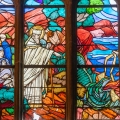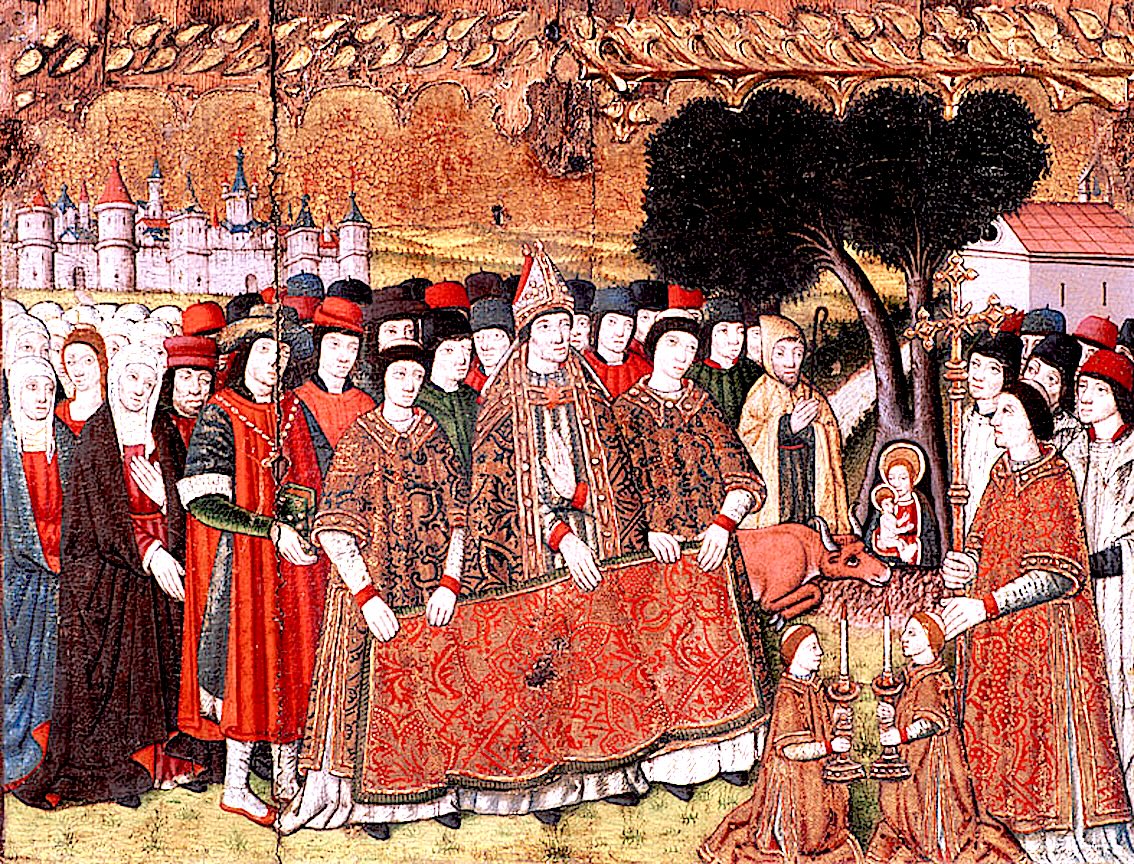
Picture a pastoral scene: a shepherd boy guiding his flock across a quiet hillside. One animal grows restless, strays, or darts toward a crag. The boy follows—and finds something he wasn’t looking for: a small image of the Virgin Mary, hidden in rock, nestled inside a hollow tree, or emerging from a spring.
Startled, he runs to the village. News spreads quickly. A chapel is erected, processions begin, and over time a sanctuary arises at the site. This narrative—of a humble discovery leading to lasting veneration—has echoed for centuries across the villages, valleys, and sierras of Spain. Its persistence invites reflection: why does this pattern repeat with such fascination and regularity?
A recurring narrative structure
The structure is remarkably consistent. It underpins major local traditions across Spain, including the Virgin of Núria (Catalonia), El Rocío (Andalusia), Guadalupe (Extremadura), and Almudena (Madrid), among hundreds of others. In most cases, the image appears in a crevice, spring, cave, or tree trunk. From the location comes the name—Guadalupe, for instance, is believed to derive from the Arabic wadi (valley or river)—and the symbolic strength of what is hidden and then revealed.
Often, a fantastical element heightens the tale: animals that refuse to eat, strange lights, sudden healings. But at its core lies a simple pattern—someone stumbles upon an object of devotion, often modest in scale and form, which seems to rise from the earth as a sign. The widespread retelling of this motif helped reinforce Spain’s identity in popular imagination as la tierra de María—a land marked by Marian presence.
Historical memory and hidden icons
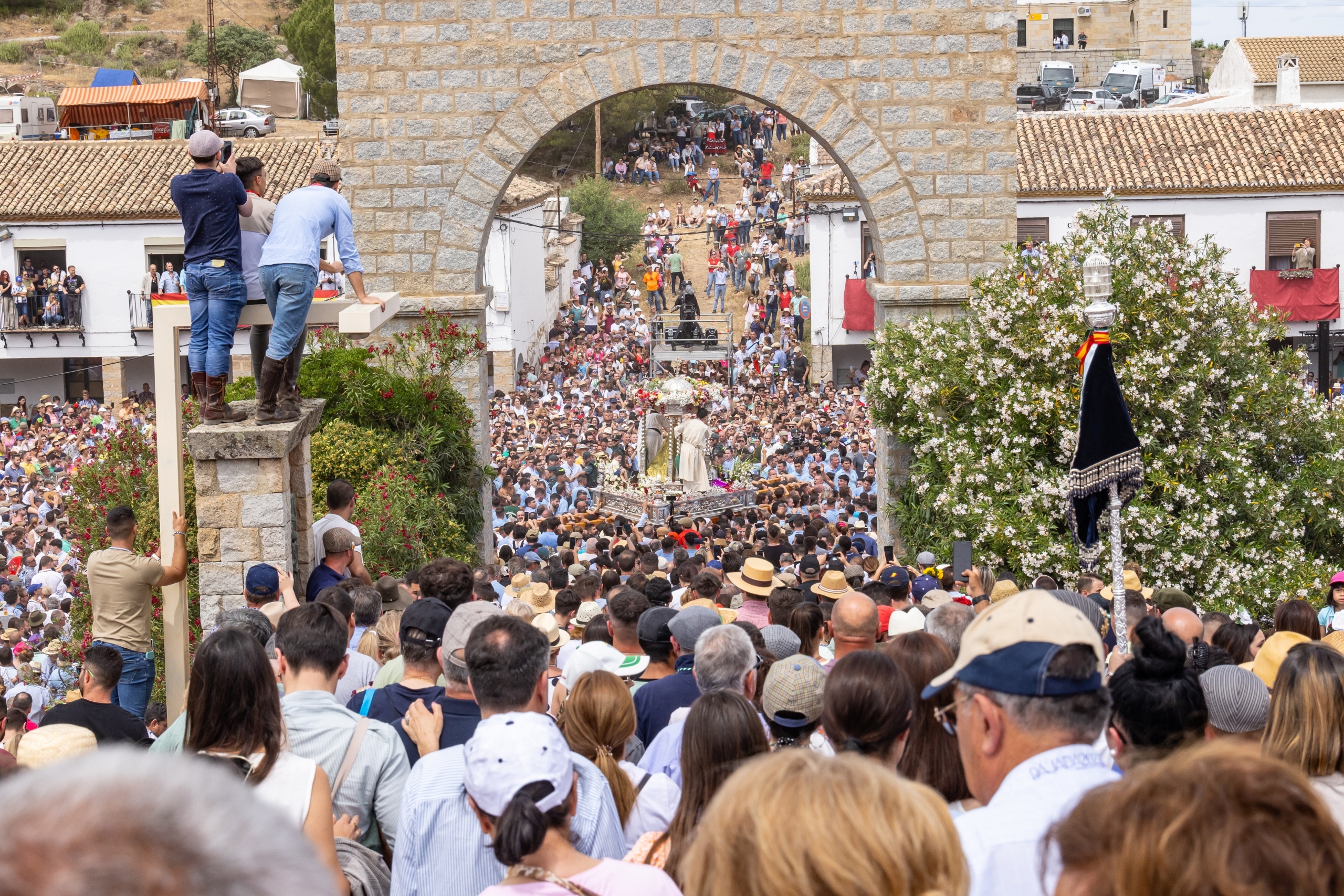
To understand the deeper resonance of these discoveries, historical context is essential. During the Muslim governance of the Iberian Peninsula (711–1492 CE), Christian communities—especially Mozarabs—frequently concealed religious images to protect them from destruction or erasure. When these icons were recovered centuries later, the act of rediscovery was often interpreted not as historical chance, but as divine intervention.
Similar dynamics played out during other periods of upheaval, such as the Peninsular War against Napoleonic forces (1808–1814) and the Spanish Civil War (1936–1939). In both cases, local communities hid devotional objects, which reappeared after the conflict, their presence reinterpreted through the lens of communal survival and restored memory.
The tradition extended across the Atlantic. In Brazil, the image of Our Lady of Aparecida was found in a river by fishermen in 1717; in Costa Rica, the Virgin of Los Ángeles was discovered by an Indigenous girl in the 17th century. As in Spain, these discoveries emerged not from elite initiative but from everyday life—a feature that continues to ground their symbolic power in the realm of the ordinary.
Reconquest and the symbolic power of discovery
The centuries of the Christian Reconquest (11th–15th centuries CE) were crucial in shaping these traditions. Each rediscovered image became a political and spiritual symbol, framed as divine endorsement of Christian expansion across the peninsula. The proliferation of these narratives during this period is striking. In the former territories of the Crown of Aragon alone, over 200 distinct “Discovered Virgins” have been recorded. Nearly every village claimed one.
Origin stories—often legendary—connected these images to the earliest periods of Iberian Christianity. Some traditions claimed they had been brought by the apostles or even painted by Luke the Evangelist. Though such accounts are clearly folkloric, they helped root the rediscovered icons in a lineage of continuity, reinforcing the idea of a spiritual return as Christian control reasserted itself over formerly Muslim territories.
Local identity and communal memory
Beyond their religious content, these stories function as foundational myths. The discovered images serve as collective anchors: defining territory, preserving memory, and reinforcing shared identity. Their locations often evolve into pilgrimage sites, local festivals, and cultural centers, especially in rural regions where such traditions help shape social cohesion.
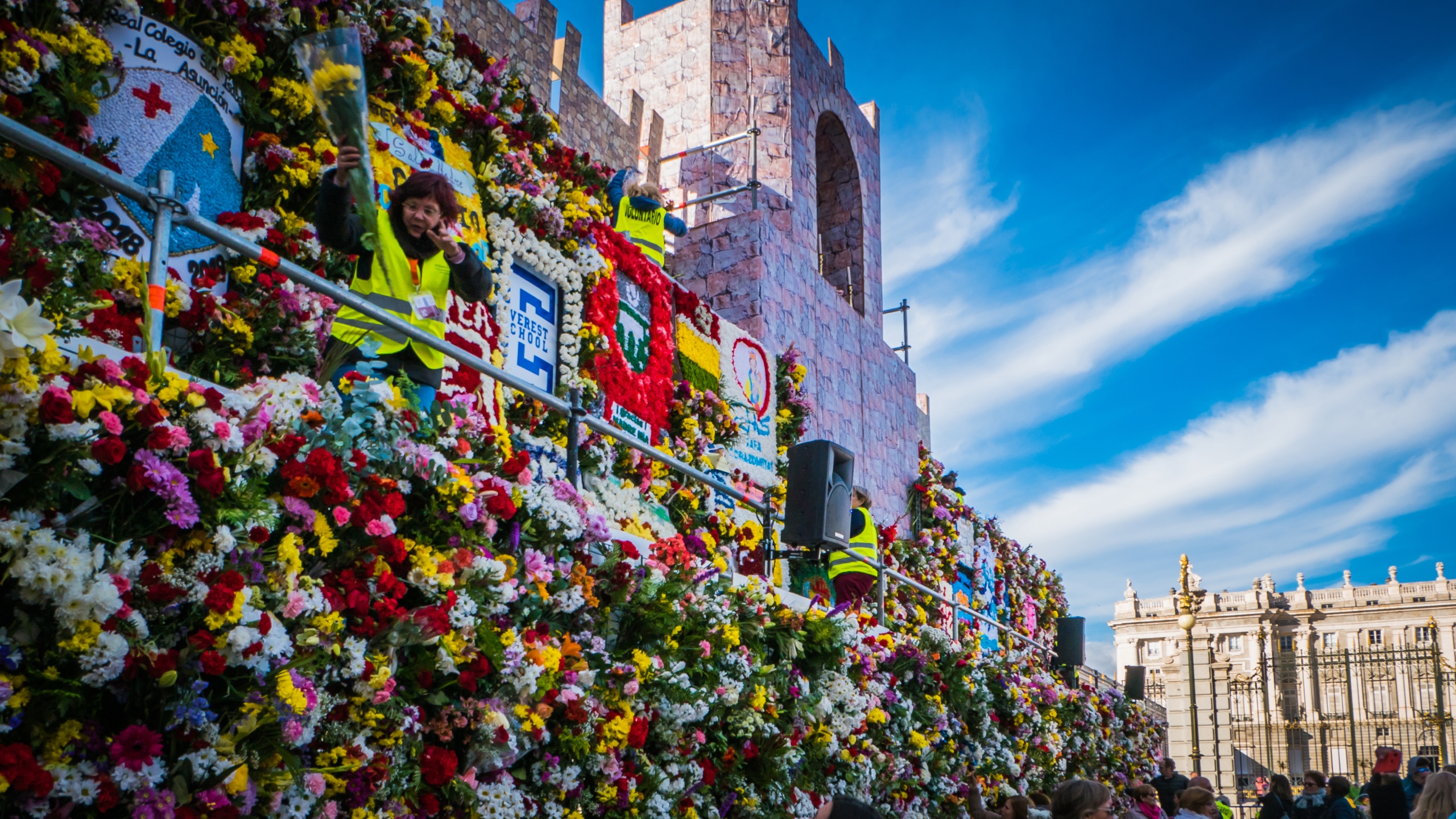
Importantly, the discoverers are almost always depicted as humble figures—shepherds, children, or villagers—never the powerful or wealthy. This consistent narrative underscores a form of religiosity rooted in proximity and daily life, where the sacred does not impose itself but emerges unexpectedly.
These devotions inspire vernacular architecture, oral storytelling, pilgrimage paths, and seasonal festivities. The sanctuaries built at these sites often harmonize with the natural surroundings, integrating local materials and traditional forms. Many include museums, offer guided routes, or serve as focal points for regional crafts and cuisine.
A living tradition
Today, these traditions persist at the intersection of faith, heritage, and tourism. The 8th of September – marking the Nativity of Mary in the Catholic liturgical calendar – is a major celebration in many communities. In other regions, the commemorative date aligns with the specific day the image was allegedly found, reflecting localized variations in practice.
Modern visitors may attend processions, explore rural chapels, or walk historic trails leading to the shrines. Whether approached as cultural heritage, spiritual journey, or community gathering, these spaces continue to evolve while preserving centuries-old narratives.
The “Discovered Virgins” are not defined by divine apparitions but by unexpected finds that grow into enduring symbols. Their legacy speaks to how communities respond to disruption, preserve memory, and express identity through place and story. From Spain to Latin America, the pattern remains remarkably resilient.
At the edge of a spring, in the hollow of a tree, or along a windswept ridge, the story retells itself: not in thunderous revelations, but in quiet moments of rediscovery that transform landscape into meaning.
AI Transparency Notice
PilgriMaps uses artificial intelligence tools to assist in the research, drafting and translation of editorial content. All AI-assisted content is reviewed, edited and verified by our editorial team before publication. We contrast information against primary sources, specialist literature and on-the-ground knowledge to ensure accuracy, cultural sensitivity and editorial integrity.
AI is one tool among many in our workflow. The judgement, curation and responsibility for everything published on this platform remain entirely human.
Viator Media S.L. — in compliance with the EU Artificial Intelligence Act (Regulation EU 2024/1689).
This post is also available in: