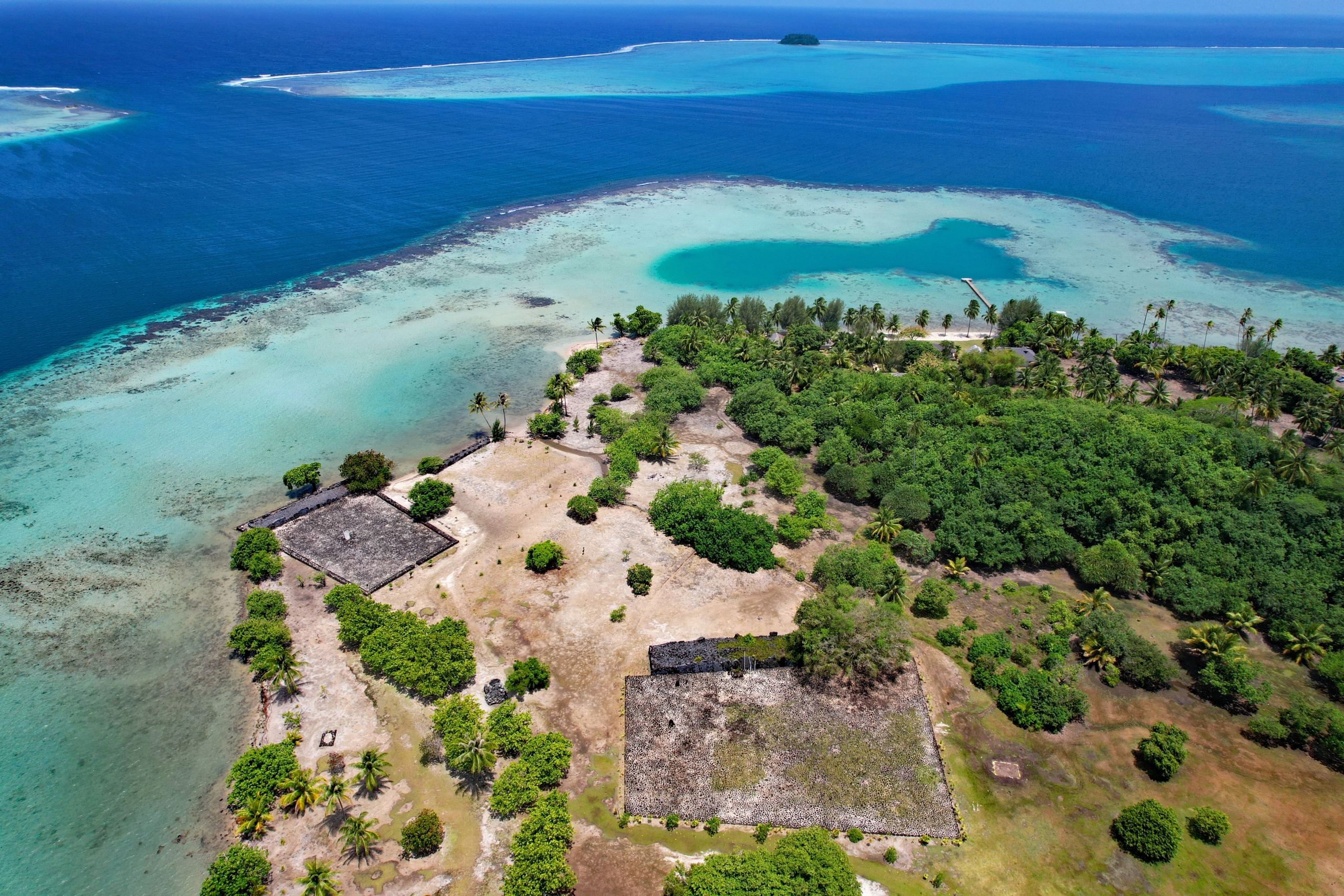
On the southeastern coast of Raiatea, very close to famous Bora Bora and facing a broad lagoon and the open Pacific beyond, lies Taputapuātea – an expansive stone marae complex that once functioned as one of the most influential pilgrimage centers in Polynesia.
Long before modern borders divided the Pacific into nation-states, this site anchored a shared cultural geography linking islands thousands of kilometers apart. Chiefs, navigators, ritual specialists, and envoys traveled by canoe to Raiatea, not as isolated visitors but as participants in a transoceanic network of exchange, learning, and political alignment.
Taputapuātea’s significance rests less on monumentality than on connectivity. Its power derived from its role as a meeting point – a place where genealogies, navigational knowledge, and social authority converged. For centuries, it served as a destination for long-distance ritual journeys that structured Polynesian history as much through movement as through settlement.
Geography and sacred orientation
Taputapuātea occupies a low coastal platform between the lagoon and the mountains of Raiatea’s interior. The setting is deliberate. The site aligns with the horizon, the sea lanes, and celestial reference points essential to Polynesian navigation. From here, traditional voyaging routes radiated outward across the Pacific, linking Raiatea with Hawaiʻi, Aotearoa (New Zealand), Rapa Nui (Easter Island), and numerous archipelagos in between.
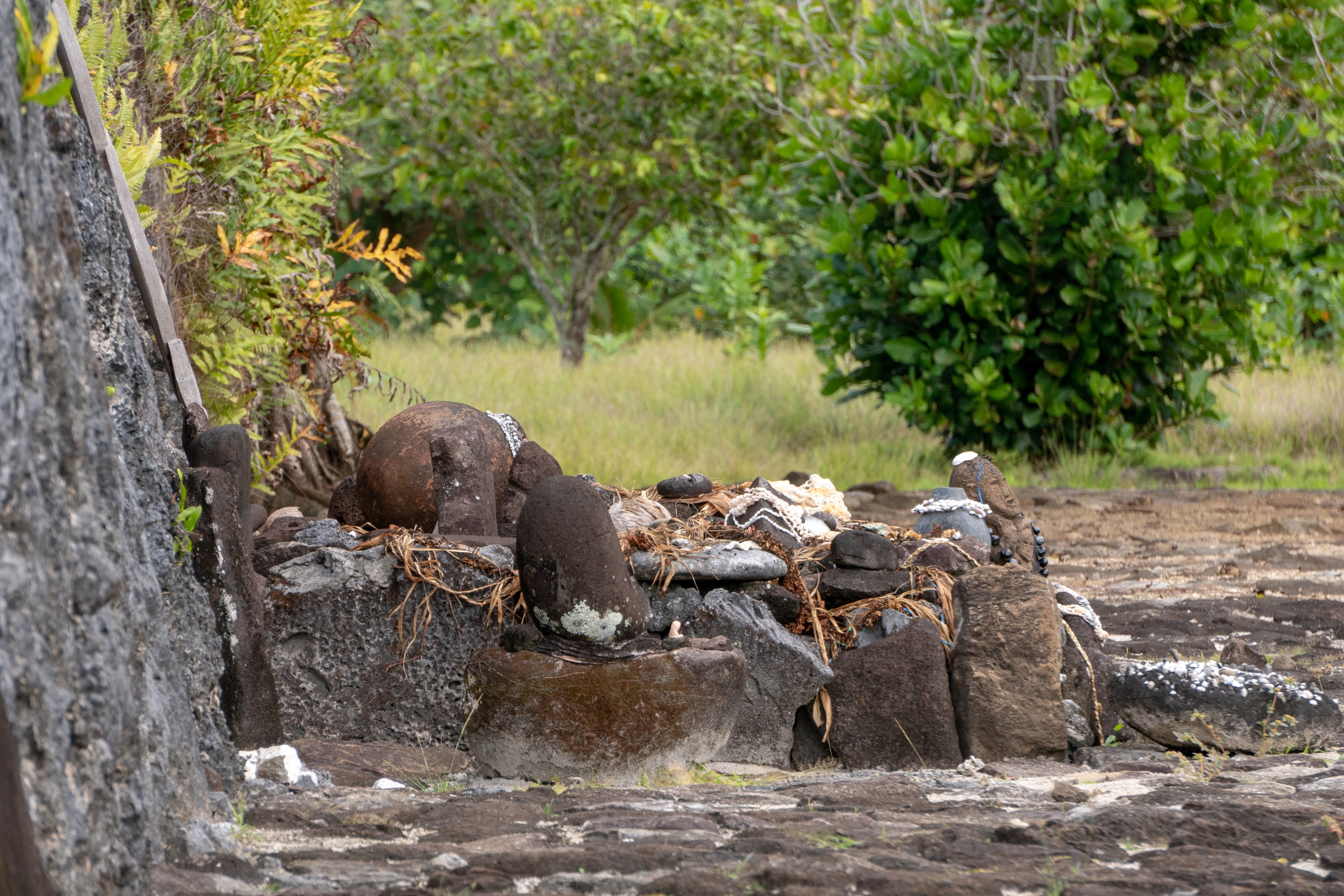
The physical layout reflects this orientation. Dry-stone walls enclose open courtyards, with upright slabs and altars arranged toward the water. Rather than enclosing worshippers, the architecture frames space, sky, and sea – elements inseparable from Polynesian cosmology and travel practice. Pilgrimage to Taputapuātea was therefore also a journey into a carefully calibrated landscape where geography and ritual knowledge intersected.
A hub of ritual travel
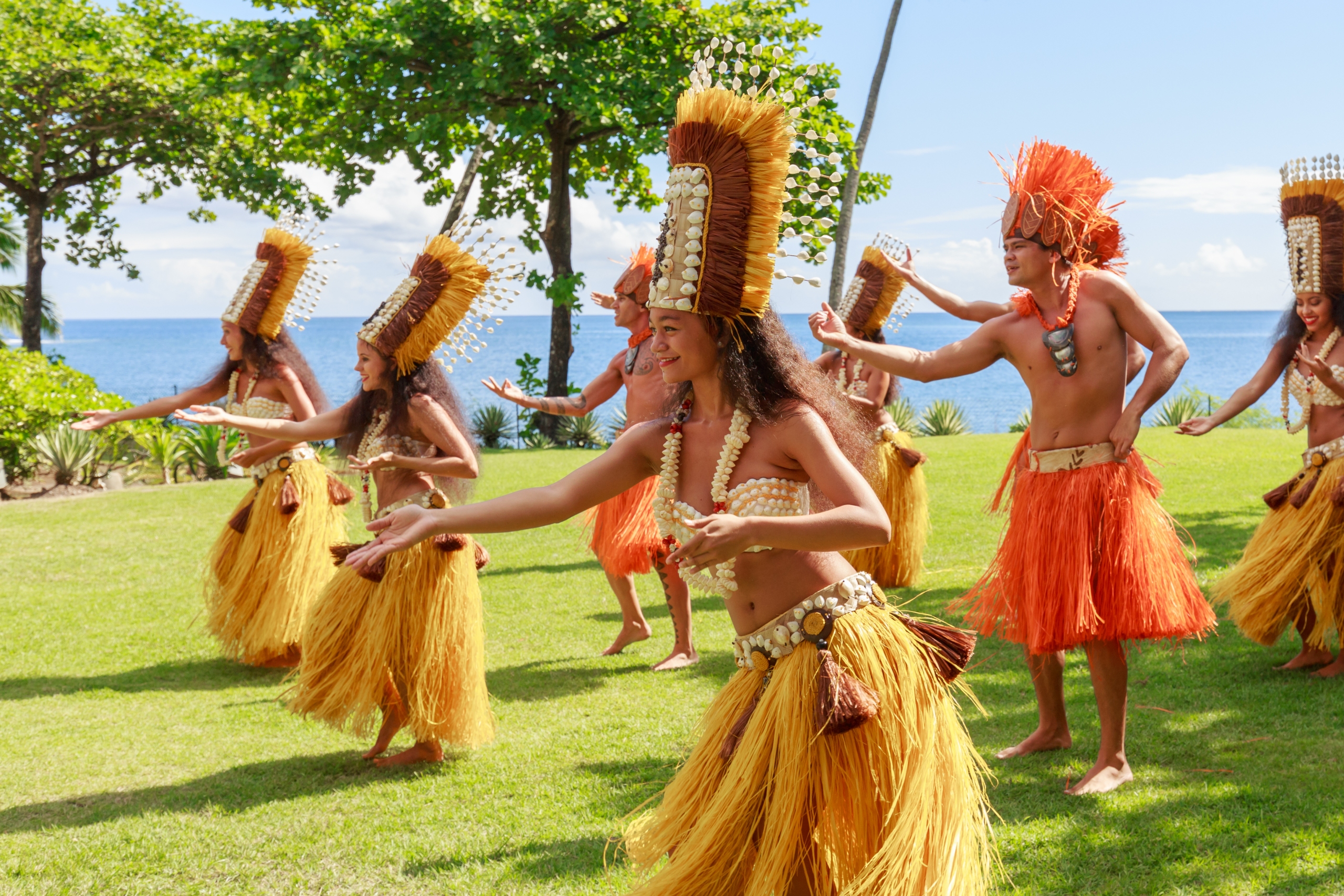
From roughly 1000 CE onward, Taputapuātea became closely associated with a regional system of marae dedicated to shared deities, genealogical lineages, and political alliances. Chiefs and priests undertook voyages to Raiatea to legitimize authority, renew alliances, or participate in ceremonies that reaffirmed connections among distant communities.
These journeys followed established maritime corridors, guided by stars, ocean swells, bird behavior, and seasonal patterns. Pilgrimage in this context was inseparable from navigation itself. To arrive at Taputapuātea was to demonstrate mastery of the ocean and familiarity with a shared cultural framework extending across Polynesia.
The site also functioned as a place of instruction. Knowledge—especially navigational expertise and ritual protocols—was transmitted face-to-face. Pilgrims did not simply visit; they participated, observed, and returned home carrying practices that reinforced cultural cohesion across vast distances.
Political and cultural authority
Taputapuātea’s prominence was tied to its role in establishing and maintaining political legitimacy. Rulers from other islands recognized Raiatea as a source of ancestral authority, and ceremonies performed at the marae conferred recognition that could not be replicated locally. This made pilgrimage a strategic act, intertwining ritual travel with governance.
Archaeological evidence suggests successive phases of expansion and reconfiguration, indicating that the site evolved in response to changing regional dynamics. New platforms and walls marked shifts in power relationships, while continuity of use reinforced Taputapuātea’s long-standing prestige.
Importantly, this authority was not centralized in a single polity. Instead, it depended on shared recognition. Pilgrimage sustained that recognition by periodically renewing personal and communal ties to the site.
Disruption and survival
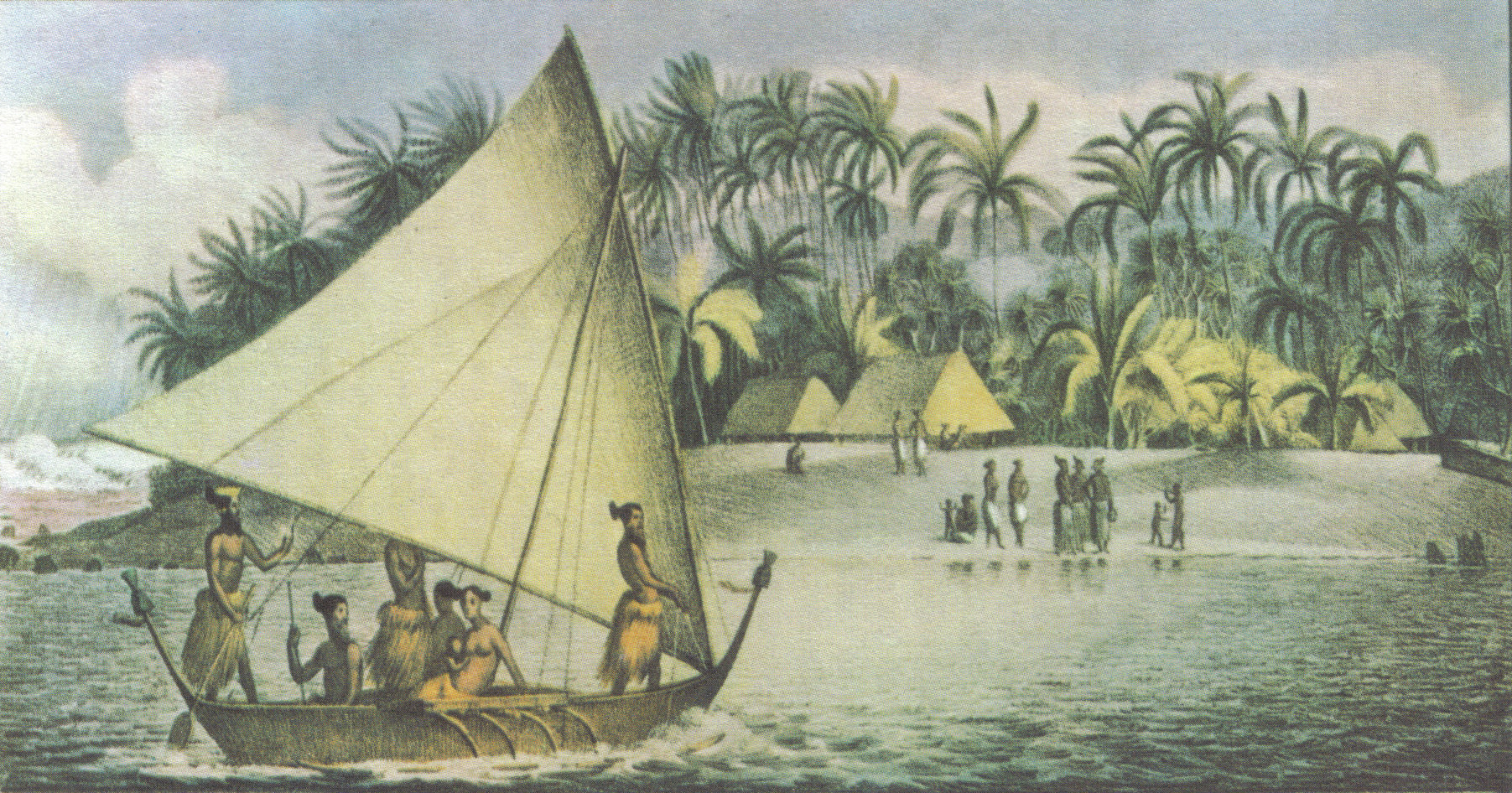
European contact in the late 18th century profoundly altered pilgrimage patterns across Polynesia. Missionary activity, colonial administration, and demographic decline disrupted traditional travel networks. At Taputapuātea, ritual use diminished, and parts of the complex fell into disrepair.
Yet the site was never erased from cultural memory. Oral traditions preserved its significance, and local communities maintained a relationship with the land, even as practices changed. In the late 20th and early 21st centuries, renewed interest in Polynesian navigation and heritage sparked efforts to restore and reinterpret the site.
Recognition of Taputapuātea as a UNESCO World Heritage Site in 2017 formalized its global significance, framing it as a testament to Polynesian seafaring and cultural exchange rather than as a relic of a single tradition.
Contemporary pilgrimage and return
Today, Taputapuātea attracts a different kind of pilgrimage—one shaped by heritage tourism, cultural revitalization, and diasporic return. Visitors arrive by plane rather than canoe, yet many describe their journey in terms of reconnection rather than sightseeing.
Cultural practitioners from across Polynesia continue to visit the site for ceremonies, educational programs, and commemorative voyages. These gatherings echo earlier patterns of movement, reaffirming relationships among islands and communities separated by colonial histories but linked through shared ancestry.
For travelers, the experience is deliberately understated. There are no towering monuments or dramatic reconstructions. Instead, Taputapuātea invites slow engagement: walking along stone alignments, observing the lagoon’s changing light, and recognizing the site as part of a living landscape rather than a static ruin.
Visiting Taputapuātea today
Access to Taputapuātea is straightforward, located a short drive from Uturoa, Raiatea’s main town. Interpretive panels provide historical context, and guided visits are available for those seeking deeper insight into Polynesian navigation and social organization.
Respectful behavior is essential. The site remains culturally significant, and visitors are encouraged to follow posted guidelines, stay on marked paths, and approach the space with awareness of its ongoing role in community life.
A pilgrimage defined by movement
Taputapuātea challenges conventional ideas of pilgrimage as travel toward a single sacred center. Instead, it represents a node within a dynamic network—a place whose meaning emerged through repeated journeys, exchanges, and returns. Its legacy lies not only in stone structures but in the routes that once converged there and the cultural knowledge carried across the Pacific.
As a pilgrimage site, Taputapuātea speaks to mobility as a foundation of culture. It reminds visitors that, in Polynesia, the sea was not a barrier but a pathway—and that pilgrimage could span an ocean.
AI Transparency Notice
PilgriMaps uses artificial intelligence tools to assist in the research, drafting and translation of editorial content. All AI-assisted content is reviewed, edited and verified by our editorial team before publication. We contrast information against primary sources, specialist literature and on-the-ground knowledge to ensure accuracy, cultural sensitivity and editorial integrity.
AI is one tool among many in our workflow. The judgement, curation and responsibility for everything published on this platform remain entirely human.
Viator Media S.L. — in compliance with the EU Artificial Intelligence Act (Regulation EU 2024/1689).
This post is also available in: