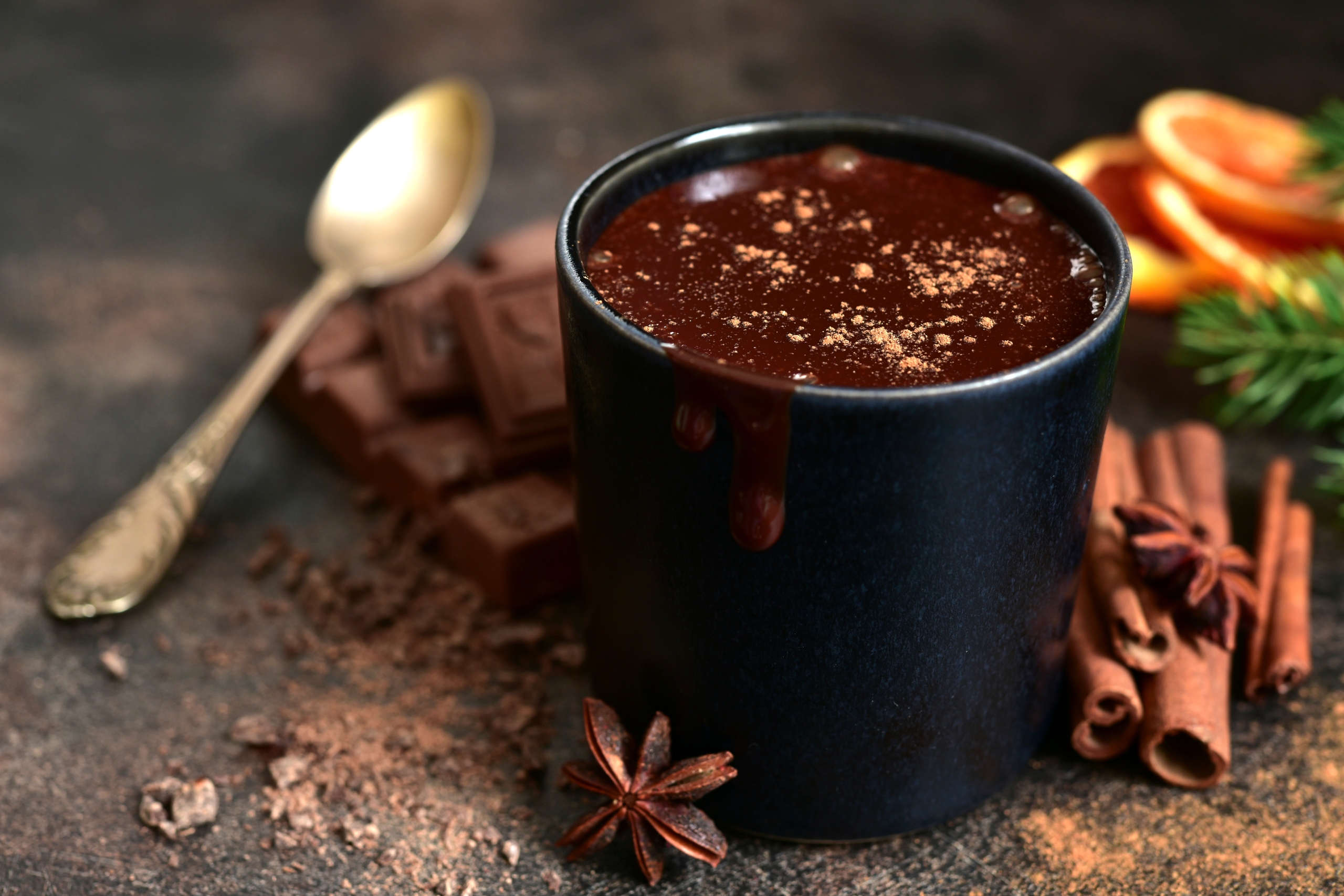
On winter evenings in Malta, when December light settles early across the limestone towns and harbors, a single aroma defines the season: the warm, spiced scent of Imbuljuta tal-Qastan. This traditional chestnut drink—served hot, thickened with cocoa, and perfumed with citrus peel—occupies a distinct place in Maltese festive culture. It signals a moment of transition each year, linking community gathering, seasonal observance, and the memory of older patterns of winter hospitality.
Although today it appears as a familiar comfort, Imbuljuta summarizes a long history shaped by Mediterranean contact. Its chestnuts evoke older European winter staples; its cocoa points to early modern global routes; its spices recall exchange networks across the Mediterranean basin. The drink does not originate in a single documented moment. Instead, it developed gradually as Maltese households blended imported ingredients with local practice, producing a beverage that eventually came to anchor the close of Christmas Eve.
A Maltese winter tradition
Imbuljuta tal-Qastan is prepared by simmering chestnuts—often soaked in advance—with cocoa or chocolate, sugar, citrus zest, and spices such as cinnamon or cloves. The result is a thick, aromatic drink closer in texture to a light dessert than to a simple infusion. Families prepare it in large pots, especially on 24 December, when it is served after the late-evening gathering that marks the transition into Christmas Day.
In earlier generations, villagers returning from churches across Malta and Gozo often shared Imbuljuta in kitchens, squares, or parish courtyards. In many households it became the first taste of Christmas: warming, communal, and unmistakably seasonal. Although the islands’ winters are relatively mild, the drink occupies the psychological role that mulled beverages play further north—an emblem of winter conviviality, scented with ingredients that carry long histories.
Tracing the origins of the drink
The precise origins of Imbuljuta remain somewhat undocumented, but its components offer clues. Chestnuts circulated widely in the central Mediterranean from antiquity onward, whether grown locally in limited quantities or brought in by traders. Cocoa and chocolate arrived in Malta through early modern maritime exchange, first as luxury imports and later as accessible household ingredients. Citrus—strongly associated with Maltese agriculture—adds local character, while spices such as cinnamon, cloves, and nutmeg reflect centuries of Mediterranean movement.
Taken together, these threads suggest that Imbuljuta emerged gradually between the late medieval and early modern periods as seasonal cooking adapted to new tastes and trade flows. Its survival into the present reflects the drink’s integration into the Maltese Christmas rhythm rather than any specific historical event. What persists is not a single origin story but a seasonal habit—devised in domestic kitchens, repeated across generations, and now recognized as part of the islands’ winter identity.
Christmas in Malta: A broad cultural landscape
Christmas in Malta is a blend of Mediterranean traditions, community customs, and the islands’ long engagement with early Christian history. According to the Acts of the Apostles, Paul was shipwrecked on the Maltese coast in the 1st century CE, and the text presents this episode as the moment when a Christian community first took shape on the archipelago. Indeed, archaeological evidence—including the most important catacombs outside of Rome, and late-antique architectural remains—indicates that Malta and Gozo hosted established Christian communities well before the medieval era. This deep chronological layer shapes how the season is framed on the islands today.
By early December, towns and villages fill with concerts, markets, and small exhibitions. The Maltese presepju—the archipelago’s famed creches—remains a central feature of the domestic landscape. Families construct nativity scenes enhanced with miniature landscapes, windmills, or rural villages; some parishes host large mechanical cribs crafted by local artisans. The sprouting of vetch seeds, known as ġulbiena, continues as a household practice. Grown on damp cotton, the pale shoots decorate windowsills and cribs, offering a visual counterpart to the season’s light.
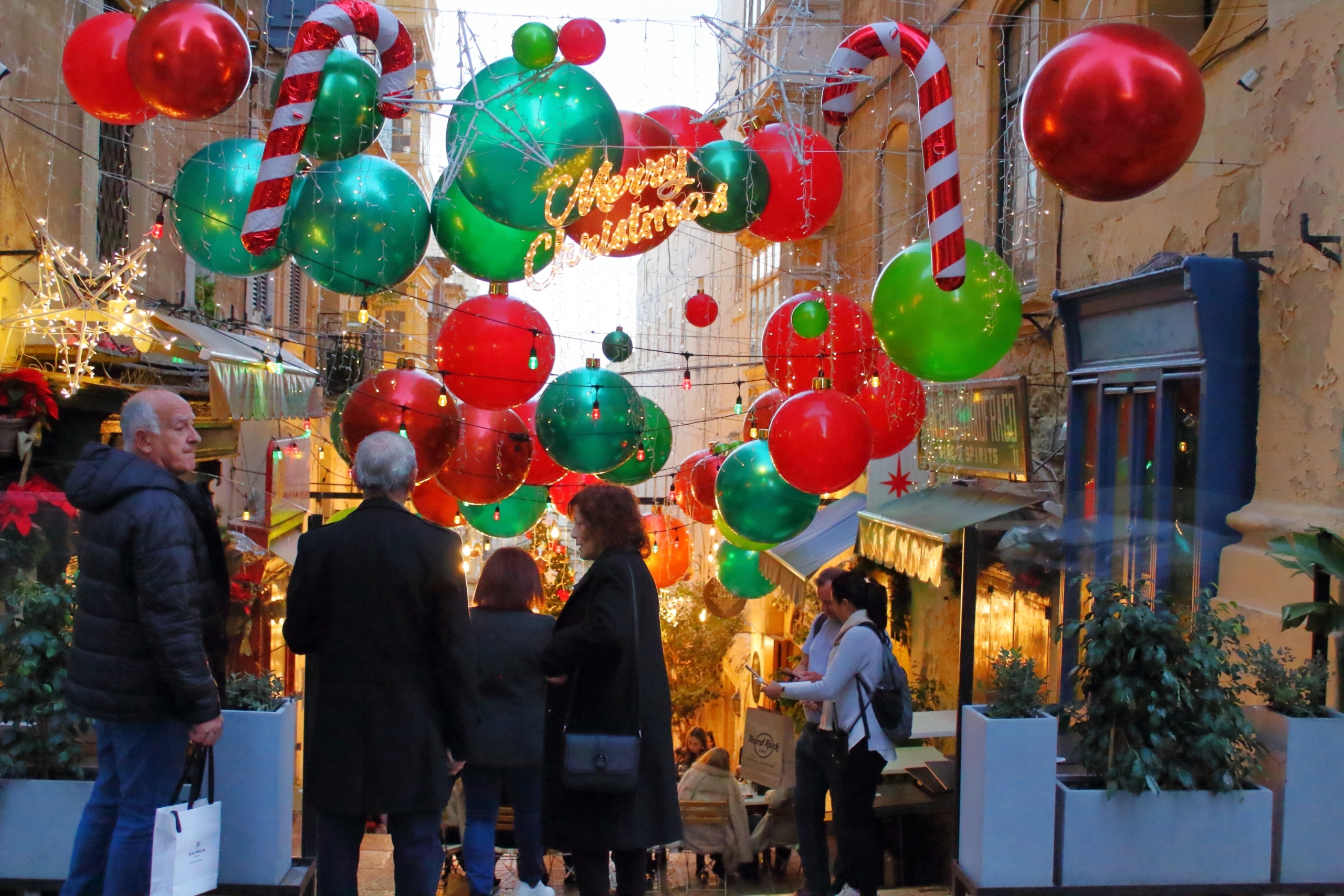
The rhythm of 24 December remains important across the islands. Many families attend the late-night gathering at their parish, a tradition that has evolved over centuries. The return home afterward marks the moment when Imbuljuta appears on tables alongside sweet pastries or citrus. This transition from communal gathering to domestic warmth defines the Maltese experience of Christmas Eve: quiet streets, stone alleys lit by festive decorations, and the familiar scent of spices drifting from kitchens.
Presepi Maltesi: A craft tradition traveling far beyond the Archipelago
Christmas Day itself brings extended family meals that blend local and international dishes. Roast meats, baked pasta, and honey rings (qagħaq tal-għasel) share the table with more contemporary additions. Although visitor numbers increase during December, the season retains a distinctly local character: anchored in neighborhoods, shaped by village rhythms, and expressed through food and craft as much as through formal observance.
Culinary memory and seasonal movement
For travelers interested in pilgrimage routes, seasonal festivals, and the interplay of landscape and ritual, Imbuljuta tal-Qastan reveals how winter traditions develop in island societies where histories overlap and influences circulate. The drink stands at the intersection of domestic practice and collective memory: prepared in households, shared after nightly gatherings, and recalled each year as part of the sensory geography of Maltese wintertime.
Its endurance illustrates how food can mark cycles of time. While the calendar may change, the act of stirring chestnuts and spices into a thick, fragrant drink links past and present. By tasting it, one enters a seasonal rhythm shaped by centuries of Mediterranean exchange and by Malta’s long association with early Christianity—an association that endures not as doctrine but as cultural memory embedded in narratives, sites, and seasonal habits.
A living tradition
Today, Imbuljuta tal-Qastan continues to accompany the quiet hours of Christmas Eve, connecting Maltese families to a seasonal practice that has evolved yet remains recognizable across generations. It exemplifies how a modest dish can become a marker of collective identity, a bridge between the domestic hearth and the wider landscape of winter celebration.
For visitors, seeking out a cup of Imbuljuta during the festive season provides a modest but resonant form of cultural encounter. It offers a glimpse of how Malta navigates winter: through light, community, craft, and a cup of something warm carried across time.
AI Transparency Notice
PilgriMaps uses artificial intelligence tools to assist in the research, drafting and translation of editorial content. All AI-assisted content is reviewed, edited and verified by our editorial team before publication. We contrast information against primary sources, specialist literature and on-the-ground knowledge to ensure accuracy, cultural sensitivity and editorial integrity.
AI is one tool among many in our workflow. The judgement, curation and responsibility for everything published on this platform remain entirely human.
Viator Media S.L. — in compliance with the EU Artificial Intelligence Act (Regulation EU 2024/1689).
This post is also available in: