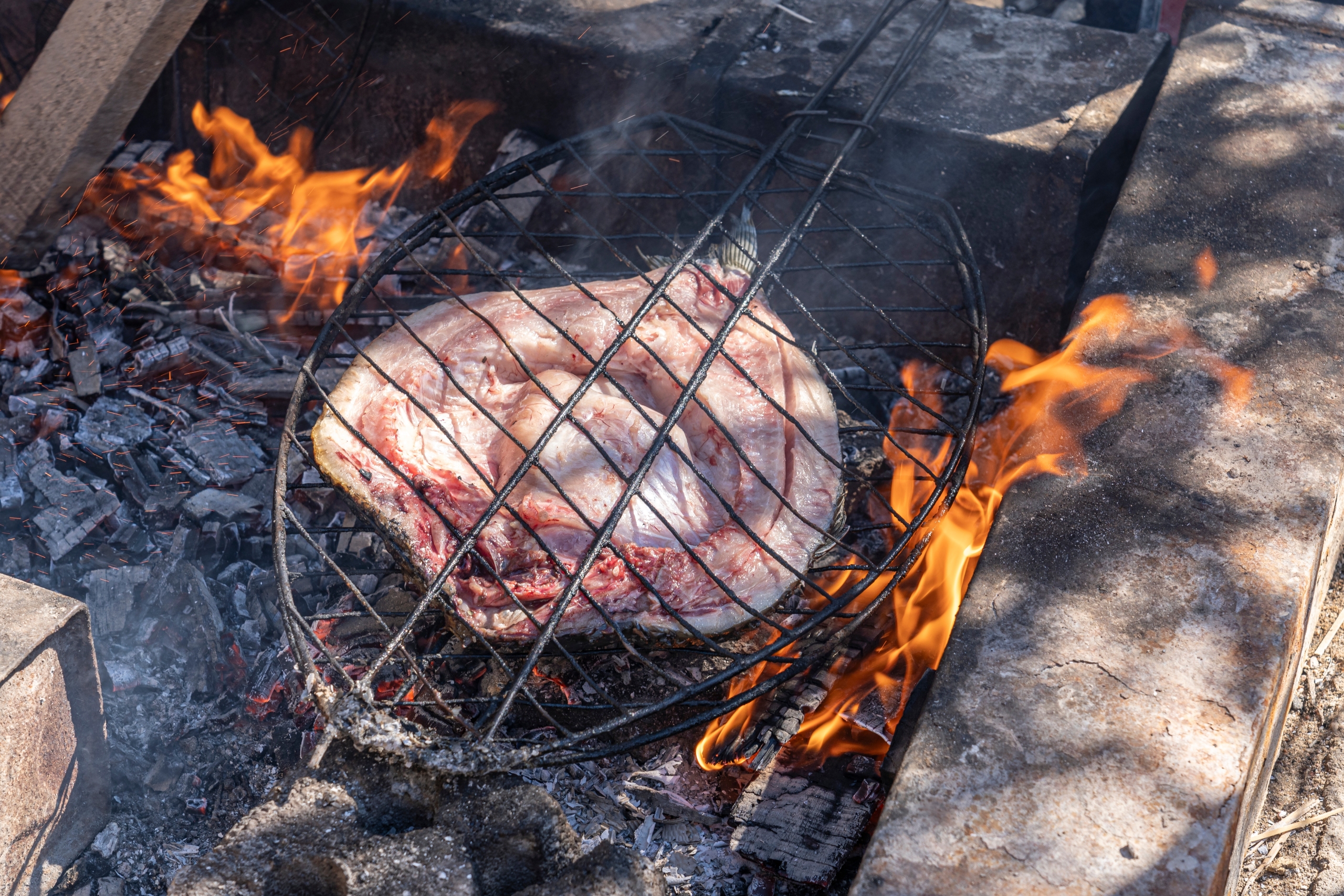
At sunset, the light over the Tigris turns gold and Baghdad eases its rhythm, though barely. The city does not stop — it simply settles closer to the ground. Along the river, in Abu Nuwas Park — named after one of the great Arab poets — the embers begin to glow as if someone were tuning an instrument. There is no ceremony, no pretense. Only fire, time, and a fish opened like a book, facing the flame.
To an outsider, it might look like a curious technique. To Baghdad, it is something deeper: an everyday act through which the city tells its story anew. Masguf does not live in museum cases or on the pages of history. It lives here, on the streets, by the riverbank — a humble choreography where smoke speaks.
It matters because it is real life continuing. Because it is Baghdad speaking in the first person. Because it is culture that does not need to raise its voice.
Urban Choreography by the Tigris
The technique of masguf is well known, though it still holds mystery for those who have never stood before its vertical grills: a carp opened flat, its body exposed to the side fire for nearly an hour before a final burst of direct heat seals the skin. Watching the fish roast slowly before the flames is mesmerizing.
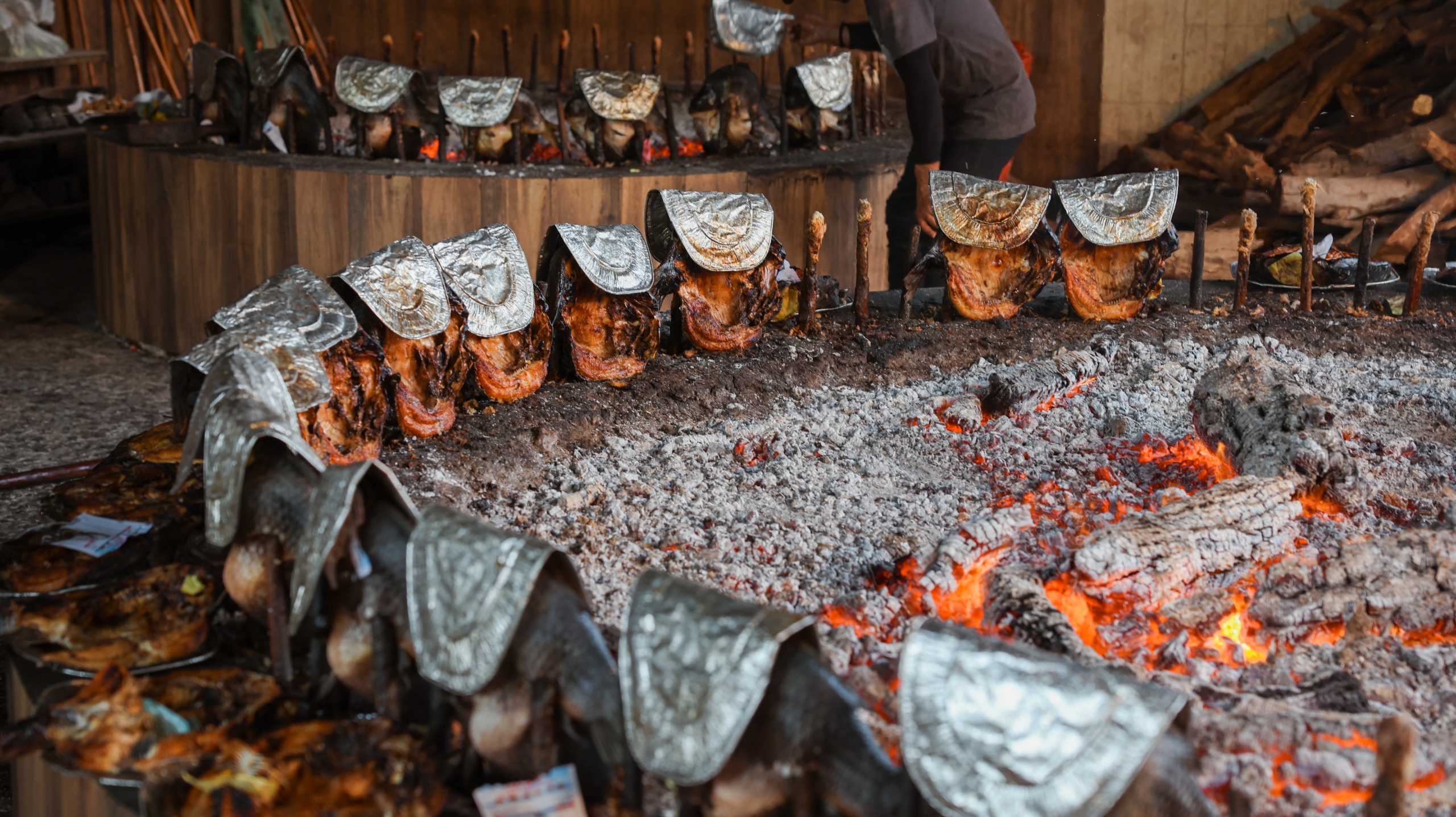
But the method itself is not the most interesting part. What fascinates is what this cooking creates socially. In Baghdad, masguf is never prepared behind walls. It happens in the open. Cooking becomes a public act — transparent, communal, almost declarative: there is nothing to hide here.
Anthropologically, the point is not the dish but the social device it activates. Masguf belongs to a precise ecosystem — a river city that defines itself by the water’s edge. Baghdad does not look at the Tigris as a distant view, but as an emotional infrastructure, part of its own bloodstream.
That is why masguf is both meal and urban performance. People come not only to eat fish but to take part in a small liturgy of togetherness: waiting, watching the fire, talking without haste, sharing air thick with smoke. Hospitality here is not declared; it is practiced through charcoal and time.
Memory by the Fire
When violence engulfed Iraq, Abu Nuwas ceased to be a place for open-air dinners. The river remained, but the city had no time for slow conversations. What is remarkable is that when ordinary life returned — gradually and without ceremony — masguf returned with it. Not as a nationalist emblem or curated nostalgia, but as a spontaneous gesture.
No one in Baghdad decreed that masguf would symbolize recovery. People simply went back to the river and lit coals. The ability to wait an hour beside a grill, watching fire at work, is itself proof that peace still has space to grow. A city breathes again when it recovers the right to patience.
A Dish in Exile
Beyond Iraq, masguf changes form but not essence. In Amman, Dubai, London, or Detroit, Iraqi restaurants adapt it as best they can. Sometimes carp is replaced by another fish, sometimes the grill is different, the smoke less aromatic. Yet the essential act remains — open the fish, show it, offer it to the flame. It is a quiet affirmation: we are still ourselves.
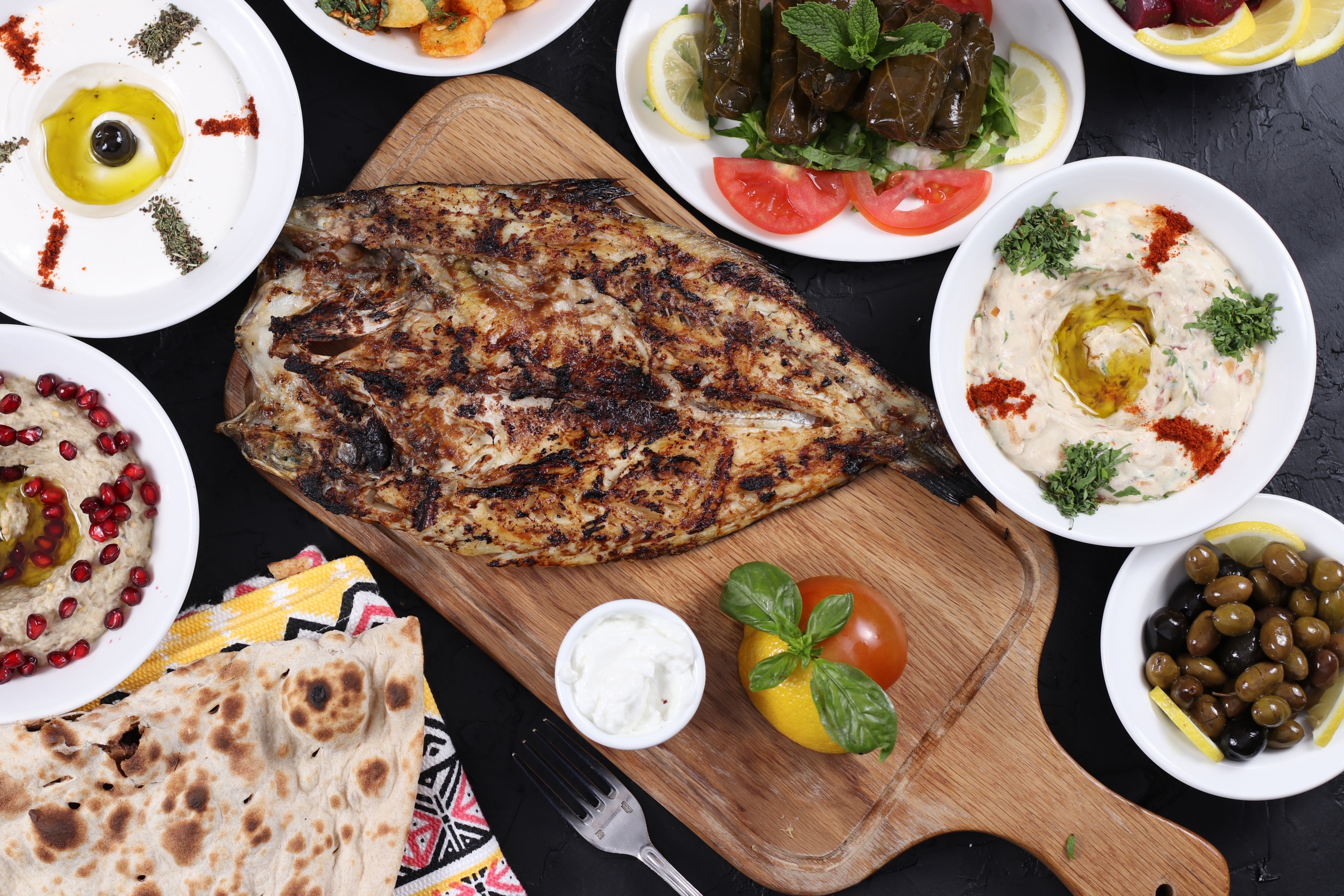
Masguf is the Tigris turned into portable memory. For the Iraqi diaspora, it serves as an emotional anchor. The goal is not culinary perfection but reunion — to create a space where people gather. That is its core. Iraq exports not only flavors but a cuisine of community, a way of being together around fire.
To travel to Baghdad, or even to imagine it truthfully, one must look beyond ruins, headlines, and geopolitics. The real city lives in these unpretentious scenes where no one is trying to explain anything. Just walk through Abu Nuwas at dusk and let your eyes adjust to the rhythm of the river: riverside gardens, makeshift stalls, and grills glowing like small iron amphitheaters.
Community Around the Fire
At its heart, masguf is a language — not only a dish. A language of slow fire, open display, and tacit transparency. Its meaning lies not in recipe precision but in the relationship it creates between cook and guest. The opened fish, exposed to the coals, becomes almost an anthropological statement: real life shown as it is — unembellished, without illusion. Its power is precisely in the everyday.
When the skin turns crisp and lacquered, the crucial moment comes: to eat together, to talk, to dip bread in the juices formed by flame, to share herbs, onion, tomato, and lemon. In that moment, politics fades to a distant murmur. What remains is pure community.
To understand Iraq beyond appearances, one must learn to read these small rituals. Masguf is part of the urban alphabet of contemporary Iraq. It says that life continues. It says that memory endures. It says that a city can become a community again — through something as simple as roasting a fish, face to the fire.
AI Transparency Notice
PilgriMaps uses artificial intelligence tools to assist in the research, drafting and translation of editorial content. All AI-assisted content is reviewed, edited and verified by our editorial team before publication. We contrast information against primary sources, specialist literature and on-the-ground knowledge to ensure accuracy, cultural sensitivity and editorial integrity.
AI is one tool among many in our workflow. The judgement, curation and responsibility for everything published on this platform remain entirely human.
Viator Media S.L. — in compliance with the EU Artificial Intelligence Act (Regulation EU 2024/1689).
This post is also available in: