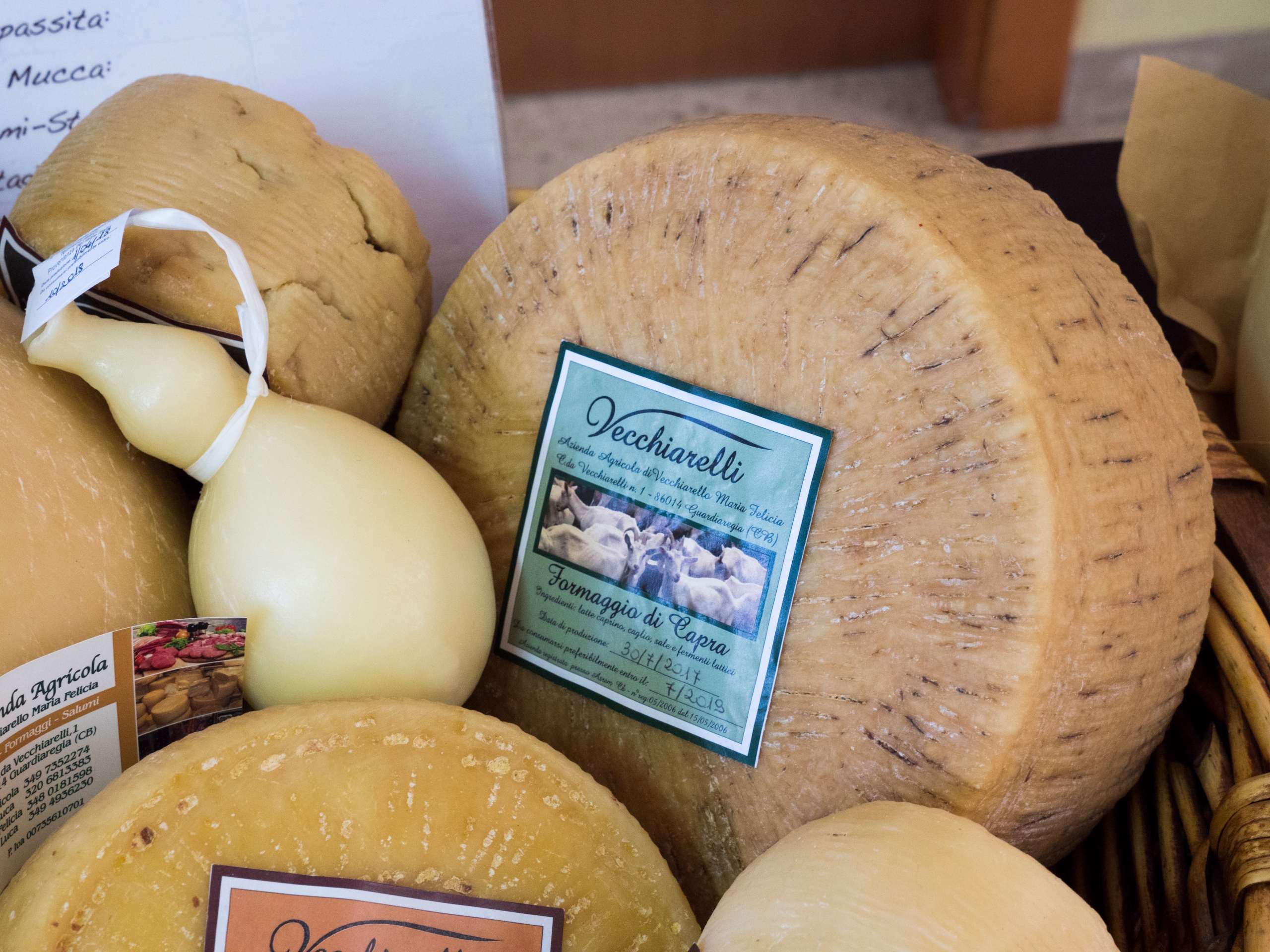
In the quiet hills of central Italy, where ancient footpaths still connect seasonal pastures and the rhythms of rural life persist, the region of Molise safeguards a lesser-known culinary legacy: its traditional cheeses. Centered around the province of Campobasso, these dairy products reflect centuries of transhumant herding, artisanal knowledge, and cultural identity — now at risk of disappearing.
Often overlooked on the Italian map, Molise is the country’s smallest and least visited region. Its marginality, however, has preserved a unique agro-pastoral tradition, one that stretches back over three millennia and resists the homogenizing pressures of industrialized food production.
A Landscape Shaped by Transhumance
Molise’s dairy culture is rooted in transhumance — the seasonal migration of livestock between mountain and coastal pastures. This practice shaped the cultural and ecological landscape of the region, forging deep connections between herders, land, and livestock.
The town of Bojano, linked to early Samnite settlements and named in honor of a sacred ox that led its founders to fertile pasture, remains a local center for dairy production — especially noted for its fiordilatte, a fresh stretched-curd cheese. But across the wider province, a range of cheeses tells the story of this ancient relationship between people and pasture.
A Cheese to Be Worn: The Treccia of Santa Croce di Magliano
Among the region’s most distinctive products is the Treccia of Santa Croce di Magliano, a hand-woven cheese traditionally made for religious festivals. Measuring about one meter in length and weighing up to 1.5 kilograms, this braided cheese is worn across the shoulders by herders and livestock during the Madonna dell’Incoronata festival in late April and on the feast of Saint James.
White when fresh and yellowing with age, the Treccia is a rare synthesis of craftsmanship, ritual, and food heritage. Its production — limited to just 1,000 kilograms annually — has been recognized by the Slow Food Foundation as a traditional food at risk of extinction. Each braid is crafted from stretched cheese strands cooled in water, brined, and then hand-woven on a cotton surface.
It is the only known Italian cheese traditionally worn before eaten, embodying a rural worldview in which agricultural and religious calendars remain intertwined.
Caciocavallo of Agnone: A Symbol of Continuity
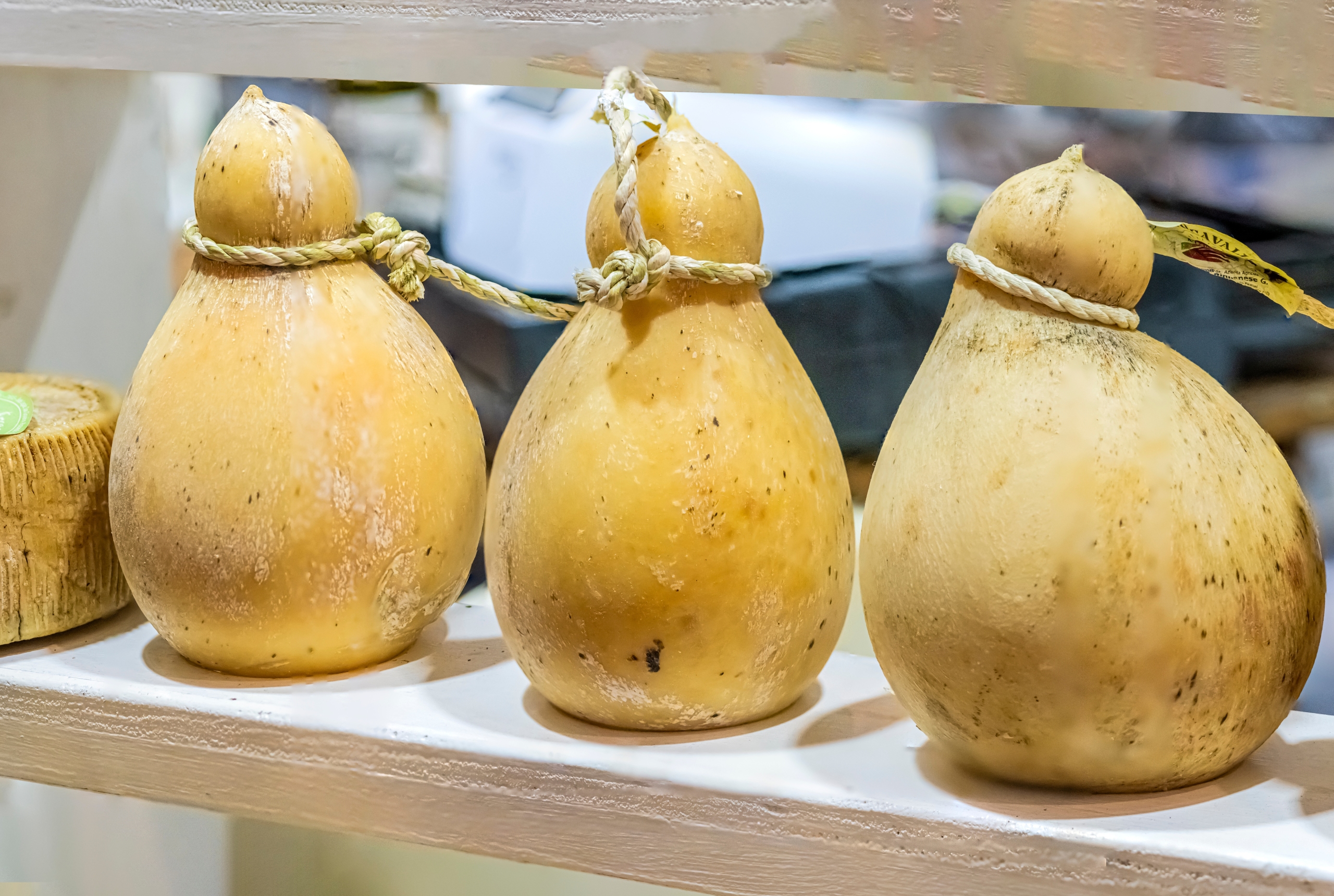
Another emblematic cheese from the Campobasso area is the Caciocavallo of Agnone, named for its resemblance to saddlebags once draped over horses for aging. Produced from raw cow’s milk, it is aged from three months to over a year, often in caves that impart unique microflora and flavor profiles.
Younger versions are mild and slightly sweet, while aged forms develop more complex, sharp notes. Its quality reflects both the purity of Molise’s mountain pastures and the knowledge of small-scale dairies where production methods are passed down across generations.
Scamorza and the Art of Stretched Curd
Campobasso is a stronghold of pasta filata — stretched-curd cheese techniques. Local scamorze, both fresh and smoked, are compact, savory cheeses often used in traditional Molisan dishes. In scamorza alla pizzaiola, the cheese is baked with tomato, olive oil, garlic, and oregano. In more elaborate versions, it is hollowed out, filled with summer truffle (scorzone), breaded, and roasted.
These recipes, rooted in household and pastoral cooking, highlight how everyday ingredients can express regional identity through skill and adaptation.
Goat’s Milk Cheeses: The Montefalcone Example
Free-range goat herding on Molise’s sunlit slopes gives rise to cheeses like the Caprino of Montefalcone del Sannio, made from raw goat’s milk and aged for at least two months. It is semi-firm, with a rustic rind and a soft, white interior.
The cheeses are traditionally hung from wooden frames called casceras and allowed to mature in open-air environments. The result is a distinctive, tangy product that pairs well with raw vegetables, crusty bread, or local preserves.
Fiordilatte: The Minimalist Tradition
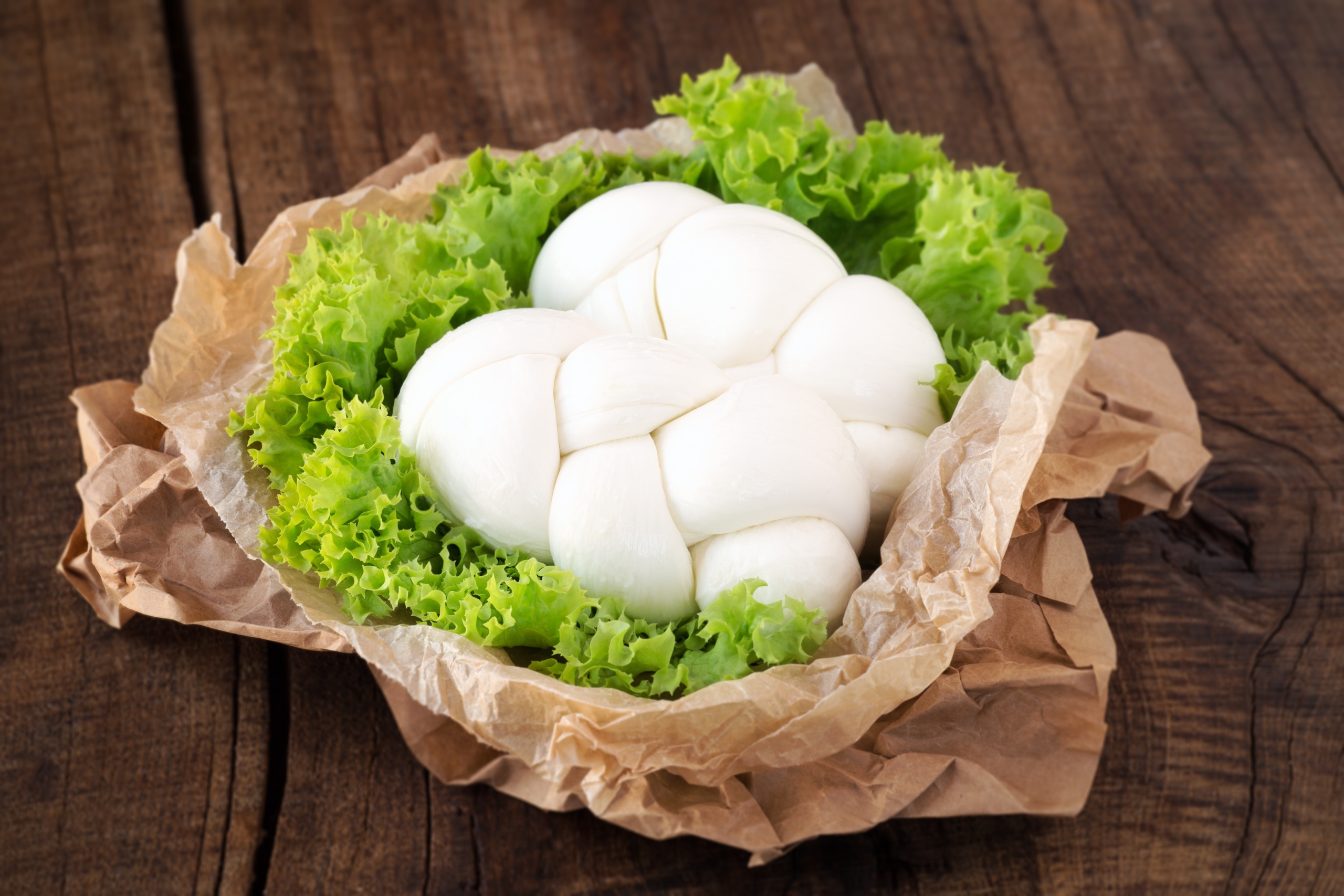
Among the most delicate of Molise’s cheeses is fiordilatte, a fresh, rindless product made from stretched curd and cow’s milk. Meant to be eaten immediately, it is often served with prosciutto in celebratory meals such as weddings.
Behind its simplicity lies a centuries-old technique and a commitment to high-quality, unprocessed milk. The cheese’s creamy texture and clean flavor speak to the natural pastures and traditional animal husbandry that still define the region.
Burrino: Preserving Butter in Cheese
Less known but equally innovative is burrino, a cheese that encloses a core of fresh butter inside a shell of pasta filata. The practice likely emerged as a way to preserve butter without refrigeration, wrapping it in a protective edible casing.
When sliced, burrino reveals its soft, golden interior — a combination of textures and flavors that reflects the ingenuity of Molise’s cheesemakers.
Cacio-ricotta: A Hybrid Heritage
Another unique example is cacio-ricotta, a hybrid cheese made through a blend of rennet-curd and whey-curd methods. The result is a semi-fresh product with a firm exterior and soft interior, ideal for spreading or cooking. Its profile bridges the gap between fresh cheese and aged ricotta, showcasing the experimental spirit of local dairy culture.
Tradition Under Threat
Many of these cheeses now face uncertain futures. As rural depopulation, industrial dairy production, and changing consumption patterns reshape Italian agriculture, the artisanal practices of Molise are increasingly rare.
Some producers, like the Paladino family of Santa Croce di Magliano, continue to uphold these methods with skill and dedication. Their work combines high-quality raw materials with inherited techniques, sustaining a tradition that remains economically fragile but culturally vital.
Despite being underrepresented in Italian culinary narratives, Molise’s dairy heritage survives — in braids of cheese worn in devotion, in sharp wheels of caciocavallo matured in mountain caves, and in the quiet labor of family dairies scattered across the hills of Campobasso.
AI Transparency Notice
PilgriMaps uses artificial intelligence tools to assist in the research, drafting and translation of editorial content. All AI-assisted content is reviewed, edited and verified by our editorial team before publication. We contrast information against primary sources, specialist literature and on-the-ground knowledge to ensure accuracy, cultural sensitivity and editorial integrity.
AI is one tool among many in our workflow. The judgement, curation and responsibility for everything published on this platform remain entirely human.
Viator Media S.L. — in compliance with the EU Artificial Intelligence Act (Regulation EU 2024/1689).
This post is also available in: