Across Malta’s towns and villages, small workshops and domestic courtyards turn into seasonal studios where artisans assemble elaborate miniature worlds. These Presepji Maltin– Maltese nativity scenes – emerged from a long-standing Mediterranean craft culture that blends vernacular architecture, local landscapes, and hand-molded figures into compact theatrical settings. The practice holds deep social visibility on the islands, yet its reach now extends well beyond the central Mediterranean. Over the last several decades, Maltese craftsmen and collectors have exported their aesthetic to international exhibitions, specialized markets, and cultural institutions, including installations in Vatican City.
A distinctive visual language
While Nativity displays exist across Europe, the Maltese idiom developed its own vocabulary. Traditional pieces often incorporate architectural motifs drawn from limestone farmhouses, narrow alleys, and rural chapels. Terraced fields, rubble walls, and windmills appear in miniature, framing familiar scenes crafted with clay, gypsum, or terracotta. The figures tend to favor expressive facial modeling and vivid coloration, drawing on older southern European sculptural traditions while retaining local nuance.
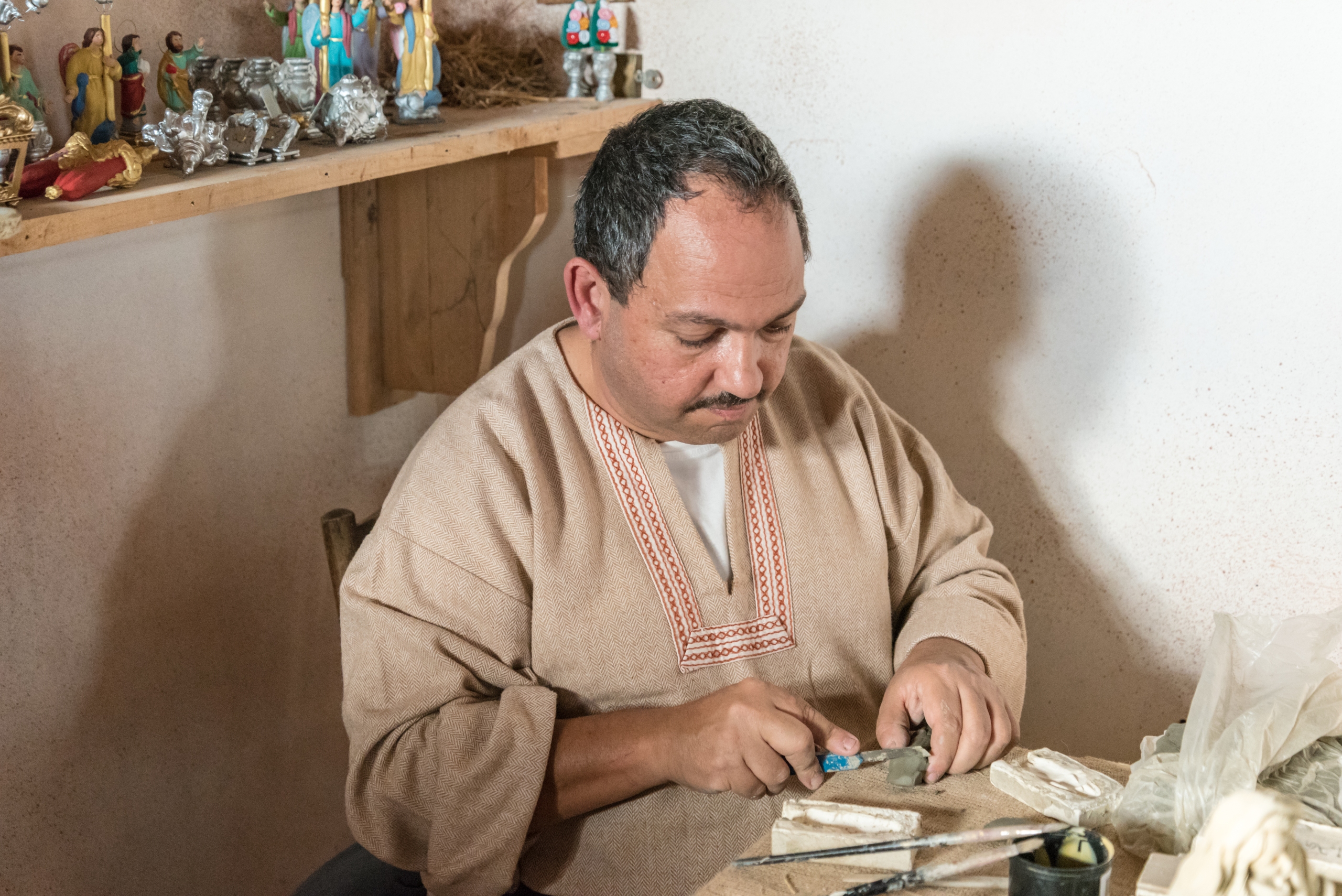
Some makers design static tableaux, while others construct kinetic displays driven by concealed mechanisms. Moving water wheels, turning mills, and animated village routines create a sense of lived environment. These micro-landscapes often extend beyond the biblical narrative, inviting viewers to observe regional crafts – bakers, fishermen, and shepherds rendered through Maltese material culture. The result merges Mediterranean ethnography with a visual interpretation of the nativity that is immediately recognizable within the archipelago.
Historical pathways and workshops
The practice took shape during the early modern period, a time when devotional art circulated widely through the central Mediterranean. Maltese families began building their own presepji at home, supplementing imported figurines with local models. By the 18th and 19th centuries, Maltese craftsmen were producing full sets – structures, figurines, and scenic details. A distinct technical heritage evolved around clay modeling, papier-mâché, and polychromy.
During the 20th century, several workshops consolidated this knowledge and helped preserve it through apprenticeships. Their methods emphasize hand-sculpted forms rather than mass-produced molds. Today, these studios often collaborate with local cultural associations, ensuring continuity in materials and techniques. Exhibitions in community centers, parish halls, and restored historical sites allow artisans to present both traditional and contemporary interpretations.
From island craft to international display
As Malta expanded its cultural outreach in the late 20th and early 21st centuries, Presepji Maltin became a notable element of its heritage exports. Traveling exhibitions introduced the craft to audiences across Europe, North America, and parts of Asia. Collectors, museum curators, and cultural institutes increasingly recognized the technical merit and regional identity embedded in these works.
Particularly significant has been the inclusion of Maltese nativity displays in exhibitions held in Vatican City. These showcases bring together artisans from around the world, offering a global survey of vernacular approaches to the nativity. Maltese contributions have ranged from compact dioramas to large-scale installations. Their architectural references – limestone textures, balconies, and vernacular dwellings – stand out amid the international collection, illustrating how local identity can shape a widely shared artistic theme.
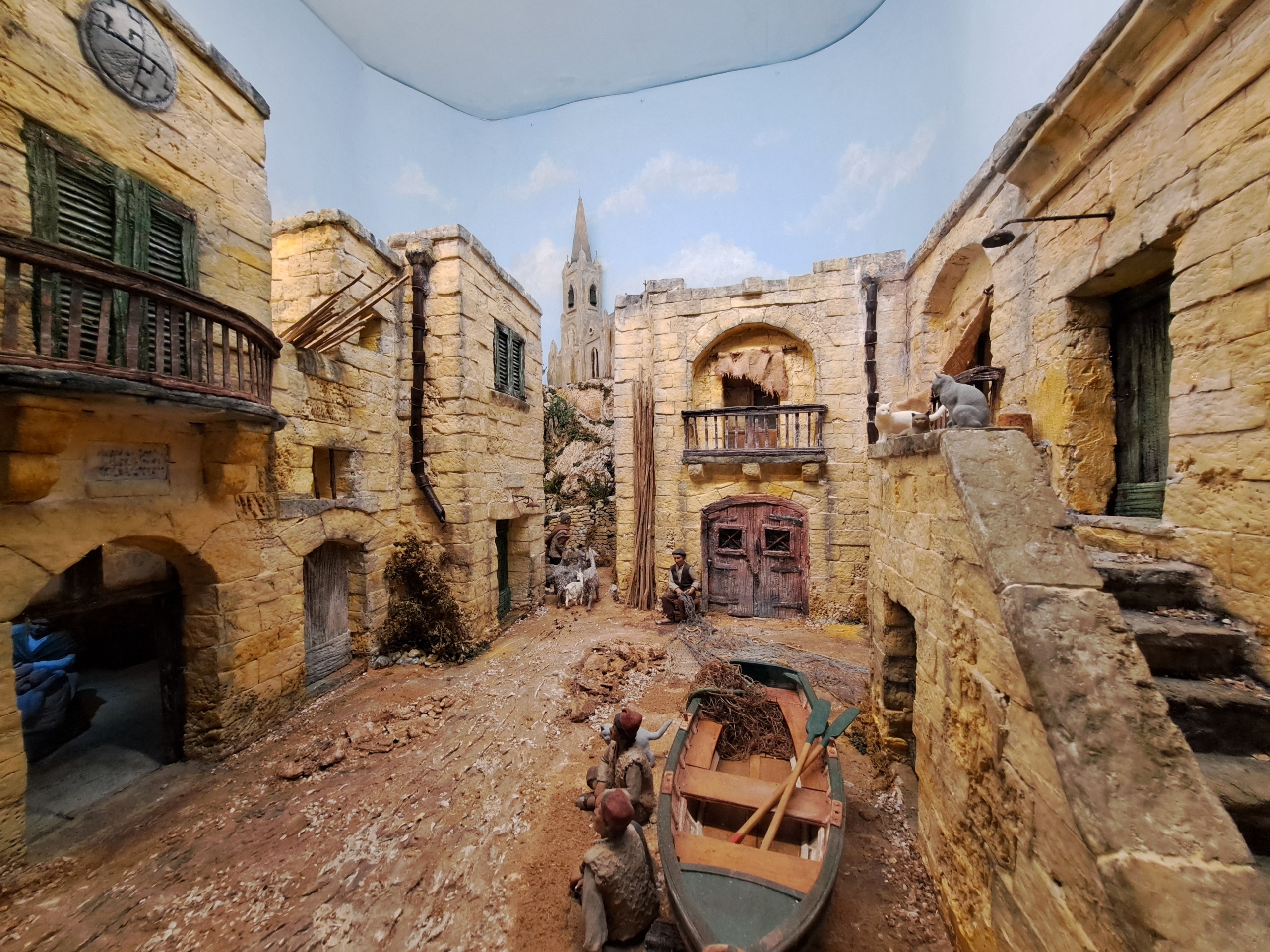
Participation in such events elevated the profile of Maltese craftspeople. Some workshops now maintain international patrons who commission custom scenes for cultural centers, embassies, and private collections. This circulation reinforces the craft’s ongoing evolution, as makers respond to diverse audience expectations while remaining anchored in established techniques.
Community networks and cultural exchange
International visibility has also stimulated new forms of exchange. Maltese artisans collaborate with European nativity guilds, attend symposiums on miniature architecture, and contribute to catalogues documenting regional styles. These networks encourage comparative study of materials, tools, and design strategies, placing Maltese work within a wider artisanal dialogue.
Within Malta, increased recognition has strengthened local enthusiasm for preservation. Community groups organize annual open-house trails, allowing visitors to tour private presepji collections across neighborhoods. Artisans demonstrate traditional sculpting and painting methods, while museum curators contextualize the practice within the islands’ broader craft history. The resulting environment supports both continuity and innovation, fostering a cultural landscape in which the presepji remain relevant and widely appreciated.
Adaptation in a global context
As the presepji circulate internationally, Maltese craftsmen adapt their work to suit diverse exhibition environments. Some pieces emphasize material authenticity—using local stone dust, pigments, or fabrics—while others adopt modular structures for transport. Even with these practical considerations, the core aesthetic remains consistent: detailed micro-architecture, expressive modeling, and narrative scenes that reflect Maltese cultural memory.
Contemporary artisans also experiment with new themes, expanding the visual vocabulary without departing from the tradition’s foundations. Urban skylines, maritime settings, and hybrid landscapes occasionally appear in modern works. Such innovations demonstrate how a historically rooted craft can respond to global interest while conserving its cultural signatures.
Cultural resonance beyond the Archipelago
The spread of Presepji Maltin illustrates how small-scale material culture can achieve international resonance. Their presence in prominent exhibitions—including those in the Holy Land, Rome, the Vatican City, in Washington D.C.—highlights the diversity embedded in a practice shared across many cultures. For Malta, these displays function as ambassadors of craftsmanship, allowing audiences to engage with the islands’ artistic history through accessible, visually intricate forms.
As global interest in vernacular art continues to grow, the Maltese presepji hold a stable place within the spectrum of Mediterranean craft traditions. Their circulation affirms the value of meticulous handwork and regional storytelling, offering a perspective shaped by centuries of island life and artisanal continuity. In this way, Presepji Maltin operate as both cultural artifacts and dynamic expressions of identity—crafted locally, recognized internationally, and sustained through a blend of heritage, skill, and innovation.
Across this landscape of craft and cultural memory, the presepji trace their lineage to Malta’s own Christian history, beginning with the shipwreck of Paul in 60 CE. That episode, preserved in the Book of Acts as much as in local historiography and maritime lore, anchors a long, continuous, uninterrupted Christian presence on the islands for 2000 years—a presence shaped by successive communities, shifting political regimes, and evolving artistic languages. Within this broad historical arc, the presepi stand as one among many practices through which Maltese communities have expressed seasonal reflection, deep faith, and communal identity, translating distant narratives into familiar architectural forms and everyday scenes.
Today, the Maltese nativity display functions as both a devotional object and a vessel of cultural and religious continuity. Its miniature dwellings, rural landscapes, and handcrafted figures distill generations of artisanal knowledge while echoing a story that has circulated on the islands for nearly two millennia. In this convergence of history, craftsmanship, and collective memory, the presepi embody a tradition that continues to adapt, sustaining a quiet resonance rooted in the Archipelago’s enduring Christian heritage.
This content comes to you in collaboration with VisitMalta
AI Transparency Notice
PilgriMaps uses artificial intelligence tools to assist in the research, drafting and translation of editorial content. All AI-assisted content is reviewed, edited and verified by our editorial team before publication. We contrast information against primary sources, specialist literature and on-the-ground knowledge to ensure accuracy, cultural sensitivity and editorial integrity.
AI is one tool among many in our workflow. The judgement, curation and responsibility for everything published on this platform remain entirely human.
Viator Media S.L. — in compliance with the EU Artificial Intelligence Act (Regulation EU 2024/1689).
This post is also available in: