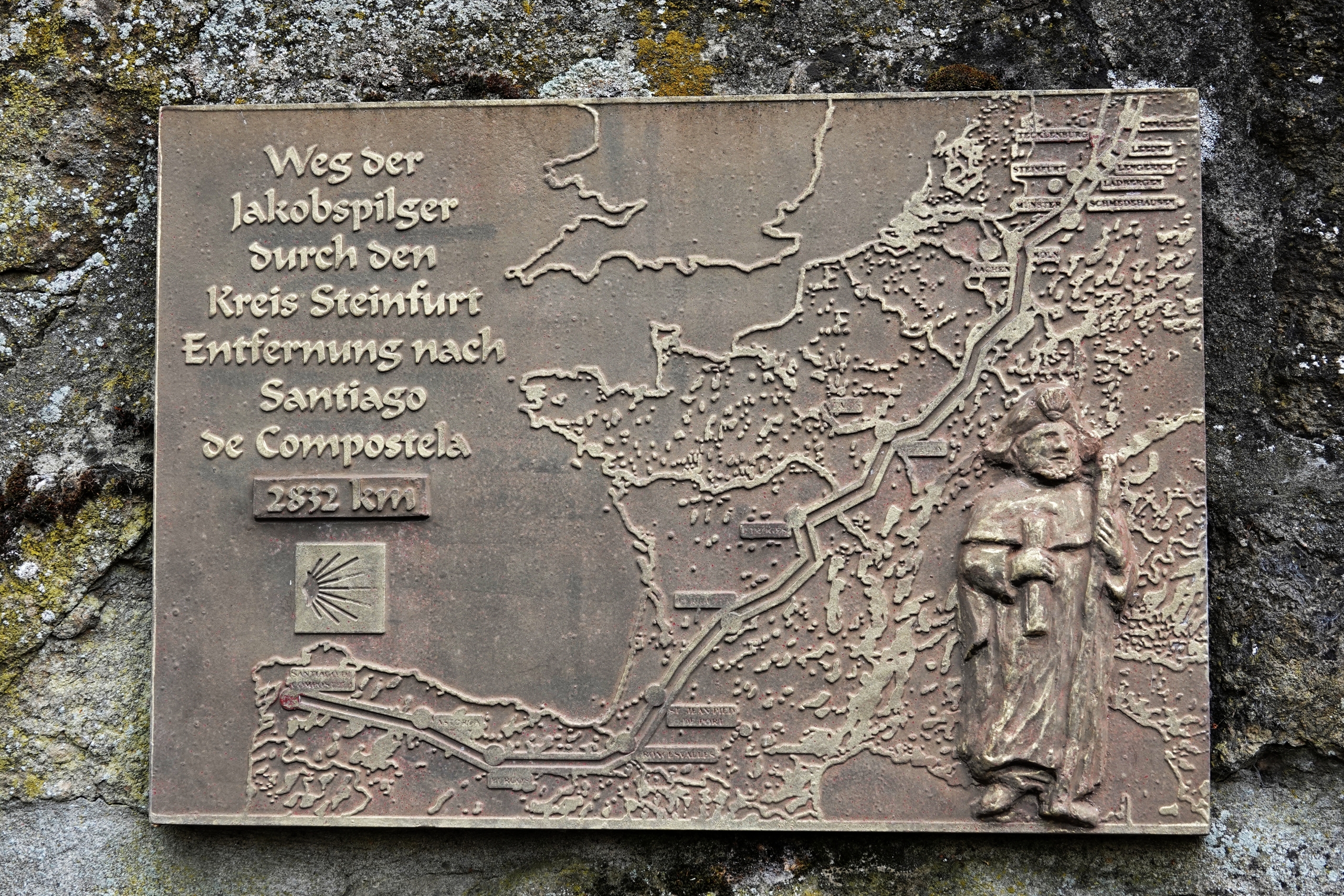
The phrase “all roads lead to Rome” has long captured the essence of interconnected travel in Europe. Yet the same might be said of Santiago de Compostela. Far from a singular path, the Camino de Santiago is a vast, evolving network of pilgrimage routes that crisscross the continent. Within Spain alone, there are eight principal routes, each with its own historical variants and local deviations. But the Camino does not begin—or end—at well-known entry points like Roncesvalles or Tui.
For more than a thousand years, Europe has woven together a dense web of routes converging at Santiago. This network, far from extinguished with the medieval period, has experienced a contemporary revival through the work of associations and volunteers. Today, these paths are marked, maintained, and walked again—evidence of a living heritage.
A Continental Tapestry of Associations
To grasp the scale of this network, consider that France alone hosts over 80 Camino-related associations. Spain follows with around 40, and additional organizations are active across Germany, Italy, Portugal, the Low Countries, and beyond. These groups are bound by shared purpose rather than centralized governance—each contributing to the preservation, expansion, and accessibility of the Camino.
Routes created in recent years outside Europe also play a role in this phenomenon but merit separate analysis. This article focuses on the historical and contemporary efforts within Europe.
France: A Pioneering Model
The modern revival of the Camino owes much to postwar France. In 1950, when the pilgrimage was largely dormant, a group of French intellectuals and walkers founded the Société Française des Amis de Saint-Jacques de Compostelle in Paris. This was the first contemporary association of its kind, establishing a framework that influenced subsequent initiatives across Europe.
Among its contributions: It reintroduced the credencial system in France, allowing pilgrims to be recognized in Santiago. It funded the conservation of Saint-Sauveur Chapel in Compostela and supported artistic restoration efforts. And, in 1969, it revived the Journée de la France (25 July) at the cathedral in Santiago, creating an annual gathering for French-speaking pilgrims.
Today, over 80 local associations operate across France under the umbrella of the Fédération Française des Associations des Chemins de Compostelle (FFACC). Their activities include signage, pilgrim hospitality training, hostel management (Haltes Pèlerines), and the publication of journals like Compostelle 2000. France remains a central engine in the Camino ecosystem, with thousands of volunteers actively engaged.
Belgium: Europe’s Densest Pilgrim Network
In terms of population-to-association ratio, Belgium hosts the most expansive Camino network in Europe. Two national groups lead this effort: The Association Belge des Amis de Saint-Jacques-de-Compostelle (Francophone, founded 1956) and the Vlaams Genootschap van Santiago de Compostela (Flemish, founded 1986)
Together, they coordinate weekly hikes, publish informative bulletins (such as De Pelgrim), and run extensive support systems for aspiring pilgrims. Their collaboration reflects Belgium’s multilingual structure, contributing to one of the most active and coordinated Camino movements in Europe.
Both groups were founding members of the European Federation of Saint James Way Associations (2023). They oversee key historic routes like the Vía Mosana and Vía Campaniensis, linking Belgium with French territories. Information centers in Brussels and Leuven assist new pilgrims with guidance on gear, itineraries, and the broader Camino culture.
Belgium’s model exemplifies effective binational cooperation and high levels of civic engagement, resulting in one of Europe’s highest per capita pilgrim participation rates.
Expanding Horizons: Portugal, Germany, Italy, and Beyond
Elsewhere in Europe, revitalization continues. Portugal is home to the Caminho Português, the second most traveled route to Santiago. From Lisbon through Porto to Tui, it is supported by associations like Via Lusitana, which manage signage (blue arrows to Fátima, yellow to Santiago), accredited hostels, and public events such as the Jornadas Jacobeas in Ponte de Lima. A federation of Portuguese associations now promotes the route internationally.
Germany features more than 50 marked Jakobswege, with the Baltic Way (Via Baltica) as a notable example. The Deutsche St. Jakobus-Gesellschaft, founded in Aachen in 1987, plays a central role in coordinating research, volunteer training, and signage.
Italy, while primarily associated with the Via Francigena, maintains several Alpine Camino routes—particularly through the Montgenèvre Pass. The Confraternita di San Jacopo di Compostella in Perugia supports pilgrim infrastructure and historical research. The Camino Maltés also integrates Sicily and Sardinia into the broader network, connecting by sea to the Catalan route.
The Netherlands is served by the Nederlands Genootschap van Sint Jacob (Utrecht, 1985), which links Dutch trails to Belgian and French paths. In Northern Europe, medieval trails are being retraced and revived. Norway’s Pilegrimsfellesskapet St. Jakob and Finnish initiatives connect to continental routes.
Eastern Europe has seen a resurgence in Camino activity, especially in Poland, where the Vía Regia and Camino de Pomerania encompass more than 7,000 km of recognized trails. These routes received official designation by the Council of Europe in 2017.
Even Ukraine has joined this renewal. In 2021, the St. James Way Podillia was launched, following the historical Via Regia between Vinnytsia and Kamianets-Podilskyi. Despite the geopolitical context, this route represents a significant cultural statement, blending medieval tradition with contemporary visibility.
A Living Heritage of Cultural Routes
The Camino de Santiago in Europe represents far more than a set of pilgrimage routes. It is a cultural phenomenon and transnational infrastructure that links historic memory with present-day mobility. Its endurance is made possible by the thousands of volunteers, researchers, and local communities who maintain and reinterpret it.
Since the founding of the Parisian association in 1950, the Camino’s network has expanded, deepened, and diversified. Whether it’s the Vía Mosana in Belgium, the Vía Regia in Poland, or the Podolian Way in Ukraine, these paths are part of a dynamic heritage recognized by international bodies such as the Council of Europe.
With more than 200 associations active across the continent, the Camino remains a vibrant system of cultural corridors. Historical routes are not just preserved—they are walked, studied, and adapted. Each new pilgrim who joins the path—whether departing from Roncesvalles or Kamianets-Podilskyi—participates in one of Europe’s most enduring and inclusive legacies.
AI Transparency Notice
PilgriMaps uses artificial intelligence tools to assist in the research, drafting and translation of editorial content. All AI-assisted content is reviewed, edited and verified by our editorial team before publication. We contrast information against primary sources, specialist literature and on-the-ground knowledge to ensure accuracy, cultural sensitivity and editorial integrity.
AI is one tool among many in our workflow. The judgement, curation and responsibility for everything published on this platform remain entirely human.
Viator Media S.L. — in compliance with the EU Artificial Intelligence Act (Regulation EU 2024/1689).
This post is also available in: