This article has been co-authored by Inma Álvarez and Jean-Pierre Fava (VisitMalta).
The Peregrinatio Sancti Pauli Apostoli 60AD route crosses Malta following the real, symbolic, and legendary traces of the shipwreck of Paul of Tarsus described in the Acts of the Apostles. Between cliffs, bays, and ancient roads built from golden stone, the itinerary culminates in Mdina, the island’s former capital.
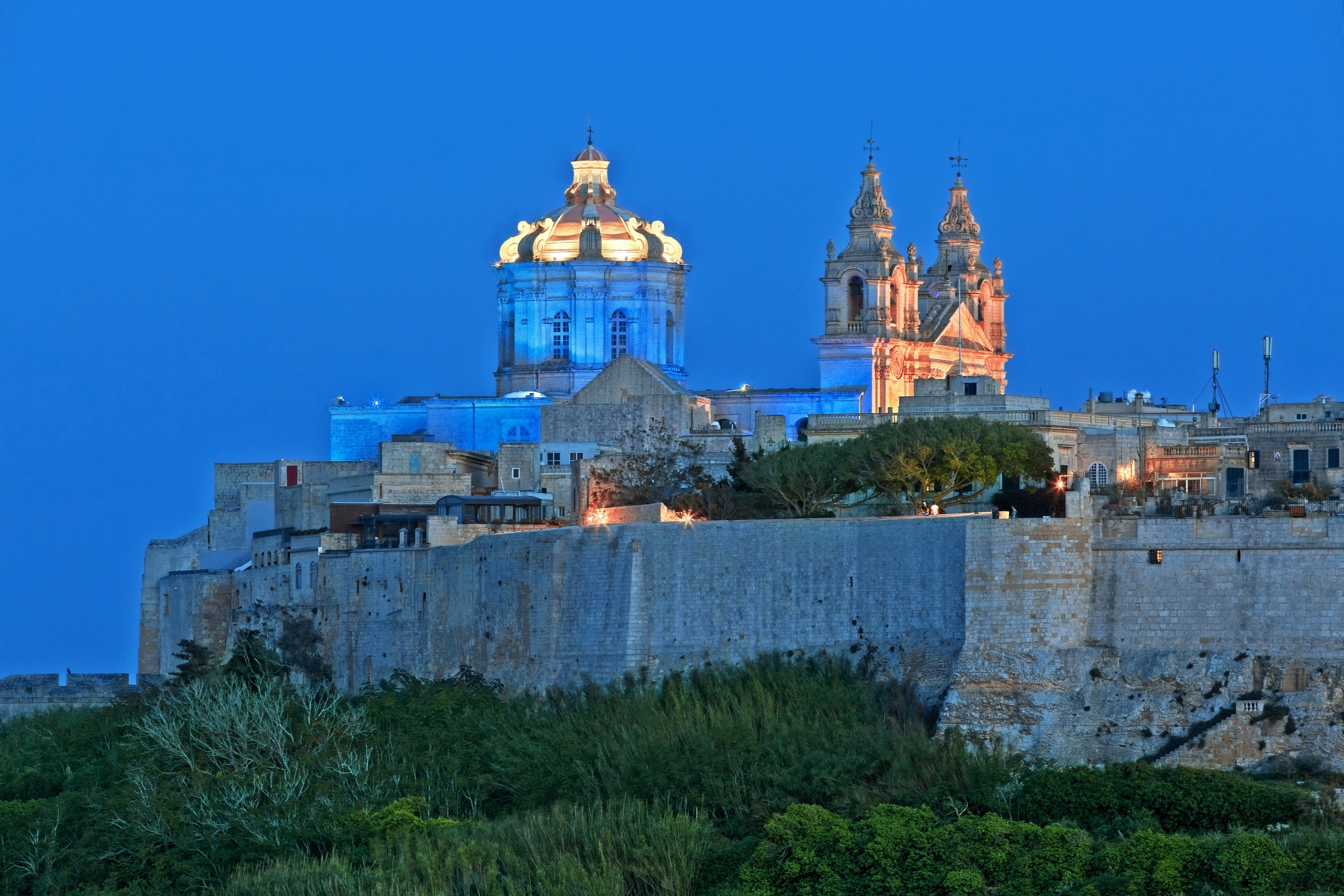
There, in the heart of the so-called “Silent City,” stands St Paul’s Metropolitan Cathedral, a building where Maltese Baroque coexists with narratives that blend historical memory, Christian tradition, and local mythology.
The citadel on the hill
Arriving in Mdina after visiting the sites associated with the apostle’s passage through Malta creates a particular sensation. The city rises above the landscape on a hilltop, protected by walls and crossed by narrow streets where time appears suspended.
Unlike Valletta, open to the sea and shaped by the dynamism of the Knights of St John, Mdina preserves a more introspective atmosphere. It is no coincidence that tradition situates here one of the most important episodes in Maltese Christianity: the meeting between Paul and Publius, the Roman governor of the island.
According to local tradition, after the shipwreck around 60 CE, Paul was brought before Publius after astonishing the inhabitants of Malta through several miracles. The most famous was the healing of the governor’s father, who suffered from fever.
From that episode onward, legend maintains that Publius embraced Christianity and became the first bishop of Malta. The story has been repeated for centuries in sermons, chronicles, and popular celebrations, eventually becoming deeply embedded in Maltese cultural identity.
The house of Publius
Mdina Cathedral stands precisely on the site where, according to tradition, the palace of Publius once stood. Historians point out that no definitive archaeological confirmation exists for this identification, although the discovery of remains from a Roman domus beneath the church has reinforced the collective imagination. In the crypt, visitors can still see ancient vestiges that sustain the idea of symbolic continuity between Roman Malta and Christian Malta.
Beyond historical precision, these narratives form part of what some scholars describe as Malta’s “Pauline mythologies”: a body of stories that helped shape the island’s spiritual memory. In Malta, Paul is not only a biblical figure; he is also a cultural character associated with the very origins of local Christianity and with a broader idea of providential protection over the archipelago.
A Baroque masterpiece
The current cathedral is far more recent than those legends. The medieval church that had stood in Mdina since the twelfth century was severely damaged by the 1693 Sicily earthquake, a catastrophe that affected much of the central Mediterranean. After the disaster, ecclesiastical authorities decided to construct an entirely new cathedral almost from scratch.
The commission was entrusted to the Maltese architect Lorenzo Gafà, a central figure of local Baroque architecture. Between 1696 and 1705, Gafà designed a monumental cathedral inspired by Italian models, featuring a Latin-cross plan, symmetrical façade, and a large dome dominating Mdina’s skyline.
From the outside, the building conveys an elegant sobriety. Malta’s characteristic golden limestone changes tone throughout the day, especially at sunset. The façade is framed by twin bell towers and crowned by a large episcopal coat of arms recalling the cathedral’s historical role as the island’s metropolitan seat.
The true impact, however, comes upon entering the cathedral. The interior reveals the full theatricality of Mediterranean Baroque: polychrome marble, reddish columns, gilded decoration, painted vaults, and lighting carefully designed to direct the gaze toward the high altar. Visitors immediately sense that the art here was conceived not merely as ornamentation, but as emotional experience.
Works of art
The cathedral’s central masterpiece is The Conversion of Saint Paul, painted in 1682 by Mattia Preti, one of the great masters of the Italian Baroque and a defining figure in Maltese art history. The canvas dominates the high altar and depicts the dramatic moment in which Saul falls from his horse, blinded by divine light on the road to Damascus. Behind the altar, another fresco by Preti portrays the apostle’s shipwreck, visually linking universal biblical history with the Maltese landscape.
The vaults of the central nave were decorated at the end of the eighteenth century by the brothers Vincenzo, Antonio, and Francesco Manno, who narrated episodes from Paul’s life through large-scale compositions filled with movement and color. The side chapels also feature important works by Francesco Zahra, especially the Altar of Repose and the marble inlays in the Chapel of the Crucifix.
One of the cathedral’s most striking elements for many visitors is the funerary pavement. The entire floor is covered with marble tomb slabs decorated with heraldic coats of arms, religious symbols, and inscriptions dedicated to bishops, nobles, and canons. Each slab functions as a small artwork, and together they form a kind of memorial mosaic inevitably recalling St John’s Co-Cathedral in Valletta. Walking through the nave also means walking across centuries of Maltese history inscribed beneath one’s feet.
Yet Mdina Cathedral is not merely a historical monument. It remains a living space deeply connected to Malta’s popular celebrations. Every 25 January, the Feast of the Conversion of Saint Paul is celebrated here, while on 29 June the island observes L-Imnarja, the major festival dedicated to Saints Peter and Paul. During those days, the streets of Mdina and Rabat fill with music, lights, and processions that demonstrate how profoundly the apostle still forms part of Malta’s cultural identity.
A guide for contemporary travelers
For today’s traveler, visiting the cathedral is relatively straightforward. From Valletta, public buses reach the entrance to Mdina, from where visitors can walk to St Paul’s Square. The cathedral and its adjoining museum are usually explored in one or two hours, although many travelers choose to stay longer wandering through the walls and narrow streets of the old capital.
The cathedral museum deserves particular attention. It houses collections of liturgical silver, historical archives, and artworks related to Malta’s religious history. For those following the Peregrinatio Sancti Pauli Apostoli 60AD, the museum also offers an opportunity to understand how the memory of Paul gradually evolved into cultural heritage over the centuries.
Several practical recommendations are worth remembering: dress respectfully, avoid using flash photography inside the church, and pay attention to the delicate marble pavement, especially when wearing narrow heels. It is also advisable to check liturgical schedules in advance, since tourist access may be restricted during major religious celebrations.
At the end of the visit, Mdina Cathedral leaves an impression difficult to reduce to a single definition. It is simultaneously sanctuary, museum, historical archive, and stage for one of the oldest traditions of the Christian Mediterranean. Those who arrive here following the traces of Paul discover that Malta preserves not only memories of the past, but also the ability to transform stories into collective identity.
Perhaps that is the true essence of the Peregrinatio Sancti Pauli Apostoli 60AD: understanding that, in places such as Mdina, drawing a boundary between history and legend has never been entirely necessary.
If you want to experience Pauline traditions in Malta firsthand, make sure you walk the Peregrinatio Sancti Pauli 60 A0, a unique Mediterranean Pauline route that traces the steps of the Apostle in the Maltese archipelago. This itinerary is a project developed by XirCammini in partnership with, and with the support of, VisitMalta. XirCammini assists individuals and groups interested in walking the Caminos, offering guidance and practical support throughout the journey. For further information, enquiries can be directed to [email protected] or via WhatsApp at +35679046942. XirCammini is a not-for-profit organisation dedicated to the development, maintenance, and promotion of historical, faith-related walking routes in Malta and across Europe. It is registered as a Voluntary Organisation (VO1646) with the Office of the Commissioner for Voluntary Organisations in Malta.
This content comes to you in collaboration with VisitMalta
AI Transparency Notice
PilgriMaps uses artificial intelligence tools to assist in the research, drafting and translation of editorial content. All AI-assisted content is reviewed, edited and verified by our editorial team before publication. We contrast information against primary sources, specialist literature and on-the-ground knowledge to ensure accuracy, cultural sensitivity and editorial integrity.
AI is one tool among many in our workflow. The judgement, curation and responsibility for everything published on this platform remain entirely human.
Viator Media S.L. — in compliance with the EU Artificial Intelligence Act (Regulation EU 2024/1689).
This post is also available in: