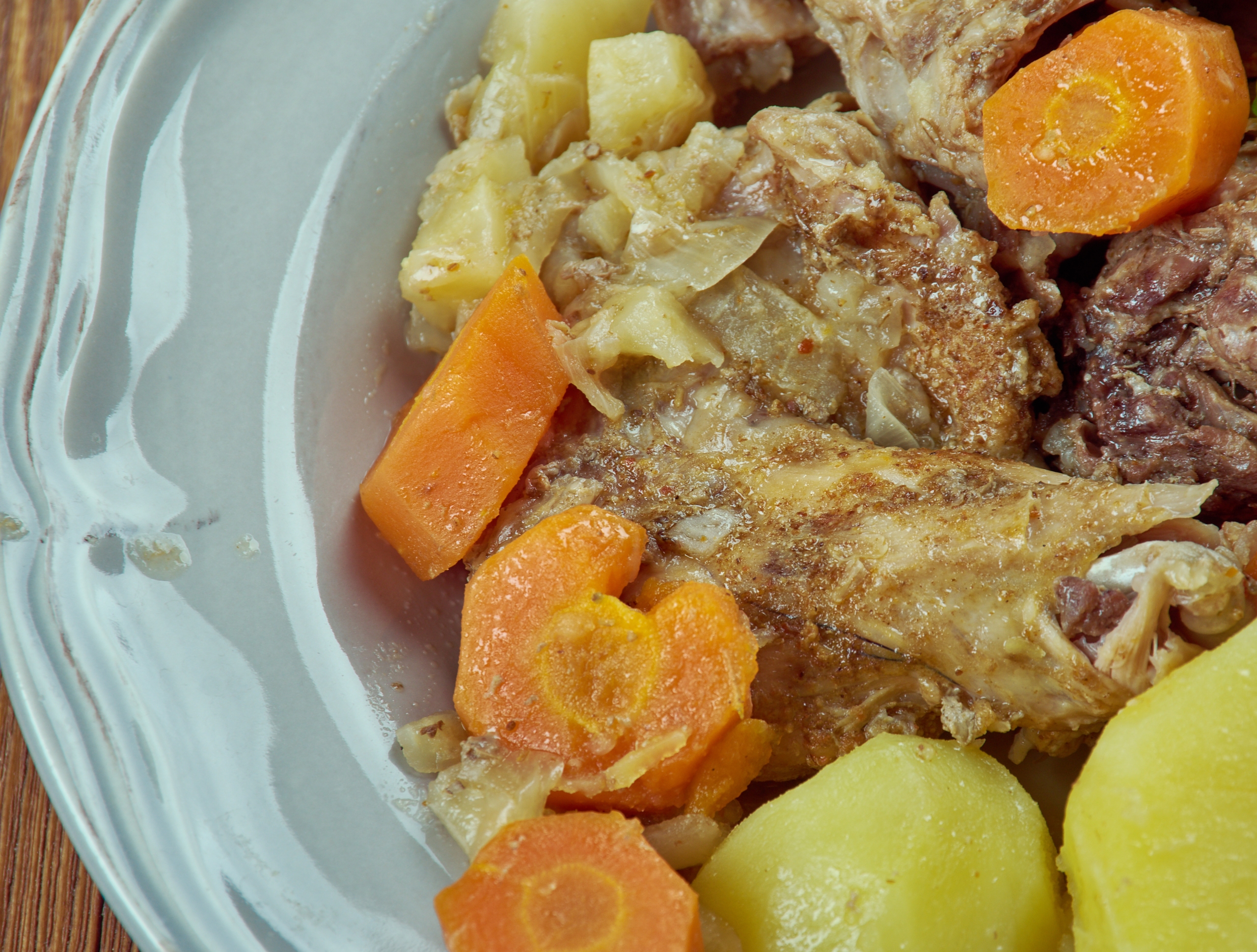
In Malta, rabbit is more than a meat. It is historical memory, domestic grammar, Sunday ritual. Stuffat tal-fenek — Maltese rabbit stew — is considered the national dish of the archipelago: a dark, dense sauce, fragrant with red wine, garlic, bay leaf, and tomato, where the meat cooks slowly until it falls off the bone.
It looks like a classic Mediterranean stew. In fact it is something more: a dish born at the intersection of hunger, power, prohibition, and identity.
The name says it plainly: fenek, in Maltese, means rabbit. Over time the word came to denote not just the animal but a dish, a feast, a way of being together.
The rabbit’s history in Malta predates modern cuisine by a long stretch. One tradition holds that rabbits arrived from the Iberian peninsula — possibly brought by Phoenicians along Mediterranean trade routes as a supply of fresh meat. Other accounts point to Roman introduction. What is certain is that the European rabbit was not native to Malta, and found the islands congenial: limestone terrain, dry countryside, walls and natural shelters.

The political turn came with the Knights of Saint John. From the sixteenth century, rabbit hunting became an instrument of social control. Various edicts restricted or banned hunting for the local population, reserving the privilege for the elite. Punishments could be severe. On Comino, the protections extended even to those who gathered the wild herbs on which the rabbits fed.
The paradox was plain. The animal the peasants could not hunt multiplied and damaged crops. The rabbit, once a food source, became a concrete sign of distant power: a privilege that bounded through the fields while those who farmed the land could not touch it.
In 1773, Grand Master Francisco Ximénez de Tejada imposed new hunting restrictions, ostensibly to increase rabbit numbers, lower meat prices, and offer the population an alternative to bread, which had grown too expensive. The social effect was the opposite. Rabbits devastated fields, tensions rose, and discontent accumulated.
Two years later, in September 1775, the so-called Rising of the Priests broke out. Its causes were multiple — the price of grain, the Order’s financial crisis, tensions between civil and ecclesiastical authority — but the rabbit had already become a symbol. In 1776, following the unrest, a proclamation restored the right to hunt rabbit on private land.
From that point the fenek began moving out of the logic of privilege and into that of the popular table. The meat became more accessible, domestic breeding spread, and Maltese cooking — as so often happens in Mediterranean cultures — transformed necessity into language.
Stuffat tal-fenek emerged from this process. The rabbit is typically marinated in red wine with garlic and aromatics, then cooked slowly with onion, tomato, bay leaf, carrots, potatoes, and thyme. Every household has its own variant — some add peas, some cloves, some let the wine dominate, others the tomato. The rule, however, is one: time. The fenek does not tolerate haste. It requires low heat and patience.
The fenkata is the occasion on which the dish becomes ritual. When a Maltese person says they are going for a fenkata, they are not simply announcing dinner. They are describing a long, familial, noisy gathering — antipasti, bread, cheese, olives, wine, conversation that stretches out.
What surprises visitors most is the double life of the sauce. It is first served with pasta, usually spaghetti: the rabbit ragù opens the meal as a first course. Then comes the meat, with roast or fried potatoes and vegetables. The same sauce traverses two courses — first coating the pasta, then returning to its origin: bone, meat, the slow logic of the stew.
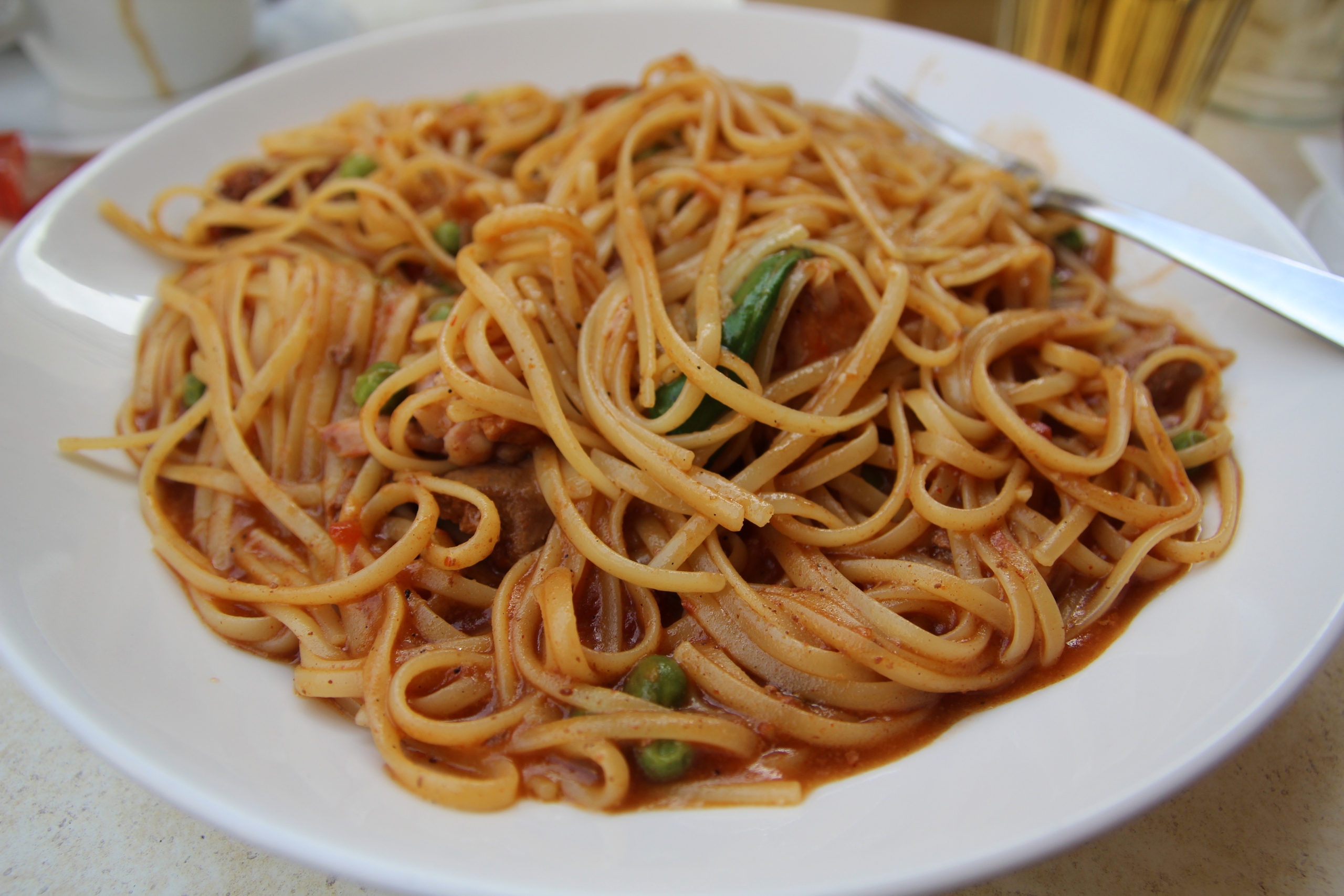
This is where Maltese cooking reveals its layered nature. The pasta speaks to Sicily and southern Italy. The use of spices and aromatics reaches back to the Arab and North African presence. The slow cooking belongs to the Mediterranean culture of the long sauce. The potatoes — now standard in the serving — reflect a more recent modernity, shaped in part by the long British period.
To eat an authentic fenkata one must leave the tourist circuit. The places that come up repeatedly are in the north and the interior: Mġarr, Baħrija, Dingli. Mġarr in particular is considered the informal capital of the fenkata. In its rustic restaurants, especially on weekends, tables fill with families, groups of friends, shared bottles, and dishes that aim for truth rather than presentation.
When you ask Maltese people where the best fenkata is to be found, the most common answer is not a restaurant. It is: “at my house.” Mġarr is, at most, the acceptable public compromise.
The fenek has left traces beyond the kitchen. Malta has a dog breed called Kelb tal-Fenek — literally “rabbit dog,” the Pharaoh Hound — traditionally used for hunting on the rocky island terrain. The name is telling. The animal that was once forbidden, hunted, raised, and cooked has entered the deep lexicon of the island.
During the British period, rabbit continued to function as a marker of identity. As Malta absorbed new habits, languages, and administrative models, the fenek remained a gesture of continuity — not museum cuisine but a living practice: domestic, rural, persistent.
Stuffat tal-fenek is, in this sense, a small narrative of cultural sovereignty. It tells of a people who took what had been forbidden, cooked it slowly, shared it with family, served it with pasta, and turned it into common memory.
AI Transparency Notice
PilgriMaps uses artificial intelligence tools to assist in the research, drafting and translation of editorial content. All AI-assisted content is reviewed, edited and verified by our editorial team before publication. We contrast information against primary sources, specialist literature and on-the-ground knowledge to ensure accuracy, cultural sensitivity and editorial integrity.
AI is one tool among many in our workflow. The judgement, curation and responsibility for everything published on this platform remain entirely human.
Viator Media S.L. — in compliance with the EU Artificial Intelligence Act (Regulation EU 2024/1689).
This post is also available in: