More than 5,200 B2B meetings, participants from 42 countries, and 6.5 million pilgrims in 2025: the Portuguese sanctuary continues to function as a strategic laboratory for the future of global pilgrimage tourism.
There are places where spiritual memory intersects with economic networks, where the human search for meaning—long examined in anthropological studies such as Victor Turner’s work on communitas in pilgrimage—takes visible form in travel flows, cultural exchange, and institutional cooperation. One of those places is Fátima. Each February, the Portuguese town also becomes a meeting point for professionals shaping the contemporary landscape of religious tourism.
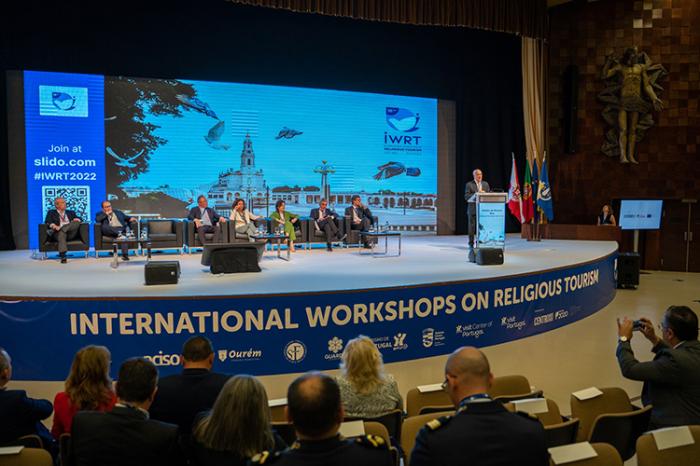
On 20 February 2026, the first phase of the thirteenth edition of the International Workshops on Religious Tourism (IWRT) concluded in Fátima. The event is organized by ACISO – Associação Empresarial Ourém-Fátima with a broad institutional partnership. A second stage followed on 23 February in the city of Guarda, known for its Jewish heritage, before participants continued to the BTL – Better Tourism Lisbon Travel Market on 25–26 February.
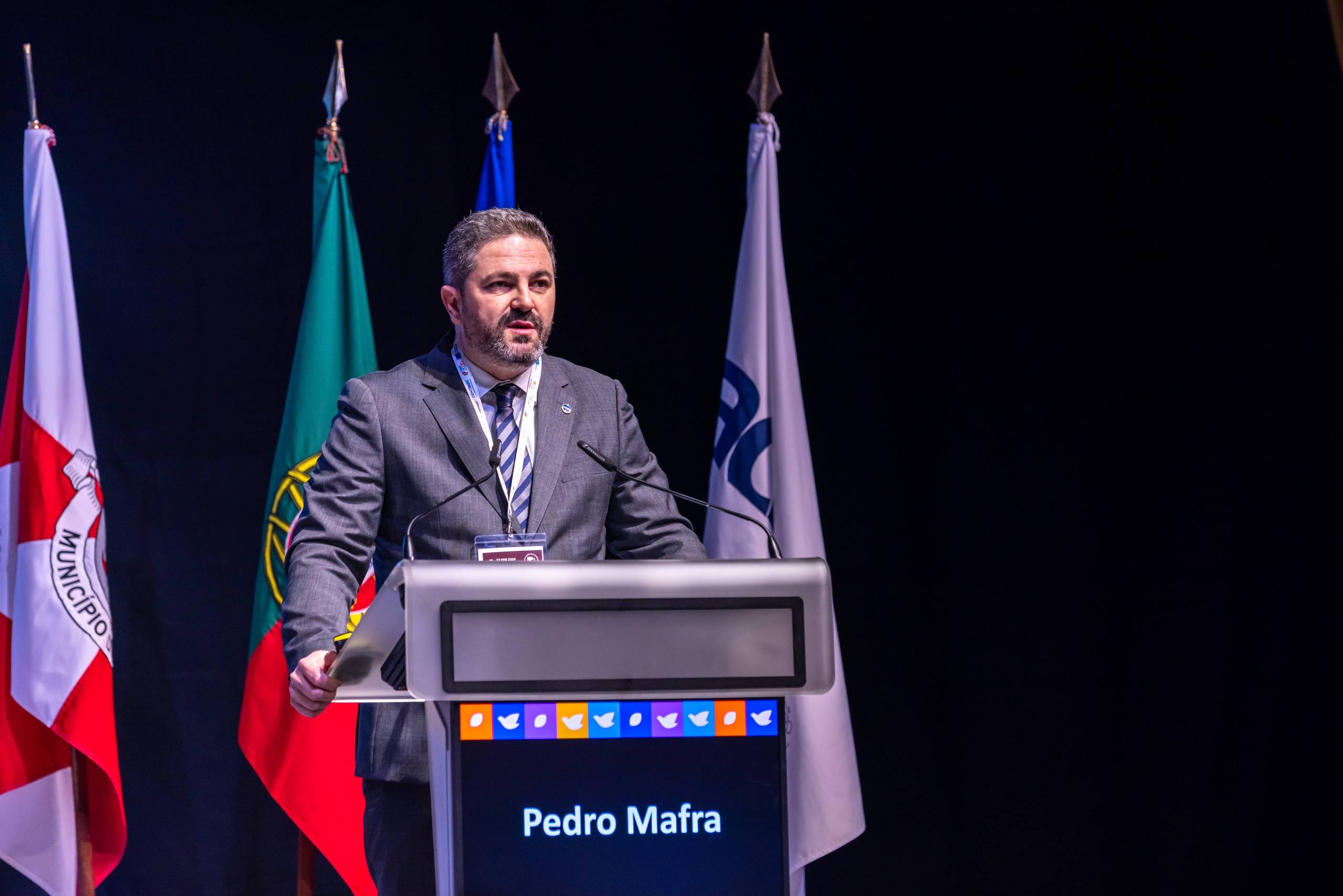
The scale of the event is reflected in its figures: 132 international buyers, 136 suppliers, 41 exhibitors, and representatives from 42 countries across 35 source markets. In two days alone, more than 5,200 B2B meetings took place. Pedro Mafra, president of ACISO, summarized the strategic importance succinctly: the value lies not only in the numbers but in their long-term economic and promotional impact, and in the relationships formed between destinations and tourism operators.
Places of faith: Memory and the pilgrim experience
The theme of the opening conference—Places of Faith: Memory, Spirituality, and the Pilgrim Experience—highlighted the conceptual framework behind the gathering. Art historian Marco Daniel Duarte, director of the museum of the Sanctuary of Fátima, emphasized that places associated with religious memory function as cultural landscapes rather than simple geographic coordinates.
In this perspective, pilgrimage operates as a structured experience shaped by memory, identity, and collective narrative. Researchers in neuroscience and cultural studies have increasingly explored how meaningful places activate emotional and autobiographical memory, reinforcing the bond between landscape and identity. The journey to a shrine therefore involves not only movement through space but engagement with cultural memory embedded in specific locations.
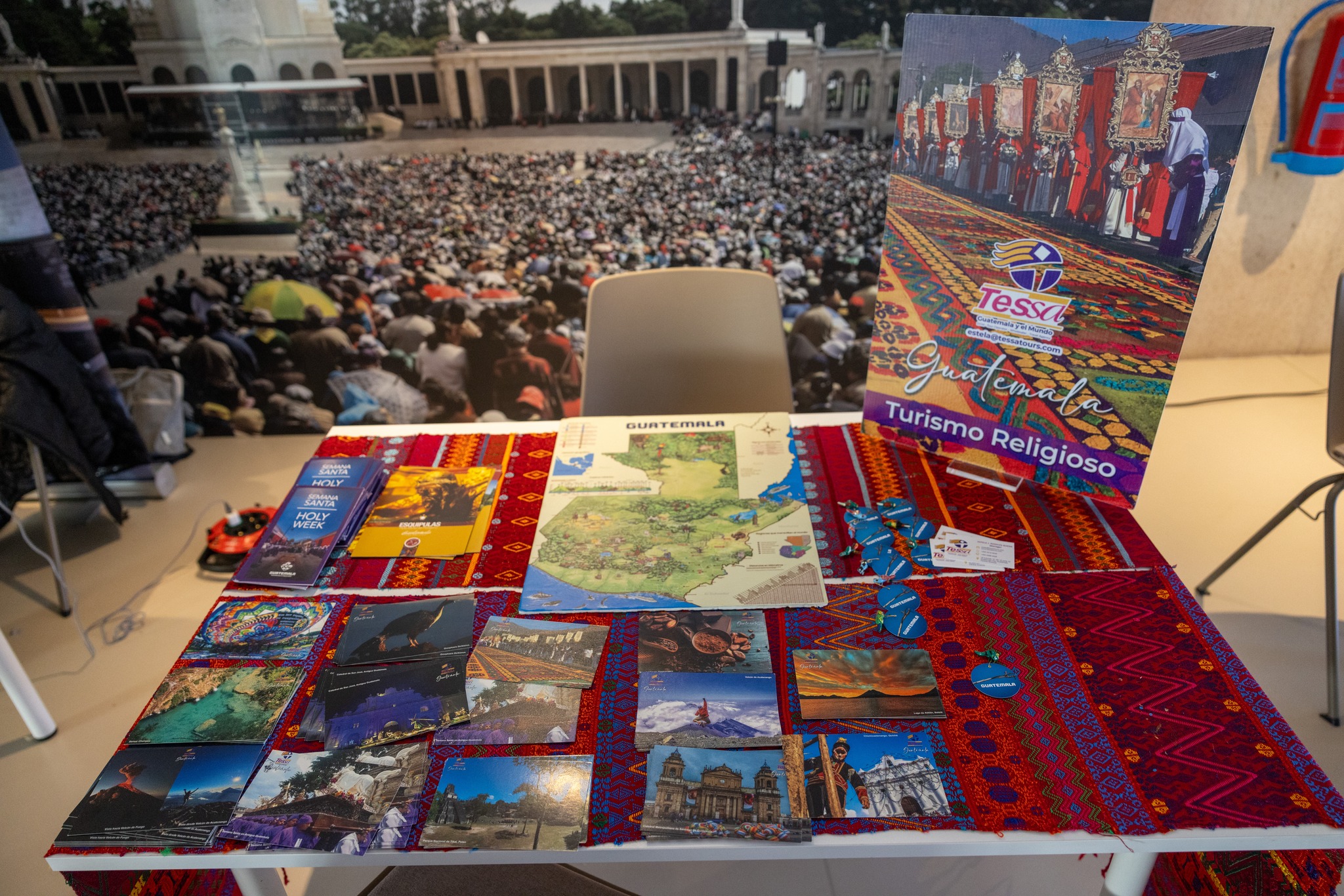
Among the presentations, one focused on the “Living Legacy of the Virgin Mary in Egypt through the Route of the Holy Family,” an itinerary linking more than twenty-five sites along the Nile and its delta. Promoted by the Egyptian Tourism Authority as a heritage route, it illustrates how pilgrimage itineraries increasingly operate as integrated cultural products that combine archaeology, history, and travel infrastructure.
Another proposal came from the municipality of Luján in Argentina, which introduced the concept of a First Ibero-American Forum of Marian Cities. The project seeks to connect destinations associated with Marian traditions across multiple continents, demonstrating how pilgrimage routes can also function as channels of cultural diplomacy and international cooperation.
Fátima as platform, not only destination
In 2025 the Sanctuary of Fátima received approximately 6.5 million pilgrims, positioning it among the most visited pilgrimage centers in the world. Yet its significance extends beyond devotional practice.
Regional tourism officials increasingly frame Fátima as a gateway that connects visitors to the wider cultural landscapes of central Portugal. Rui Ventura, president of the Centro de Portugal Tourism Board, described the sanctuary as both destination and access point—an entry into the Médio Tejo region and its surrounding cultural and natural heritage.
This approach reflects broader strategies in contemporary place branding, where prominent heritage sites function as anchors for regional tourism development. By linking pilgrimage with cultural itineraries, landscapes, gastronomy, and local traditions, destinations can diversify visitor experiences while strengthening regional economies.
Manuel Valamatos, president of the Médio Tejo Intermunicipal Community, offered a striking statistic: tourism in Fátima accounts for more than 75 percent of visitor activity in the region. The concentration illustrates both the strength of the sanctuary as an attraction and the challenge of distributing tourism benefits more widely across neighboring communities.
Tourism and community resilience
The thirteenth IWRT took place in a context shaped by severe weather events that affected several regions of Portugal earlier in the year. Maintaining the event carried symbolic significance as well as economic implications.
Local leaders emphasized tourism’s role in community recovery. Luís Albuquerque, mayor of Ourém, noted that regional resilience requires coordinated national and international support. Representatives of the Sanctuary also highlighted the potential of pilgrimage travel to contribute to local recovery by restoring visitor flows and economic activity.
Studies in disaster recovery consistently show that the revival of cultural and ritual practices—festivals, pilgrimages, and heritage visits—can support social resilience. Such activities help re-establish routine, reinforce community identity, and renew public spaces after disruptive events.
Emerging markets and changing geographies
Data presented during the workshops indicate notable shifts in the global geography of pilgrimage travel. South Korea has emerged as a rapidly expanding market for Portugal, supported in part by the direct air connection between Seoul and Lisbon. The United States, China, and Japan also continue to represent significant visitor markets.
These trends align with broader research on post-pandemic religious tourism. International studies estimate annual growth in the sector between five and seven percent, with particularly strong expansion in Asian markets where travel linked to cultural identity and heritage has long played an important role.
Pedro Machado, Portugal’s Secretary of State for Tourism, highlighted the potential scale of the IWRT network. The buyers and suppliers represented at the workshops collectively serve markets reaching billions of potential travelers, positioning the event as a key node within the global infrastructure of pilgrimage tourism.
Lithuania as guest destination
Each IWRT edition features a guest destination, and in 2026 the role was held by Lithuania. Represented by Lidija Bajarūnienė of the Lithuanian Ministry of Economy and Innovation and the European Travel Commission, the country presented a heritage landscape shaped by centuries of religious tradition.
Among the best-known sites is the Hill of Crosses near Šiauliai, where thousands of crosses placed over generations create a striking cultural landmark. Lithuania also highlighted its network of Marian shrines and historic churches, illustrating how northern European destinations are increasingly engaging with pilgrimage tourism as part of cultural heritage promotion.
The Lithuanian presence underscored the intercultural dimension of the IWRT, where destinations from different religious and historical contexts meet within a shared framework of heritage tourism.
The pilgrim certificate and the future of the routes
One of the announcements attracting particular interest concerned the forthcoming Pilgrim Certificate of Fátima. Scheduled for launch on 13 October, Portugal’s National Pilgrim Day, the certificate will recognize those who complete designated walking routes leading to the sanctuary.
Inspired by the credential system used on the Camino de Santiago, the initiative aims to strengthen the network of Fátima pilgrimage routes and respond to growing interest in slow travel and experiential tourism. Studies of contemporary travel patterns consistently show increasing demand for journeys that combine physical movement, landscape exploration, and personal reflection.
The second phase of the IWRT, held in Guarda, further broadened the scope of discussion by focusing on Portugal’s Jewish heritage—one of the Iberian Peninsula’s most significant yet often overlooked cultural legacies. This emphasis reinforced the workshops’ multi-faith perspective, presenting religious tourism not as a single tradition but as a diverse field of cultural routes and historical narratives.
For more than a decade, the IWRT has functioned as a meeting point where heritage, travel infrastructure, and cultural diplomacy intersect. By bringing together destinations, researchers, and tourism professionals, the workshops illustrate how pilgrimage routes—ancient in origin—continue to evolve within contemporary global networks of mobility and cultural exchange.
AI Transparency Notice
PilgriMaps uses artificial intelligence tools to assist in the research, drafting and translation of editorial content. All AI-assisted content is reviewed, edited and verified by our editorial team before publication. We contrast information against primary sources, specialist literature and on-the-ground knowledge to ensure accuracy, cultural sensitivity and editorial integrity.
AI is one tool among many in our workflow. The judgement, curation and responsibility for everything published on this platform remain entirely human.
Viator Media S.L. — in compliance with the EU Artificial Intelligence Act (Regulation EU 2024/1689).
This post is also available in: