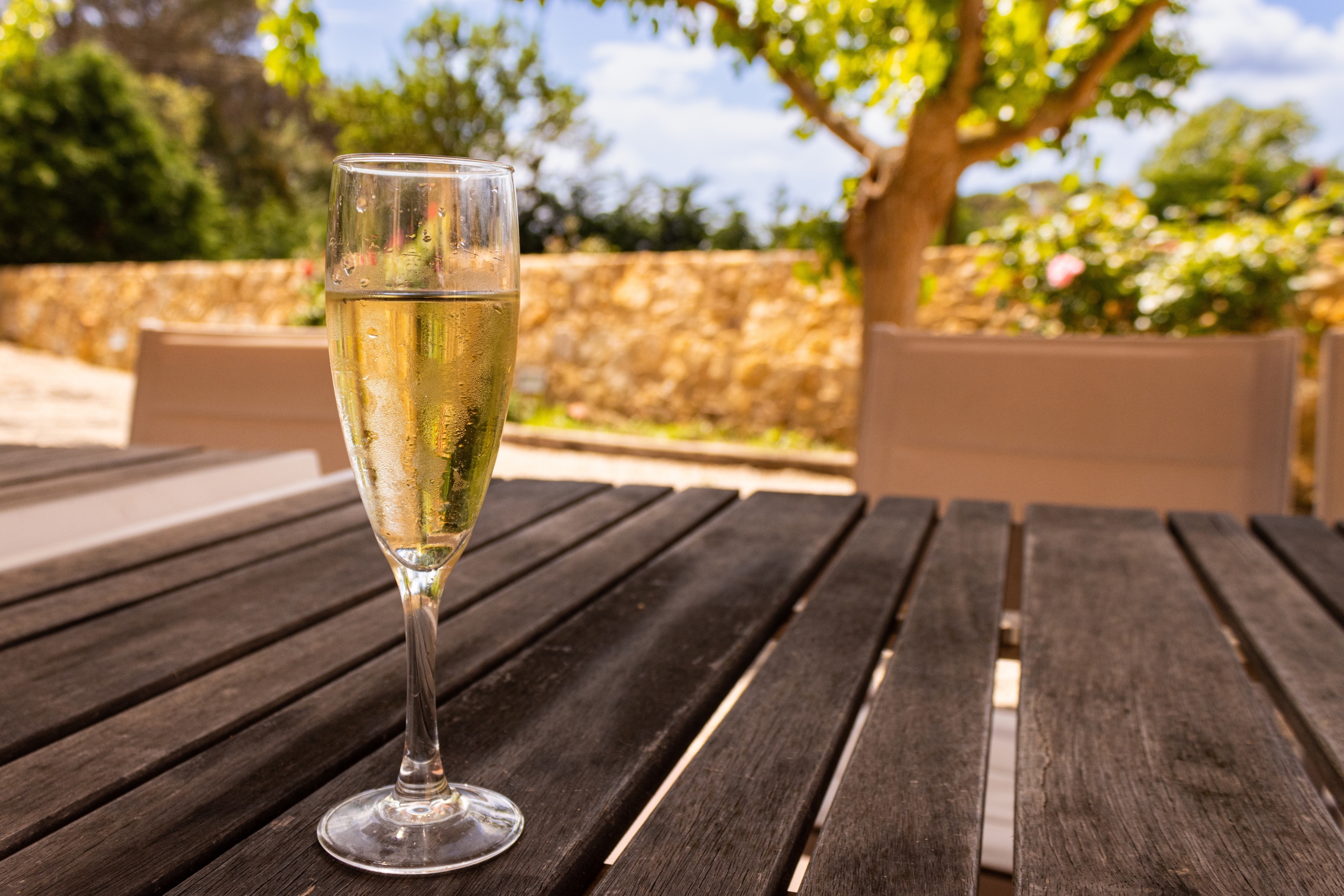
In the late 19th century, while Antoni Gaudí was raising impossible towers over Barcelona, thousands of bottles were quietly fermenting underground in the Penedès region. Catalonia was creating two modern symbols at the same time: a new architecture and a new wine.
The connection is more than a coincidence in timing. Catalan Modernism and the birth of cava emerged from the same historical moment: an expanding industrial society, a bourgeoisie eager for cultural prestige, and a Catalonia seeking to express its identity through architecture, industry, and landscape.
The relationship between Gaudí and cava is real, but not in the simplified way some tourist stories suggest. Gaudí was neither “the architect of cava” nor the designer of the great historic wineries of the Penedès. The truth is more interesting. He belonged to a network of patrons, industrialists, technicians, and architects who accompanied the rise of Catalonia’s sparkling wine and helped shape its modern image.
Two revolutions at the same time
The Catalonia in which Gaudí worked was undergoing rapid transformation. Barcelona was expanding as an industrial powerhouse, new fortunes were being made, and Modernism was becoming the visual language of a society that wanted to appear modern while remaining unmistakably Catalan.
At the same time, the Penedès was experiencing its own quiet revolution. The region was deeply rooted in viticulture and increasingly connected to European markets through railroads and maritime trade. During the second half of the nineteenth century, Catalan wine and brandy enjoyed remarkable growth. Then came phylloxera, the insect that devastated vineyards across Europe.
The crisis was enormous. Vineyards disappeared, and thousands of families were affected. Yet the recovery led to profound change: vineyards were replanted, new agricultural techniques were adopted, and producers increasingly turned toward sparkling wines made using the traditional French method. In other words, cava was born from a catastrophe as much as from an opportunity.
While Gaudí experimented with daring structures and flowing façades, the Penedès was rebuilding its agricultural landscape and defining a new wine industry. Both processes were part of the same Catalan modernization.
When champagne reached Catalonia
Before there was cava, there was fascination with champagne. During the nineteenth century, Catalan elites began consuming sparkling wines imported from France’s Champagne region. Reims and Épernay became essential reference points for Catalan entrepreneurs and technicians who traveled north in search of expertise and prestige.
The connection was not merely commercial. Catalonia also had a thriving cork industry, especially in Girona and the Empordà region, which maintained close ties with France’s great Champagne houses. Catalan cork literally helped seal the bottles of European champagne.
Eventually, an obvious question emerged: why not produce something similar in Catalonia? The figure most closely associated with the origins of cava is Josep Raventós Fatjó of the Codorníu family, who is generally credited with producing the first bottles of Catalan sparkling wine using the traditional method in 1872. Yet the process was collective. Technicians, merchants, agronomists, and entrepreneurs all participated in the gradual transfer of knowledge from France to the Penedès.
What matters is that cava was never intended as a simple copy of Champagne. It became a Mediterranean interpretation of the traditional method. Native grape varieties – Macabeo, Xarel·lo, and Parellada – gave Catalonia’s sparkling wine a distinctive personality of its own.
Did Gaudí have a relationship with cava?
Historical research reveals at least three different connections between Gaudí and the world of cava. The first is direct and well documented: the Celler Güell in Garraf, the winery developed by Eusebi Güell on the Mediterranean coast and associated with both Gaudí and his collaborator Francesc Berenguer.
The second is more technical and less known. In 1883, Gaudí prepared topographic surveys and measurement plans for the Can Rossell de la Llena estate in Gelida, a property historically linked to the wine-growing landscape of the Upper Penedès. The third connection may be the most important historically: cava eventually adopted aspects of Gaudí’s architectural language through other architects connected to his circle.
Celler Güell: The missing piece
Few of Gaudí’s works are as unusual as Celler Güell. Perched near the Mediterranean coast, the building seems part monastery, part ship, and part medieval fortress. Its steep roof appears to slide toward the sea, while its dark stone reinforces the impression of a structure designed as much for defense as for beauty.
The exact authorship remains debated. Most scholars today accept a joint involvement by Gaudí and Francesc Berenguer. Beyond the question of authorship, however, the building matters because it links different dimensions of the Modernist world.
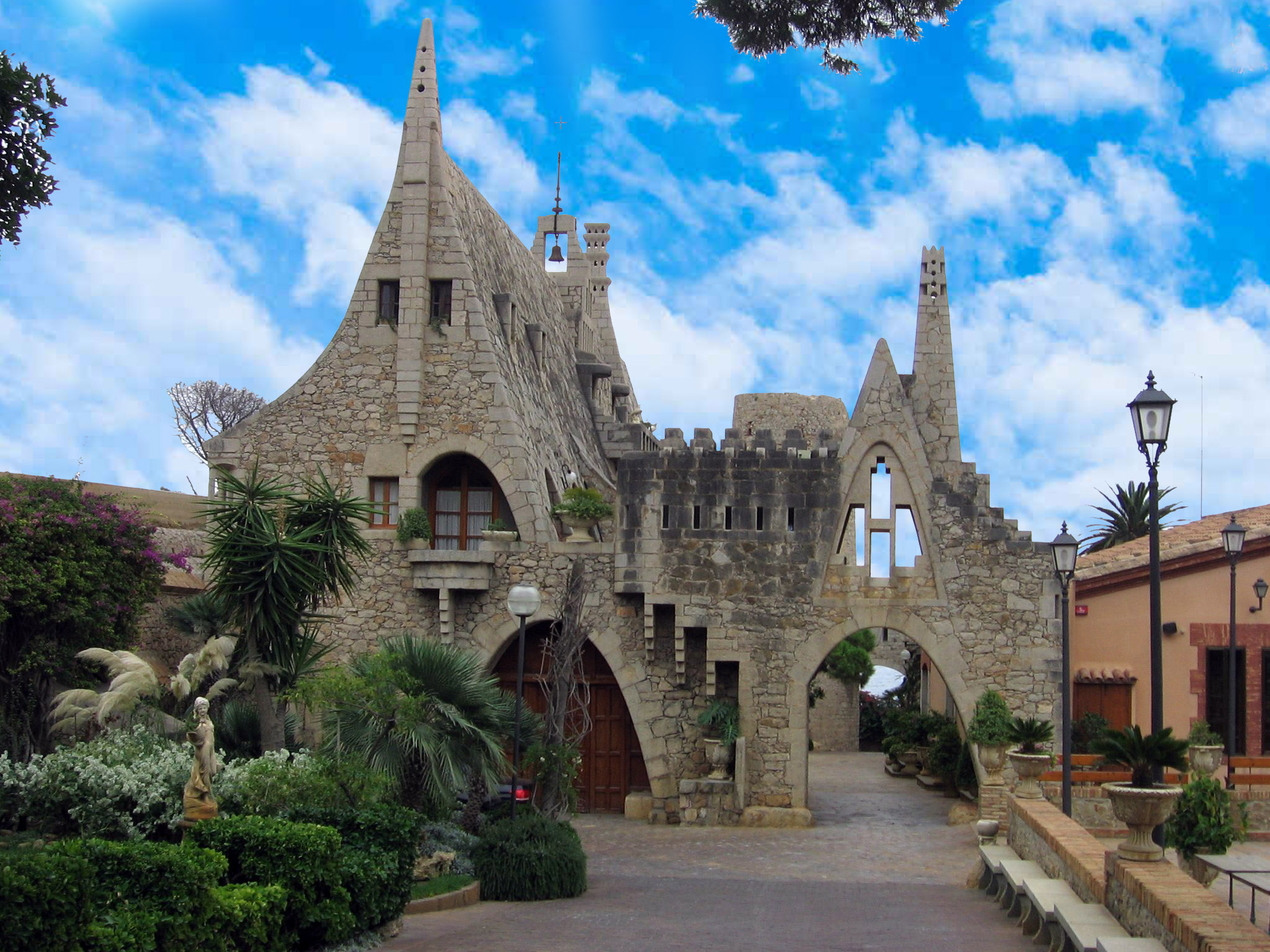
Celler Güell was not merely an architectural fantasy. It was a functional facility connected to the agricultural and wine-producing interests of Eusebi Güell, Gaudí’s great patron. It reminds us that Güell was not only an industrialist and arts patron; he was also involved in rural enterprises and wine-related projects in the Garraf region.
The winery also reveals something fundamental about Catalan Modernism: its ability to transform practical buildings into cultural statements. Even a wine facility could become a work of landscape art.
The Penedès Gaudí knew
Another, much less famous episode concerns Can Rossell de la Llena. In 1883, Gaudí produced two topographical surveys for this estate near Gelida and Subirats, in the heart of the Upper Penedès. Surviving documents confirm his direct technical involvement in a property tied to viticulture.
Compared with the grandeur of the Sagrada Família or Park Güell, the episode might seem insignificant. Yet it is fascinating precisely because of its modesty. Here we see a different Gaudí: practical, professional, almost invisible.
Not the visionary creator of organic forms, but a man measuring fields, boundaries, and agricultural land. Even so, this detail helps illuminate his relationship with Catalan territory. Gaudí moved not only among churches and urban palaces; he also knew the rural landscapes of the Penedès and understood their economic transformations.
When cava adopted Gaudí’s language
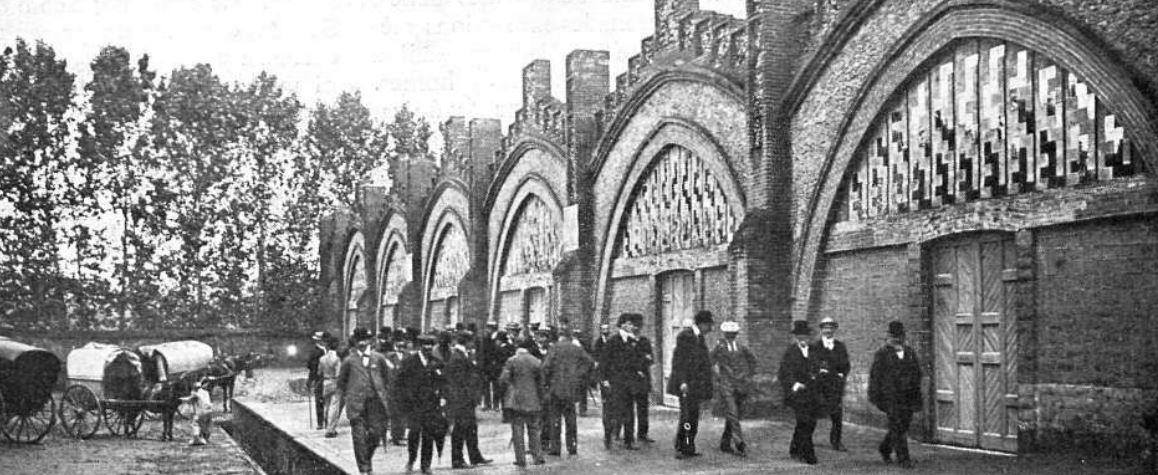
This is perhaps the most significant connection between Gaudí and cava. The great architectural landmarks of Catalan sparkling wine were not designed by Gaudí himself, but they absorbed elements of the Gaudían imagination and Catalan Modernism.

Lluís Bonet i Garí, another architect connected to Gaudí’s circle, also participated in later expansions and renovations associated with the Codorníu world. The result was significant: industrial cava gradually built part of its visual identity through Modernism and Gaudí’s architectural legacy. Gaudí did not directly shape cava’s aesthetic, but the cultural ecosystem around him certainly did.
Architecture, prestige, and wine
By the late nineteenth and early twentieth centuries, wineries had become more than agricultural production facilities. They evolved into symbols of economic power and cultural prestige.
The major cava houses quickly understood that producing sparkling wine was not enough. They also needed a visual narrative. Modernist wineries functioned as industrial cathedrals where technology, beauty, and economic ambition came together.
Modernism offered exactly what they needed: an aesthetic capable of expressing wealth, modernity, and Catalan distinctiveness all at once. Architecture helped transform cava from a celebratory beverage into a cultural symbol.
It is no coincidence that many of the historic wineries of the Penedès remain popular destinations today not only because of their wines, but also because of their architecture. The building and the product tell the same story.
Cava as Catalan identity
Over time, cava became more than a sparkling wine associated with celebrations and exports. The sector increasingly redefined itself around concepts such as origin, terroir, sustainability, and extended aging. Sant Sadurní d’Anoia remains the symbolic heart of that story. Much of the industry was born there, and it continues to anchor the cultural imagination surrounding Catalan sparkling wine.
Today, however, the story is more complex. The modern cava world is shaped by debates over quality, appellation systems, organic viticulture, and international prestige. Initiatives such as Corpinnat and Clàssic Penedès demonstrate how strongly producers seek to reinforce their territorial identity.
In some ways, this evolution mirrors Gaudí’s own legacy. For decades, his architecture was viewed primarily as decorative eccentricity. Today it is also understood as a profound reflection on place, nature, and culture. When Gaudí died in 1926, Catalan cava was still a young industry. Yet both the architect and the sparkling wine had already achieved something remarkable: they transformed a local identity into a recognizable way of seeing the world.
AI Transparency Notice
PilgriMaps uses artificial intelligence tools to assist in the research, drafting and translation of editorial content. All AI-assisted content is reviewed, edited and verified by our editorial team before publication. We contrast information against primary sources, specialist literature and on-the-ground knowledge to ensure accuracy, cultural sensitivity and editorial integrity.
AI is one tool among many in our workflow. The judgement, curation and responsibility for everything published on this platform remain entirely human.
Viator Media S.L. — in compliance with the EU Artificial Intelligence Act (Regulation EU 2024/1689).
This post is also available in: