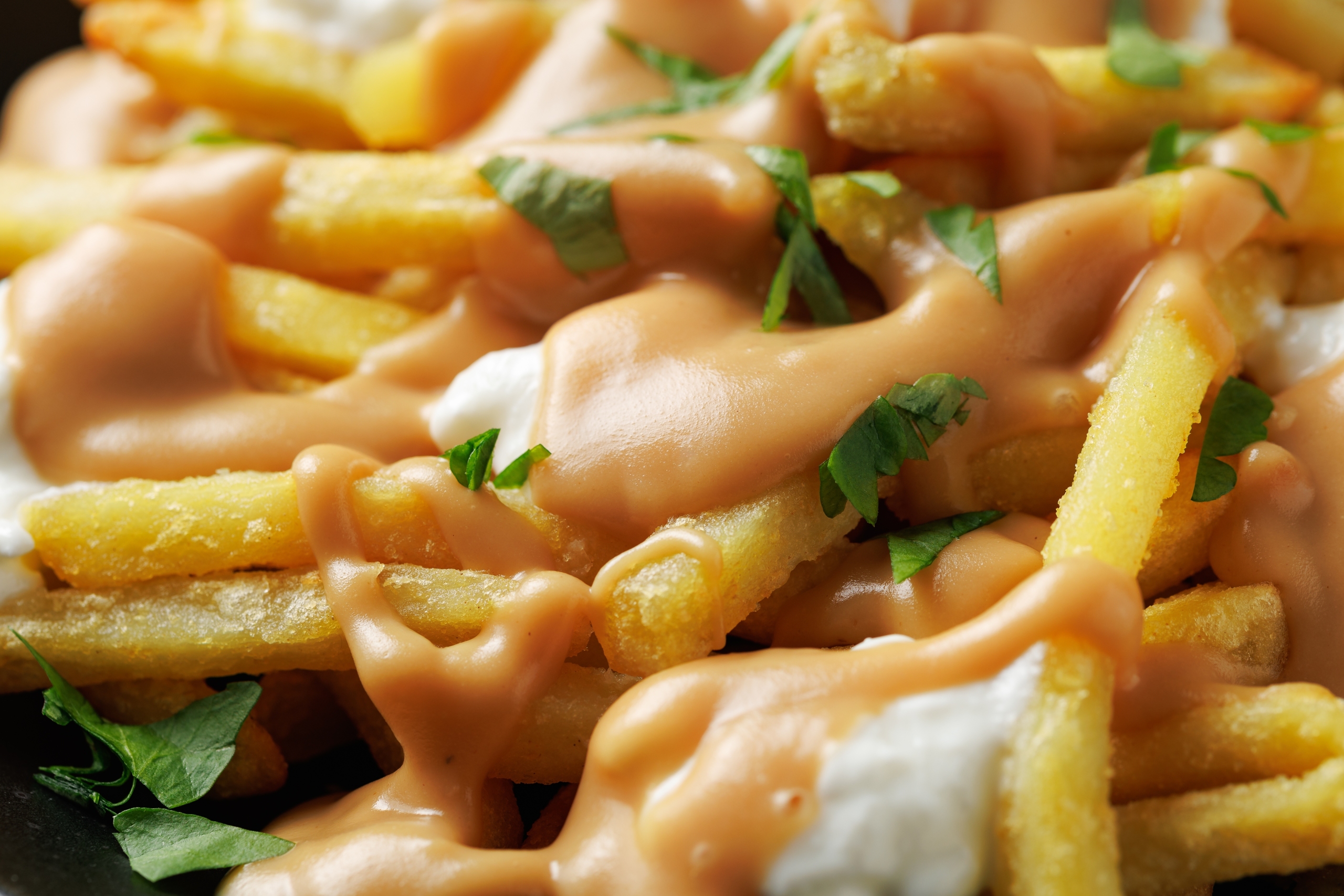
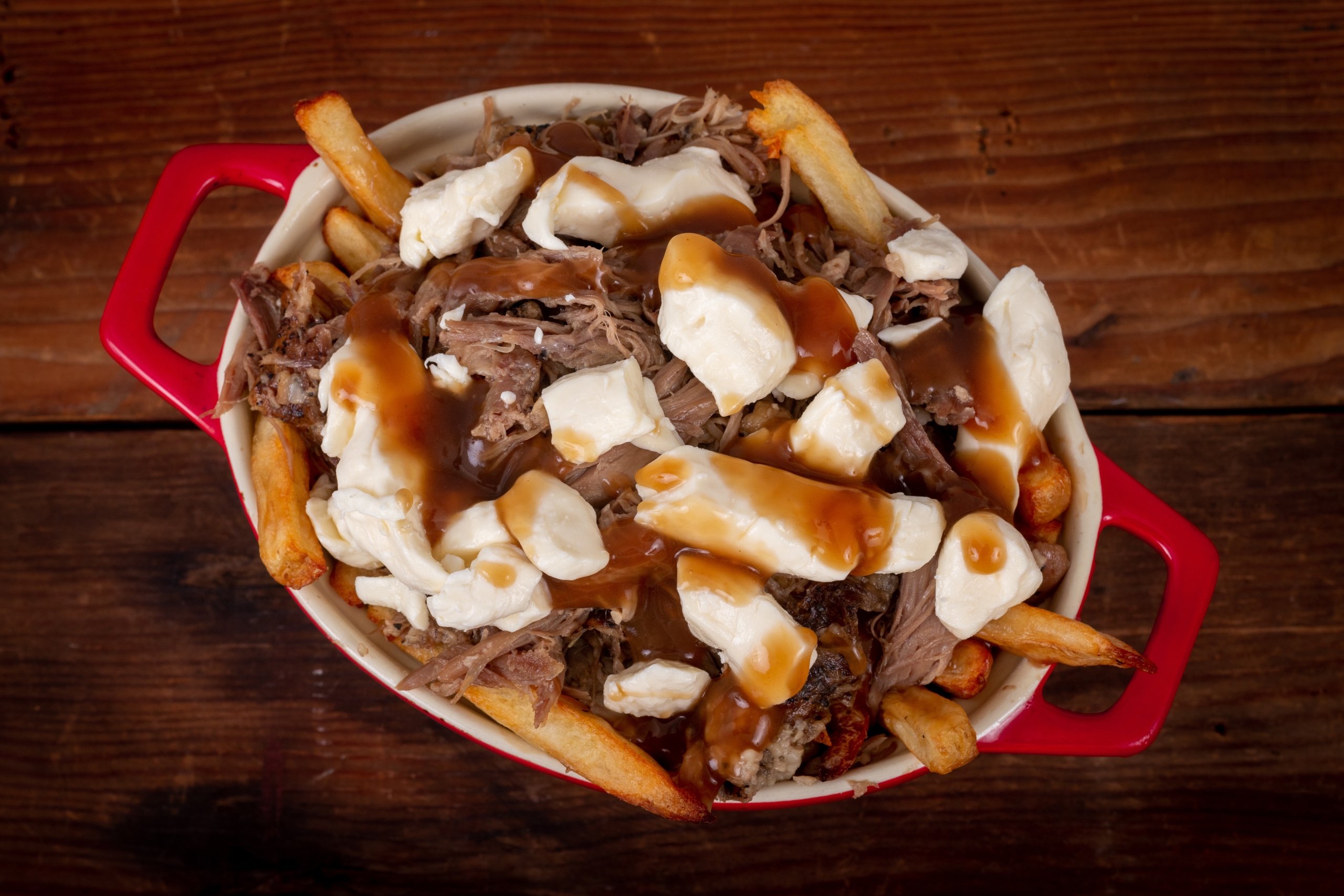
The coincidence between the name poutine – the well-known Quebec dish made of French fries, cheese curds, and gravy – and the French rendering of Russian president Vladimir Putin’s surname has, at times, led to misunderstandings that are as striking as they are superficial. In the Francophone world, both words are spelled identically, even though they share no common origin or meaning.
This linguistic overlap gained international visibility in 2022, following Russia’s invasion of Ukraine. Journalist Leyland Cecco reported in The Guardian how some restaurants serving poutine received criticism or hostile comments due to this unintended association. Establishments in France and Canada were quick to point out the obvious: the dish originated in Quebec in the mid-20th century and has no connection whatsoever to international politics.
Rather than reflecting any deeper cultural phenomenon, the episode illustrates how words can shift across contexts and generate confusion. Once this misunderstanding is set aside, poutine regains its true significance: a humble, popular recipe born in rural Quebec, whose story deserves to be told on its own terms.
A dish born in rural Quebec in the 1950s
Today, poutine is one of the most recognizable culinary symbols of Canada. It appears in restaurants of all kinds – from modest snack bars to high-end establishments – and has crossed borders to appear in cities across Europe, the United States, and Asia. Its origins, however, are surprisingly humble.
The story begins in rural central Quebec in the late 1950s, a region of small agricultural communities located between Montreal and Quebec City. At the time, the roads were dotted with modest family-run diners serving quick, inexpensive food: hamburgers, hot dogs, soft drinks, and generous portions of French fries.
Within this setting emerged a combination that now seems almost inevitable: French fries topped with fresh cheddar cheese curds and hot gravy. According to Encyclopaedia Britannica, the dish appeared in rural restaurants toward the end of the 1950s and spread rapidly throughout the region.
One ingredient was central to the dish’s character: cheese curds – small pieces of fresh cheddar curd produced during the cheese-making process. In Quebec’s dairy regions they were commonly sold in local cheese shops, often eaten fresh as a snack.
Combining them with French fries proved natural. The result was inexpensive, filling, and calorie-dense – exactly what farmers, laborers, and truck drivers traveling along rural roads needed.
The famous phrase: “A damn mess”
Like many popular recipes – from pizza to the hamburger – poutine has several possible birthplaces, each with its own version of the story.
The most widely known comes from Warwick, a small town near Victoriaville. In 1957, the owner of the restaurant Café Idéal – later called Le Lutin qui rit – was Fernand Lachance. A regular customer, Eddy Lainesse, asked for something unusual: he wanted cheese curds added to a bag of French fries.
According to the oral tradition recorded in several culinary histories, Lachance responded with a remark that later became legendary:
“Ça va te faire une maudite poutine!” (“That’s going to make a damn mess!”)
The word poutine was already used in Quebec French to describe a chaotic or messy mixture. It turned out to be the perfect name for the improvised dish.
The combination was an immediate success. Customers began requesting it frequently, and the restaurant eventually added it to the menu. Soon afterward, hot gravy was introduced, helping keep the dish warm while bringing the flavors together.
Drummondville vs. Warwick: The dispute over origins
Warwick is not the only place claiming the invention of poutine. Another widely circulated version comes from Drummondville, where the restaurant Le Roy Jucep asserts that the dish was created in 1964.
According to this account, the restaurant already served fries with gravy (patate-sauce). Customers often purchased bags of cheese curds at the same establishment and began adding them to the fries. As the combination grew popular, the owner, Jean-Paul Roy, decided to place it officially on the menu.
At first, the dish was called fromage-patate-sauce, a descriptive but impractical name. Eventually the simpler term poutine – already familiar in Quebec’s everyday speech – was adopted.
Other towns also claim a role in the dish’s creation, suggesting a plausible conclusion: poutine likely emerged simultaneously in several small rural restaurants as a result of similar culinary habits. In the history of gastronomy, popular recipes rarely have a single inventor. They often appear when cultural and economic conditions favor a particular combination of ingredients.
What makes an authentic poutine
Over time, poutine became such an important culinary symbol that debates emerged over what qualifies as an authentic version.
In Quebec, purists generally agree on three essential elements. The fries should be relatively thick and cut by hand. The exterior should be crisp while the interior remains soft. The cheese curds – fresh cheddar curds – form the heart of the dish. They are not grated cheese or mozzarella. Authentic curds have a springy texture and produce a distinctive squeak when bitten, a detail many Quebecers consider indispensable.
Finally, hot gravy is poured over the dish just before serving. The heat softens the curds slightly without fully melting them, creating a balance of textures that defines the experience of eating poutine. This interplay between crisp fries, elastic curds, and hot gravy distinguishes the original recipe.
From roadside food to cultural symbol
For several decades, poutine carried an ambiguous reputation. It was widely loved by local communities, yet it was also associated with inexpensive roadside food and an unsophisticated culinary style.
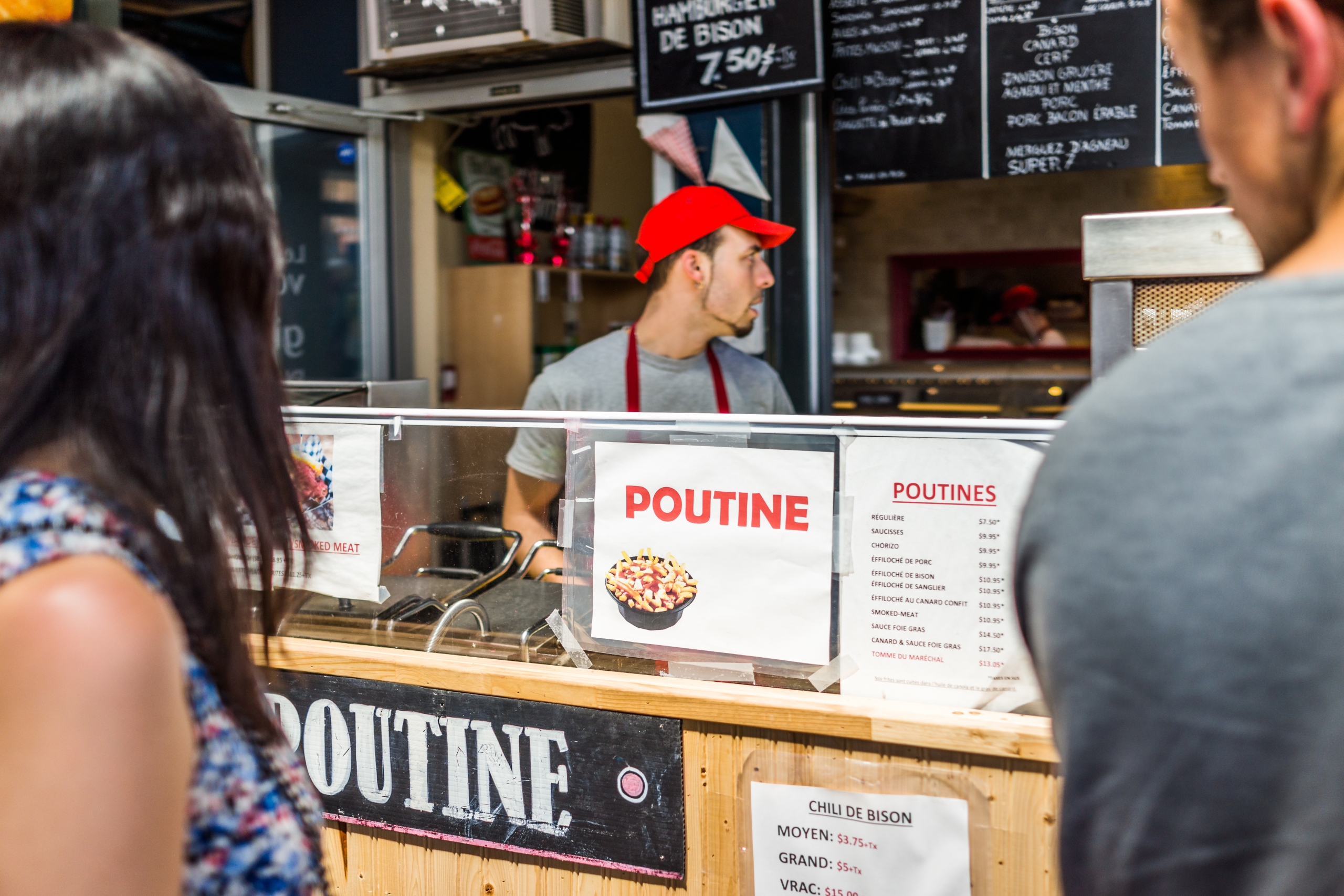
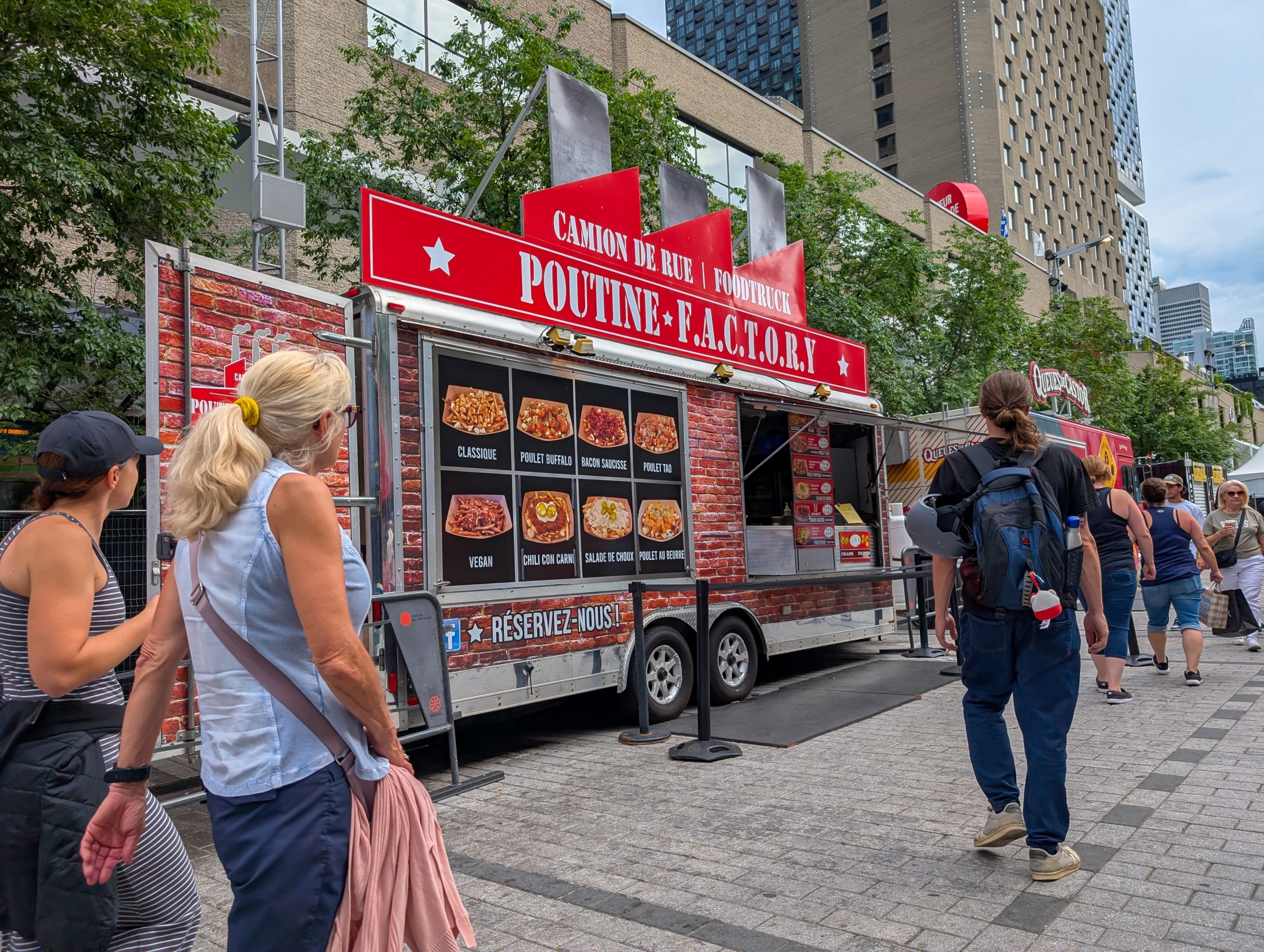
That perception began to change in the 1990s. Restaurants in Montreal and Quebec City started reinterpreting the traditional recipe, introducing more elaborate versions with ingredients such as duck confit, Montreal smoked meat, or even foie gras. At the same time, specialized restaurants known as poutineries appeared, offering dozens of variations on the dish.
Rather than diluting its identity, these reinterpretations helped consolidate poutine as one of Canada’s most representative culinary symbols – a process similar to the evolution of other popular dishes in many cultures. Today poutine appears at food festivals, on tourist menus, and in restaurants across the country.
A dish that tells a story
The story of poutine reveals more than the evolution of a recipe. It illustrates a recurring pattern in the history of gastronomy. Many culinary traditions now considered emblematic emerged in modest settings, far from centers of power or haute cuisine. They developed in small communities where everyday creativity transformed simple ingredients into dishes capable of bringing people together around a table.
The occasional confusion with the surname of a political leader, viewed in this light, becomes a minor anecdote. Poutine belongs to a different story – one shaped by rural highways, family-run diners, and cold winter nights in Quebec. In that narrative, French fries, cheese curds, and hot gravy combined almost by accident to become one of the most recognizable symbols of Canadian food culture.
AI Transparency Notice
PilgriMaps uses artificial intelligence tools to assist in the research, drafting and translation of editorial content. All AI-assisted content is reviewed, edited and verified by our editorial team before publication. We contrast information against primary sources, specialist literature and on-the-ground knowledge to ensure accuracy, cultural sensitivity and editorial integrity.
AI is one tool among many in our workflow. The judgement, curation and responsibility for everything published on this platform remain entirely human.
Viator Media S.L. — in compliance with the EU Artificial Intelligence Act (Regulation EU 2024/1689).
This post is also available in: