Even before understanding why, the body already knows that certain sounds are beneficial. It knew this long before words existed to describe it.
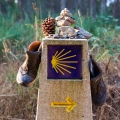
There is a sound that many pilgrims on the Camino de Santiago identify, when asked about their experience, as the moment they realized they had truly arrived. It is not the sight of the cathedral, remarkable though it is. It is not the Obradoiro Square, even though it is one of Europe’s most beautiful squares. It is the sound of the bells – those great bells of ancient bronze, rung in full peal during major celebrations and audible from kilometers away. They first arrive as a vibration felt in the chest more than in the ears, and then as a rich sound filling the surrounding air.
The body recognizes it before the mind identifies it. Something loosens. The shoulders drop a few centimeters. The breath opens. It is a physiological response to a specific auditory stimulus.
In the 1970s, the composer and theorist R. Murray Schafer introduced the concept of the soundscape to describe the collection of sounds that characterize and define an environment. Schafer’s central insight was that the sounds of a place are not a neutral background to be ignored; they are a constitutive part of the experience of that place. Change the soundscape and you change the place. Change the place and you change the people who inhabit it. Romanesque cathedrals, with their high vaults and thick stone walls, do not produce the same acoustics as Baroque basilicas or modern churches.
These differences are not accidental. Medieval architects designed buildings with a clear understanding of how sound would behave within them. The lingering echo in certain Benedictine choirs, the way a single voice multiplies within a Romanesque apse, the muffled silence of granite chapels – each was intended to create a particular state in those who entered.
Footsteps
Yet the most remarkable sounds of a pilgrimage are not the cathedral bells. They are footsteps – your own footsteps on the trail.
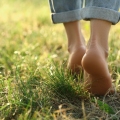
Try listening to them, just once, instead of covering them with music through earphones. On a dirt path, each step produces a muted, full sound that changes subtly with every meter of terrain: drier on compact clay, softer on damp earth, different again on cobblestones or tall grass. Gradually, this sound synchronizes with the rhythm of breathing – two steps for an inhalation, two for an exhalation – and then, during long hours of walking, with the heartbeat itself.
The Benedictine monks who organized their daily lives around the principle of ora et labora – pray and work – understood that the rhythmic walk between cloister, church, and fields produced something akin to prayer. Not because they necessarily recited formulas while walking, though they often did. Rather, because sustained rhythmic movement creates a state of quiet, focused attention that closely resembles meditative states described in contemplative traditions around the world.
Researchers studying music and the brain have extensively documented a phenomenon known as entrainment: the tendency of the nervous system to synchronize with regular rhythms from the external environment. The drums of shamanic ceremonies, Tibetan gongs, Gregorian chant with its slow and steady cadence—all produce measurable changes in the brain activity of listeners. Rhythmic walking does something similar, using one’s own footsteps as the source of sound. It is a self-generated rhythm through which the body regulates itself.
The wind
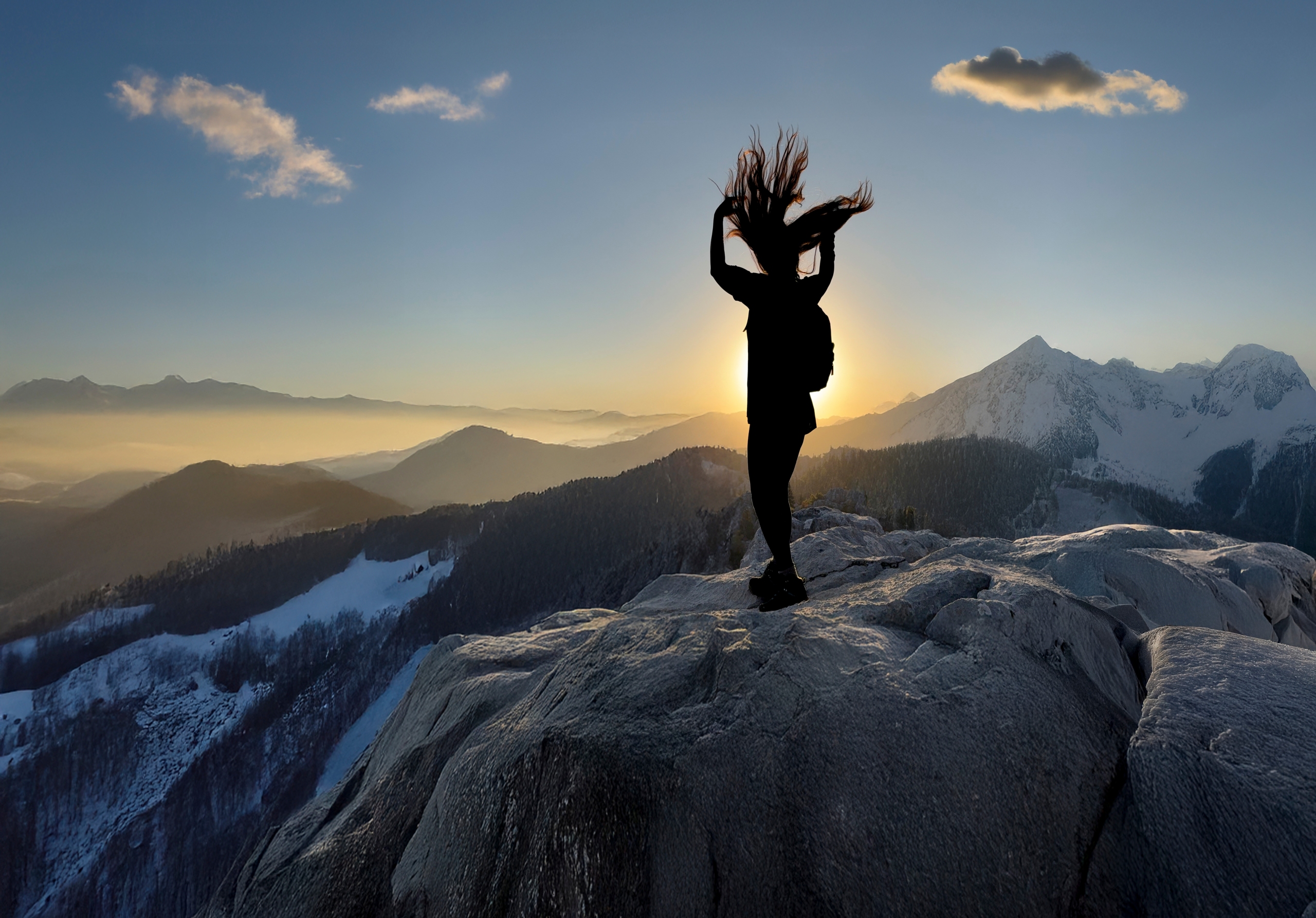
The wind deserves a chapter of its own. Not urban wind, the kind that rushes through corridors between buildings and overturns trash bins. That is noise, disturbance. The wind of ridgelines, high plateaus, and mountain passes is something entirely different. It has texture, direction, temperature, and what ancient sailors called character.
Transhumant shepherds of the Apennines knew winds by name and could tell what kind of day was coming from the way their flocks reacted even before the breeze arrived. Medieval pilgrims on Alpine routes knew that a certain wind meant snow by midday and prepared accordingly. This kind of knowledge – sensory, embodied, nonverbal – can only be acquired through prolonged exposure outdoors. Only by remaining still long enough to hear, rather than simply moving through the landscape.
The Tibetan mantras recited during the kora around Mount Kailash – and especially Om Mani Padme Hum, repeated softly for hours by pilgrims as they walk – produce vibrations in the larynx that, at specific frequencies and intensities, mechanically stimulate branches of the vagus nerve passing through that region. The vagus nerve is the body’s principal parasympathetic nerve, associated with calm, rest, digestion, and the reduction of alarm responses. It is a form of sonic pharmacology requiring no external ingredient: only voice, rhythm, and intention.
Toward the end of a long pilgrimage, something changes in the way the world is heard. Things become noticeable that passed entirely unnoticed during the first week: the difference in sound between a dry trail and a wet one beneath the feet; the shift in the tone of the wind as altitude increases; the way a forest sounds differently in the morning than in the afternoon; the distinctive, dense silence that precedes rain. It is not that these sounds were absent before. They were always there. The journey has simply removed enough background noise – both internal and external – to make them finally audible.
References
- Schafer, R.M. (1977). The Soundscape: Our Sonic Environment and the Tuning of the World. Destiny Books.
- Levitin, D.J. (2006). This Is Your Brain on Music. Dutton.
AI Transparency Notice
PilgriMaps uses artificial intelligence tools to assist in the research, drafting and translation of editorial content. All AI-assisted content is reviewed, edited and verified by our editorial team before publication. We contrast information against primary sources, specialist literature and on-the-ground knowledge to ensure accuracy, cultural sensitivity and editorial integrity.
AI is one tool among many in our workflow. The judgement, curation and responsibility for everything published on this platform remain entirely human.
Viator Media S.L. — in compliance with the EU Artificial Intelligence Act (Regulation EU 2024/1689).
This post is also available in: