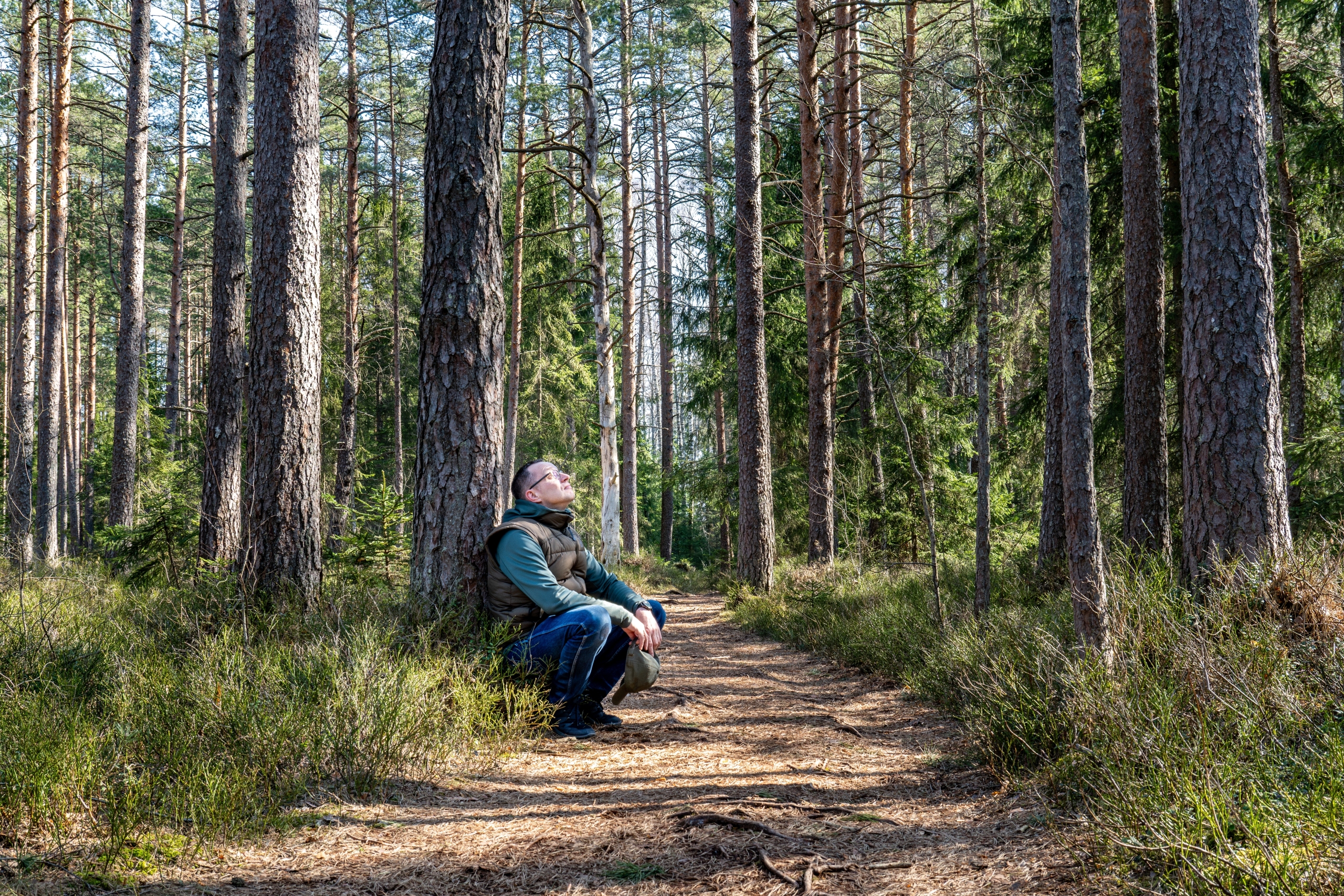
Why natural silence is emerging as a frontier of inner well-being, and what scientific research suggests about its capacity to restore mind and spirit
There is a precise moment when silence ceases to be absence and becomes presence. It occurs when the noise of the world recedes, leaving only the rhythm of the heart, the rustle of leaves, the breath. Those who have walked alone in a forest at dawn recognize it. Those who have spent a night in a mountain hermitage remember it. That silence is not empty; it is filled with something that resists naming, yet has a restorative quality.
Scientific research is beginning to articulate what contemplative traditions have long observed: the silence of natural environments offers more than auditory rest. It supports physiological and psychological regeneration. In an age defined by continuous sensory input, this form of quiet is gaining renewed relevance.
The physiology of silence: what happens when noise recedes
A study published in the journal Heart found that just two minutes of silence can produce relaxation effects greater than those associated with meditative music. Cortisol levels decrease, heart rate slows, and the parasympathetic nervous system—responsible for rest and recovery—activates spontaneously.
A 2024 meta-analysis in Psychoneuroendocrinology, examining 58 studies with more than 3,500 participants, confirmed that mindfulness- and relaxation-based interventions are among the most effective in reducing cortisol levels, with an average effect size of 0.345. Silence, when combined with exposure to natural environments, appears to amplify these effects. These changes are measurable through biochemical markers in blood and saliva.
Natural silence, however, is not defined by the absence of sound. The auditory field of a forest or riverbank includes birdsong, flowing water, and wind through vegetation. Researchers describe this as a “restorative soundscape”: a pattern of sound that the human brain, shaped over long evolutionary periods in natural settings, registers as safe.
Within such environments, the limbic system—associated with emotional processing—tends to settle. The amygdala, which monitors potential threats, reduces its level of activation. The result is not only calm, but a shift in the body’s baseline state.
Technostress and the search for quiet
According to the Association of Nature and Forest Therapy, 97% of the population in the United States is exposed to daily noise. Environments of sustained quiet have become increasingly rare. Contemporary life is marked by constant sensory demand: notifications, screens, traffic, overlapping conversations, and the persistent hum of electronic devices.
The term “technostress,” introduced in Japan in 1984, describes the strain associated with prolonged exposure to technology. Today, it is widely used to characterize a pervasive condition. Noise pollution, beyond its subjective annoyance, has been linked to elevated blood pressure, sustained increases in stress hormones, and a higher risk of cardiovascular disease. Even low-level background noise—often no longer consciously perceived—can maintain the nervous system in a state of alertness.
Responses to this condition are often framed through older practices: silent retreats, solitary walking routes, stays in remote dwellings. These are not simply expressions of nostalgia. They reflect a physiological need. The human brain is not adapted to process continuous, high-density stimulation. Offering it periods of silence does not remove something essential; it restores a missing condition.
Contemplative traditions and the long history of silence
Across cultures, silence has been understood as a medium for reflection and transformation. In the 13th century, the Persian poet Rumi described silence as a language beyond words. From the 4th century onward, Christian ascetics in the Egyptian desert sought hesychia, a state of inner stillness associated with attentive awareness. Zen practitioners structure meditation around seated silence, while certain Hindu traditions include mauna, or periods of intentional silence.
Within Christian thought, figures such as John of the Cross described phases of interior quiet as part of a process of transformation. Quaker communities have long practiced collective silence as a form of shared attention. In Eastern Christian contexts, hesychast practices developed forms of inward prayer carried out in stillness.
These approaches can be understood as structured methods for reducing distraction and cultivating sustained awareness. Contemporary neuroscience increasingly examines similar conditions under terms such as stress reduction and attentional regulation. Silent presence in natural environments combines two factors: reduced artificial stimuli and sustained exposure to non-threatening sensory patterns. Together, they create conditions associated with recovery from chronic stress.
Places of quiet: landscapes associated with retreat
Across different regions, certain sites have become associated with sustained silence. In northern Spain and in Tuscany, monastic communities offer simple accommodation to visitors seeking periods of quiet, regardless of religious affiliation. Monte Oliveto Maggiore, in the clay hills of southern Tuscany, receives guests for extended stays shaped by silence and routine.
In Japan, temples on Mount Kōya maintain long-standing practices of early morning meditation, structured around ritual continuity. On the island of Iona, off the western coast of Scotland, a long tradition of retreat has drawn visitors for over fifteen centuries.
In Italy, the hermitage of Camaldoli, located within the forests of the Casentino, has maintained a continuous association with silence since the early eleventh century. The Sacro Speco at Subiaco, connected to the early life of Benedict of Nursia, and the Charterhouse of Serra San Bruno in Calabria, are similarly linked to traditions of withdrawal and quiet.
Yet such experiences do not depend exclusively on distant travel or formal institutions. Urban parks at dawn, woodland paths away from traffic, or coastal areas outside peak seasons can offer comparable conditions. The defining factor is not location alone, but the deliberate choice to step outside continuous noise.
Practice: entering silence
Contemporary guidance often emphasizes observation rather than control. One approach, associated with Vedanta-based teaching, suggests allowing mental activity to settle without direct intervention. Thoughts are not forced into silence; they are permitted to slow, much as water becomes still when wind subsides.
Natural environments tend to support this process. Broad landscapes—mountain horizons, forests, open water—shift attention away from immediate concerns. With fewer external demands, cognitive activity may reorganize at a slower pace.
A practical entry point may begin with ten minutes per day. A natural setting, however modest, is sufficient. Devices are set aside. One may sit or walk without a fixed objective. The emphasis is on sustained presence rather than directed thought. Over time, such intervals can function as a stable reference point, accessible when external demands intensify.
Recovering what remains available
The silence of nature does not introduce something entirely new. It allows recognition of a condition that is often obscured. It is widely accessible, requires no specific framework of belief, and involves minimal resources beyond time and attention.
In contexts that prioritize constant connectivity and responsiveness, natural silence offers an alternative mode of engagement: sustained presence. In the 17th century, the philosopher Blaise Pascal observed that many human difficulties arise from an inability to remain quietly in one place. His remark can be read today in broader terms. The “room” need not be enclosed. It may take the form of a forest, a mountain landscape, or an open field at dawn.
In such settings, silence is not the absence of the world, but a different way of encountering it—one that continues to draw individuals seeking restoration, clarity, and balance.
AI Transparency Notice
PilgriMaps uses artificial intelligence tools to assist in the research, drafting and translation of editorial content. All AI-assisted content is reviewed, edited and verified by our editorial team before publication. We contrast information against primary sources, specialist literature and on-the-ground knowledge to ensure accuracy, cultural sensitivity and editorial integrity.
AI is one tool among many in our workflow. The judgement, curation and responsibility for everything published on this platform remain entirely human.
Viator Media S.L. — in compliance with the EU Artificial Intelligence Act (Regulation EU 2024/1689).
This post is also available in: