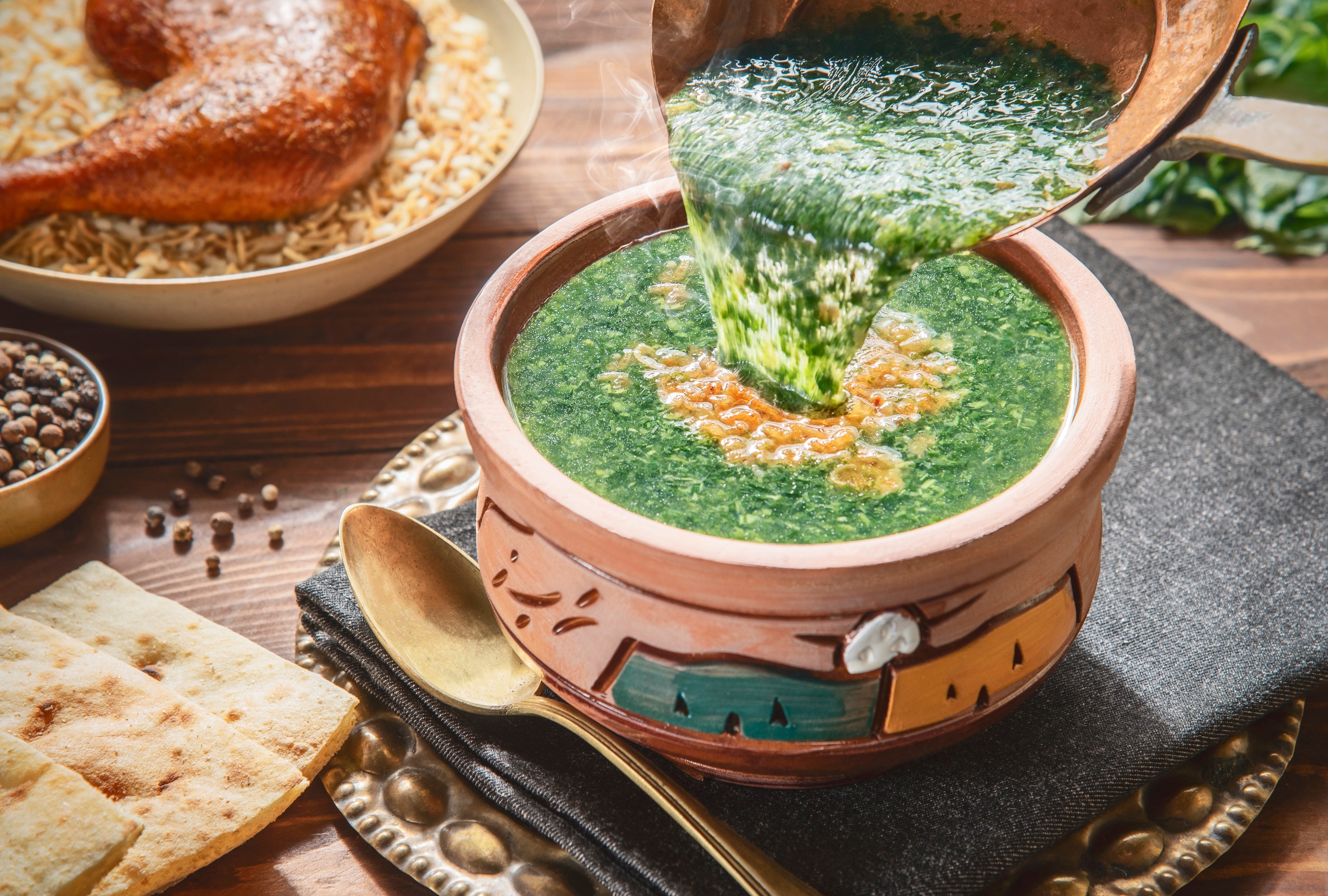
In an Egyptian home, the defining moment in preparing molokheya arrives with a sudden sizzle. The cook lifts a pan filled with garlic and coriander fried in hot fat and pours the fragrant mixture into the bubbling green soup. For an instant, the kitchen fills with steam, aroma, and sound.
In many Egyptian families, this gesture is accompanied by a theatrical exclamation, a loud sigh, or an almost ritual reaction. It is a small domestic rite passed down from one generation to the next, especially in homes across the Nile Delta, the alleyways of Cairo, and the kitchens of Alexandria. Before the dish itself comes the gesture. That moment consecrates the preparation.
Molokheya — scientifically known as Corchorus olitorius — is a plant that thrives in Egypt’s heat as naturally as a creature inhabits its native environment. It germinates once the soil reaches around 21 degrees Celsius and is ready for its first harvest after sixty to seventy days. Its stalk grows upright toward the sun, while its small pointed leaves absorb the Nile’s warmth and light.
In the Nile Delta, where small farms dominate the agricultural landscape, molokheya grows alongside tomatoes, okra, and fresh coriander. Large estates tend to favor cereals and cotton; smaller farms cultivate the vegetables that define everyday Egyptian cooking.
Farmers sow the seeds in spring, once the danger of cold weather has passed. To ensure fresh leaves throughout summer, they plant successive crops every two to four weeks. The first cutting comes when the plant reaches roughly sixty centimeters in height. Farmers harvest the tender upper shoots while leaving the plant to branch again. A single plant can be harvested several times during the season.
For generations, Egyptian women learned to recognize the perfect harvest moment simply by watching mothers and grandmothers. It was knowledge transmitted without the need for words.
The Caliph who tried to ban it
The story every Egyptian knows dates back to the early eleventh century. The sixth Fatimid caliph, al-Hakim bi-Amr Allah, ascended the throne at the age of eleven and ruled Egypt from 996 to 1021. Medieval chroniclers describe him as an unpredictable and controversial ruler.
Among the many restrictions issued during his reign was one concerning molokheya itself.
According to several medieval sources, the caliph banned its sale and consumption in 1004. The historian al-Maqrizi later wrote that people were publicly punished for continuing to sell the plant in Cairo’s markets. The reasons behind the prohibition remain uncertain. One common interpretation suggests that molokheya had become associated with the Sunni caliph Muawiya, founder of the Umayyad dynasty and a historical rival of the Shi‘i Fatimids.
Popular legends also emerged around the episode. One story claims that al-Hakim executed a man nicknamed “Molokheya,” though historians generally regard the tale as folklore rather than documented history.
In 1021, al-Hakim disappeared mysteriously during a nighttime ride on Cairo’s Muqattam Hills. His body was never found. Some Druze traditions historically associated the rejection of molokheya with reverence for al-Hakim. In Egypt itself, however, the plant quickly returned to the table. The prohibition lasted only a few years. The tradition has endured for nearly a thousand.
Tasha: The heart of Egyptian cooking
Every Egyptian kitchen relies on a technique known as ta’leya or tasha: garlic and coriander are fried in bubbling ghee — clarified butter — before being poured into an already hot dish. The intense heat releases the coriander’s aroma and softens the garlic until it becomes golden and fragrant.
Molokheya receives this treatment at the very end of cooking. The contact between the sizzling tasha and the green soup creates the characteristic sound that fills the kitchen.
Egyptian families even preserve jokes and humorous traditions surrounding the moment. Some grandmothers claim they can judge a person’s cooking skills by the way they prepare the tasha. It is domestic irony, but also an affectionate way of transmitting culinary tradition.
Egypt on a plate: Regional variations
Egypt does not cook molokheya in a single way. The cuisine shifts according to geography.
In Alexandria, along the Mediterranean coast, many people prefer preparing it with shrimp. The flavor of the sea blends with the velvety texture of the soup. In the Nile Delta and Upper Egypt, poultry is more common: chicken, duck, and especially rabbit. Rabbit is often considered the most refined and traditional pairing, though it appears less frequently on everyday tables today.
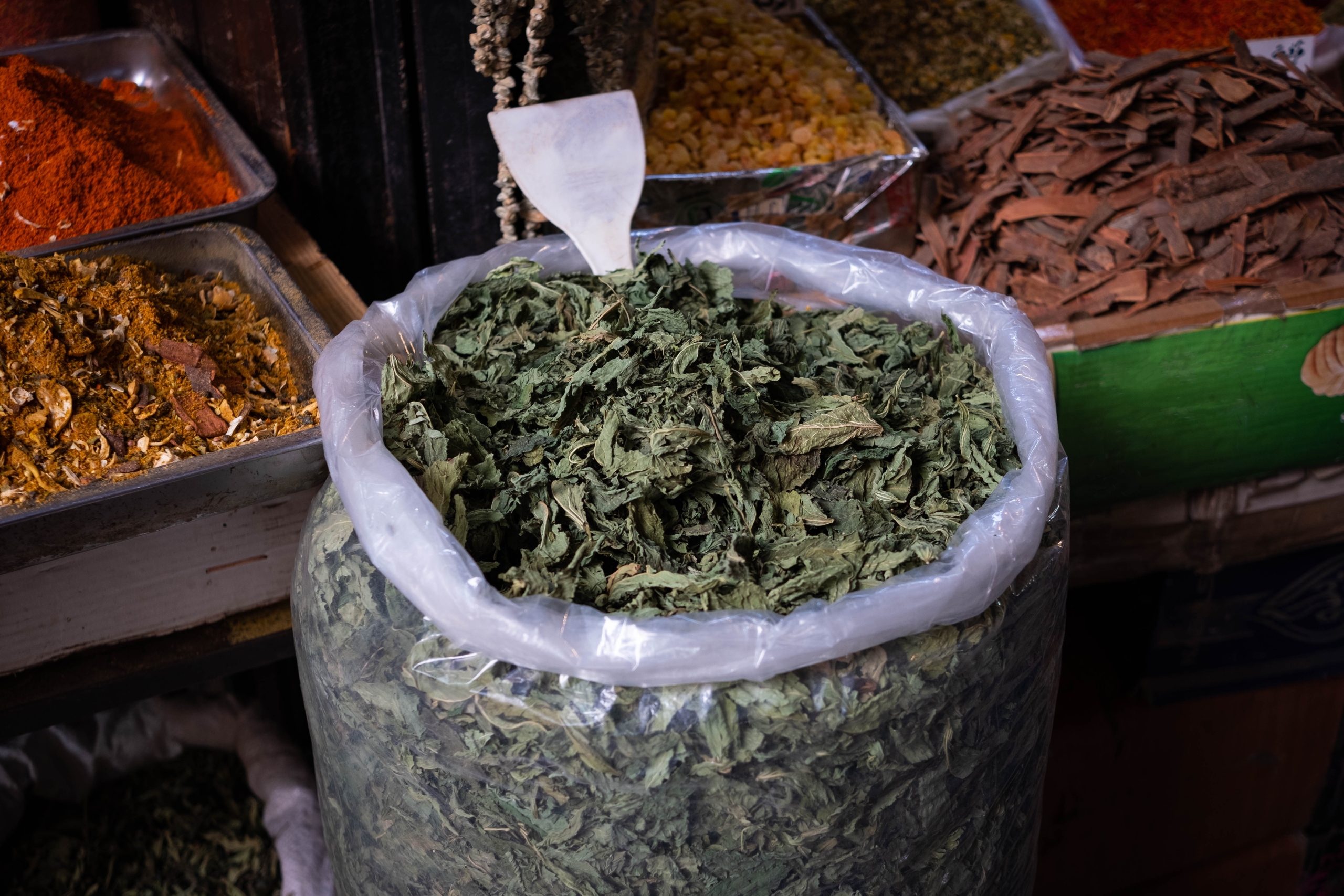
In Naga al-Aqarba, a village near Luxor, a particular tradition is linked to the Mawlid — the celebration of the Prophet Muhammad’s birth. During the festival, villagers prepare large pots of molokheya nashfa, a version made with sun-dried leaves. The dish is distributed together with meat among local families, transforming food into a collective gesture of hospitality and solidarity.
One village elder explains: “We inherited this tradition from our ancestors. Every year they prepared molokheya nashfa and distributed it to the village families. We still continue the tradition today.” In that context, molokheya ceases to be merely food. It becomes shared memory.
The Traditional Egyptian Recipe
Ingredients (serves 4)
500 grams fresh molokheya leaves (or 200 grams frozen)
1.5 liters salted chicken stock
One whole chicken previously boiled in the stock
8–10 garlic cloves, crushed and finely chopped
1 tablespoon freshly ground coriander seeds
2 bay leaves
2–3 tablespoons ghee or oil
Salt and black pepper
White rice with toasted vermicelli and pita bread for serving
Preparation
Carefully separate the fresh leaves from the stems, keeping only the tender parts. Spread them on a cutting board and chop them finely with a sharp knife using quick, rhythmic movements. The final texture should resemble a very fine green paste. Traditionally, cooks use a mezzaluna — the curved blade rocked rapidly with both hands.
Bring the chicken stock to a boil in a large pot. Add the bay leaves, salt, and pepper. Once boiling, lower the heat to medium-low and add the chopped molokheya. Stir gently to avoid lumps. As the leaves cook, they release natural compounds that give the soup its characteristic velvety, slightly viscous texture. Let it simmer gently for fifteen to twenty minutes.
In a separate pan, heat the ghee over medium-high heat. Add the ground coriander and allow its aroma to bloom for a few seconds. Add the chopped garlic and cook until lightly golden, without allowing it to darken.
Lift the pan and pour the tasha directly into the bubbling molokheya. The sudden sizzling sound will fill the kitchen with the unmistakable aroma of Egyptian cooking.
Stir gently. Taste and adjust the seasoning.Serve in deep bowls alongside white rice with toasted vermicelli and pieces of boiled chicken. Warm pita bread is torn by hand and used to scoop up the soup. Some families also add fresh lemon juice or pickled red onions.
Molokheya as an Egyptian language
In many Egyptian homes, the first gesture of affection comes through food. Foul and taameya on Friday mornings, molokheya during large family azouma gatherings, feteer meshaltet during celebrations: each dish tells a story of tradition, community, and domestic memory.
On Fridays, after prayer, many families gather for lunch. Molokheya frequently appears on these tables. Children learn to recognize its aroma from the building staircase. Older generations rediscover the taste of childhood in every bowl.
In Egypt, molokheya grown in the fertile Nile Valley remains both affordable and nourishing. Rich in vitamin K, vitamin C, iron, calcium, and antioxidants, it continues to occupy a central place in everyday cooking.
Egyptians in the diaspora search for it wherever they go. They find frozen packets in Arab supermarkets in London, Paris, or New York. Relatives bring it from Cairo in suitcases. Families prepare it in foreign kitchens whenever homesickness becomes too strong.
One Egyptian woman living in Washington recently described cooking molokheya and sending a photograph to her mother in Cairo. The reply came immediately: “You dropped it!” In other words: the consistency is wrong, the leaves are too large, the broth is too thin.
Her daughter laughed. She was not cooking it for technical perfection. She was cooking it for the aroma of the tasha filling the kitchen. For the gesture learned in childhood. To feel at home again.
Egypt has endured invasions, dynasties, prohibitions, and revolutions. Yet a simple green plant has remained on the country’s tables, in its cooking pots, and in family memory.
Molokheya remains one of Egypt’s most intimate voices: a voice that tastes of home, roots, and remembrance, continuing to warm the hearts of those who prepare it and those who share it.
AI Transparency Notice
PilgriMaps uses artificial intelligence tools to assist in the research, drafting and translation of editorial content. All AI-assisted content is reviewed, edited and verified by our editorial team before publication. We contrast information against primary sources, specialist literature and on-the-ground knowledge to ensure accuracy, cultural sensitivity and editorial integrity.
AI is one tool among many in our workflow. The judgement, curation and responsibility for everything published on this platform remain entirely human.
Viator Media S.L. — in compliance with the EU Artificial Intelligence Act (Regulation EU 2024/1689).
This post is also available in: