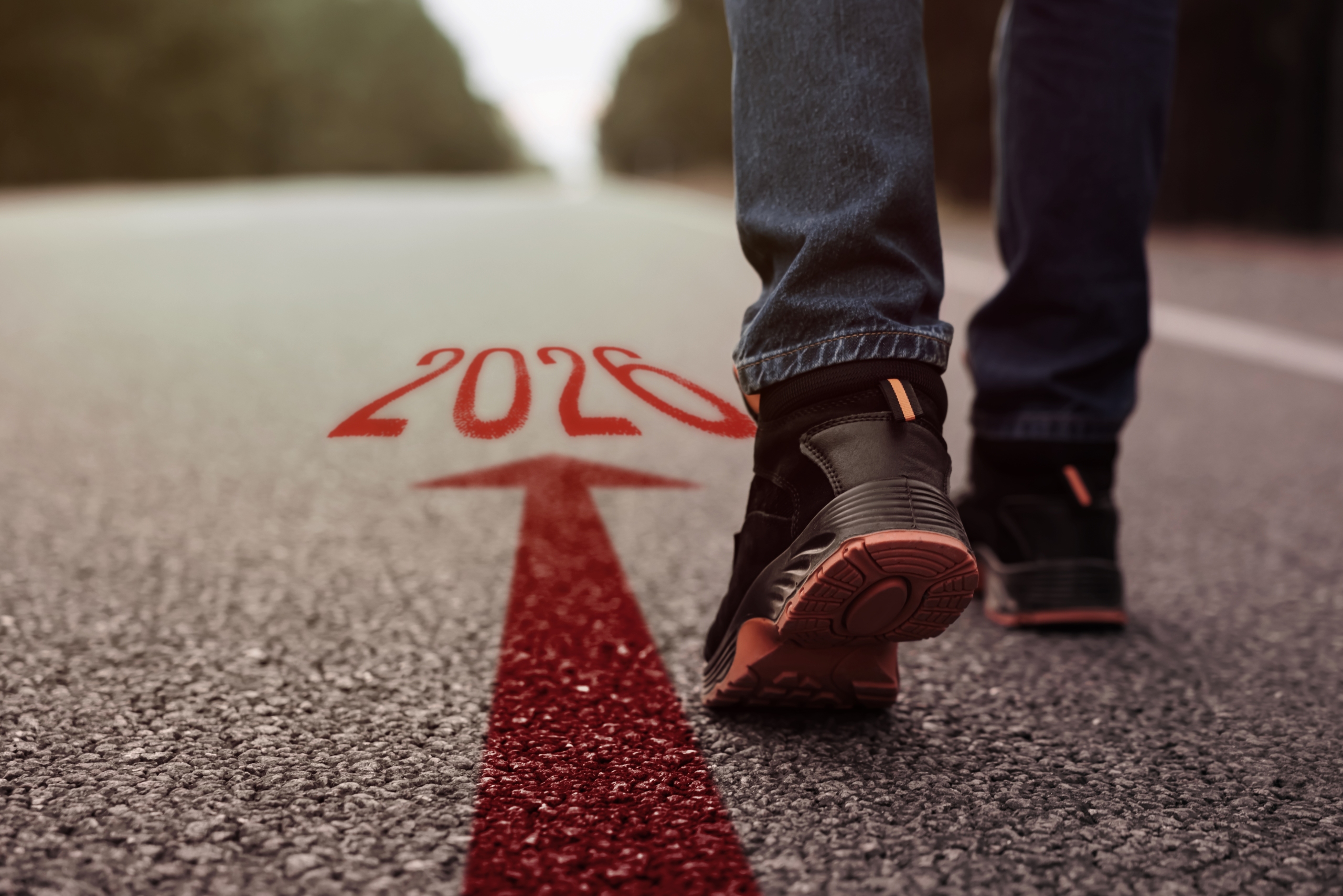
On the night most people wait for, some choose to walk.
Ten kilometers from Cerrogy to the Basilica of Caacupé, Paraguay. Fátima has done this journey for thirty-six years. First with her parents, now with her children and grandchildren. She leaves at sunset on 31 December and arrives at dawn on 1 January.
“It’s the tradition of arriving every year, and the devotion with which we do it, to give thanks,” she explains. No champagne. No fireworks. Only the rhythm of footsteps and prayers in the dark.
It is a choice that runs against the current. But she is not alone.
Sweden’s New Year walk
In Sweden, there is a word for it: Årsgång, the “year walk.” The tradition dates to the 17th century, when farmers would leave their homes at midnight on New Year’s Eve to glimpse what the coming year might hold.
They fasted all day. They avoided speaking. When midnight struck, they stepped outside and walked three times around the house counterclockwise, in silence. Then they sat, listened, and watched. They waited for the future to reveal itself.
They did not seek answers in explosions of noise. They sought them in the stillness of the night.
When a river turned to gold
In Pettorano sul Gizio, in Italy’s Abruzzo region, an old belief held that at midnight on 31 December the Gizio River would stop flowing, and water drawn at that precise moment would turn to gold.
It never did, of course. Yet people from nearby villages still came. They walked to the river, waited for the moment, and filled their buckets. The gold was something else: walking together in the cold, crossing darkness to reach the water, sharing a rite that marked the turning of the year. The water did not change in the buckets, but it changed something in the people – a sense of gathering, of community, of shared passage.
Walking as a promise
José Luis walked the Camino de Santiago for his wife. She had wanted to go. She died of cancer before she could. He took the backpack and walked for both of them.
Extraordinary occasions are not required to choose walking as a way to meet the new year. What is required is a decision: to replace spectacle with movement, noise with breath, crowds with chosen solitude.
In Romania, between Christmas and New Year, children walk from house to house carrying a star—a pole topped with a paper star that guides their way. They sing the story of the Magi, who followed a star by walking.
Moving feet tell the same story everywhere: the journey matters.
Empty suitcases
In Colombia, a curious custom unfolds at midnight on 31 December. People step outside with an empty suitcase and walk once around their neighborhood.
It may seem playful, but its meaning is clear: a declaration to the new year that one is ready to depart, that the year ahead will hold journeys, even if their destinations are unknown.
The suitcase is empty because the future has not yet been filled. The feet, however, are already moving.
Why walk
Laura returned from the Camino de Santiago changed. “I love every single person I met,” she says, sipping a beer. “I feel woven into the fabric of the world.” There is a quiet brightness about her.
This is what happens when the new year is approached on foot rather than awaited from a chair. The body remembers. Feet count steps. The heart settles into a walking rhythm. January 1 arrives not as a spectacle observed, but as a threshold crossed.
Candace, from Baltimore, prepared for her Camino by walking prayer labyrinths every Friday for months. Thirteen in total. She walked in silence. She listened.
When she finally arrived in Spain, she understood that her Camino had already begun—each Friday, each labyrinth, each step. Pilgrimage is not only the long journey. It is also the daily decision to move, to walk, to refuse stillness.
The language of simplicity
Eight hundred kilometers are not required. Santiago is not required. Medjugorje is not required.
You can follow the Swedish tradition: three silent circles around your home. Or the Colombian one: a single loop of your neighborhood with an empty suitcase. Or Fátima’s way: ten kilometers toward a place that holds meaning for you.
Distance does not matter. The gesture does.
On New Year’s Eve, while cities erupt with fireworks and concerts fill television screens, another choice remains available. Shoes on. Door open. Step outside. Walk—not to arrive somewhere, but to cross the threshold in motion. To say to the new year: I arrive walking. I arrive awake. I arrive present.
The silence that remains
Fireworks last minutes. The noise dissipates. By morning, streets are scattered with burnt paper and empty bottles. But walking leaves something behind. In the muscles. In the breath. In the body’s memory.
You arrive on 1 January with tired feet and a lighter heart. No one knows what you have done. There are no photographs to share. Nothing that sounds impressive. But you know. Your body knows. The new year has met you while you were moving toward it.
A quiet revolution
It is a quiet revolution. Unnoticed. Unannounced. Yet it is happening. In Paraguay, thousands walk toward Caacupé every year. In Sweden, some rediscover Årsgång. On the Camino de Santiago, New Year pilgrims are increasing. In Medjugorje, many spend the night walking and praying into the new year.
There are no leaders. No slogans. Just people choosing to mark the year’s turning with feet, breath, and silence. Fátima has done it for thirty-six years. You could begin this year.
No complex preparation is needed. Only a decision: to cross the threshold of the new year in the oldest way humans know – one step at a time.
This year, choose to walk.
AI Transparency Notice
PilgriMaps uses artificial intelligence tools to assist in the research, drafting and translation of editorial content. All AI-assisted content is reviewed, edited and verified by our editorial team before publication. We contrast information against primary sources, specialist literature and on-the-ground knowledge to ensure accuracy, cultural sensitivity and editorial integrity.
AI is one tool among many in our workflow. The judgement, curation and responsibility for everything published on this platform remain entirely human.
Viator Media S.L. — in compliance with the EU Artificial Intelligence Act (Regulation EU 2024/1689).
This post is also available in: