At the Portico of Glory in the Santiago de Compostela Cathedral, a medieval scene draws the eye: a man caught by a rope, his face frozen in tension, an empanada clutched in his hand. Carved around 1188 CE, the figure is a visual allegory of gluttony, rendered in stone.
Beyond its moral symbolism, the image carries another, less doctrinal significance. It is the earliest known sculptural representation of an empanada – and not an abstract pastry, but a form recognizably close to what would later become one of Galicia’s culinary emblems and a familiar presence in the European gastronomic imagination.
This petrified glutton is more than a warning against excess. He is evidence that, by the High Middle Ages, the Galician empanada was already an object of appetite, sufficiently embedded in everyday life to merit depiction by Romanesque craftsmen. Its appearance on the Portico of Glory invites a broader inquiry into a dish that has crossed centuries, cultures, and roads, evolving into a living tradition.
Ancient roots of a universal dish
The empanada’s underlying concept – dough enclosing a filling and baked with heat – did not originate in a single place. Similar preparations developed independently across cultures, from Middle Eastern filled breads to Arabic esfihas and British pies. In this sense, the empanada belongs to a class of “culinary universals”: practical solutions to preservation, portability, and sustenance for workers and travelers.
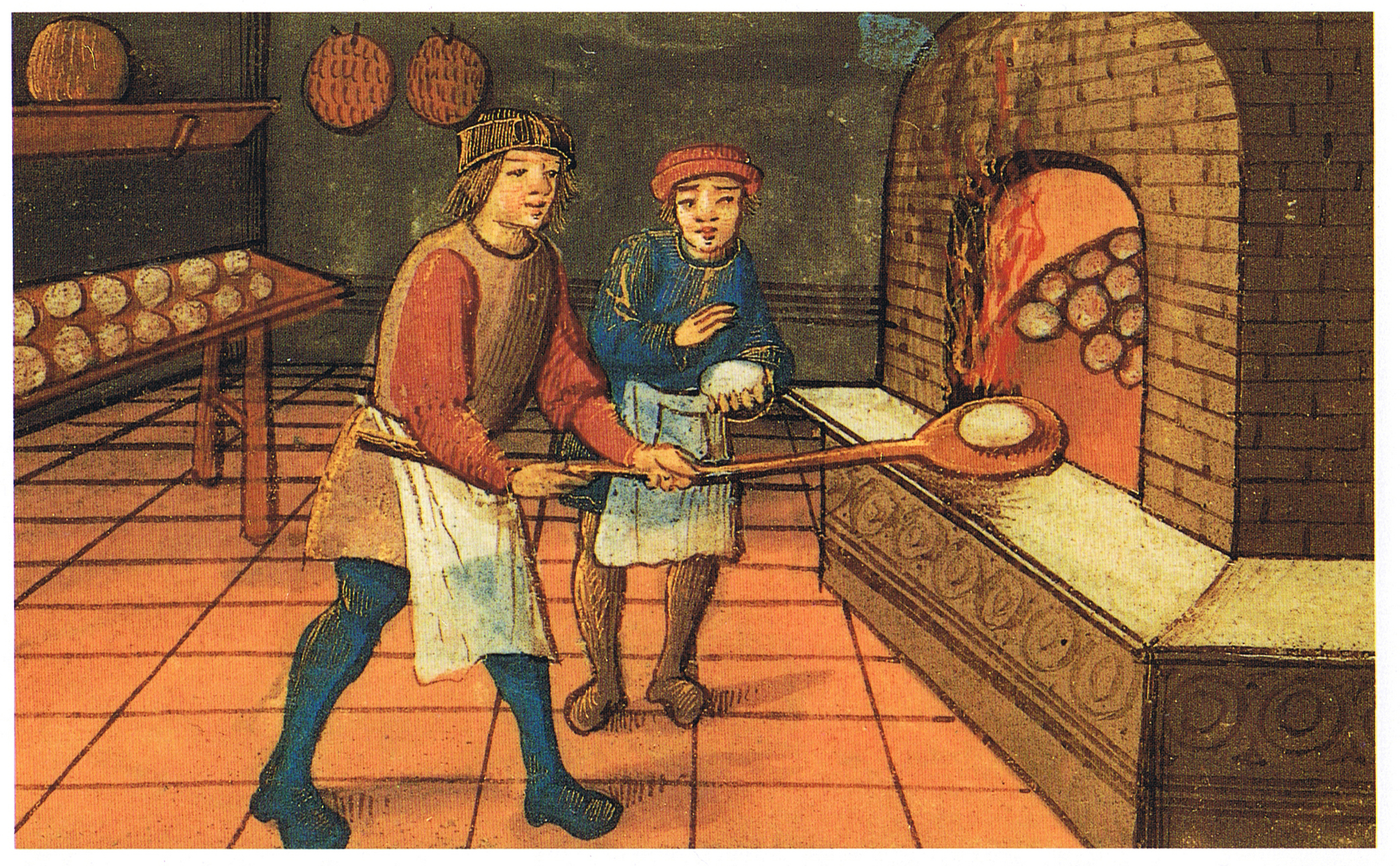
In Galicia, this idea found early and lasting resonance. While its precise origins remain debated, historical indications suggest that early forms of the empanada existed at least by the Visigothic period (7th century CE). Regulations concerning its preparation imply that it was already a common element in rural diets. Some historians point further back, proposing that the Suebi communities established in the region in the 5th century CE were familiar with comparable filled breads.
The term empanada, derived from empanar – to wrap in bread or dough – underscores the dish’s close relationship with domestic breadmaking. Conceptually simple, it proved endlessly adaptable.
Medieval Compostela: Food, art, and meaning
Medieval Compostela marks the moment when the empanada moved from daily sustenance into the symbolic sphere. On the Portico of Glory, the sculptor known as Maestro Mateo placed the empanada squarely within the visual language of the time. The condemned figure cannot swallow it; the rope tightens. The image aligns with contemporary moral iconography, yet it also situates the empanada at the cultural center of medieval society.
Additional carvings reinforce this presence. At the nearby Palace of Gelmírez, corbels in the former banquet hall depict diners handling filled breads that closely resemble empanadas. These are not decorative accidents but visual traces of a food integrated into social ritual, hospitality, and communal abundance.
Medieval literature echoes the theme. In the Cantigas de Santa María, compiled in the 13th century under Alfonso X of Castile, a thief is said to choke on a piece of chicken empanada until he repents. The anecdote again blends moral narrative with culinary familiarity.
The Camino de Santiago: A traveler’s staple
The history of the Galician empanada is inseparable from the Camino de Santiago. From the 11th century CE onward, thousands traveled these routes toward Compostela. For them, the empanada was a practical companion: compact, nourishing, protected by its crust, and capable of lasting several days.
Over time, practicality gave way to shared imagery. Popular accounts described pilgrims faltering near their destination, then recovering energy upon catching the scent of bread and empanadas from the surrounding hills. The emergence of local varieties, such as empanadas filled with scallops – the shell being a widely recognized symbol of the Camino – further tightened the association between dish and journey.
Some art historians have suggested that the empanada’s presence on the Portico of Glory may gesture not only toward moral instruction but also toward the everyday reality of pilgrimage life, embedding a familiar traveler’s food into stone.
Culinary evolution: Ingredients and technique
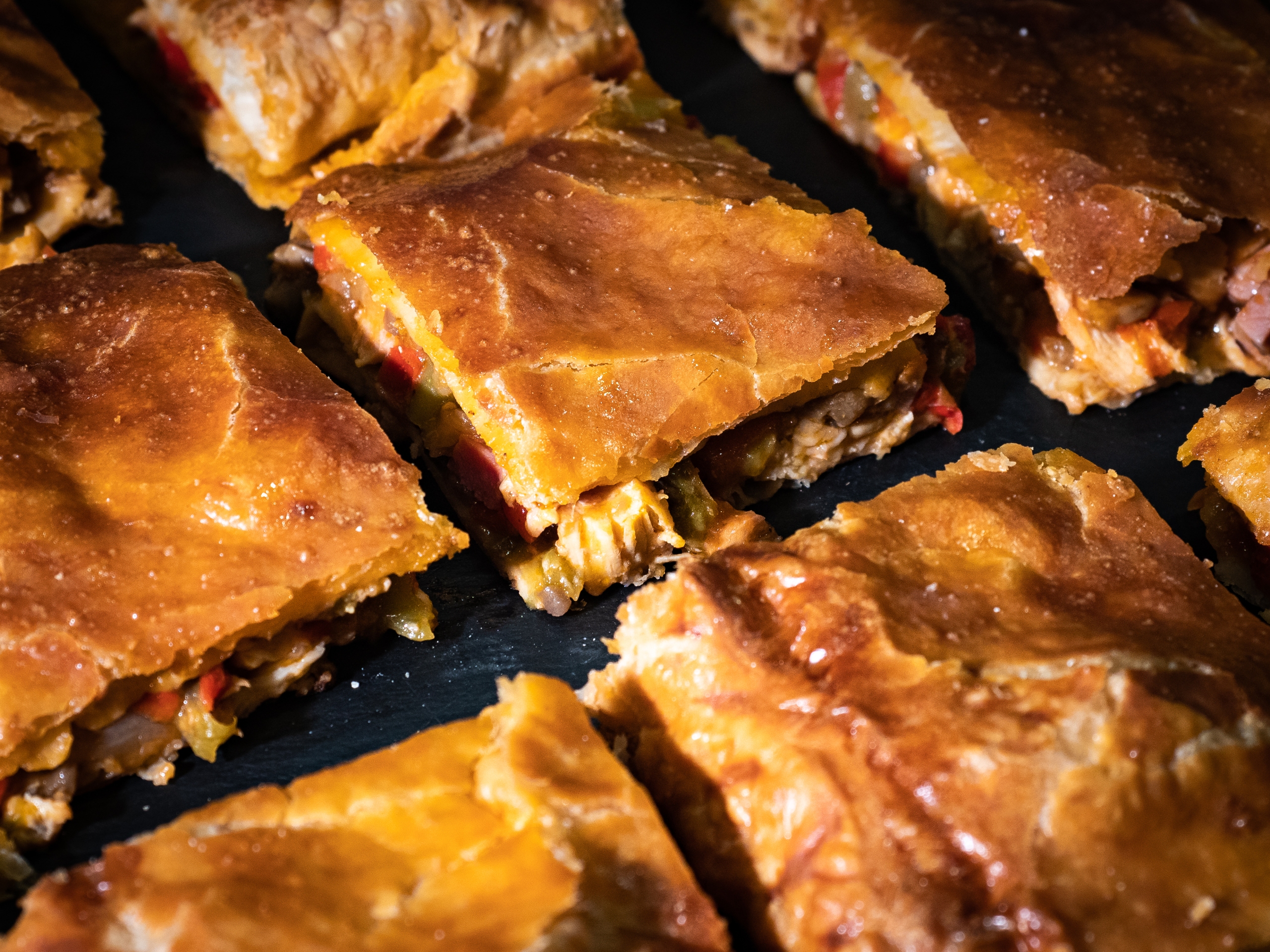
Across centuries, the Galician empanada has incorporated new ingredients while preserving its defining structure. After the transatlantic exchanges of the early modern period, products such as maize and peppers entered regional kitchens. Tomato appeared more selectively and remains absent from many traditional Galician preparations, distinguishing them from other Iberian empanadas.
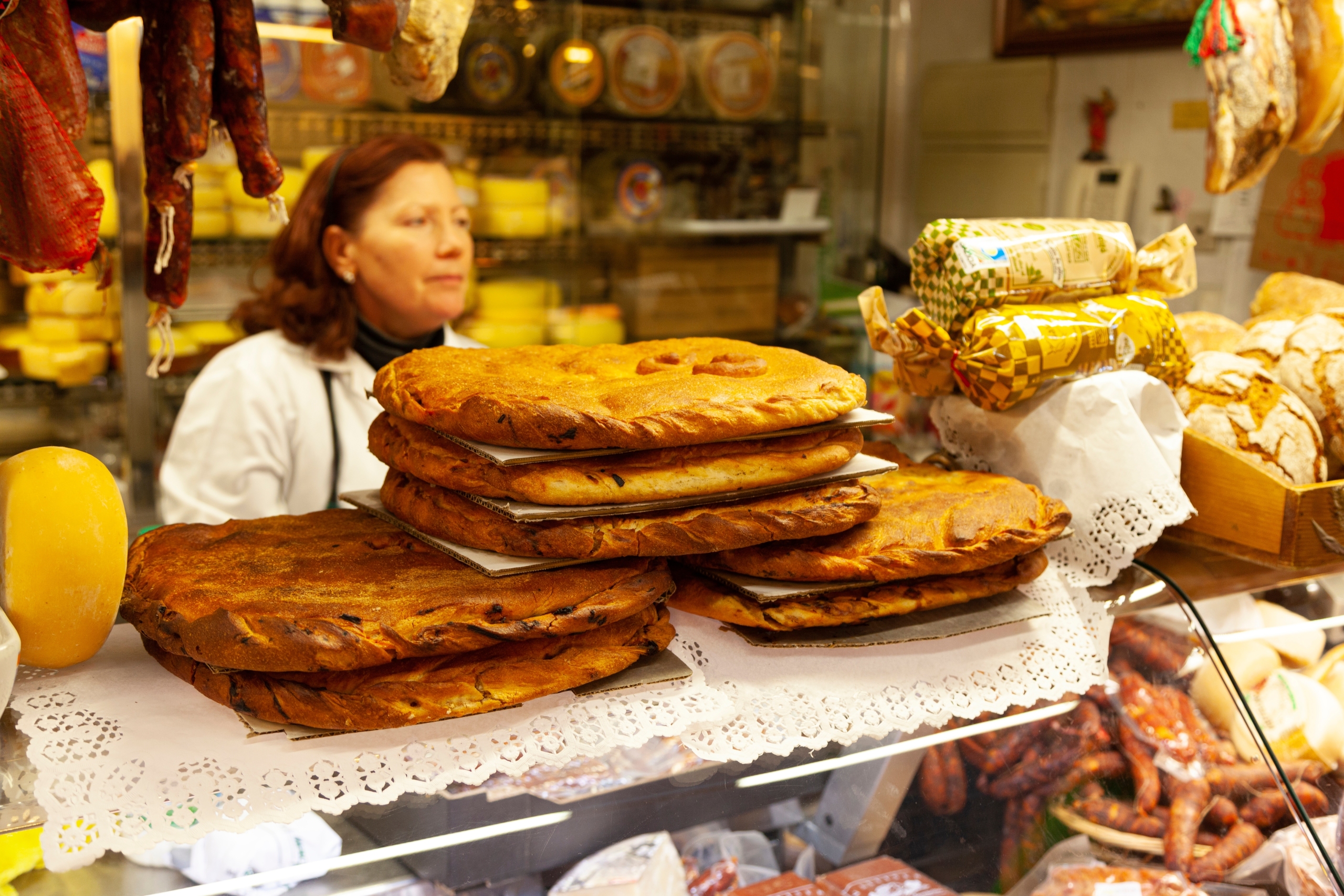
The dough evolved as well. Originally a leavened wheat bread, it remained firm enough to absorb the juices of the filling. Puff pastry and lighter textures appeared later, though the classic form – a sturdy crust encasing a moist onion-and-pepper amoado – continues to define the dish.
Fillings map Galicia’s geography: pork or beef in pastoral interiors; fish and shellfish along the Atlantic coast; river species such as lamprey inland; and specific preparations linked to seasonal abstinence, including cod with raisins. Sweet versions, filled with apple compote or custard, are less common but attest to the form’s versatility.
Cultural symbol and regional identity
Beyond flavor, the Galician empanada functions as a marker of collective identity. It brings together land and sea, rural practice and culinary adaptation. It is rarely prepared for a single diner; instead, it appears at communal meals, festivals, and local gatherings, reinforcing notions of sharing and hospitality.
Writers such as Emilia Pardo Bazán and Álvaro Cunqueiro reflected on the empanada’s practical origins and its place within regional heritage. Contemporary celebrations, including the annual Festa da Empanada de Bandeira, continue this conversation, demonstrating that the tradition remains active rather than archival.
From a Romanesque carving to a family table, from a pilgrim’s saddlebag to modern urban kitchens, the empanada traces a long cultural itinerary. It contains more than ingredients: it carries memory, labor, and continuity.
The man carved into the Portico of Glory may warn against excess, yet his frozen gesture also signals endurance. To eat a Galician empanada today is to engage with over a millennium of shared practice – hands that shaped dough, stories that recorded it, and roads that carried it onward.
AI Transparency Notice
PilgriMaps uses artificial intelligence tools to assist in the research, drafting and translation of editorial content. All AI-assisted content is reviewed, edited and verified by our editorial team before publication. We contrast information against primary sources, specialist literature and on-the-ground knowledge to ensure accuracy, cultural sensitivity and editorial integrity.
AI is one tool among many in our workflow. The judgement, curation and responsibility for everything published on this platform remain entirely human.
Viator Media S.L. — in compliance with the EU Artificial Intelligence Act (Regulation EU 2024/1689).
This post is also available in: