An interview with Jorge Martínez-Cava, co-founder of the new European federation for the Camino de Santiago
On 9 May 2024, a new federation was officially born: Camino Europa Compostela. Spearheaded by Jorge Martínez-Cava—former president of Spain’s national federation of Camino associations—it brings together pilgrim associations from across the continent. With headquarters in Logroño, the federation already represents 45,000 members from 19 countries. Its mission: to serve as a unified voice for Camino organizations at the European level and to coordinate transnational efforts in signage, hospitality, heritage protection, and inclusivity.
In this interview, Martínez-Cava outlines the aims of this growing network, the long history of European collaboration around the Camino, and how tourism, often viewed as a challenge, may in fact be key to the route’s future sustainability.
- Let’s start with the basics—what is Camino Europa Compostela and why does it matter now? Some might think of the Camino as a Spanish tradition, but your work suggests a much broader scope.
The first thing to clarify is that the Camino de Santiago hasn’t become continental—it has always been so. It’s been more European than strictly Spanish.
The first international congress of pilgrim associations was held in 1987 in Jaca, and it was already called “international.” The first modern Camino association was established in Paris in 1953, followed by Estella in 1963. Even in the 1960s, there were efforts to form a European federation. That international spirit has been part of the Camino from the beginning. Associations from France, Belgium, the Netherlands, Germany, and the UK participated alongside Spanish groups in that first congress.
- We recently covered the 1958 pilgrimage from France. It seems Camino Europa Compostela responds to something that has long existed—Europe knocking at Santiago’s door.
Absolutely. The historic backbone of the Camino is the French route.
The Camino Primitivo is older—and its advocates rightly highlight that—but the routes that linked Europe to the Iberian Peninsula were primarily those that passed through France and northern Spain. That’s where the majority of pilgrims crossed the Pyrenees—through Roncesvalles, Somport, or Hendaye.
Even in the 20th century, the major early pilgrimages began in France. Spain rediscovered its part in the Camino somewhat later.
- Today we see Camino routes marked as far away as Ukraina and Lithuania. What prompted this expansion?
The roots go back further than many realize. In Spain, efforts to recover the Camino began in the 1970s. But the major shift came in the 1980s.
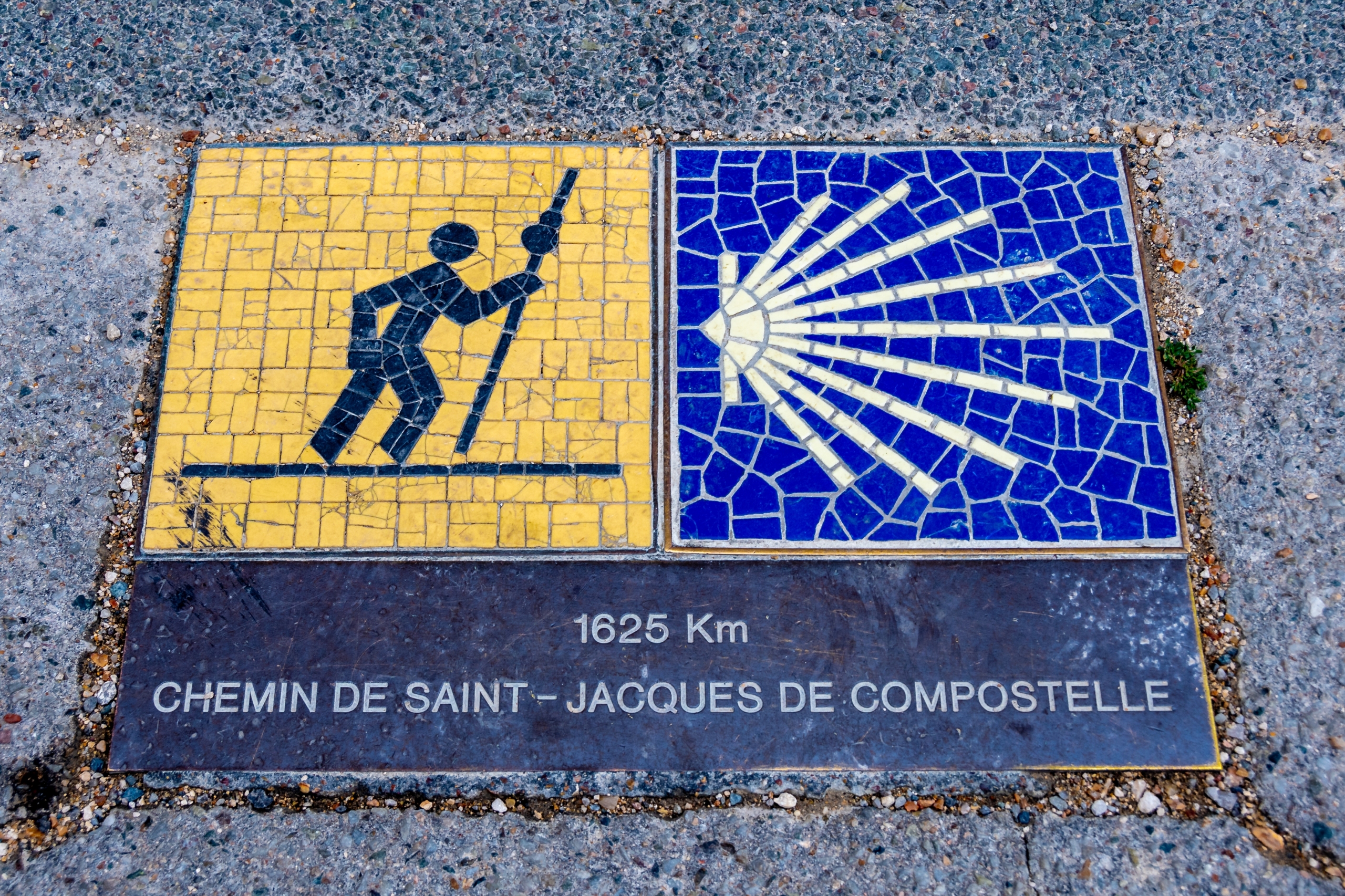
In 1983, Elías Valiña began marking the French Route. Then in 1987, the Council of Europe designated the Camino de Santiago—plural—as the first European Cultural Route. That same month, the first international congress was held in Jaca. That, for me, was the start of the Camino’s modern European phase.
- Why has Europe reengaged with the Camino after so many centuries?
There are intersecting reasons—historical, religious, cultural.
The Camino follows the routes of the Roman Empire. If you overlay the maps, they align. These were practical routes for geography and trade. Later, in the Enlightenment—a period often seen as anti-religious—we find a revived interest in walking and nature. In countries like Germany, England, and Switzerland, the figure of the peripatetic walker emerged.
That layered appeal—spiritual, historical, ecological—is what reactivated the Camino in the 19th and 20th centuries as a long-distance route.
- In recent years, we’ve seen a shift in tourism: slow travel, environmental awareness, and a search for authenticity. Has this affected the Camino?
Yes, though the trend isn’t as new as it may seem. Early 20th-century travelers—like Richard Ford or the American scholars of the Hispanic Society—were already seeking heritage, Romanesque architecture, and the Camino.
What’s truly new is the modern backpacker pilgrimage. In the Middle Ages, few walked the entire route—most traveled on horseback or by cart. Walking was the exception. Today, the backpack has become symbolic, but it’s a recent development.
- Some describe Camino Europa Compostela as a revival of medieval Europe’s connectedness. Do you see a political or cultural role for it today?
Not just a role—it’s essential.
I’ve coordinated European Camino mapping with Spain’s national geographic institute for three decades. One guiding principle: our maps don’t show borders. We aim to erase them.
The Camino teaches history, Romanesque and Gothic art, folklore, and cuisine. It promotes values still relevant today—hospitality, solidarity, mutual support. These values resonate strongly, including among young people.
- Many people are unaware of the volunteer effort behind the Camino.
It’s extraordinary. Our federation includes 45,000 members across 25 associations in 19 countries. And over 80,000 km of routes are maintained by volunteers.
They study local history, recover old paths, reconnect routes—and also welcome pilgrims at hostels. Some even pay their own travel to work two weeks without compensation. That level of civic engagement is rare in Europe.
- What are the main challenges ahead—overcrowding, sustainability?
These are real concerns, but they’re manageable. One issue is the proliferation of poorly marked routes with few services. We can’t encourage a pilgrim to walk 100 km without infrastructure or through extreme heat in Andalusia in August.
Accessibility and environmental respect are essential. The Camino should be open to people with disabilities, riders on horseback, and it must protect local communities and ecosystems.
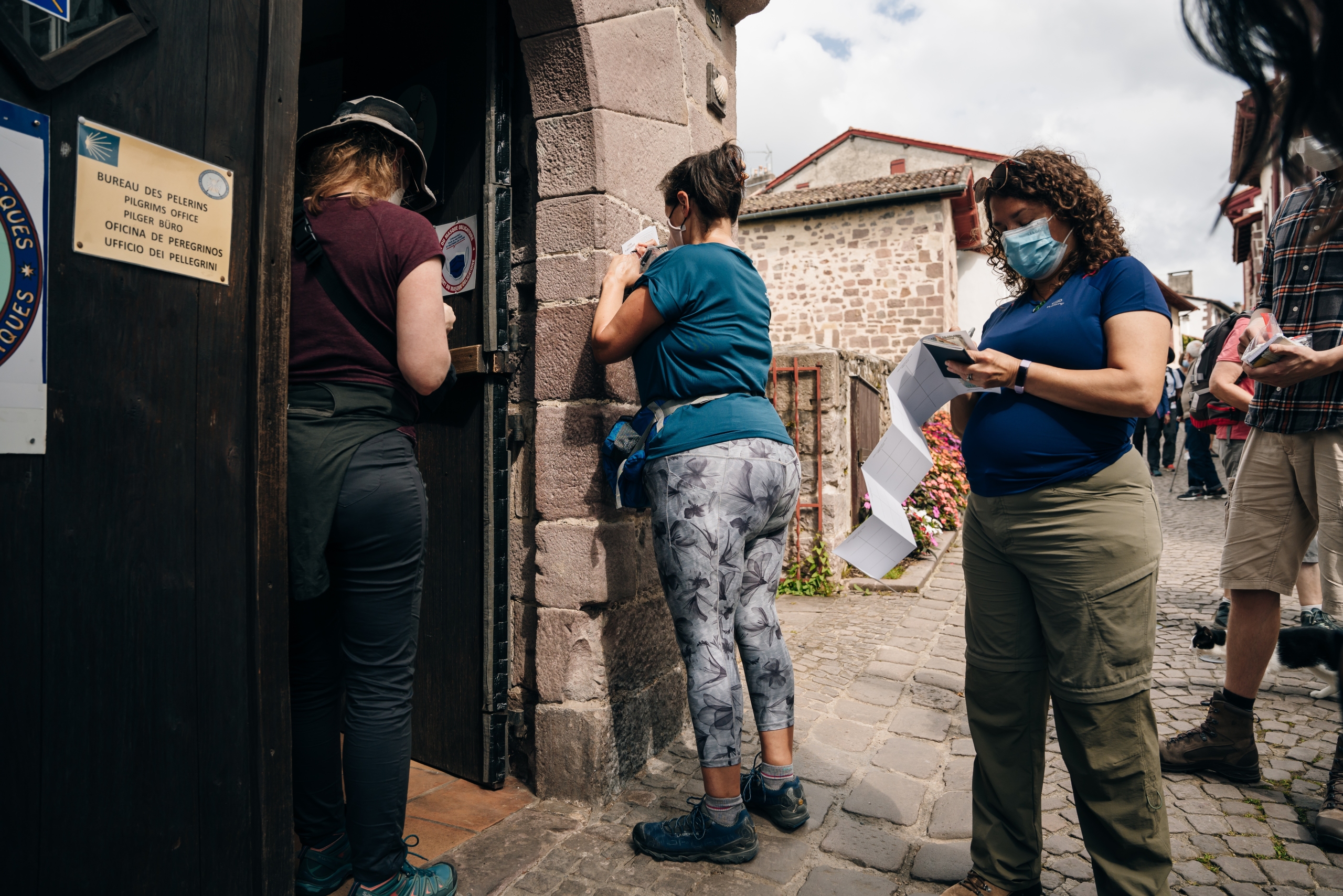
Above all, we must preserve the authenticity of the experience. Tourists aren’t the problem—there’s room for them. But we must also safeguard space for those seeking a genuine pilgrimage. That’s why we promote lesser-known routes like the Vía de la Plata or Camino de Madrid, where solitude, welcome, and reflection are still deeply felt.
Tourism, when well managed, helps preserve the route. If only 500 people walked it a year, we couldn’t maintain the infrastructure. Tourism sustains buildings, restaurants, and cultural practices.
- And on the European level?
The challenges are similar: consolidating associations, signage, and accommodations. In many countries, infrastructure is still limited, though some hostel networks are thriving.
We’re working with national and EU institutions to promote and support the routes. We’re not asking for massive funding—just basic support for historical buildings and route maintenance.
- Finally, why does pilgrimage resonate so strongly today?
Because it addresses a deep human need.
Walking long distances disconnects you. After a few days, you stop checking the news. You enter a different mental state. You reconnect—with nature, with others, with yourself.
You don’t need to be an athlete. With moderate fitness, even wheelchair users can do it. It’s accessible to all ages and backgrounds. And it delivers something rare: genuine disconnection and inner transformation.
Walking Together: Malta Hosts European Camino Gathering to Reflect on Pilgrimage Today
AI Transparency Notice
PilgriMaps uses artificial intelligence tools to assist in the research, drafting and translation of editorial content. All AI-assisted content is reviewed, edited and verified by our editorial team before publication. We contrast information against primary sources, specialist literature and on-the-ground knowledge to ensure accuracy, cultural sensitivity and editorial integrity.
AI is one tool among many in our workflow. The judgement, curation and responsibility for everything published on this platform remain entirely human.
Viator Media S.L. — in compliance with the EU Artificial Intelligence Act (Regulation EU 2024/1689).
This post is also available in: