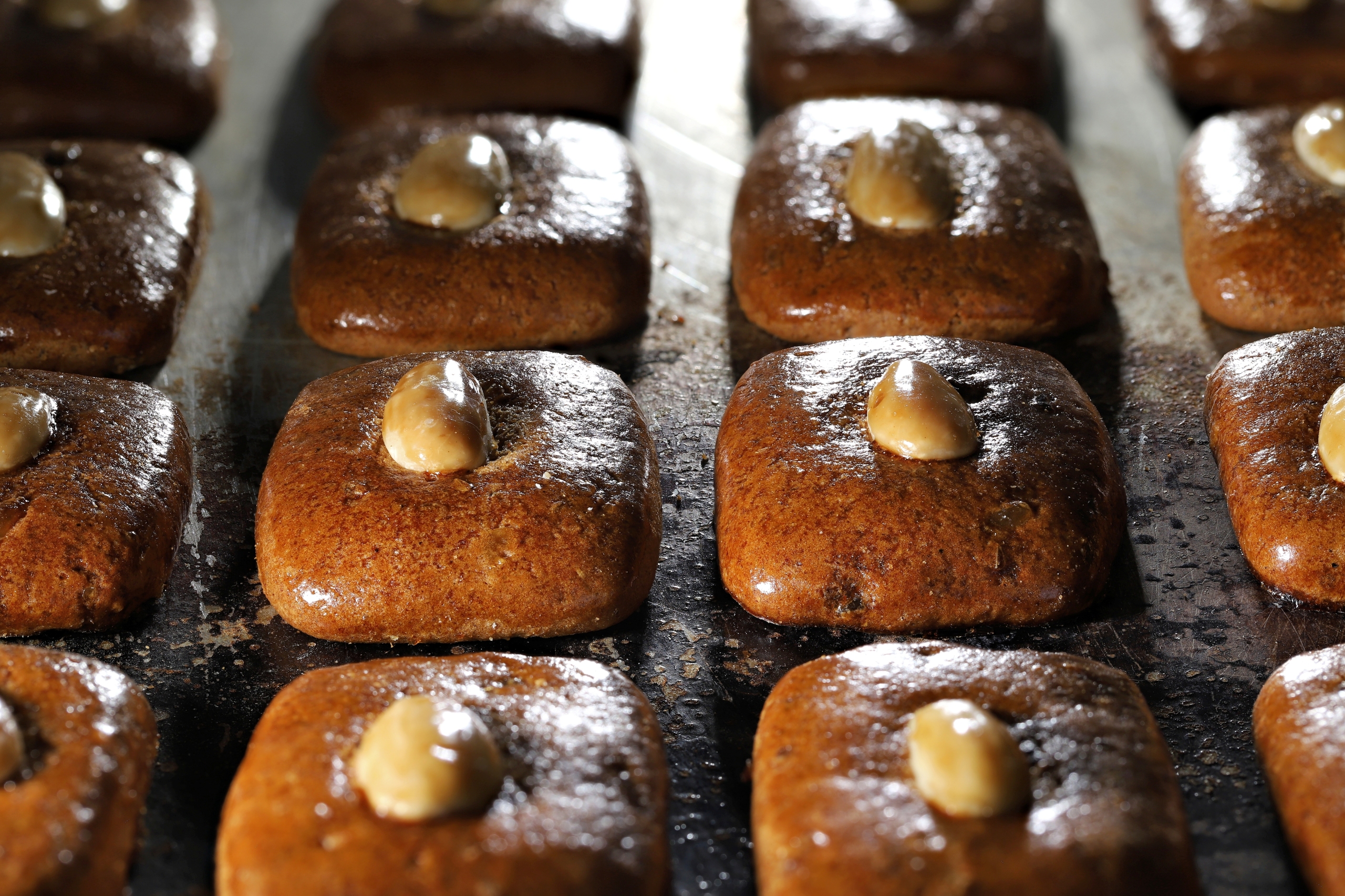
In Aachen, a German city in North Rhine-Westphalia, a joke has circulated for generations: here, pastry chefs and dentists are business partners. Like many local jokes, it contains a small truth. The Aachener Printen, the spiced biscuit that gives this city at Germany’s westernmost edge much of its identity, can be hard enough to warrant caution: better approached with molars than incisors.
Its consistency follows a strict chemistry: a dough low in water, free of fat, milk, and eggs in its traditional forms, made with beet sugar, beet syrup, and crystallized sugar. In the oven, the sugars caramelize and turn the biscuit into something between gingerbread, resin, and amber. The result is a confection built to be eaten and to last. In a cupboard it keeps for months; in the city’s memory, for centuries.
To understand the Printen, one must first understand why hardness was once considered a virtue. Aachen was Charlemagne’s city. In the Middle Ages it became one of the great pilgrimage destinations of Christian Europe, comparable in importance to Rome, Jerusalem, and Santiago de Compostela. From 1349, on a seven-year cycle, it has hosted the Heiligtumsfahrt — the exposition of the four great textile relics kept in the Marienschrein, the cathedral’s reliquary of the Virgin: by tradition, Mary’s garment on the night of the Nativity, the swaddling cloths of the infant Jesus, the cloth worn by Christ on the cross, and the linen associated with the beheading of John the Baptist.
The next exposition is scheduled for 17–25 June 2028. The last, in 2023, drew around 115,000 people to Aachen, alongside pilgrims from nearby Kornelimünster. For a city of modest size, this is a considerable human movement — devotion, tourism, economy, collective memory. That crowd needed food suited to the road. The Printe emerged partly from this: a traveller’s provision, a spiced energy source for those crossing Europe toward the cathedral.
The cathedral itself carried its own historical weight. Commissioned by Charlemagne, who was buried there in 814, it served for centuries as the coronation site of the Romano-Germanic kings, from 936 to 1531. In 1978 it became the first German site inscribed on the UNESCO World Heritage List. It now receives more than a million visitors a year. Few biscuits anywhere can claim such symbolic proximity: on one side, the architecture of imperial power and faith; on the other, a dark, hard, spice-scented rectangle.
The Printe’s family tree crosses borders. Its roots reach back to the Gebildbrot — the “figured bread” — and to the couque de Dinant, a Walloon speciality pressed in carved moulds. Local tradition holds that craftsmen from Dinant, a city known for its metalwork, brought techniques and forms to Aachen between the 15th and 17th centuries. As often in culinary history, there is no precisely dated birth certificate — only a migration of knowledge: hands, moulds, recipes, images.
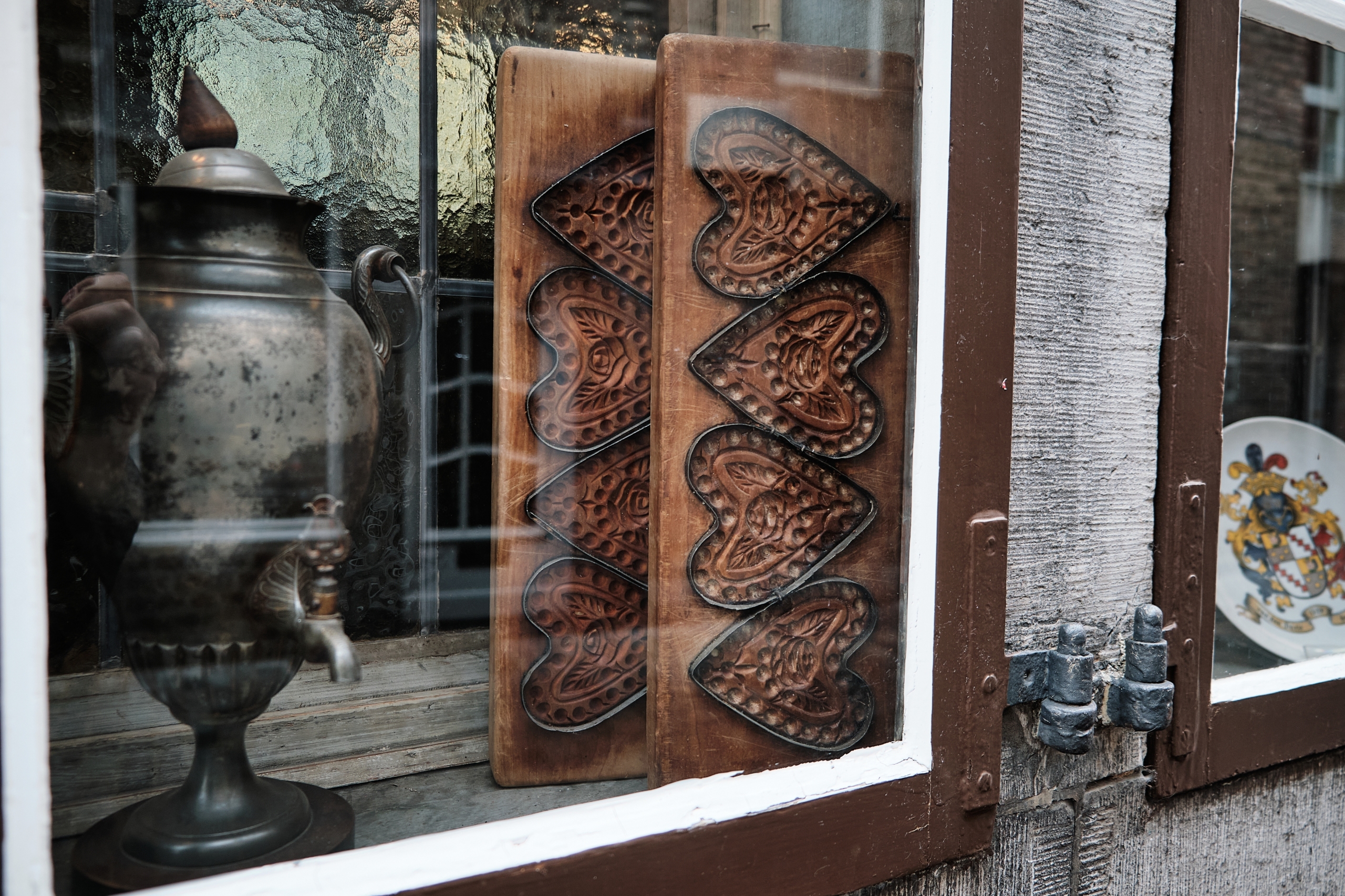
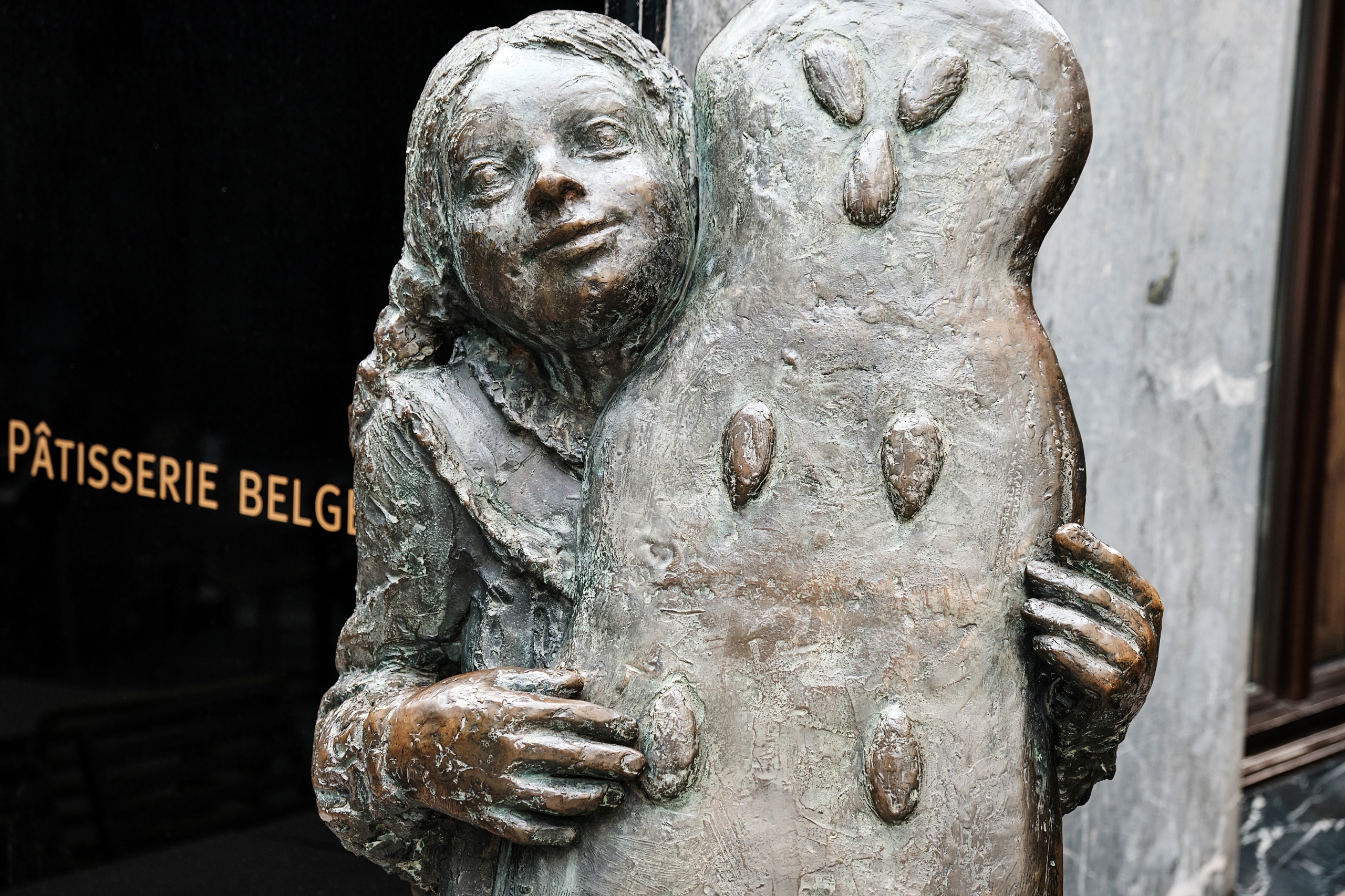
The name itself preserves this visual origin. Printen derives from the idea of printing, pressing, leaving a mark. Before it was a flavour, it was an image: saints, soldiers, religious or military figures carved into wooden moulds and transferred onto the dough — a small, edible bas-relief. Today, outside the Alt Aachener Kaffeestuben van den Daele, a bronze sculpture, the Printenmädchen, marks how fully this biscuit belongs to the city’s collective imagination.
There was also a layer now largely forgotten: the medicinal. For centuries in pre-modern European culture, the boundary between kitchen and pharmacy was far thinner than we assume. Honey, herbs, and spices were simultaneously foods, remedies, and protections. Cinnamon, anise, cloves, cardamom, coriander, allspice, and ginger were not merely aromatic — they evoked warmth, digestion, resilience, travel. The Printe belongs to a world in which sweetness was not escapism but domestic technology.
The flavour we associate with the Aachener Printen today, however, is not quite the original. The decisive change came in the early 19th century, when geopolitics entered the bakery. In 1806, Napoleon imposed the Continental Blockade against Britain. Trade routes were disrupted; access to cane sugar and honey became uncertain and expensive. Aachen’s bakers adapted. In place of traditional sweeteners they used what was available locally: beet sugar and beet syrup, the Rhenish Rübenkraut.
This was a supply crisis, but also an inadvertent stroke of luck. The syrup made the biscuit darker, denser, slightly bitter, with an aftertaste of burnt caramel and sweet earth. When Napoleon fell, the substitution did not disappear. It stayed. The constraint had become the identity. The lesson extends beyond gastronomy: authenticity does not always derive from purity of origin; sometimes it emerges from adaptation to rupture. A community loses an ingredient, finds another, and from that necessity builds its own mark.

That mark is now protected. Since 24 January 1997, “Aachener Printen” has held Protected Geographical Indication status in the European Union. The name may only be used for products linked to the Aachen area and made according to the specification. In terms of territorial marketing, it functions as a precise defensive perimeter — protecting the name, supporting the price, discouraging imitation, and binding the product to the place.
The Printe is therefore not simply a Christmas biscuit. The visitor enters the cathedral to see Charlemagne’s city, then steps outside and encounters the shop windows of the historic bakeries — Nobis, Klein, Lambertz, van den Daele. They buy a box, take it home, offer it, keep it. Aachen travels beyond Aachen. The city becomes edible, portable, giftable.
One last layer: the spices of the Printe speak not only to taste but to smell — the sense most directly connected to autobiographical memory. Cinnamon, anise, cloves, and caramelized sugar are not mere ingredients. They are archives.
Perhaps this is why a biscuit built to survive in a pilgrim’s pack has ended up surviving in a city’s memory. It was made hard to endure the journey; and that, precisely, is what made it unforgettable.
AI Transparency Notice
PilgriMaps uses artificial intelligence tools to assist in the research, drafting and translation of editorial content. All AI-assisted content is reviewed, edited and verified by our editorial team before publication. We contrast information against primary sources, specialist literature and on-the-ground knowledge to ensure accuracy, cultural sensitivity and editorial integrity.
AI is one tool among many in our workflow. The judgement, curation and responsibility for everything published on this platform remain entirely human.
Viator Media S.L. — in compliance with the EU Artificial Intelligence Act (Regulation EU 2024/1689).
This post is also available in: