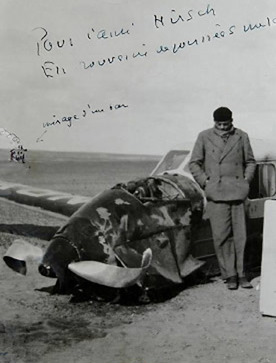
On the night of December 30, 1935, Antoine de Saint-Exupéry fell from the sky over one of Egypt’s strangest and most symbolic landscapes. His plane, a Caudron Simoun attempting to break the Paris–Saigon speed record, crashed in the Western Desert near Wadi el Natrun, a saline depression between Cairo and Alexandria.
The impact destroyed the aircraft but did not kill either the writer or his mechanic, André Prévot. For days they wandered through sand and thirst, isolated in a white, mineral vastness where the horizon seemed to erase every human reference.
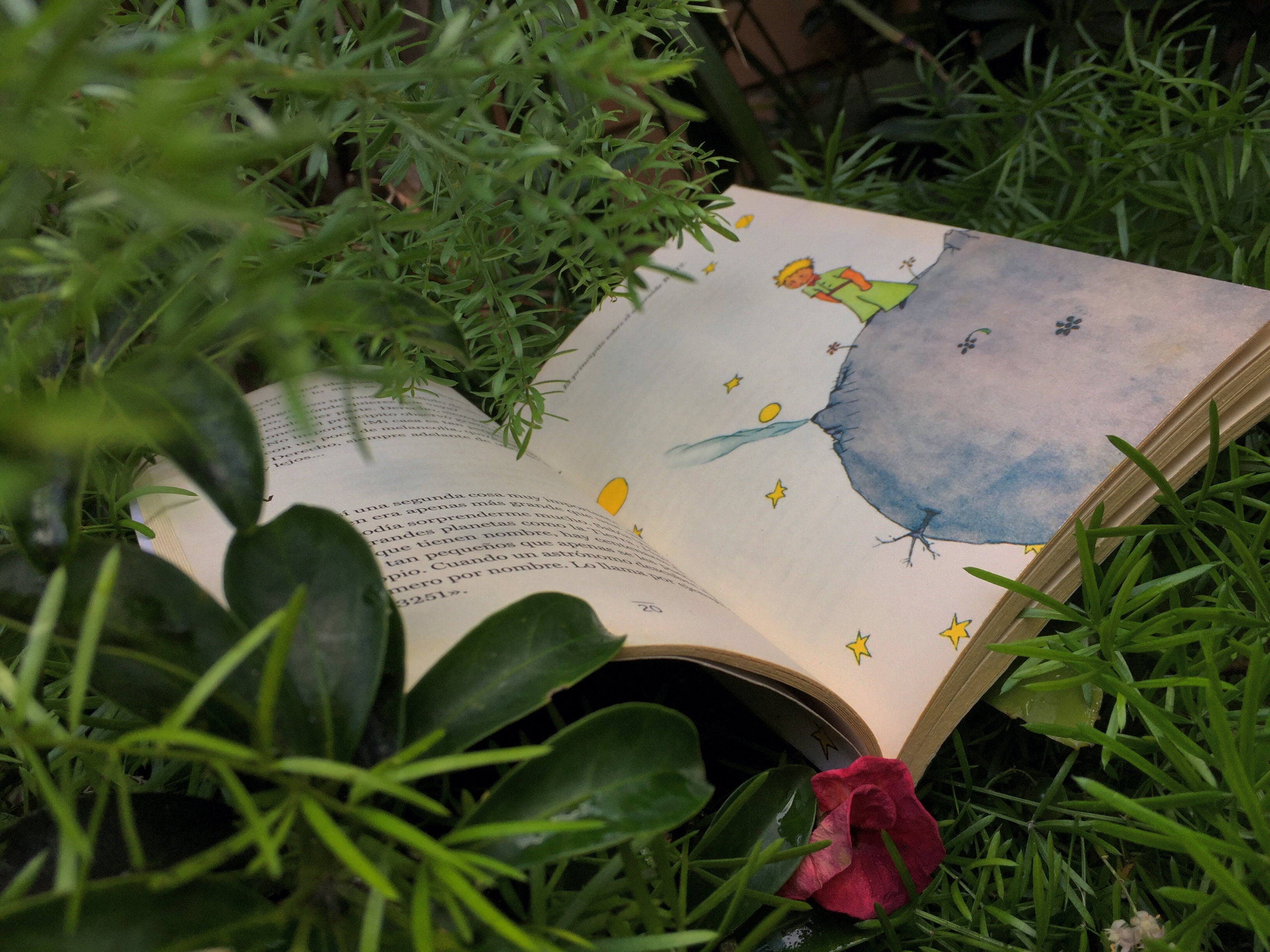
Years later, readers around the world would encounter the opening of The Little Prince: an aviator lost in the desert meets, in the middle of emptiness, a child who has come from elsewhere.
The connection between that crash and Saint-Exupéry’s masterpiece is now widely accepted. Documentary research allows us to say with reasonable certainty that the Egyptian episode shaped the narrative frame of the isolated pilot, the experience of thirst, and probably even the symbol of the hidden well in the desert.
Yet reducing the matter to a simple biographical anecdote misses the deeper significance. What is truly fascinating is the place where it happened: Wadi el Natrun was no ordinary desert. For millennia, it had been associated with death, preservation, silence, and spiritual transformation.
There, precisely there, one of the most luminous books ever written about the human condition began to take shape.
A very particular desert
Long before Saint-Exupéry became lost in its sands, Wadi el Natrun already held a singular place in the Egyptian imagination. Ancient Egyptians knew the region as Sekhet Hemat, “the field of salt.”
Its lakes, rich in natron — a natural mixture of sodium carbonate — were essential to mummification. The substance dried bodies and slowed the decay of flesh. The valley was therefore linked to the passage between life and death, to preservation and permanence.
That detail becomes striking when read alongside The Little Prince. The entire book seems preoccupied with what survives disappearance: memory, friendship, responsibility toward another, the invisible persistence of bonds. Saint-Exupéry’s desert is not simply empty space; it is a landscape where what matters becomes visible precisely because everything secondary has fallen away.
The paradox of the valley deepens this symbolic dimension. Wadi el Natrun is dominated by saline lakes where almost nothing can live. Yet fresh water also emerges nearby. According to Coptic tradition, the Holy Family passed through the region during the flight into Egypt, and a miraculous spring appeared to relieve their thirst: the so-called Spring of Mary. Since then, this source of living water beside the mineral landscape of natron has been interpreted as a sign of hope and renewal. In the middle of a barren environment, the possibility of life unexpectedly appears.
It is difficult not to think of the well in The Little Prince. In the novel, the desert hides a secret water that matters beyond its practical use. The well represents not only physical survival, but meaning, friendship, and inner revelation. “What makes the desert beautiful,” the little prince says, “is that it hides a well somewhere.” The image resonates deeply with the symbolic logic of Wadi el Natrun: living water beside dead lakes; hope rising amid salt.
A man in crisis
When Saint-Exupéry arrived there in 1935, however, he was not seeking mystical revelation. He was pursuing speed. Records. Prestige. Modernity. Like many interwar pilots, he was fascinated by aviation as both a technical and human conquest.
But he was also exhausted. Even before the crash, he was carrying personal and existential tensions that surface clearly in Wind, Sand and Stars. Airmail aviation had taught him both fraternity and solitude. To fly meant crossing continents, but also experiencing a growing sense of isolation. Technical progress was accelerating, while Europe moved dangerously close to another war.
In Wind, Sand and Stars, Saint-Exupéry repeatedly reveals this unease. The airplane never appears as a mere machine. It becomes a metaphor for human fragility. Flying shows how deeply human beings depend on one another. Technology is not enough. Heroism is not enough. The only truly solid things are bonds.
That is why the crash in Wadi el Natrun was so decisive. There, in the middle of the desert, everything that structured the modern world was suddenly suspended. Speed stopped mattering. The record lost its meaning. The broken engine was no longer a failed technical feat, but a sentence. Suddenly, only two men remained, facing silence, thirst, and the very real possibility of death.
Extreme experience and revelation
Later accounts describe an extreme ordeal. The Simoun had crashed at night, probably because of heavy rain and poor visibility. Saint-Exupéry and Prévot survived the impact, but were stranded with too little water. For three or four days, they walked under the sun, drank dew, and suffered hallucinations brought on by dehydration. They were finally found by a Bedouin caravan, which led them to the Salt and Soda works run by the engineer Raccaud.
But the important point is not only the physical adventure. What matters is the inner transformation the episode produced in Saint-Exupéry.
In his later writings, the desert ceases to be merely a geographical setting and becomes a moral laboratory. In Wind, Sand and Stars, especially in the chapter “In the Heart of the Desert,” the crash is already transfigured. The extreme experience becomes a way of asking what it really means to be human. There appears one of the central sentences of his work: “To be a man is, precisely, to be responsible.”
That shift is essential. The crash stops being a heroic adventure and becomes an experience of stripping away. The desert removes the superfluous and forces a person to face himself.
Radical exposure
Curiously, that idea connects deeply with the spiritual history of Wadi el Natrun. Centuries before Saint-Exupéry, early Christian monks had chosen this region precisely to withdraw from the world. From the fourth century CE onward, figures such as Macarius the Great settled in the valley in search of silence, austerity, and inner transformation. One of the great centers of desert monasticism was born there. The Desert Fathers believed that only by moving away from the noise of cities could they hear what was essential.
Saint-Exupéry, by contrast, was thrown there by accident. Yet the symbolic result is similar: both pass through an experience of radical exposure. In the desert, ordinary securities disappear. Only silence, fragility, and the need for another remain.
In fact, The Little Prince can be read as the poetic culmination of that experience. The narrator’s mechanical breakdown serves a purpose far deeper than simple plot. The broken engine interrupts the adult world: the world of statistics, productivity, prestige, and technique.
Only when that universe collapses does it become possible to hear another voice. The little prince appears precisely there: in the emptiness.
That also explains the transformation of the “other” between the real crash and the fiction. In the historical experience, the other has a concrete face: the Bedouins who physically rescue the survivors. In Wind, Sand and Stars, that alterity broadens into a reflection on human fraternity. Finally, in The Little Prince, it takes on an almost metaphysical form: a mysterious child from another planet.
Seeing with a child’s eyes
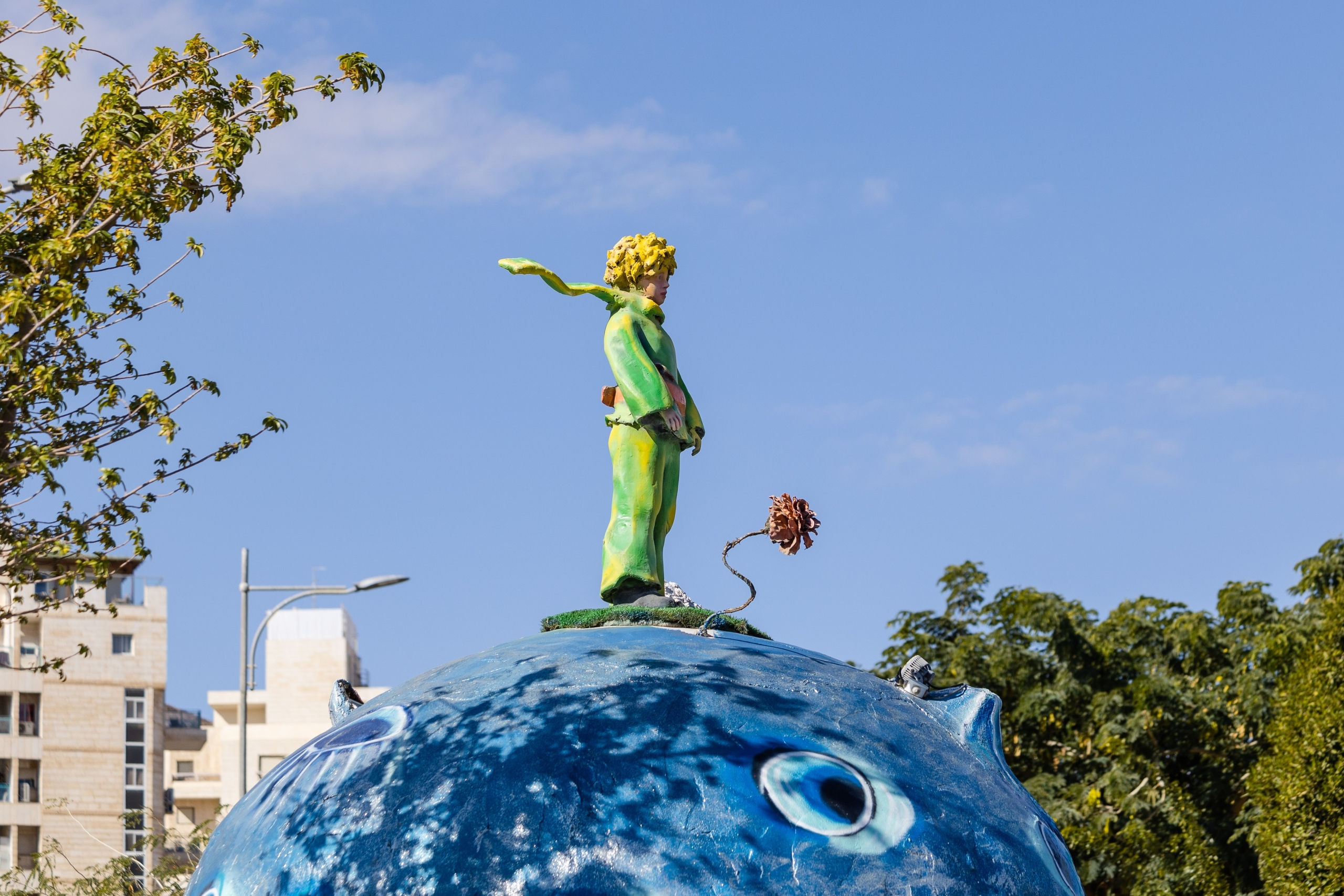
The little prince restores to the aviator something the modern world had eroded: the ability to look at the world with wonder. That is why the book insists so strongly on childhood. Not as sentimental nostalgia, but as a form of perception not yet colonized by adult utility.
In this sense, Saint-Exupéry’s desert is not a place of absolute death. It is a threshold. Just as Wadi el Natrun had for centuries been associated with both death and spiritual transformation, the desert of The Little Prince becomes a place where emptiness makes revelation possible.
The literary evolution of the crash shows this process clearly. First comes the raw event: impact, thirst, survival. Then the journalistic account in Le Vol brisé. Later, the moral reflection of Wind, Sand and Stars. Finally, the poetic sublimation of The Little Prince. Each stage removes material details and increases symbolic density.
In Wind, Sand and Stars, the desert teaches what it means to be human. In The Little Prince, it teaches what it means to see.
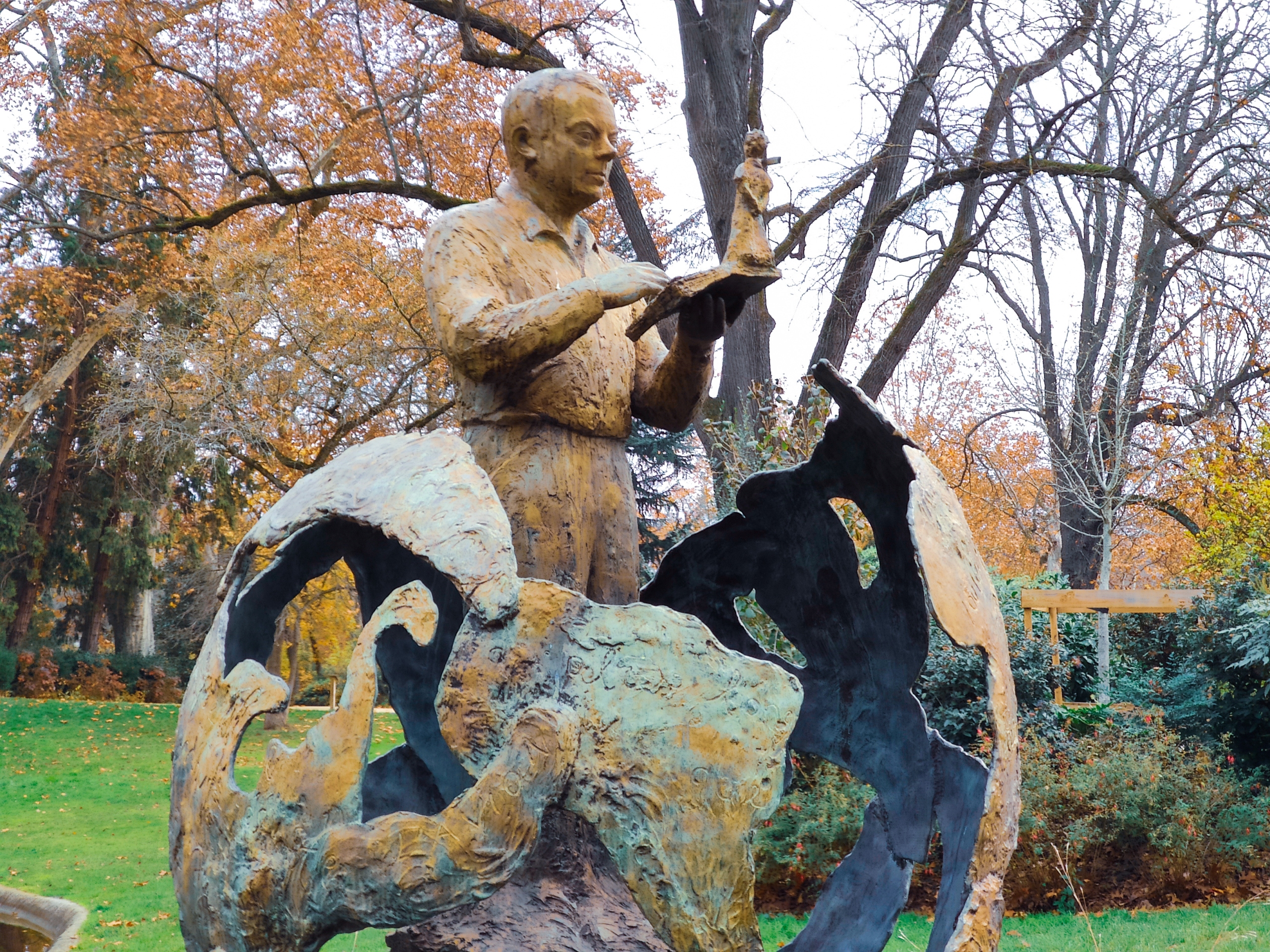
Perhaps that is why the book continues to move readers nearly a century later. Although often read as a children’s tale, it was born from an experience deeply tied to vulnerability, thirst, and the fear of disappearing. In Wadi el Natrun, Saint-Exupéry understood that human beings do not live by technology or material survival alone. They need meaning. They need bonds. They need something like that hidden well in the desert.
Here, the Egyptian landscape acquires its full symbolic force. Since Antiquity, Wadi el Natrun had been a frontier between destruction and preservation. Ancient Egyptians went there in search of the mineral that protected bodies from decay. Monks sought in its deserts a more authentic spiritual life. Christian tradition even imagined a spring rising miraculously beside saline waters. The whole valley seems organized around a single intuition: that in the midst of barrenness, a source of life may be hidden. That is exactly what the aviator in The Little Prince discovers.
The book does not deny suffering or fragility. On the contrary, it is born from them. But it suggests that even at the heart of emptiness, something may appear that can save a human being from despair. A well. A friendship. A conversation. A different way of seeing.
That is why it matters that this book began, at least in part, in Wadi el Natrun. Not only because a plane crashed there, but because the landscape had already been speaking for millennia in the same symbolic language that Saint-Exupéry would later turn into literature.
In the valley where ancient Egyptians preserved their dead and monks sought to hear what was essential, a lost pilot discovered that salvation does not always come through technology or strength. Sometimes it appears quietly, as hidden water in the desert.
AI Transparency Notice
PilgriMaps uses artificial intelligence tools to assist in the research, drafting and translation of editorial content. All AI-assisted content is reviewed, edited and verified by our editorial team before publication. We contrast information against primary sources, specialist literature and on-the-ground knowledge to ensure accuracy, cultural sensitivity and editorial integrity.
AI is one tool among many in our workflow. The judgement, curation and responsibility for everything published on this platform remain entirely human.
Viator Media S.L. — in compliance with the EU Artificial Intelligence Act (Regulation EU 2024/1689).
This post is also available in: