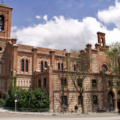
The Monastery of Santa María la Real de Oseira, located in the parish of Osera in San Cristóbal de Cea, province of Orense, is a Trappist monastery of the Cistercian Order with a history of more than eight centuries. Founded in 1137 and welcomed to the Cistercian Order in 1141, the monastery has played a crucial role in the economic and social life of the region. Its name, derived from “Ursaria” or “land of bears”, reflects the local fauna in ancient times and is linked to the monastery’s coat of arms. During its heyday, the monastery expanded significantly thanks to donations and acquisitions, housing a large community. The abbey church, built between 1200 and 1239, is an outstanding example of Cistercian architecture in the Iberian Peninsula. It is an obligatory stop for pilgrims on their way to Santiago de Compostela along the Via de la Plata.
Throughout its history, Oseira has had illustrious abbots, such as Dom Lorenzo and Dom Fernando Pérez, who played important roles within the order and at the court of the kingdom. The monastery suffered several challenges, including the arrival of the commendatory abbots in 1513 and a devastating fire in 1552, although it always managed to recover. In the 19th century, the disentailment of Mendizábal resulted in the expulsion of the monks and the abandonment of the monastery. It was not until 1929, thanks to the intervention of the bishop of the time, that the restoration of the monastery began. The restoration work, directed by the monks themselves and supported by the Diputación de Orense, culminated in 1990 with the receipt of the Europa Nostra Award, in recognition of the exceptional recovery of the building. Highlights include the Gothic-style chapter house, the refectory and the cloisters.
- Address
Oseira, Ourense - Web
https://mosteirodeoseira.org/web/ - Visiting Hours
Monday to Saturday from 10:30 to 12:00 and from 16:00 to 17:30. Sunday at 12:45 and from 16:00 to 17:30 - What to see
Imposing Carthusian monastery
AI Transparency Notice
PilgriMaps uses artificial intelligence tools to assist in the research, drafting and translation of editorial content. All AI-assisted content is reviewed, edited and verified by our editorial team before publication. We contrast information against primary sources, specialist literature and on-the-ground knowledge to ensure accuracy, cultural sensitivity and editorial integrity.
AI is one tool among many in our workflow. The judgement, curation and responsibility for everything published on this platform remain entirely human.
Viator Media S.L. — in compliance with the EU Artificial Intelligence Act (Regulation EU 2024/1689).
This post is also available in: