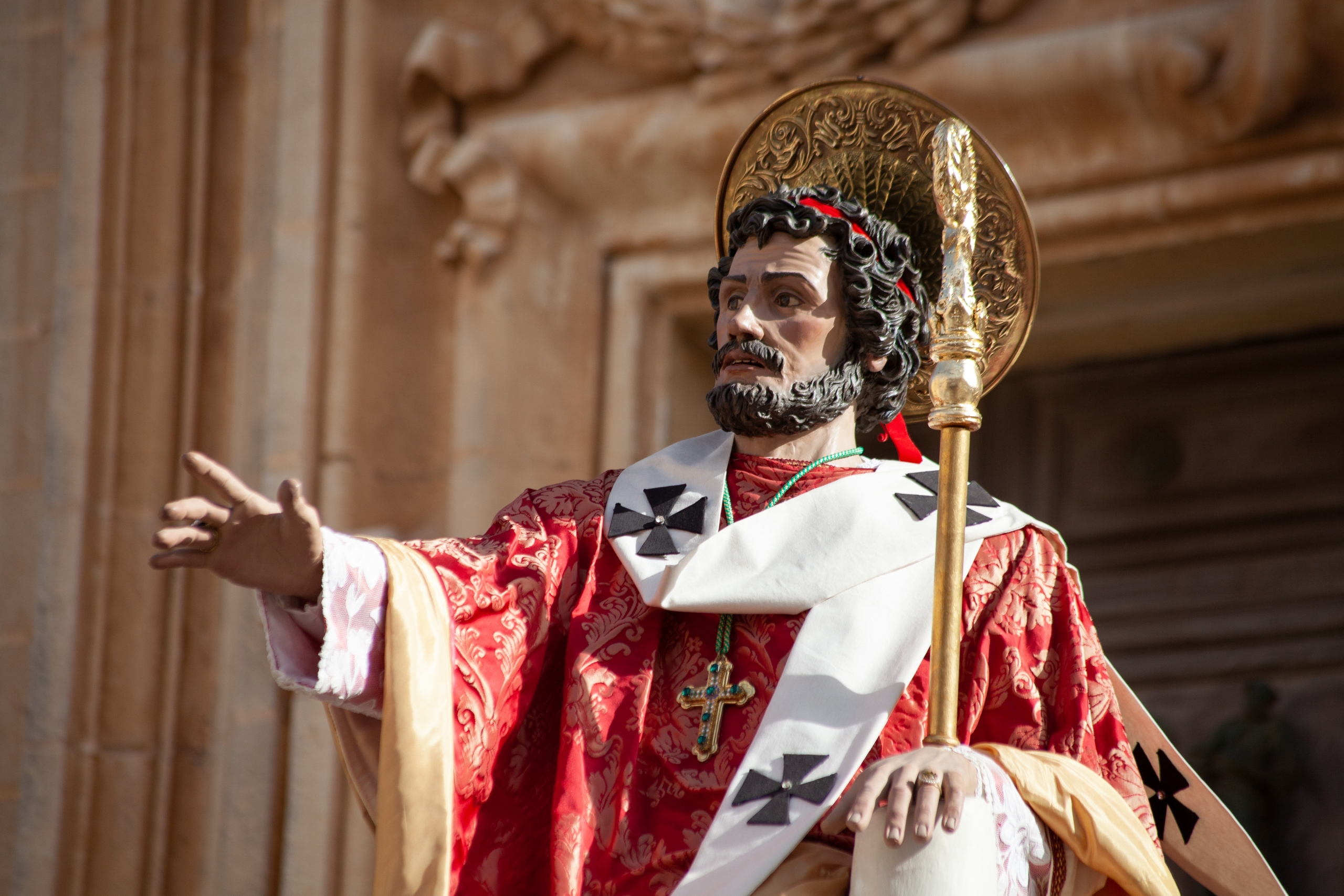
This article has been co-authored by Team PilgriMaps and Jean-Pierre Fava (VisitMalta).
The islands of Malta occupies a central position in the maritime space that connected the Levant, North Africa, and the Italian peninsula during the Roman period. Its role in what may be described as a Pauline Mediterranean circuit derives from a brief but influential episode recorded in the Acts of the Apostles, traditionally attributed to Luke the Evangelist. Within this narrative appears the figure of Publius of Malta, whose story links local tradition to broader patterns of travel, shipwreck, and reception.
The arrival of Paul
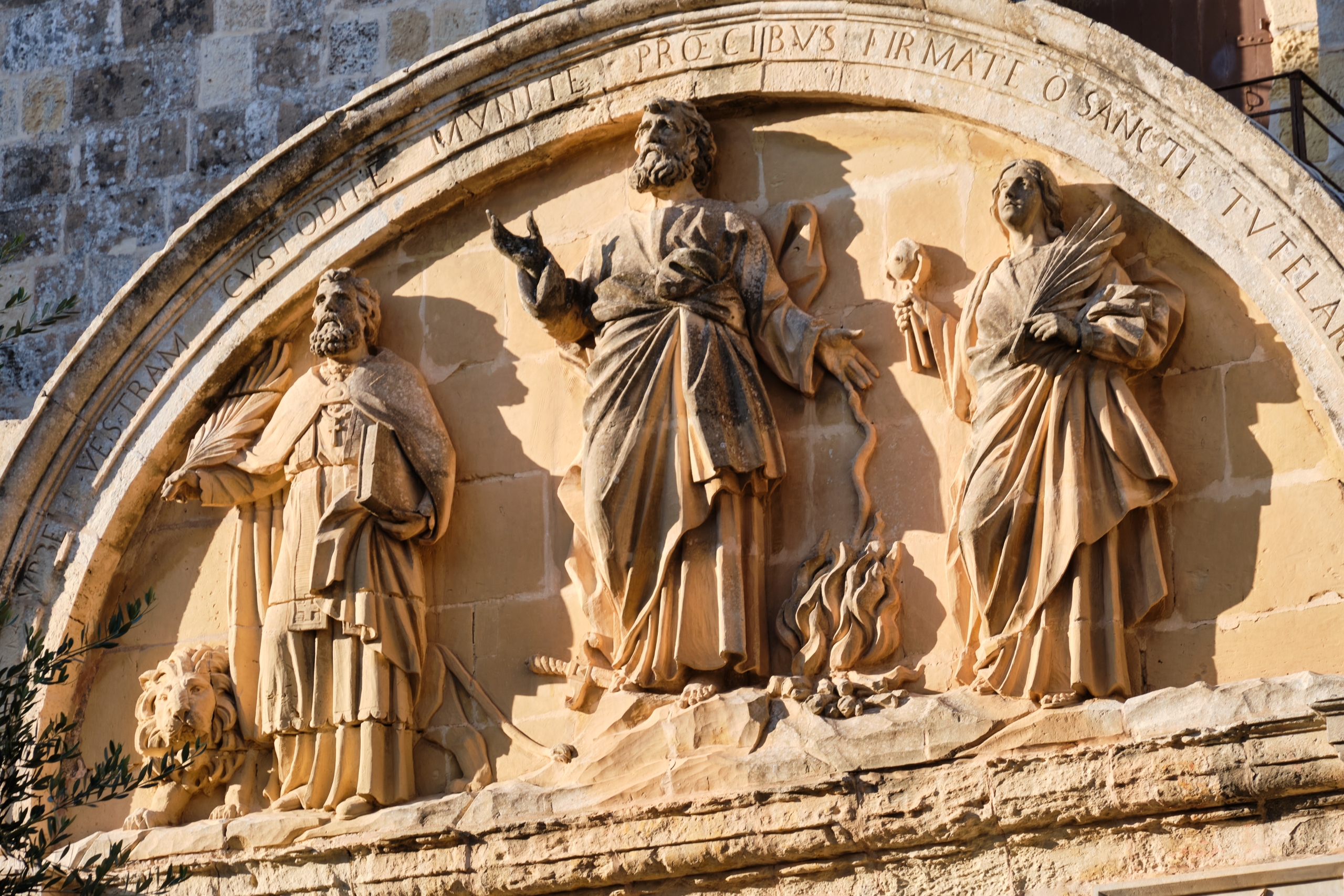
The account in Acts 27–28 describes how Paul the Apostle, en route as a prisoner to Rome, was caught in a storm and shipwrecked on an island identified as Malta. The narrative situates the event within the wider system of Roman maritime routes connecting the eastern Mediterranean to Rome.
Those who reached shore, according to the text, were received with what is described as philanthrōpia—a term suggesting structured hospitality rather than spontaneous charity. This reception frames Malta not as a peripheral location but as a node within established networks of movement, capable of integrating shipwrecked travelers into its social fabric.
Publius: A local figure in a transregional narrative
Within this account, Publius is introduced as the “chief man of the island,” a designation that suggests administrative authority under Roman governance. He receives Paul and his companions and, according to the narrative, hosts them for three days. The text further recounts the healing of Publius’s father, an episode that reinforces the theme of encounter between local structures and itinerant figures.
Later tradition identifies Publius as the first bishop of Malta, integrating him into a developing ecclesiastical framework. While this identification emerges from sources later than Acts, it reflects a broader tendency in Mediterranean societies to anchor transregional narratives in local lineages.
Sites such as St Paul’s Grotto in Rabat and San Pawl Milqi have been associated with this episode, forming a network of places that connect textual memory with physical landscape. These locations function less as verified historical settings than as focal points for continuity and interpretation.
Malta in a pauline circuit
To situate Malta within a Pauline circuit is to consider the sequence of movements described in Acts: from the eastern Mediterranean, through Crete, across the central sea, to Malta, and onward to Rome. This trajectory corresponds to known maritime corridors used for grain shipments, military transport, and administrative travel.
Malta’s position along this route transforms it into a point of interruption that acquires retrospective significance. The shipwreck—an unplanned event—becomes the basis for the island’s integration into a network of remembrance. In this sense, Malta exemplifies how contingency can generate enduring spatial meaning.
For later travelers, retracing Paul’s journey has provided a framework for movement across the Mediterranean. Within this framework, Malta emerges as a privileged stop: not because of monumental scale, but because of its narrative density within a widely circulated text.
From antiquity to contemporary routes
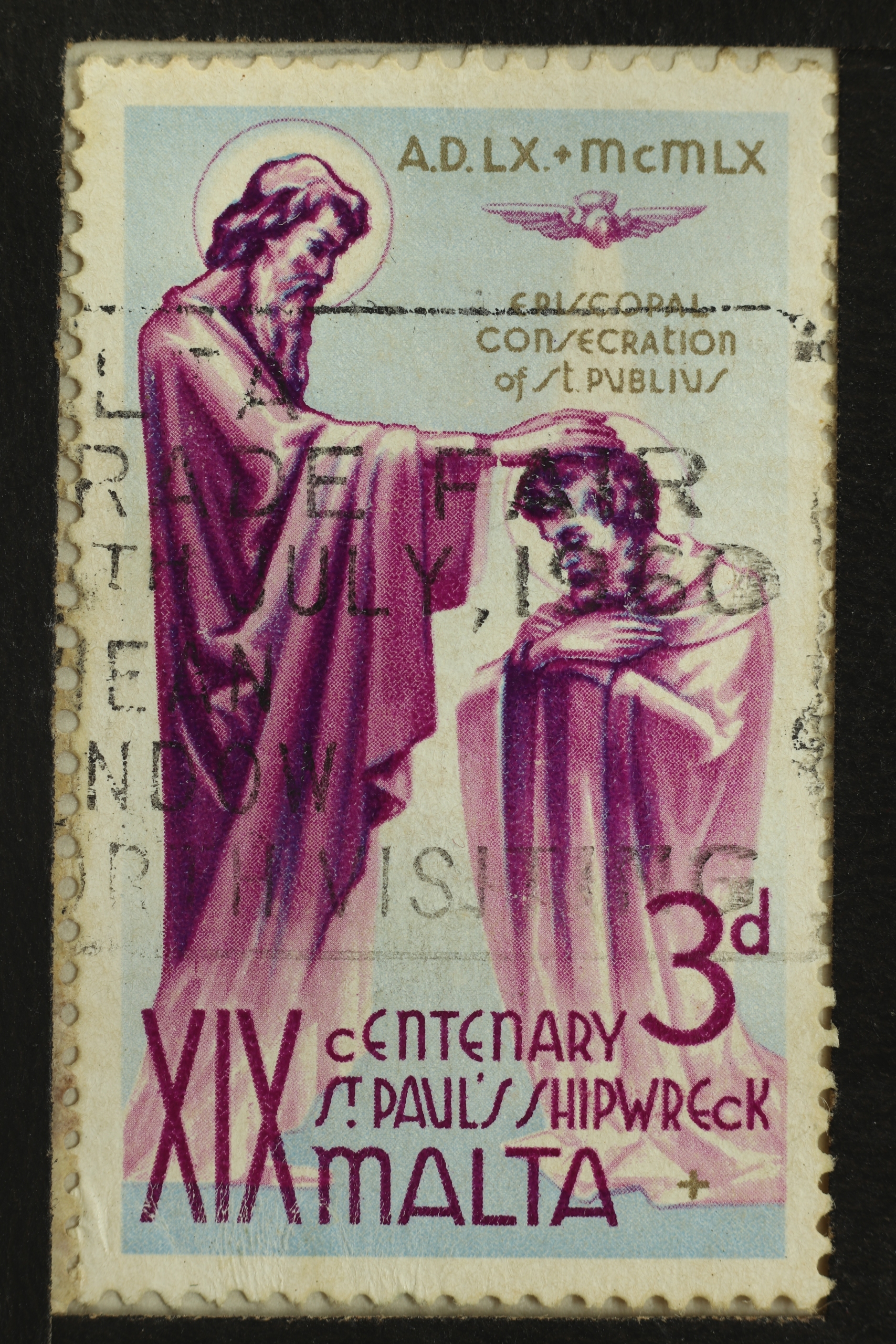
In later periods, Malta’s association with Paul and Publius contributed to its incorporation into broader itineraries linking the Levant, Sicily, and Rome. Pilgrims, scholars, and travelers moving between these regions often included the island as a point of reference.
This inclusion aligns with patterns observed across the Mediterranean, where islands function as both barriers and connectors. Malta’s harbors, fortified settlements, and inland sites reflect successive adaptations to these roles.
Today, the island continues to attract visitors interested in tracing these layered histories. Routes connecting St Paul’s Bay, Rabat, and Mdina provide a structured way of engaging with the narrative, while maritime perspectives situate Malta within the wider geography of ancient travel.
Node formed by narrative
The figure of Publius illustrates how local identity can be shaped by participation in a transregional account. His portrayal in Acts, combined with later tradition, anchors Malta within a Mediterranean system defined by movement, encounter, and reinterpretation.
As part of a Pauline circuit, Malta does not function as an origin or endpoint. It occupies an intermediate position—one created by interruption and sustained by memory. Through this lens, the island becomes a site where textual narrative, maritime geography, and local tradition converge into a coherent, if evolving, itinerary.
If you want to experience Pauline traditions in Malta firsthand, make sure you walk the Peregrinatio Sancti Pauli 60 A0, a unique Mediterranean Pauline route that traces the steps of the Apostle in the Maltese archipelago. This itinerary is a project developed by XirCammini in partnership with, and with the support of, VisitMalta. XirCammini assists individuals and groups interested in walking the Caminos, offering guidance and practical support throughout the journey. For further information, enquiries can be directed to [email protected] or via WhatsApp at +35679046942. XirCammini is a not-for-profit organisation dedicated to the development, maintenance, and promotion of historical, faith-related walking routes in Malta and across Europe. It is registered as a Voluntary Organisation (VO1646) with the Office of the Commissioner for Voluntary Organisations in Malta.
This content comes to you in collaboration with VisitMalta
AI Transparency Notice
PilgriMaps uses artificial intelligence tools to assist in the research, drafting and translation of editorial content. All AI-assisted content is reviewed, edited and verified by our editorial team before publication. We contrast information against primary sources, specialist literature and on-the-ground knowledge to ensure accuracy, cultural sensitivity and editorial integrity.
AI is one tool among many in our workflow. The judgement, curation and responsibility for everything published on this platform remain entirely human.
Viator Media S.L. — in compliance with the EU Artificial Intelligence Act (Regulation EU 2024/1689).
This post is also available in: