Night falls over Buskett, Malta’s only woodland. Entire families spread tablecloths beneath the trees, groups of friends share plates of stewed rabbit, and from some corner comes the sound of għana singers — Malta’s traditional folk music. It does not look like a religious celebration. Yet at dawn on June 29th, the whole country marks the solemnity of Saints Peter and Paul.
For first-time visitors to Malta, L-Imnarja is puzzling. It is a religious feast, but also a popular festival. A national celebration, and at the same time something deeply local. And it is, in all likelihood, one of the oldest living traditions in the archipelago.
What exactly is L-Imnarja? Why are two Christian apostles celebrated with a night of communal gathering in a forest? And how can a visitor take part today? Why Malta celebrates Saints Peter and Paul? The answer begins long before the Maltese state existed — and even before the arrival of the Knights of Malta.
The shipwreck that changed the island’s history
Few biblical episodes are as closely bound to a country’s identity as the shipwreck of Saint Paul is to Malta. According to the Acts of the Apostles, the future saint was traveling as a prisoner bound for Rome when a storm drove his ship aground on an island identified since antiquity as Malta. The account describes how the inhabitants welcomed the survivors with extraordinary hospitality. Paul remained there for several months, preached, performed healings, and left a mark that Maltese tradition regards as the origin of Christianity on the island.
From that point on, Saint Paul became one of the most beloved figures in Maltese history. His memory is present in churches, caves, chapels, pilgrimage routes, and countless popular traditions. Although the June 29th solemnity is jointly dedicated to Saints Peter and Paul, for many Maltese the figure of Paul carries a particular significance — he belongs to the foundational story of the nation itself. It is no coincidence that whenever Malta presents itself as one of Europe’s oldest Christian communities, the shipwreck narrative always sits at the center of that account.
How the Knights of Malta turned the feast into a national celebration
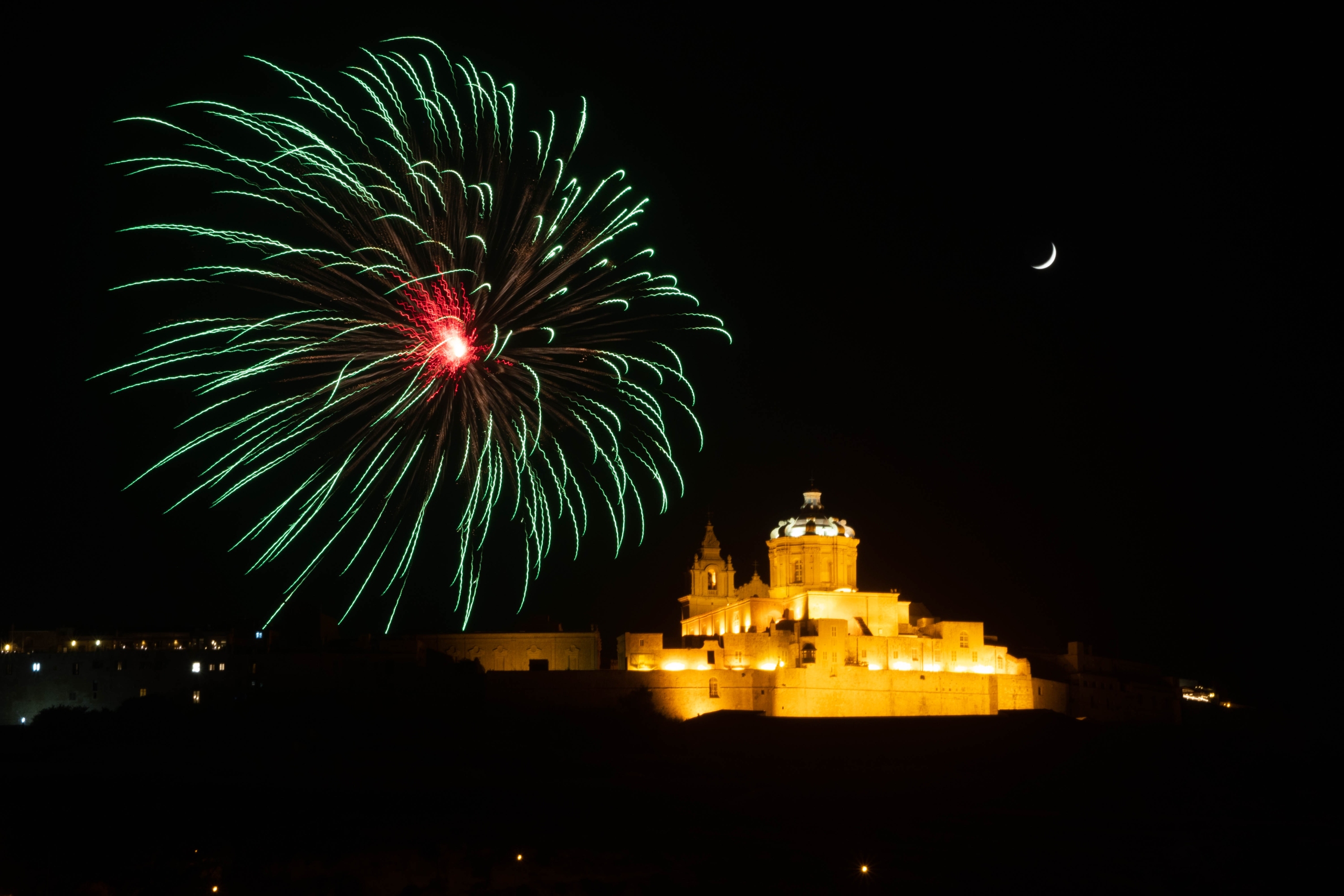
The feast, however, took its present form several centuries later. When the Order of Saint John established itself in Malta in 1530, the Knights inherited an existing tradition of devotion to the apostles — but it was they who transformed it into one of the archipelago’s great public celebrations.
The Order understood early on the importance of religious festivities as instruments of social cohesion. Under their rule, the celebrations of Saints Peter and Paul entered the official calendar and began combining religious observances, public ceremonies, and popular festivity. Many of the customs that define L-Imnarja today have their roots in that period. The joint participation of civil and religious authorities, public proclamations, communal celebrations, and much of the feast’s symbolism were consolidated under the Knights’ governance. The feast ceased to be purely a liturgical observance and became an expression of collective Maltese identity.
The Bandu: an inheritance from the Malta of the Knights
One of the most visible traces of that legacy is the Bandu — an official proclamation that once announced the arrival of the feast. In an era without newspapers, radio, or modern communications, this public reading served to inform the population that the celebrations were beginning. Its practical function has long since disappeared, but the tradition remains alive and constitutes one of the most tangible links between the L-Imnarja of today and the Malta governed by the Order of Saint John.
Rabbits, privileges, and a curious historical inheritance
The food carries traces of that period as well. The most emblematic dish of L-Imnarja is the fenkata — a meal centered on stewed rabbit that occupies a central place in the celebrations. According to popular tradition, under the Knights’ rule hunting was subject to strict restrictions and largely reserved as a privilege of the elite. The feast of Saints Peter and Paul was said to be one of the moments when ordinary people could more freely access this meat, making rabbit a symbol associated with the celebration. Whatever the precise historical truth of this account, the association between L-Imnarja and the fenkata remains inseparable to this day.
What L-Imnarja actually celebrates
From a liturgical standpoint, June 29th is one of the great solemnities of the Catholic calendar. The Church commemorates Saints Peter and Paul together, regarded as the two pillars of early Christianity. Peter represents apostolic continuity and the leadership of the nascent Church. Paul embodies the missionary expansion of Christianity beyond the Jewish world. Both were martyred in Rome during the first century, and their memory has been celebrated jointly since the earliest centuries of Christianity.
In Malta, however, the feast carries an additional dimension. Alongside the universal commemoration of the two apostles, Maltese people celebrate an essential chapter of their own history. For many inhabitants of the archipelago, the solemnity evokes the man who arrived on their shores after a shipwreck — and whose memory has remained alive for nearly two thousand years.
The eve: a night in Buskett
The most singular experience of L-Imnarja begins on the afternoon of June 28th. Thousands of people make their way to the Buskett Gardens, a broad wooded area beside Verdala Palace. In a country where forested spaces are rare, this place carries a particular resonance.
As the evening sets in, families occupy tables, benches, and clearings among the trees. Others arrive with folding chairs and baskets of food. Gradually the woodland transforms into an enormous open-air gathering space. There is no rigid programme to follow. The essence of the night is simply sharing time with family and friends while waiting for the feast day to arrive. For the visitor, this gathering offers a rare opportunity to witness a tradition deeply embedded in everyday Maltese life.
The sound of tradition: għana
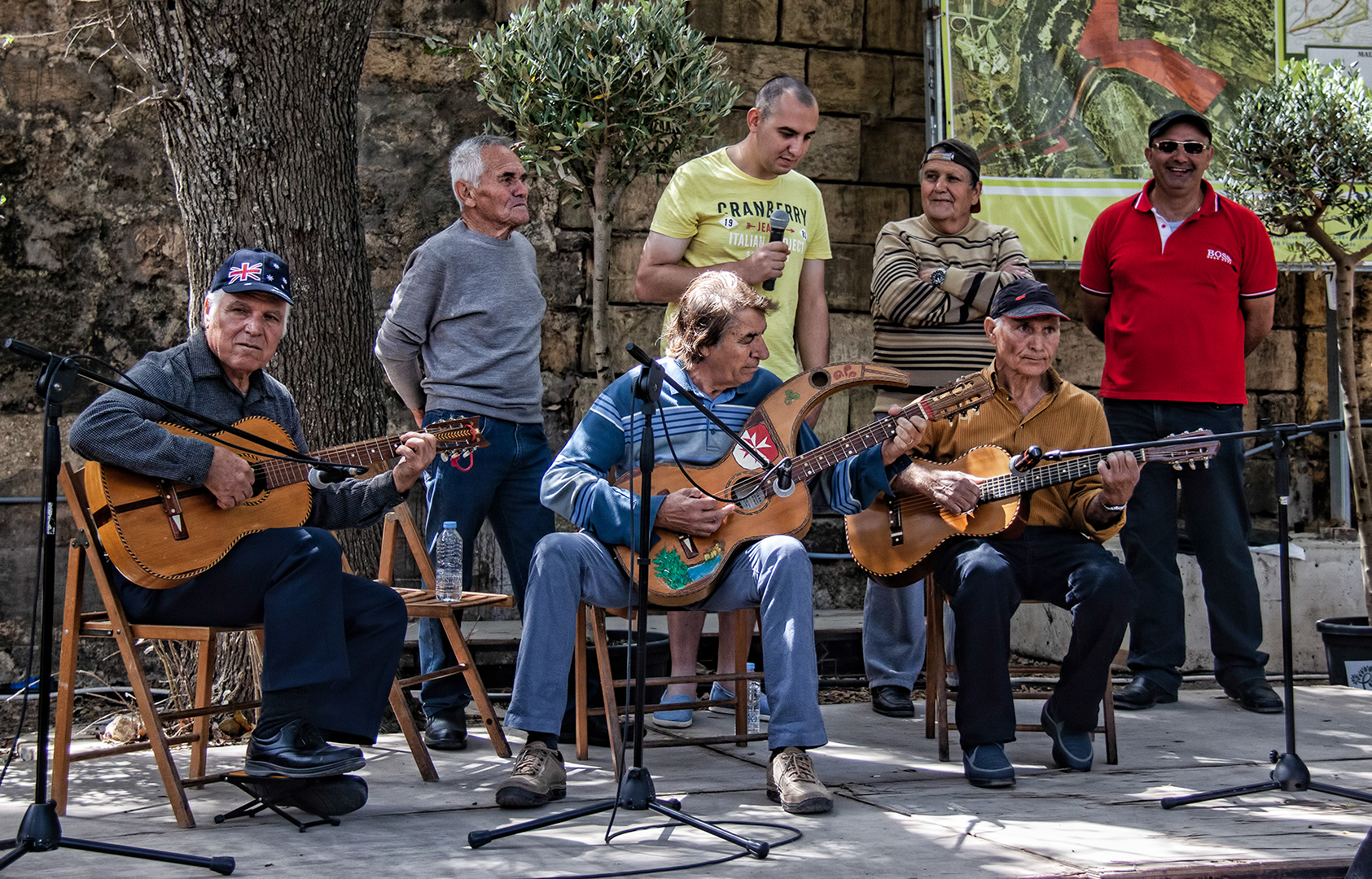
Among the most distinctive cultural expressions of the feast is għana, Malta’s traditional folk music. It is a genre transmitted orally across generations, in which performers develop elaborate sung dialogues — often improvised — accompanied by guitars. During L-Imnarja it is common to encounter both spontaneous and arranged performances, offering a chance to hear one of the most authentic expressions of Maltese cultural heritage. More than entertainment, għana is a form of collective memory connecting the present to centuries of popular tradition.
The great L-Imnarja dinner
No celebration would be complete without its food. The undisputed centerpiece is the fenkata — rabbit prepared in various ways and typically shared among a group. Many restaurants offer special menus during the feast, while numerous families prepare their own recipes to bring to Buskett or share at private gatherings. For many Maltese, the feast would not be the feast without this dish, which has become over the centuries one of the most recognizable symbols of national culinary identity.
A fair that recalls rural Malta
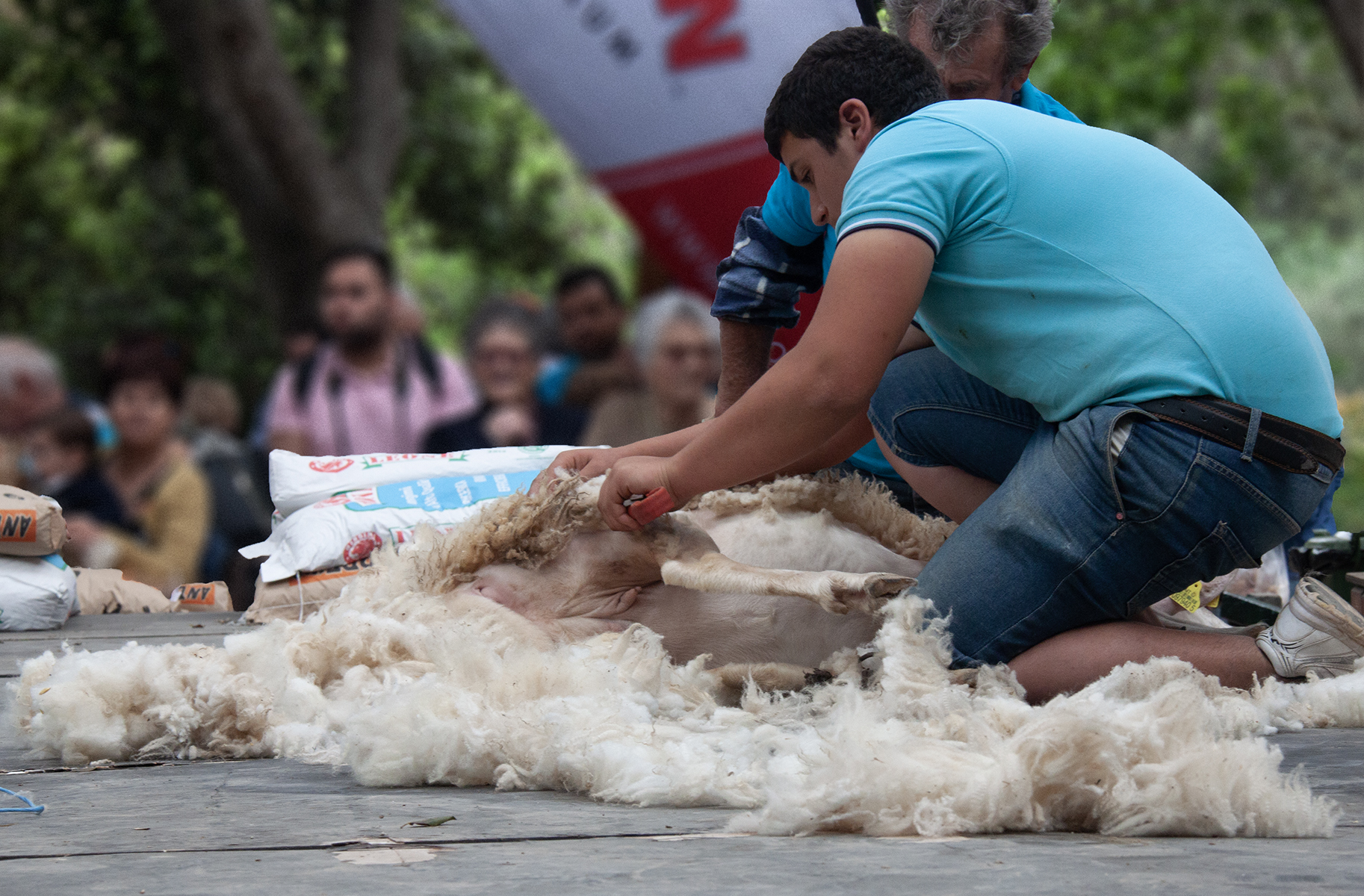
The morning of June 29th reveals another dimension of the celebration. Buskett becomes the setting for a large agricultural fair where livestock, farm produce, and rural traditions are on display. Although contemporary Malta is a highly urbanized country, this part of the celebration recalls the central role that agriculture played for centuries in island life and the economy. Livestock shows, competitions, craft demonstrations, and local produce stalls open a side of the archipelago that rarely appears in tourist imagery.
The religious celebrations
Meanwhile, parishes and churches mark the spiritual core of the day. Solemn Masses on June 29th draw worshippers from across the country. In some localities, processions, acts of veneration, and special celebrations dedicated to the two apostles take place. The religious dimension remains essential to understanding the feast’s deeper meaning. However much the music, food, and popular activities draw attention, everything revolves around a solemnity that continues to hold a prominent place in Maltese religious life.
How to take part in L-Imnarja today
For those who want to experience the feast, the simplest approach is to set aside two distinct moments. The afternoon and evening of June 28th offer access to the popular atmosphere of Buskett — the family gathering, the traditional music, the open-air dinners. The morning of June 29th offers a different perspective, centered on the agricultural fair, the religious celebrations, and the institutional observances.
Buskett is the heart of the feast, but it is also worth visiting Mdina and Rabat, where the memory of Saint Paul remains especially present. It is worth keeping in mind that L-Imnarja is not a celebration created for tourists. Those who take part in it become, if only for a few hours, participants in a tradition that Maltese people regard as part of their own history.
Some places are best understood through their monuments. Others reveal themselves through their landscapes. Malta offers a third possibility: knowing the country through a feast.
L-Imnarja holds together the memory of Saint Paul’s shipwreck, the legacy of the Knights of Malta, rural traditions, folk music, food, and contemporary family life. Few celebrations manage to gather so many layers of history into a single day. Those who spend a night beneath the trees of Buskett and wake to find the country celebrating Saints Peter and Paul will likely have discovered something essential about Malta: the extraordinary capacity of a small island to keep its traditions alive without turning them into a mere performance of the past.
AI Transparency Notice
PilgriMaps uses artificial intelligence tools to assist in the research, drafting and translation of editorial content. All AI-assisted content is reviewed, edited and verified by our editorial team before publication. We contrast information against primary sources, specialist literature and on-the-ground knowledge to ensure accuracy, cultural sensitivity and editorial integrity.
AI is one tool among many in our workflow. The judgement, curation and responsibility for everything published on this platform remain entirely human.
Viator Media S.L. — in compliance with the EU Artificial Intelligence Act (Regulation EU 2024/1689).
This post is also available in: