At dawn, central Moscow hardly suggests a point of spiritual departure. Traffic circles the Kremlin, visitors converge on Red Square, and Soviet-era buildings rise with their austere stone presence. Yet from here – from “kilometer zero” – begins one of Russia’s oldest and most significant pilgrimage routes: the Lavra Trail, a journey of approximately 75 miles leading to the Trinity – St. Sergius Lavra in Sergiev Posad.
This is not an alpine trail or a scenic itinerary designed for international tourism. It follows a different logic. It forms a spiritual axis linking the political capital to the forest where, in the 14th century, a monk altered the course of Russian history.
The monk who unified a fragmented land
That monk was Sergius of Radonezh (c. 1314–1392), born Bartholomew in a period when the territories of Rus’ were divided into principalities and largely subject to the Golden Horde. He was neither a military strategist nor a political reformer. He was a hermit.
He withdrew into the forests near Radonezh and founded a small community dedicated to the Trinity. What began as an isolated wooden church gradually developed into a spiritual center with influence across Muscovite Rus’.
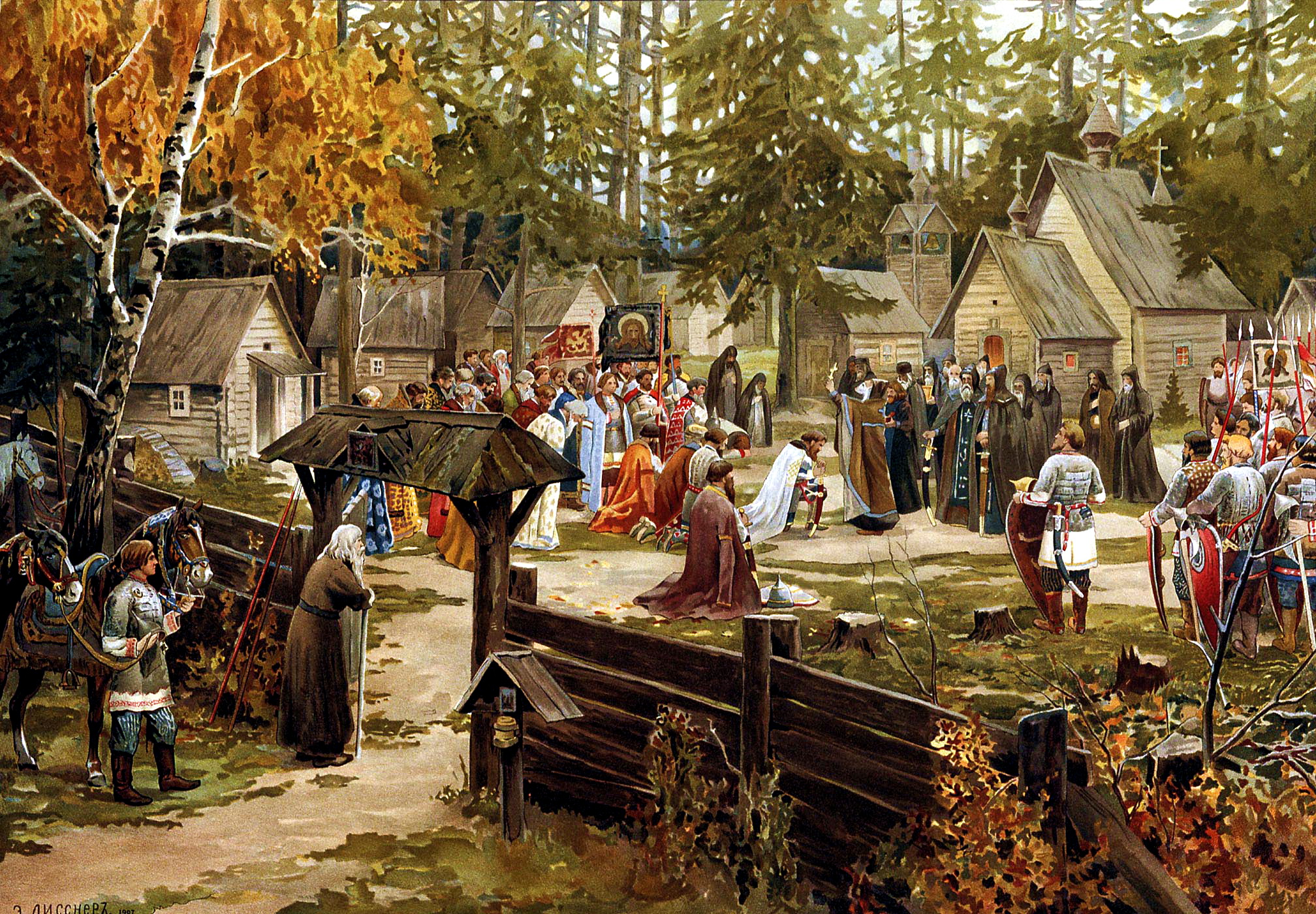
A defining episode in his legacy was his blessing of Prince Dmitri Donskoy before the Battle of Kulikovo in 1380. Although the victory did not immediately end Mongol dominance, it became a lasting symbol of unity. Sergius came to embody the idea of spiritual cohesion in Russia.
Walking toward his monastery can be understood, in part, as walking toward a symbolic origin of the Russian state.
From hermitage to Lavra
The community founded by Sergius expanded steadily. Over time, the monastery was fortified and enriched with stone churches, icon workshops, theological schools, and sustained cultural activity.
It received the designation “Lavra,” a title reserved in Orthodox tradition for monasteries of exceptional importance. The Trinity – St. Sergius Lavra emerged as the principal spiritual center of Russia.
During the early 17th century, it withstood the Polish-Lithuanian siege of the so-called Time of Troubles (1608–1610), consolidating its role as both a religious and national stronghold. In subsequent centuries, rulers, nobles, and peasants traveled to venerate the relics of Sergius, preserved in the Trinity Cathedral.
From this continuity, the tradition of the Lavra Trail took shape.
A 75-miles pilgrimage
Historical sources and modern route reconstructions place the “Put’ k Lavre” at approximately 110–120 kilometers between Moscow and Sergiev Posad, consistent with references to 75 miles in later Russian documentation.
The route begins symbolically in central Moscow, near the Kremlin, and progresses northward through urban districts, parks, peri-urban settlements, and increasingly rural and forested landscapes of the Moscow region.
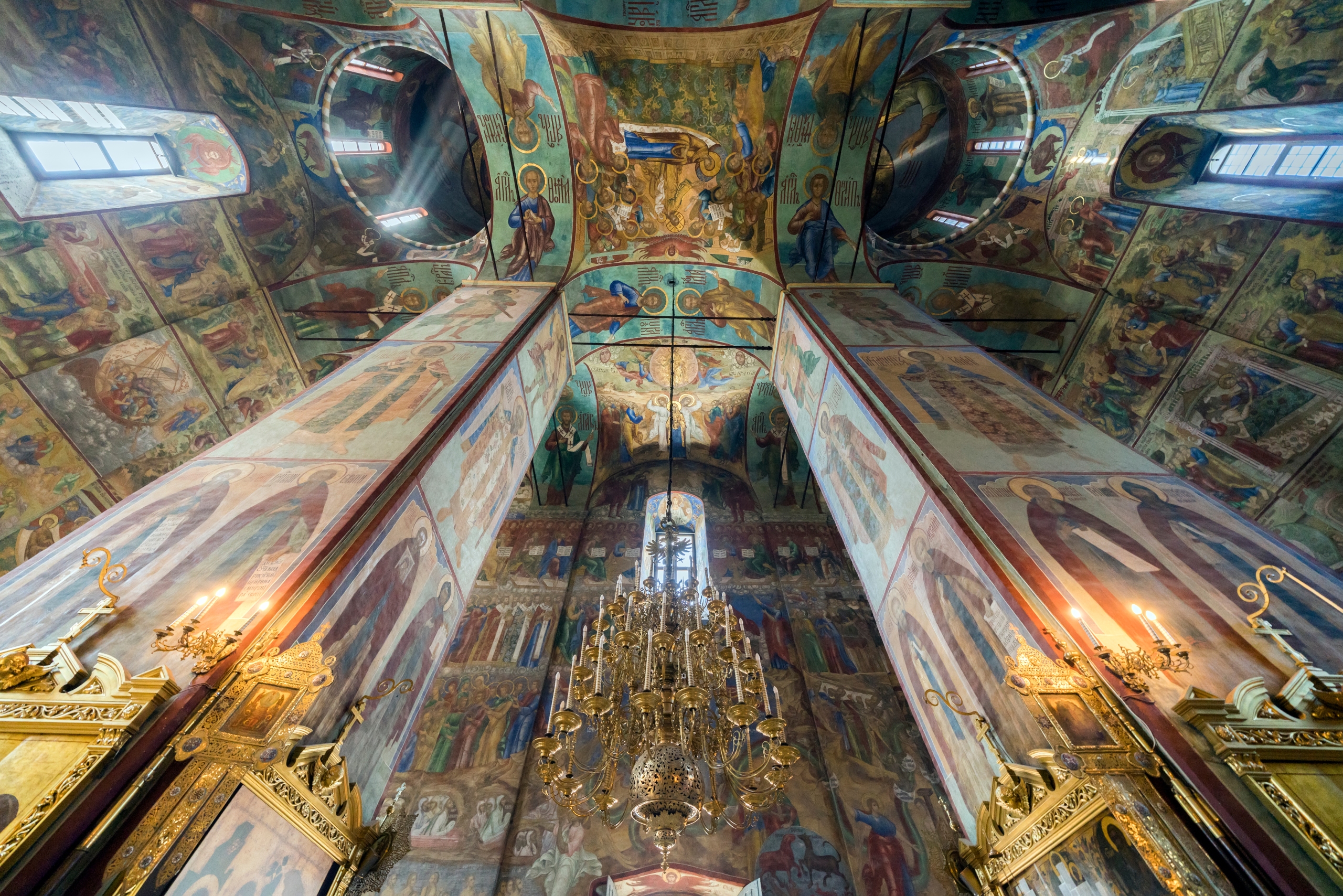
Common waypoints include Mytishchi, Pushkino, and Khotkovo. The final stretch descends toward Sergiev Posad, where the monastery’s white walls emerge amid greenery or snow, depending on the season.
The landscape is not dramatic in conventional terms. There are no high mountain ranges or striking gorges. Instead, the terrain consists of forests, flat horizons, dirt paths, and distant bell towers. It is an interior landscape, aligned with Orthodox spiritual sensibilities: silence, repetition, and continuity.
Pilgrims across social worlds
For centuries, the Lavra attracted large numbers of pilgrims. The barefoot peasant walking long distances shared, in symbolic terms, the same destination as rulers arriving in ceremonial processions.
Figures such as Ivan IV, Peter I, and Nicholas II maintained strong connections with the monastery. In intellectual circles, thinkers like Pavel Florensky developed their work in close relation to its spiritual traditions.
Tsars as pilgrims: Power walking between the sacred and history
The pilgrimage, however, was never exclusively associated with elites. It remained fundamentally popular. In the Russian cultural imagination, walking to the monastery signified seeking counsel, performing penance, pursuing healing, or reaffirming belonging within a shared spiritual framework.
The route today
In recent decades, the Lavra Trail has undergone a process of revitalization as both a cultural and pilgrimage route. It is partially waymarked and can be divided into stages of 12–15 miles, allowing completion in four to five days.
The terrain combines urban segments on leaving Moscow, forest trails, rural paths, and stretches of secondary roads. Infrastructure is modest but functional: accommodation in intermediate towns, hotels in Sergiev Posad, and convenient return options to Moscow via commuter rail.
Visitors should be aware of certain cultural conventions: modest dress within the monastery, attentiveness to Orthodox liturgical practices, and restrictions on photography inside churches. The Lavra functions as an active monastic community rather than a historical display.
A “Russian Camino”?
Comparisons with the Camino de Santiago often arise, though they require nuance. The Camino today is a global and highly diversified phenomenon. The Lavra Trail remains more contained, shaped primarily by national historical consciousness rather than international projection.
Nonetheless, parallels exist. The Camino contributed to the articulation of medieval Western Europe. Sergius of Radonezh played a comparable role in shaping Russia’s spiritual identity. Both routes lead not only to a destination, but to foundational narratives.
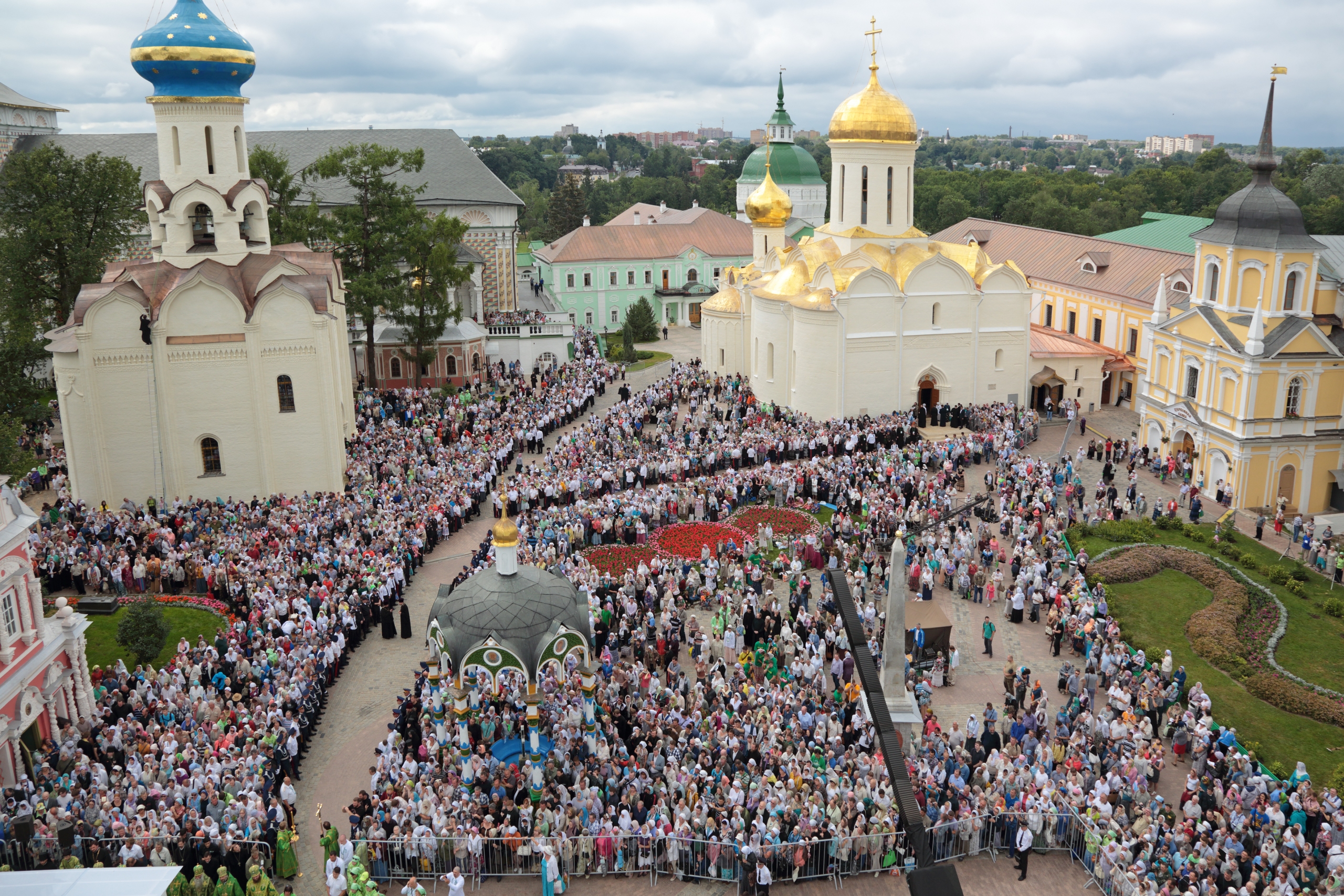
Arrival at the White Walls
After approximately 75 miles, the contemporary pilgrim reaches Sergiev Posad. Blue domes marked with stars rise above the monastery’s white walls. Bells carry across the surrounding forest.
The journey is not extreme in physical terms. It does not cross deserts or mountain ranges. Yet it traverses a different kind of terrain: the accumulated spiritual memory of a country.
The Lavra Trail is not defined by spectacle. It traces a line between authority and contemplation, state and solitude, capital and forest. To walk it today is to enter an enduring dialogue that continues to shape Russian cultural identity.
Official website of the Road to the Lavra (in Russian) https://dorogavposad.ru/
AI Transparency Notice
PilgriMaps uses artificial intelligence tools to assist in the research, drafting and translation of editorial content. All AI-assisted content is reviewed, edited and verified by our editorial team before publication. We contrast information against primary sources, specialist literature and on-the-ground knowledge to ensure accuracy, cultural sensitivity and editorial integrity.
AI is one tool among many in our workflow. The judgement, curation and responsibility for everything published on this platform remain entirely human.
Viator Media S.L. — in compliance with the EU Artificial Intelligence Act (Regulation EU 2024/1689).
This post is also available in: