At various moments in history, nearly every form of power has felt the need to walk. Not in the metaphorical sense of progress or expansion, but in a far more literal one: leaving the palace, stepping away from the center of authority, and moving toward a sacred place. Medieval rulers crossed Europe toward Santiago or Rome; Asian emperors visited ancestral temples; leaders of different traditions traveled long distances in search of spiritual legitimacy. In many cultures, governing also involved undertaking pilgrimage.
This practice was not merely political calculation. It responded to a deeper logic. Power could not rely solely on force or law; it needed to present itself as part of a higher order. Pilgrimage, in this sense, carried layered meaning. The ruler did not only command; he also submitted, asked, and gave thanks. He appeared before his subjects as someone who acknowledged a greater authority.
Few traditions developed this idea as systematically as Russia. Over centuries, the tsars turned pilgrimage into a structured practice. Under the Romanov dynasty in particular, journeys to sacred sites functioned both as acts of personal devotion and as a refined form of political communication—a way of staging the alliance between authority and religion.
Pilgrimage as governance
In the Russian context, pilgrimage even had a specific term: bogomolie, “going to pray at holy places.” In practice, it extended beyond prayer. These journeys combined liturgy, spectacle, and governance within a single gesture.
Tsars traveled to major religious centers that functioned as spiritual poles of the country. Among them, the Trinity–St. Sergius Monastery near Moscow held a central place, often regarded as a form of “state sanctuary.” Other destinations included more remote yet symbolically charged sites such as the Solovki Islands in the north and the Sarov–Diveevo complex.
The ritual framework was consistent: processions, veneration of relics, public almsgiving, and blessings. The tsar was received by clergy, accompanied by his court, and observed by the population. In this way, pilgrimage became a form of political technology, making visible the relationship between authority and the sacred.
Ivan IV: Power in supplication
An early example appears in Ivan IV. Often remembered for his use of violence, his engagement with religious centers was nonetheless continuous and significant.
One of his principal destinations was the Trinity–St. Sergius Monastery, which he visited shortly after his coronation in 1547. He returned after his marriage and on other key occasions. In one instance, he completed part of the journey on foot in winter, in a visible act of penitence.
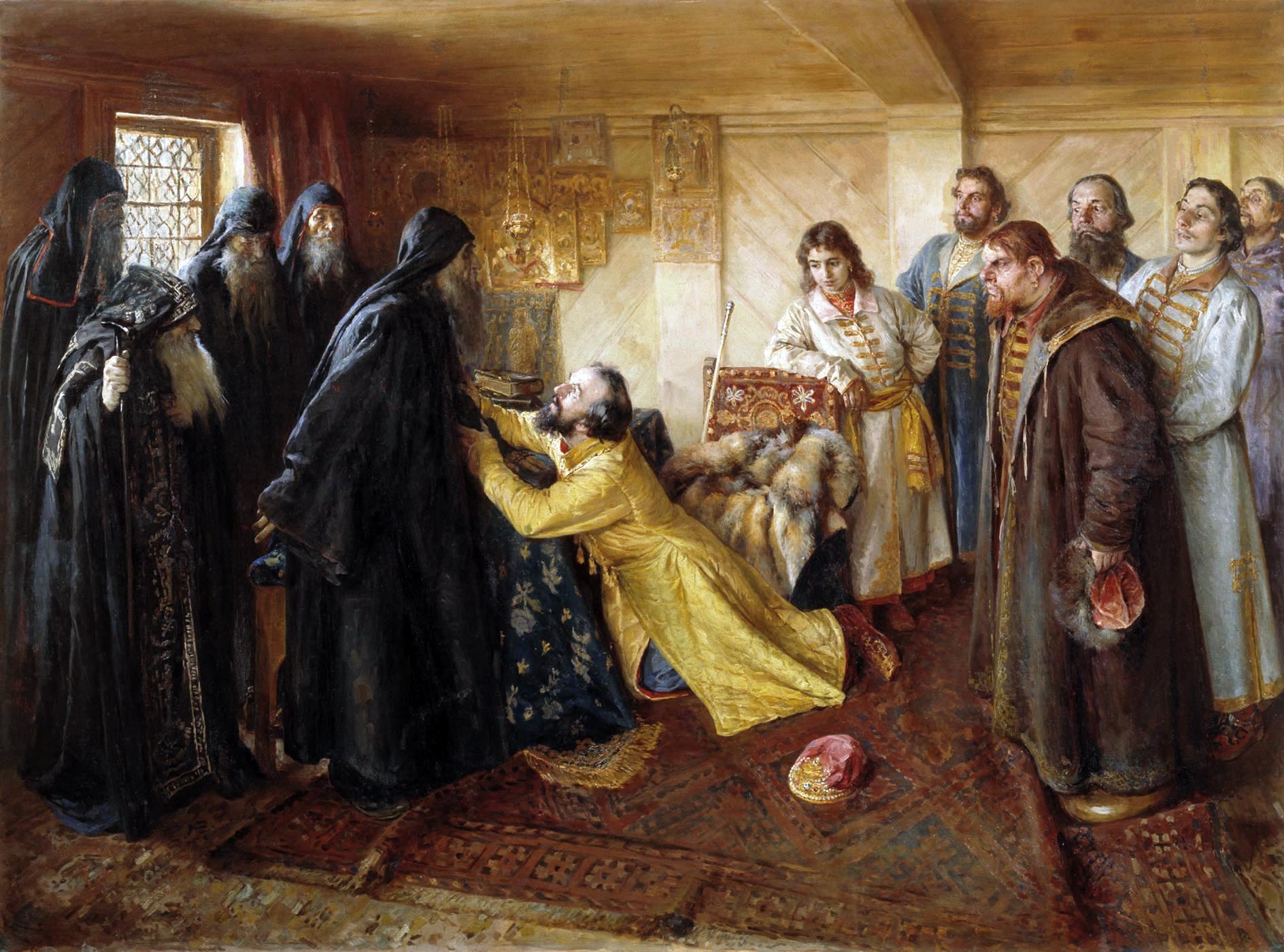
His itineraries extended beyond this site. He also visited major northern monasteries such as Kirillo-Belozersky, indicating that these locations formed part of a broader symbolic network of authority.
Before the campaign against Kazan, Ivan again traveled to the Trinity – St. Sergius Monastery to participate in liturgical rites and seek blessing. After military victories, he returned to give thanks. Warfare and governance were thus framed within a religious context. Ivan did not only rule; he supplicated – and through that public supplication, part of his authority was constructed.
Michael I: Pilgrimage and reconstruction
When Michael I was elected tsar in 1613, Russia was emerging from a period of instability. His initial pilgrimage was not secondary; it played a central role in establishing legitimacy.
The journey again focused on the Trinity–St. Sergius Monastery, but included multiple stops in cities such as Yaroslavl and Rostov, as well as visits to monasteries housing revered icons.
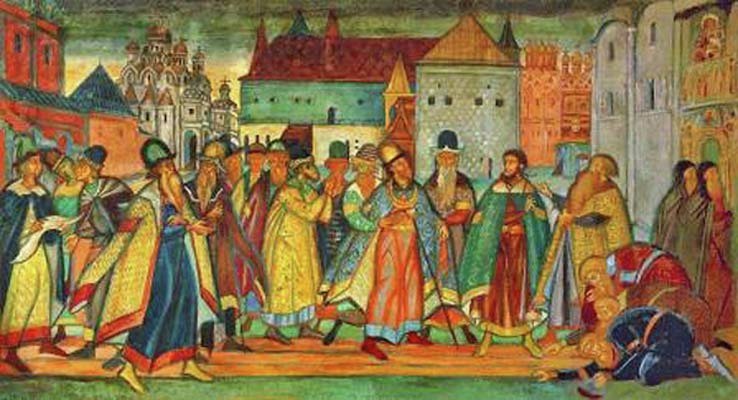
Each stop functioned ceremonially. The tsar was welcomed with crosses, icons, and relics; he participated in services and made donations. The entire route operated as an extended procession across space.
These destinations were not chosen arbitrarily. They were nodes of spiritual authority. By visiting them, Michael inserted himself into a sacred geography that reinforced his position. The pilgrimage did not merely inaugurate a reign; it contributed to rebuilding a political order.
Alexis I: The State in motion
Under Alexis I, pilgrimage reached a high degree of organization. The destination remained largely the same, but the journey itself became increasingly structured.
The so-called “road to Troitsa” developed into a ritualized itinerary. Before departure, roads were repaired, stops arranged, and resources mobilized. During the journey, the tsar traveled with troops, convoys, and court officials.
It was a large-scale movement. Yet the defining moment came at the end: the final kilometers were completed on foot. After deploying the full apparatus of power, the ruler symbolically set it aside.
At the monastery, he participated in liturgies, venerated the relics of Sergius, and made offerings. The site functioned simultaneously as spiritual center and political stage, and pilgrimage had become a carefully orchestrated expression of statehood.
Peter I and Catherine II: Imperial reframing
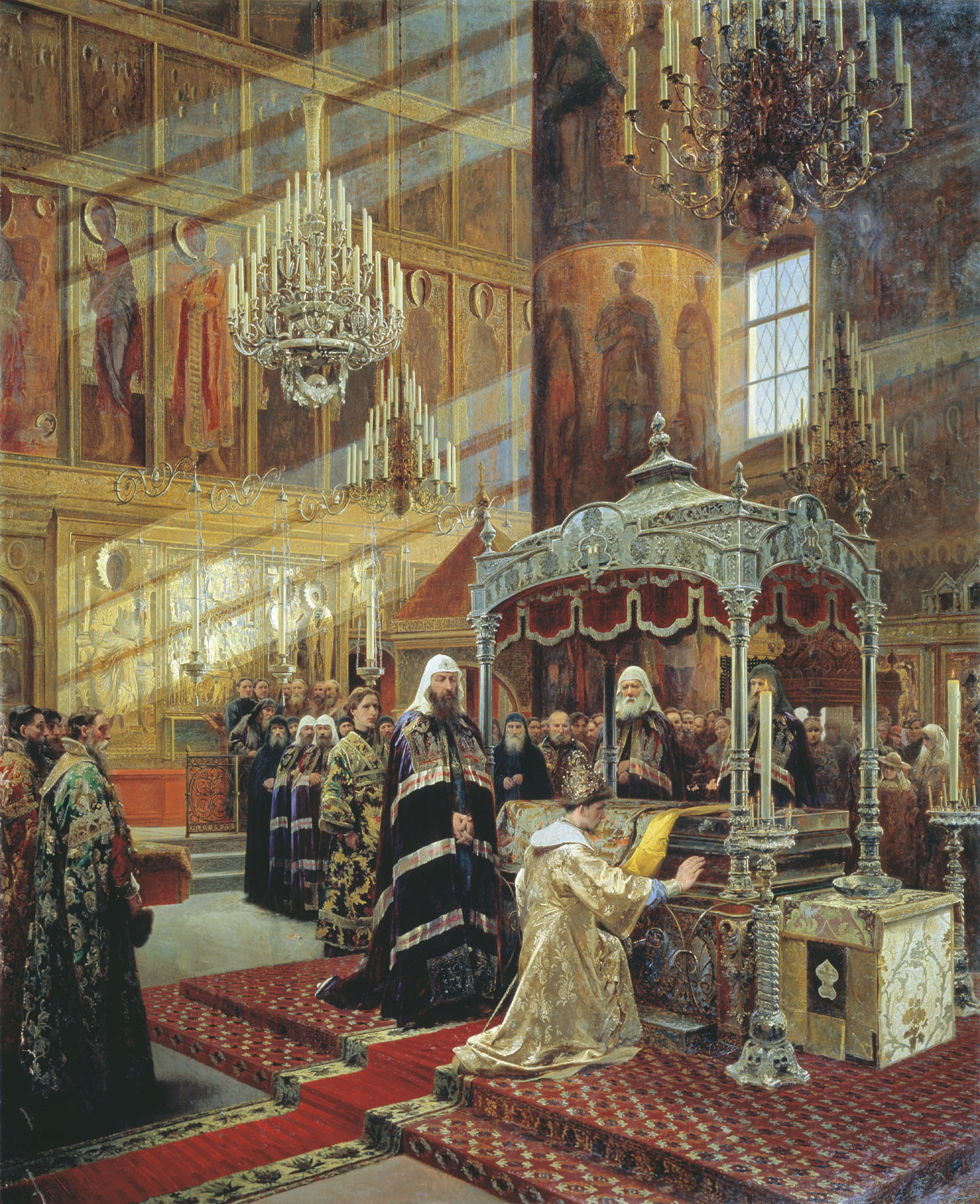
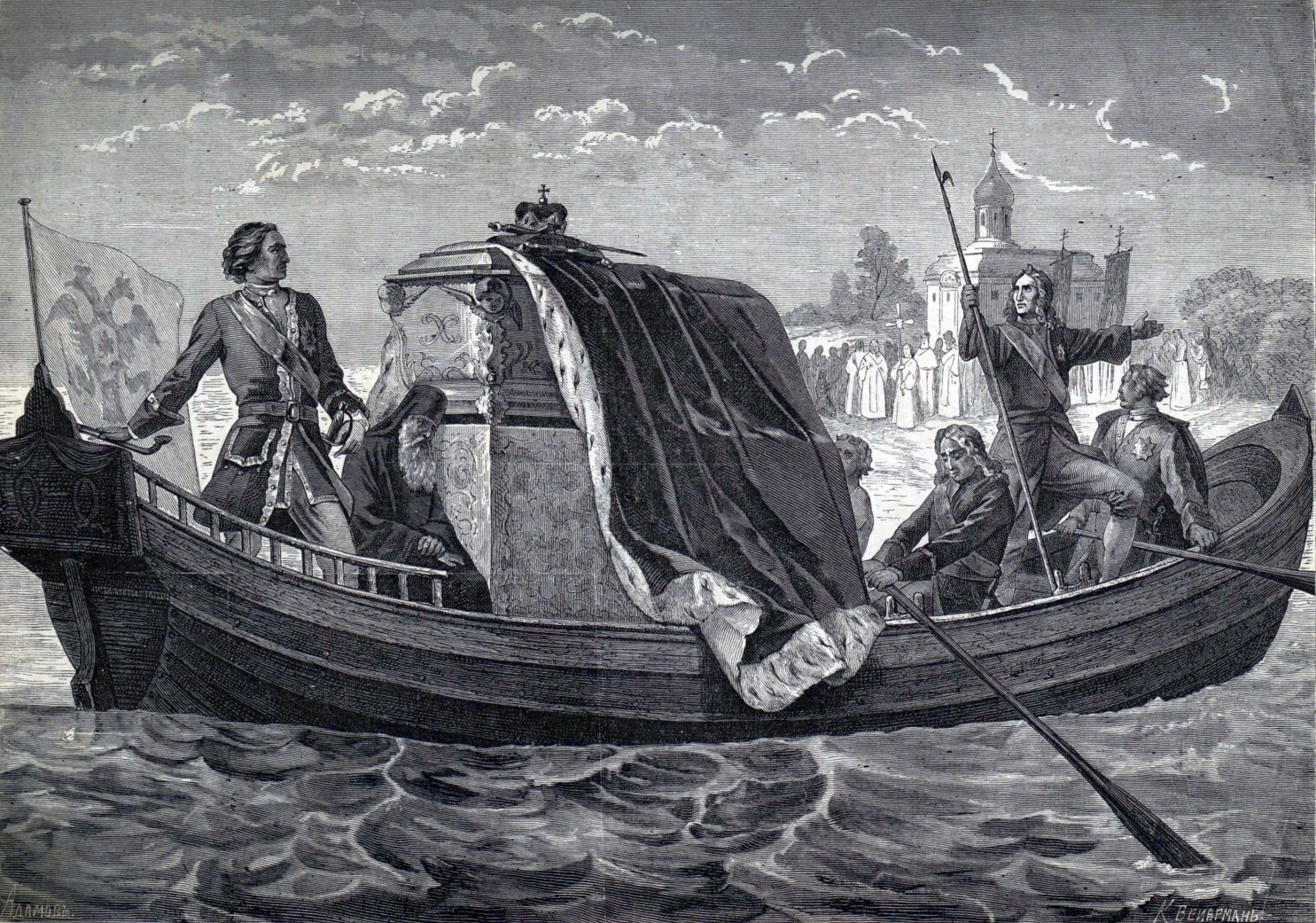
With Peter I, the geography of pilgrimage expanded. In addition to visiting the Trinity–St. Sergius Monastery, he traveled to distant sites such as the Solovki Monastery on the White Sea.
This destination carried not only religious significance but also strategic value. Peter arrived by sea, commissioned chapels, and installed crosses, integrating these locations into his territorial vision. Pilgrimage thus intersected with geopolitics.
Catherine II offers a particularly revealing case. In 1775, she undertook a carefully organized pilgrimage to the Trinity–St. Sergius Monastery, stopping at places such as Khotkovo along the way. Her arrival was marked by processions, bells, cannon salutes, and musical performances.
Yet a notable contrast emerges. Catherine was associated with Enlightenment thought and maintained correspondence with figures such as Voltaire. In many respects, she represented a departure from earlier traditions.
However, she did not abandon pilgrimage. This suggests that such journeys were not simply expressions of personal belief, but essential components of the language of power. Even an Enlightenment-oriented ruler operated within this framework.
Nicholas II: Pilgrimage at scale
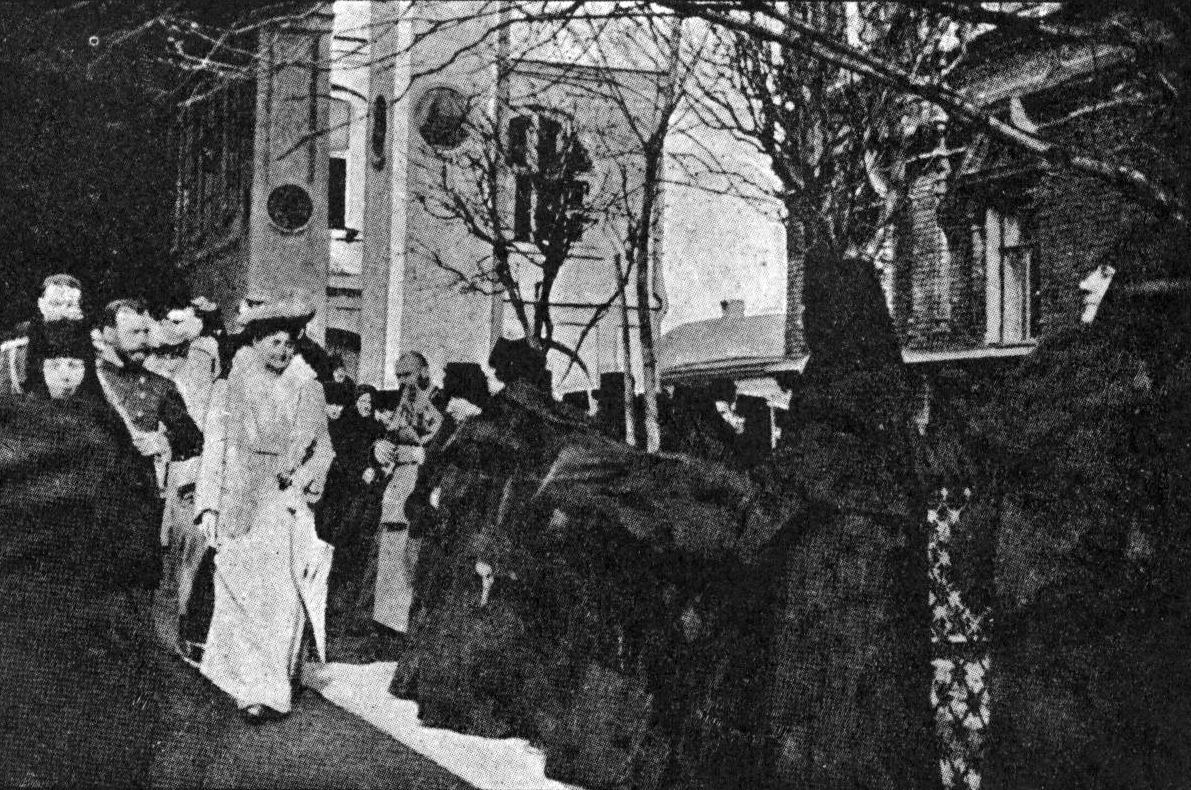
At the beginning of the 20th century, under Nicholas II, pilgrimage reached unprecedented scale. In 1903, he traveled to Sarov, near Diveevo, for the canonization of Seraphim of Sarov—a site with strong popular appeal.
The event drew vast crowds, possibly in the hundreds of thousands. Temporary infrastructure was constructed, medical services organized, and systems of coordination implemented.
The tsar participated actively: joining processions, visiting associated sites, venerating relics, and walking alongside participants at certain stages. Pilgrimage had become a mass phenomenon. It was no longer solely an act of power; it had become a collective experience.
In 1913, during the tercentenary of the Romanov dynasty, Nicholas II visited symbolic sites such as the Ipatiev Monastery, reinforcing the link between dynasty and sacred history. These gestures, however, did not prevent the collapse of the system a few years later.
After the Empire: Pilgrimage without Tsars
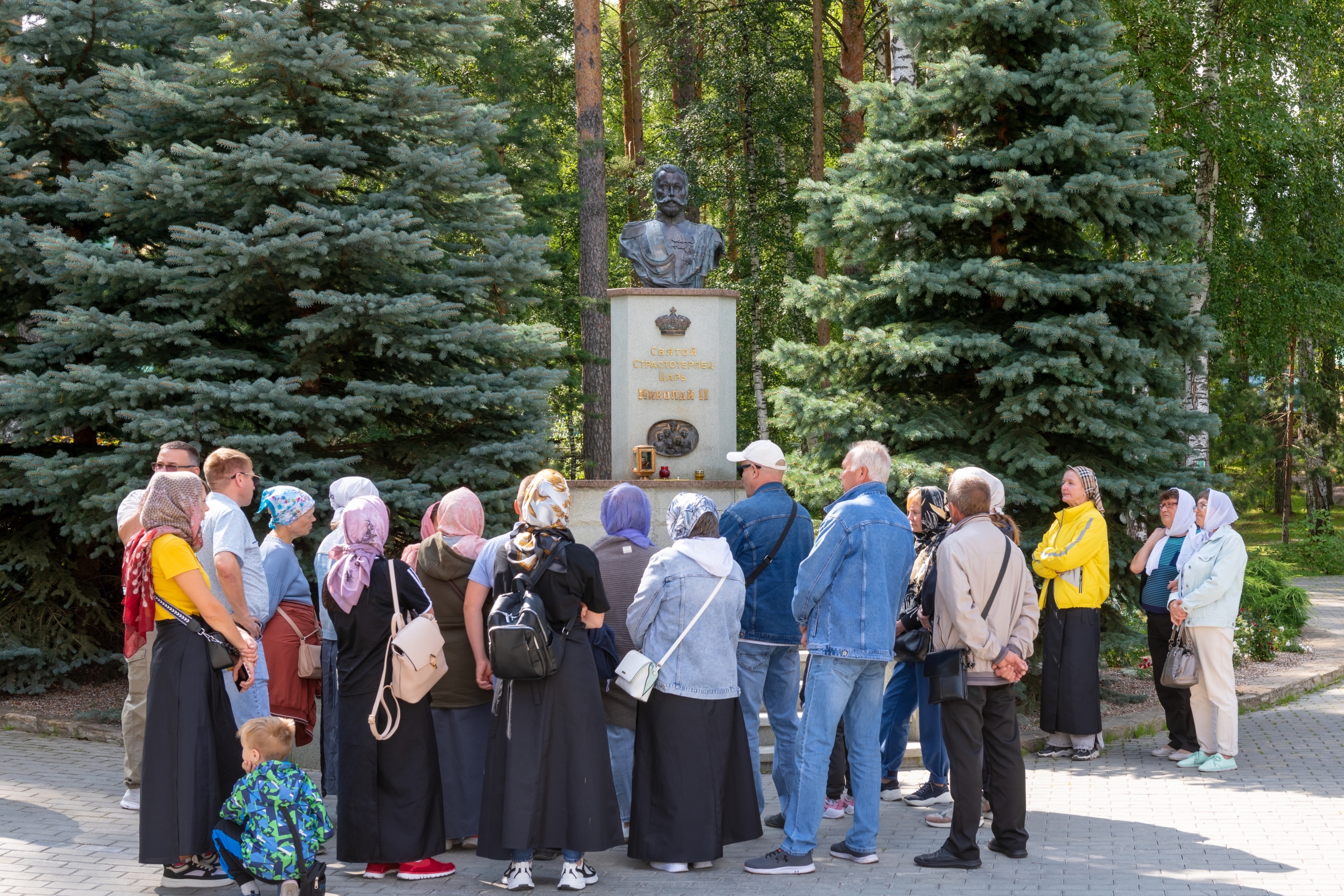
The fall of the monarchy in 1917 and the execution of the Romanov family marked a structural rupture. Yet the logic of pilgrimage persisted, though transformed. Its meaning shifted. It no longer served to legitimize power, but to sacralize its end. In August 2000, the Russian Orthodox Church canonized the executed imperial family. Yekaterinburg, the site of their death, developed into a new symbolic center, marked by the construction of the Church on the Blood and the emergence of commemorative practices.
In 2018, marking the centenary of the execution, approximately one hundred thousand participants joined a night pilgrimage retracing the route associated with the event. The structure echoed earlier forms: procession, walking, collective ritual.
The difference was fundamental. Previously, the tsar undertook pilgrimage to legitimize authority. Now, people walked to reinterpret that authority and engage with historical memory.
The power that walks
Across centuries, Russian rulers did not govern solely from palaces. They also moved—toward sites such as the Trinity–St. Sergius Monastery, Solovki, and Sarov—integrating these places into a broader geography of power.
Pilgrimage evolved: from personal act to state ritual, from imperial display to mass participation, and ultimately to collective remembrance. Yet a constant remained: the need to give meaning to power—or to its memory—through movement and contact with the sacred.
Today, where tsars once walked, others continue to do so. In that gesture, simple yet enduring, survives one of the oldest ways of articulating the relationship between history, authority, and transcendence.
AI Transparency Notice
PilgriMaps uses artificial intelligence tools to assist in the research, drafting and translation of editorial content. All AI-assisted content is reviewed, edited and verified by our editorial team before publication. We contrast information against primary sources, specialist literature and on-the-ground knowledge to ensure accuracy, cultural sensitivity and editorial integrity.
AI is one tool among many in our workflow. The judgement, curation and responsibility for everything published on this platform remain entirely human.
Viator Media S.L. — in compliance with the EU Artificial Intelligence Act (Regulation EU 2024/1689).
This post is also available in: