For over 140 years it has risen above Barcelona’s rooftops, drawing pilgrims, tourists, and architects in equal measure. Yet behind the famous spires lies a story far stranger — and more unfinished — than most visitors ever suspect.
1. Gaudí was not the first architect
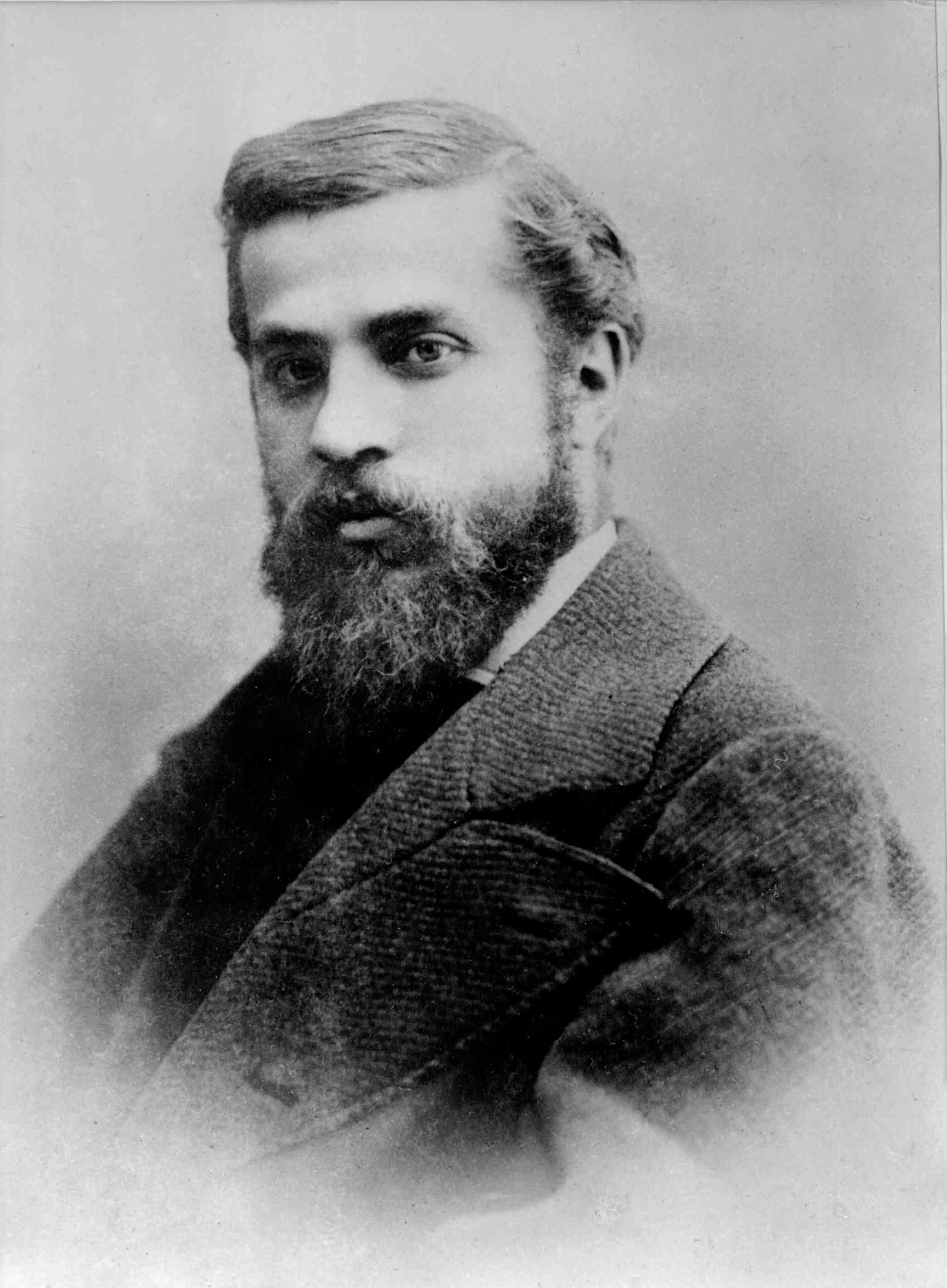
Antoni Gaudí’s name is inseparable from the basilica, but he was not there at the beginning. When the cornerstone was laid on 19 March 1882, the architect in charge was Francisco de Paula del Villar y Lozano, a seasoned diocesan architect from Murcia who envisioned a straightforward neo-Gothic church — ogival windows, flying buttresses, pointed bell towers, all firmly within the conventions of its time. He resigned the following year after a dispute over building costs with the project’s founder, Josep Maria Bocabella.
The commission was then offered to the celebrated architect Joan Martorell, who declined and instead recommended a young architect from Reus named Antoni Gaudí — barely 31 years old, with little major work to his name. Gaudí inherited del Villar’s crypt, finished it in its original Gothic style, and then, over the following four decades, turned every other element of the project into something the world had never seen before.
2. The Passion Façade sparked one of Spain’s fiercest art controversies
In the mid-1980s, sculptor Josep Maria Subirachs was commissioned to carve the figures for the Passion Façade — the entrance that depicts the suffering, death, and resurrection of Christ. He moved into the basilica, as Gaudí himself had once done, and set to work. What emerged was a radical departure: angular forms, stark geometries, and expressionistic faces carved from travertine and Floresta sandstone.
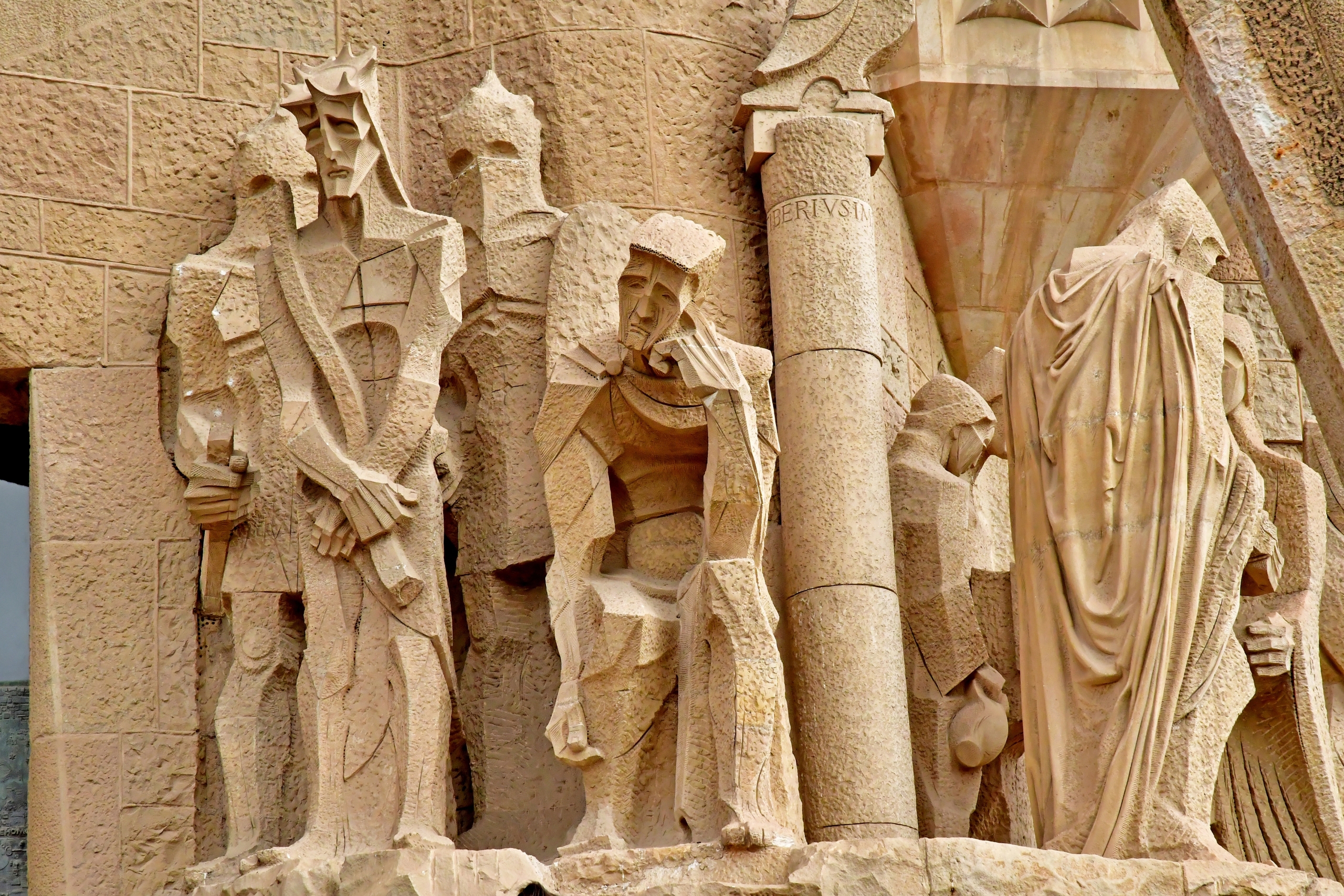
When the first sculptures were unveiled, the reaction divided Spain. Critics and citizens accused Subirachs of betraying Gaudí’s organic, nature-inspired spirit. Subirachs was unapologetic: he argued that imitating Gaudí would have been a forgery, and that the theme of the Passion — suffering, agony, death — called for a harsher visual language, not organic abundance. His most celebrated piece, the Kiss of Judas, depicts Iscariot as a figure already haunted by what he has done.
Over time the controversy has cooled, and in 2019 the Catalan government declared all of Subirachs’s work at the temple a Cultural Asset of National Interest. His stone bust of Gaudí — a final, quietly ironic gesture — now greets visitors in the basilica’s own museum.
3. Peregrine falcons have nested in the towers for over twenty years
Since 2003, a pair of peregrine falcons has nested each spring in the basilica’s towers — the result of a deliberate reintroduction project launched by Barcelona City Council and the environmental organisation Galanthus Natura in 1999.
The Sagrada Família was chosen precisely because it was one of the last places in the city where the birds had bred before disappearing entirely from the urban landscape. The name itself feels providential: peregrine derives from the Latin peregrinus, meaning pilgrim, and in Spanish the bird is still called halcón peregrino — the pilgrim falcon. Each year a webcam is installed in the nest so the public can follow the breeding season online.
By 2026, more than 250 falcon chicks had been born in Barcelona since the programme began, 56 of them hatching directly in the towers of the Sagrada Família. The fastest animals on the planet, capable of diving at over 300 km/h, have made Gaudí’s unfinished masterpiece their permanent home.
4. It is now the tallest church in the world
On 31 October 2025, a crane lifted the lower arm of the cross atop the Tower of Jesus Christ into position, and in that moment the Sagrada Família officially became the tallest church on earth. At 162.91 metres it surpassed the Ulm Minster in Germany — a Gothic Lutheran cathedral that had held the record since 1890. The following February, the upper arm of the cross was added, bringing the completed tower to its final height of 172.5 metres above the city.
Gaudí, who designed the temple to stand just one metre shorter than Montjuïc hill — insisting that no human work should presume to surpass God’s creation — would have been satisfied by the margin. The record had been in German hands for 135 years. It now belongs to Barcelona.
5. It will almost certainly never be truly finished
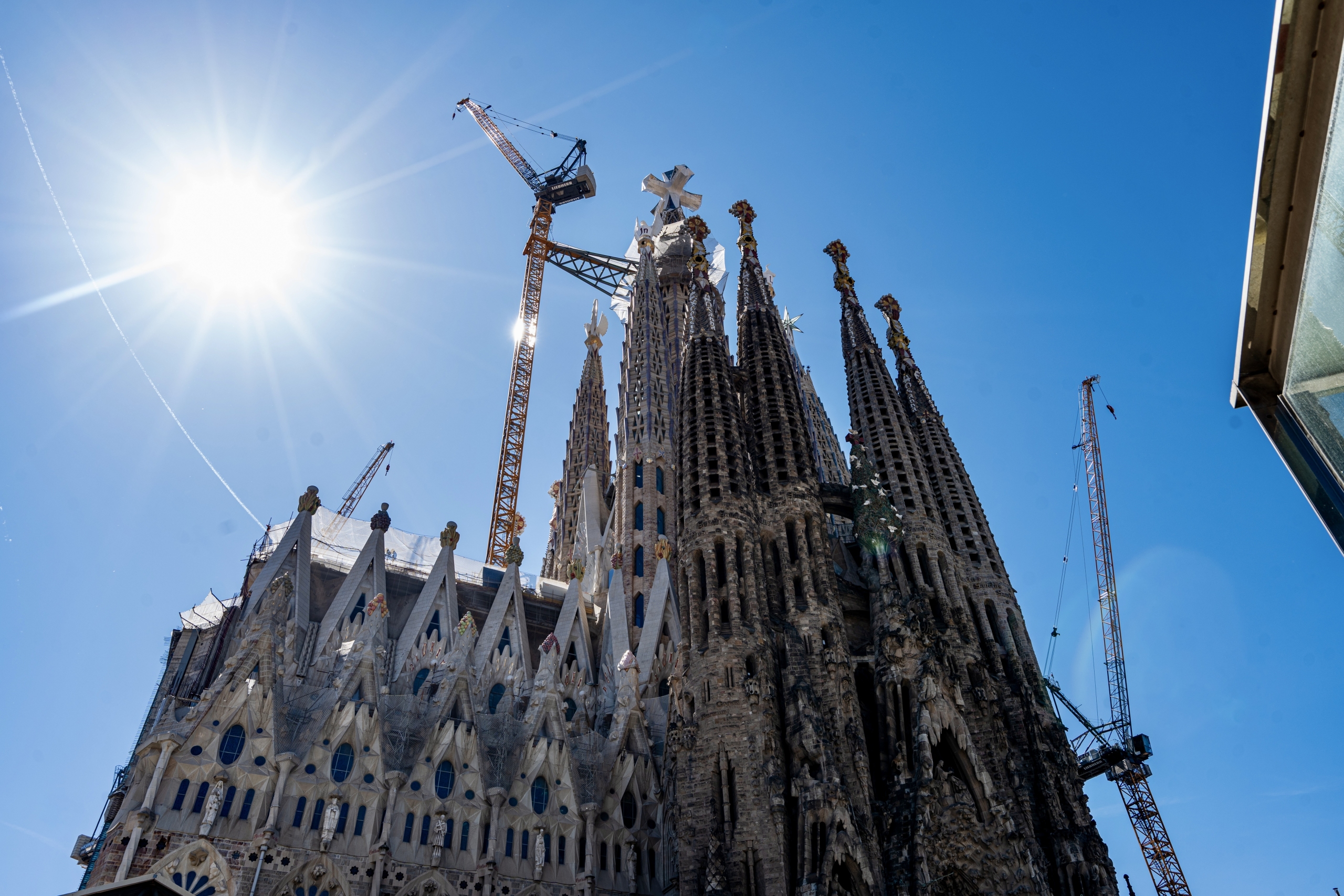
Headlines regularly announce a completion date — 2026, 2030, 2033 — and the main structure is genuinely close. But Gaudí’s full vision was not only a building: it included a monumental Glory Façade that would serve as the main entrance to the basilica, approached via a grand ceremonial portico from Carrer de Mallorca.
To realise that portico as Gaudí planned, several existing residential buildings in the surrounding streets would need to be demolished — an intervention that the city of Barcelona has shown little appetite to authorise. There is also the question of funding: unlike ancient cathedrals built on royal endowments, the Sagrada Família has always depended on donations and, increasingly, visitor ticket sales.
The pandemic demonstrated how quickly that income can vanish. The Glory Façade’s sculptural programme is still being defined: in 2025, three contemporary artists — Miquel Barceló, Cristina Iglesias, and Javier Marín — were commissioned to present proposals for consideration. The situation is not so different from the Pórtico de la Gloria in Santiago de Compostela: a masterpiece completed within a larger project that the original architect knew would outlast him.
Gaudí himself acknowledged as much, leaving only rough sketches of the Glory Façade and writing that other generations would complete the work in the style of their own time. The basilica may reach its structural height. But the total design Gaudí imagined — the building in full ceremonial dialogue with its city — may remain permanently, and perhaps beautifully, unfinished.
AI Transparency Notice
PilgriMaps uses artificial intelligence tools to assist in the research, drafting and translation of editorial content. All AI-assisted content is reviewed, edited and verified by our editorial team before publication. We contrast information against primary sources, specialist literature and on-the-ground knowledge to ensure accuracy, cultural sensitivity and editorial integrity.
AI is one tool among many in our workflow. The judgement, curation and responsibility for everything published on this platform remain entirely human.
Viator Media S.L. — in compliance with the EU Artificial Intelligence Act (Regulation EU 2024/1689).
This post is also available in: