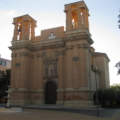
The Paromeos Monastery, also known as Baramos, is the northernmost of the four Coptic Orthodox monasteries of Scetis in Wadi El Natrun. Founded around 335 A.D. by Saint Macarius the Great, it is considered the oldest surviving monastery of the desert. Its name, Pa-Romeos– “that of the Romans” – is traditionally linked either to Saints Maximus and Domitius, sons of Emperor Valentinian I, or to Emperors Arcadius and Honorius, disciples of Saint Arsenius, who lived in seclusion here.
The monastery played a central role in early monasticism, hosting influential Desert Fathers. Among them stood Saint Moses the Black, the former bandit who embraced radical repentance and became one of the most beloved saints of Scetis. His humility, spiritual awakening, and martyrdom during the Berber raid of 405 A.D. left a lasting mark; his relics remain in the monastery’s oldest church, dedicated to the Virgin Mary.
Paromeos endured repeated raids and periods of abandonment until defensive walls were added in the 9th century. Over the centuries, it attracted notable travelers and produced several patriarchs and renowned theologians. Today it preserves much of its ancient character: five historical churches, a keep, towers, refectories, guesthouses, and hermit caves scattered in the surrounding desert. Modern additions under Pope Shenouda III include infrastructure, cultivation projects, clinics, and expanded monastic accommodations. Nearby stands the cave of Pope Cyril VI, now a popular pilgrimage site. Ongoing archaeological excavations continue to reveal early monastic and even pre-Christian layers, including a defensive tower and remains of an ancient structure likely linked to a Pharaonic monument.
- Address
Natrn Valley, Beheira Governorate 5700266, Egypt - Web
https://baramous.com/ - Visiting Hours
Unknown - What to see
Main entrance and fountain – 9th-century walls – Church of the Virgin – 7th-century fortress – Church of St. John the Baptist
AI Transparency Notice
PilgriMaps uses artificial intelligence tools to assist in the research, drafting and translation of editorial content. All AI-assisted content is reviewed, edited and verified by our editorial team before publication. We contrast information against primary sources, specialist literature and on-the-ground knowledge to ensure accuracy, cultural sensitivity and editorial integrity.
AI is one tool among many in our workflow. The judgement, curation and responsibility for everything published on this platform remain entirely human.
Viator Media S.L. — in compliance with the EU Artificial Intelligence Act (Regulation EU 2024/1689).
This post is also available in: