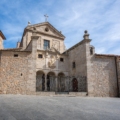
The Monastery of Saint Macarius the Great, founded in the late 4th century by Saint Macarius – disciple of Saint Anthony and pioneer of monasticism in Wadi El Natrun. – is one of the most ancient and influential monastic centers of Egypt. What began as Macarius’s solitary cell grew into a vast community that attracted major Desert Fathers such as Arsenius, Moses the Black, John the Short, Isidore, and Paphnutius. Over the centuries the monastery endured repeated Berber raids, rebuilt its churches and fortress, and expanded under imperial and patriarchal patronage. It became a guardian of relics central to Coptic memory, including those of Saint Macarius, the Forty-Nine Martyrs of Scetis, and – according to longstanding tradition – those of John the Baptist and the prophet Elisha, whose rediscovery in 1976 brought international attention and theological debate.
Today the monastery is a major spiritual and intellectual center, spanning over 11 square kilometers with seven churches, a monumental fortress, extensive monk cells, agricultural lands, a hospital, museum, library, printing press, and modern guest facilities. Its contemporary revival began in 1969 with the arrival of Father Matta El-Meskeen and his community, who restored monastic life and buildings. Later abbots, including the beloved and scholarly Anba Epiphanius, strengthened its global links and academic influence until his assassination in 2018 shocked the Coptic world. The monastery continues to play a vital role in Coptic spirituality, manuscript preservation, and inter-monastic dialogue, standing as a living heir to the original vision of Saint Macarius: a place where prayer, simplicity, and wisdom shape generations.
- Address
Beni Salama, Natrn Valley, Beheira Governorate 5724702, Egypt - Web
https://www.stmacariusmonastery.org/ - Visiting Hours
Everyday from 8:00 to 17:00 - What to see
Church of San Macarius – Chapel of the 49 Martyrs (5th century) – 18th-century monastic cells – Refectory – 11th-century fort – Mural paintings
AI Transparency Notice
PilgriMaps uses artificial intelligence tools to assist in the research, drafting and translation of editorial content. All AI-assisted content is reviewed, edited and verified by our editorial team before publication. We contrast information against primary sources, specialist literature and on-the-ground knowledge to ensure accuracy, cultural sensitivity and editorial integrity.
AI is one tool among many in our workflow. The judgement, curation and responsibility for everything published on this platform remain entirely human.
Viator Media S.L. — in compliance with the EU Artificial Intelligence Act (Regulation EU 2024/1689).
This post is also available in: