For several days in April 2026, Algeria – usually outside the radar of international cultural tourism – became the first stage of one of the most closely watched journeys of the new pontificate. Leo XIV chose this North African country as the starting point of his first major tour of the continent, and the decision was not incidental.
The motivation was not limited to diplomatic concerns or interreligious dialogue, although both were part of the itinerary. It centered, above all, on a figure: Augustine of Hippo. The pontiff, a member of the Augustinian order, chose to begin precisely in the land where the bishop of Hippo was born, lived, and died, visiting key sites associated with his life and emphasizing his North African origin – often overshadowed by more Eurocentric interpretations.
During his stay in Annaba, the Pope visited the ruins of ancient Hippo, paused in the place where Augustine preached and wrote, and celebrated a mass in the basilica dedicated to him. The gesture carried clear symbolic weight: it was not only a commemoration of a major figure in early Christianity, but also an effort to situate him once again within his original geography.
The visit formed part of a broader tour across Africa – a continent where Catholicism is currently experiencing significant growth – and aimed to reinforce dialogue between cultures and religions. In Algeria, however, it acquired a specific nuance: to view Augustine from Africa and, in doing so, restore visibility to a heritage that has long remained in the background.
This external perspective coincides with an internal movement. In recent years, the Algerian government has been developing a project designed to connect these sites into a cultural itinerary – not as a traditional pilgrimage route, but as a framework linking history, territory, and identity.
In other words, while the Pope followed Augustine’s traces, Algeria began to consider how those traces might be transformed into a path.
A project in progress: Designing a route through culture
Under the still largely programmatic title “In the Footsteps of Augustine,” the Algerian government has begun work on creating a cultural itinerary linking the main sites associated with his life. It is not yet an established route, nor even a fully defined one. The project remains in an early phase, but its direction is clear.
The initiative responds to several simultaneous objectives. It seeks to develop a form of cultural and religious tourism that is largely absent in the country, to position Algeria within major international itineraries, and – perhaps most significantly – to reclaim Augustine as part of Algeria’s historical heritage.
For centuries, Augustine has been read primarily as one of the central figures of Latin Christianity. The Algerian approach proposes a shift in perspective: before being framed as Latin or European, Augustine was African. This assertion is not only historical; it forms the conceptual axis around which the route is being designed.
A life translated into territory
Unlike other major pilgrimage routes, this itinerary does not rely on a continuous inherited tradition. It is not recovered—it is constructed. To do so, the project adopts a simple and effective structure: the stages of Augustine’s life.
Birth, education, maturity, death. These four moments correspond to three principal locations within Algerian territory: Tagaste, Madaura, and Hippo. These are not arbitrary points, but stages in a personal transformation that can be read spatially.
The route would therefore not be a sequence of places, but a narrative: that of a man moving across cultures, crises, and systems of thought at a time when the ancient world was beginning to fracture.
Tagaste / Souk Ahras: Origins at the periphery
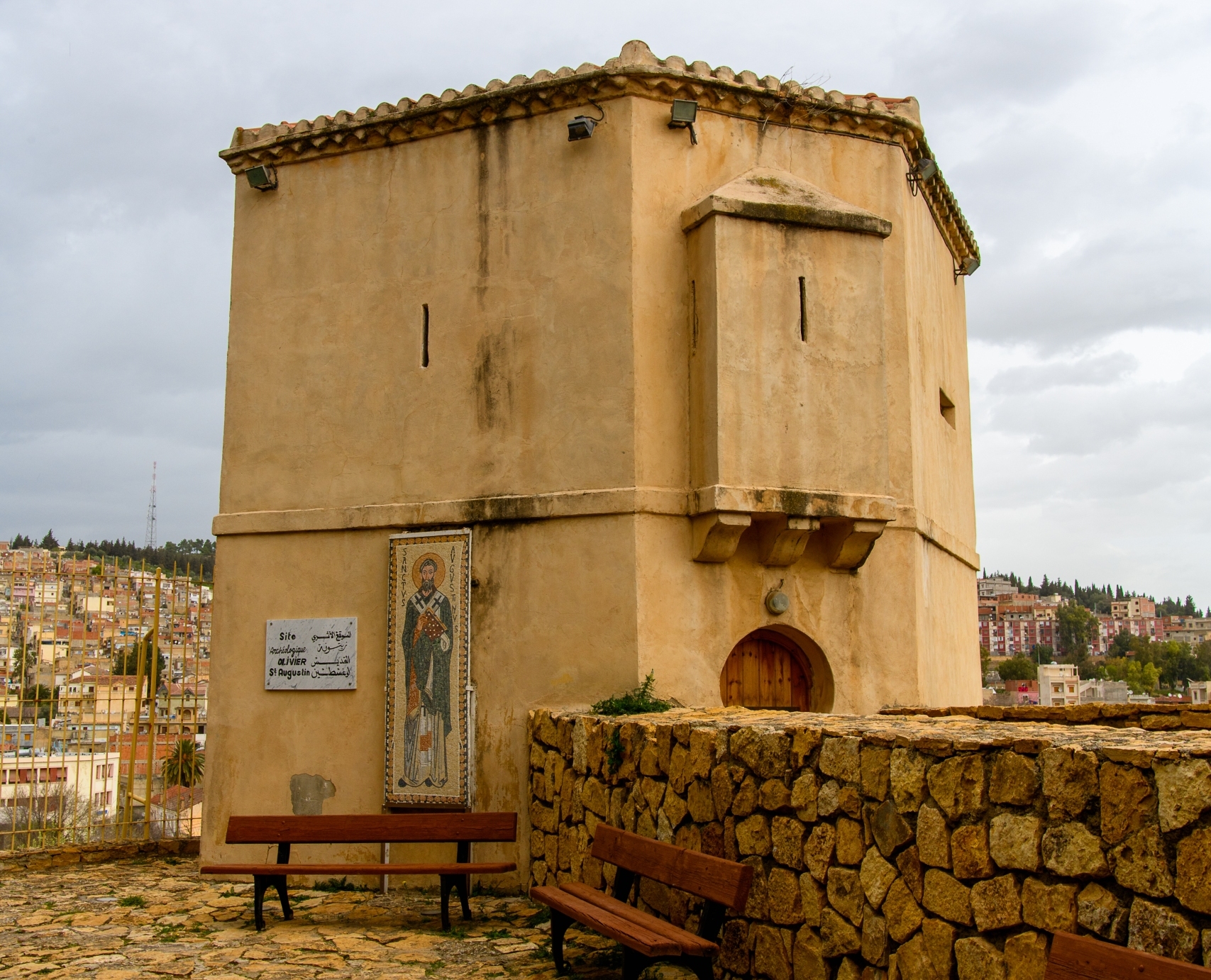
In present-day Souk Ahras, near the border with Tunisia, Augustine was born in 354. Ancient Tagaste was not a major imperial capital, but a town in inland Numidia, shaped by a deeply rooted Berber identity while also integrated into the Roman cultural network.
Today, visitors do not encounter monumental remains comparable to those of other Mediterranean cities. Archaeological traces are modest and dispersed, and the memory of the place survives more in references than in visible structures. Among these are local traditions such as the so-called “Olive Tree of Augustine,” symbolically associated with his life.
Yet this very absence of monumentality defines its interest. Tagaste does not impress through what it displays, but through what it suggests: the context in which a complex identity took shape.
Madaura: Learning to think
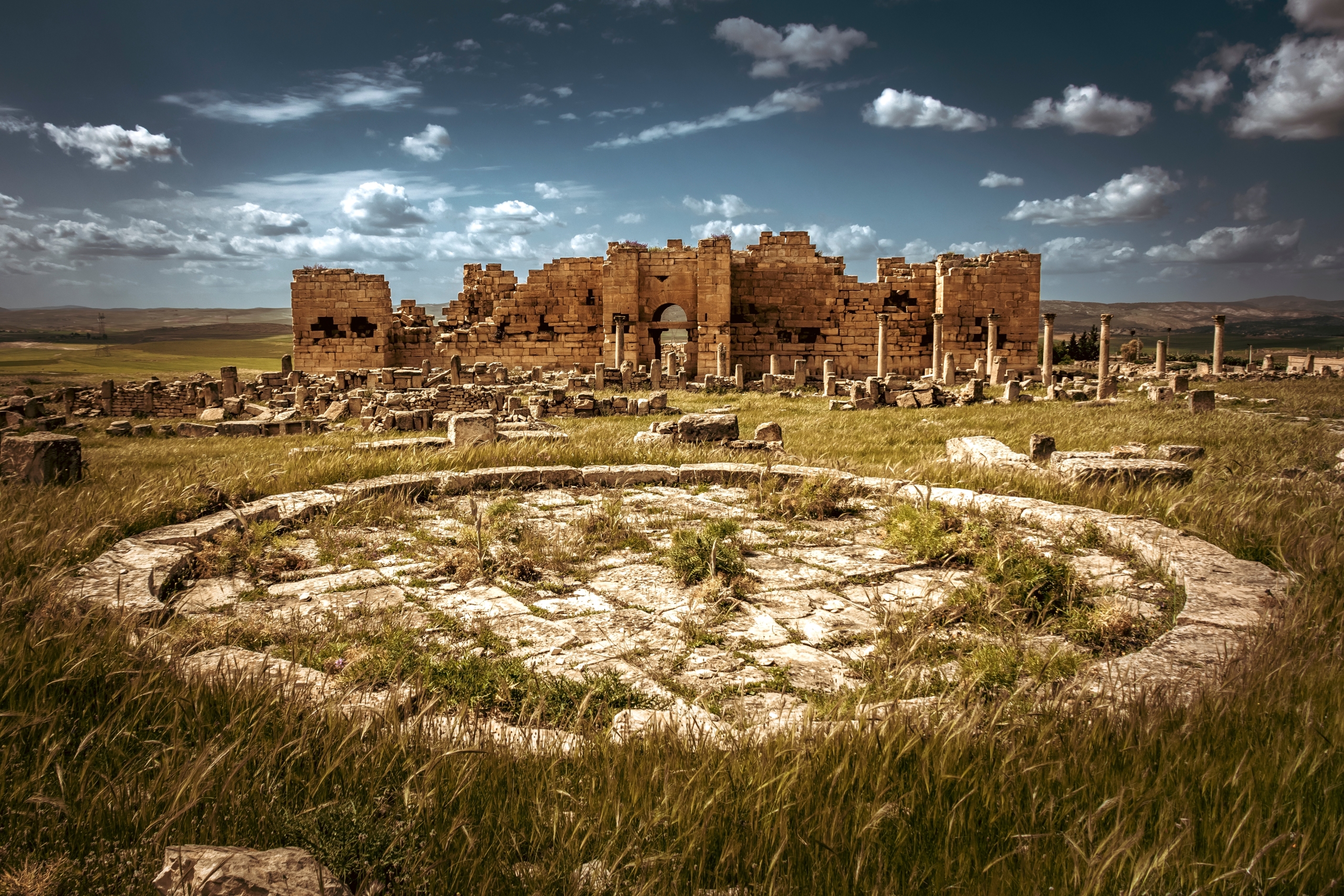
A short distance away lies Madaura, where Augustine received his education. If Tagaste represents origin, Madaura embodies entry into a structured intellectual world.
In the Roman period, the city was a recognized educational center, known for its schools of rhetoric. Here, Augustine developed the intellectual tools that would later shape his writings and debates.
The present-day ruins hint at this importance, though they do not always make it explicit. As in Tagaste, the challenge lies less in preservation than in interpretation.
Hippo / Annaba: The center of the narrative
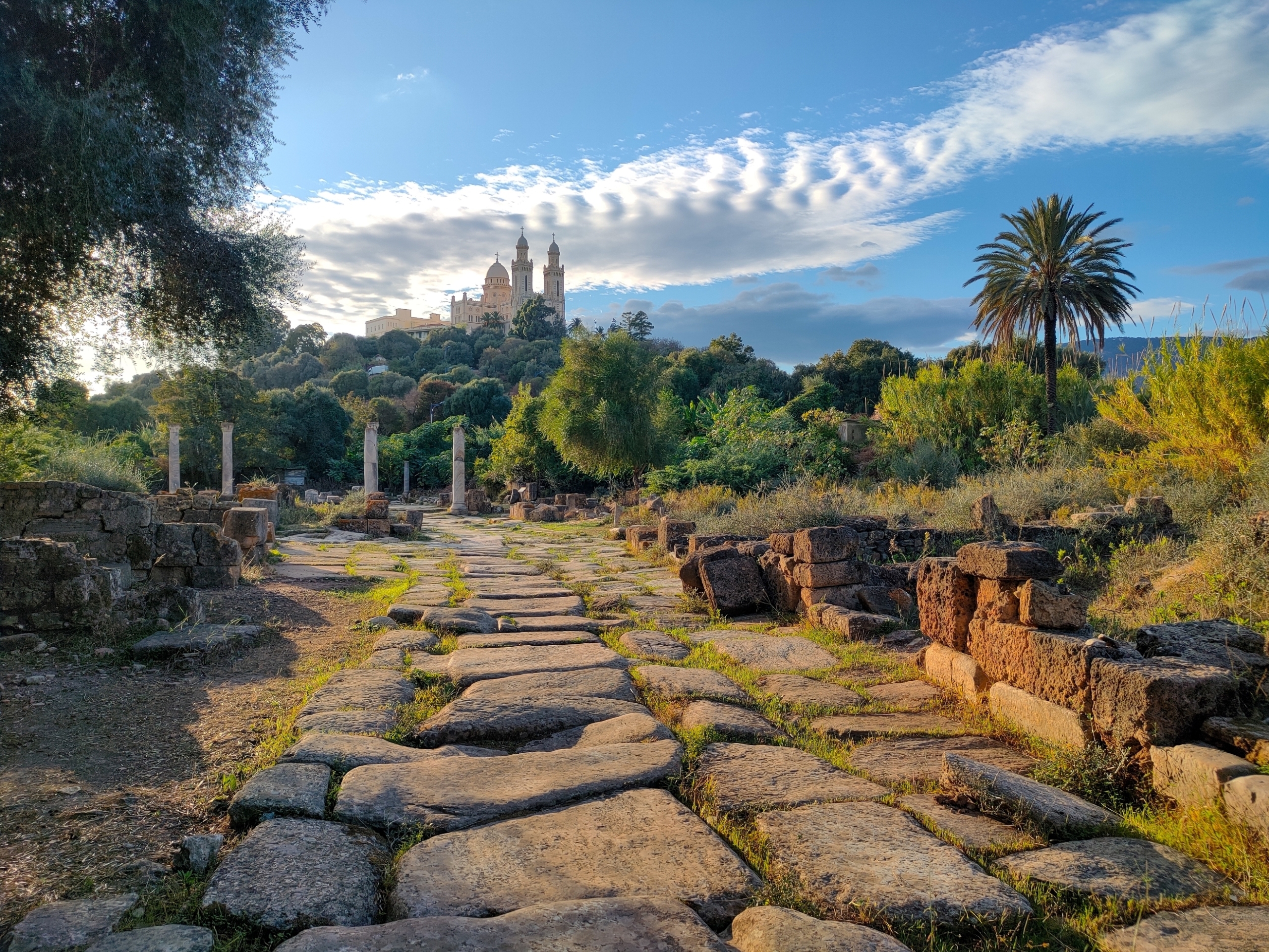
Everything converges in Hippo. Present-day Annaba is the only location where geography, history, and tourism potential clearly align.
The ancient Roman city preserves a significant archaeological complex. It was here that Augustine carried out most of his work and died in 430, during the Vandal siege.
This historical layer is accompanied by the Basilica of Saint Augustine, built in the nineteenth century. Around it, the contemporary city unfolds, with its different temporal layers not always fully integrated.
A route in the making
Tagaste provides the origin. Madaura, the formation. Hippo, the culmination. The structure is in place. What remains is the decisive step: transforming this map into a narrative that can be experienced.
In this sense, the Augustinian route in Algeria is not a rediscovery, but a construction. Its success will depend not only on the preservation of sites, but on the ability to articulate them into a coherent story.
The challenge is considerable: to turn a constellation of ruins into a path—and to make that path speak again.
AI Transparency Notice
PilgriMaps uses artificial intelligence tools to assist in the research, drafting and translation of editorial content. All AI-assisted content is reviewed, edited and verified by our editorial team before publication. We contrast information against primary sources, specialist literature and on-the-ground knowledge to ensure accuracy, cultural sensitivity and editorial integrity.
AI is one tool among many in our workflow. The judgement, curation and responsibility for everything published on this platform remain entirely human.
Viator Media S.L. — in compliance with the EU Artificial Intelligence Act (Regulation EU 2024/1689).
This post is also available in: