The life of Augustine of Hippo unfolds across a geography that is both expansive and uneasy. Born in 354 CE in Tagaste – modern Souk Ahras in present-day Algeria – Augustine’s trajectory carried him through Carthage, Rome, Milan, and finally to Hippo Regius. These movements, while central to his intellectual and personal development, were not embraced with enthusiasm. His writing, particularly in Confessions, reveals a figure who experienced travel less as liberation than as dislocation: a necessary disturbance rather than a chosen path.
To imagine an “Augustinian Camino” is therefore to trace a paradox. Unlike other historical itineraries shaped by devotion or institutional pilgrimage, Augustine’s route resists codification. It is a journey marked by reluctance, intellectual restlessness, and a gradual reorientation of the self. Beginning in Tagaste, extending through the cultural intensity of Carthage, crossing the Mediterranean toward Rome, and culminating in Milan or Ostia, this conceptual camino follows not a devotional map but a narrative arc preserved in prose.
Tagaste to Carthage
Augustine’s early departure from Tagaste to Carthage was driven by education rather than exploration. In Confessions (Book III), he describes Carthage as a place of intense sensory and emotional experience—“a cauldron of unholy loves”—yet his movement there is framed not by curiosity about distance but by immersion in rhetoric and ambition. Travel here is instrumental: a means to advancement within the Roman imperial system.
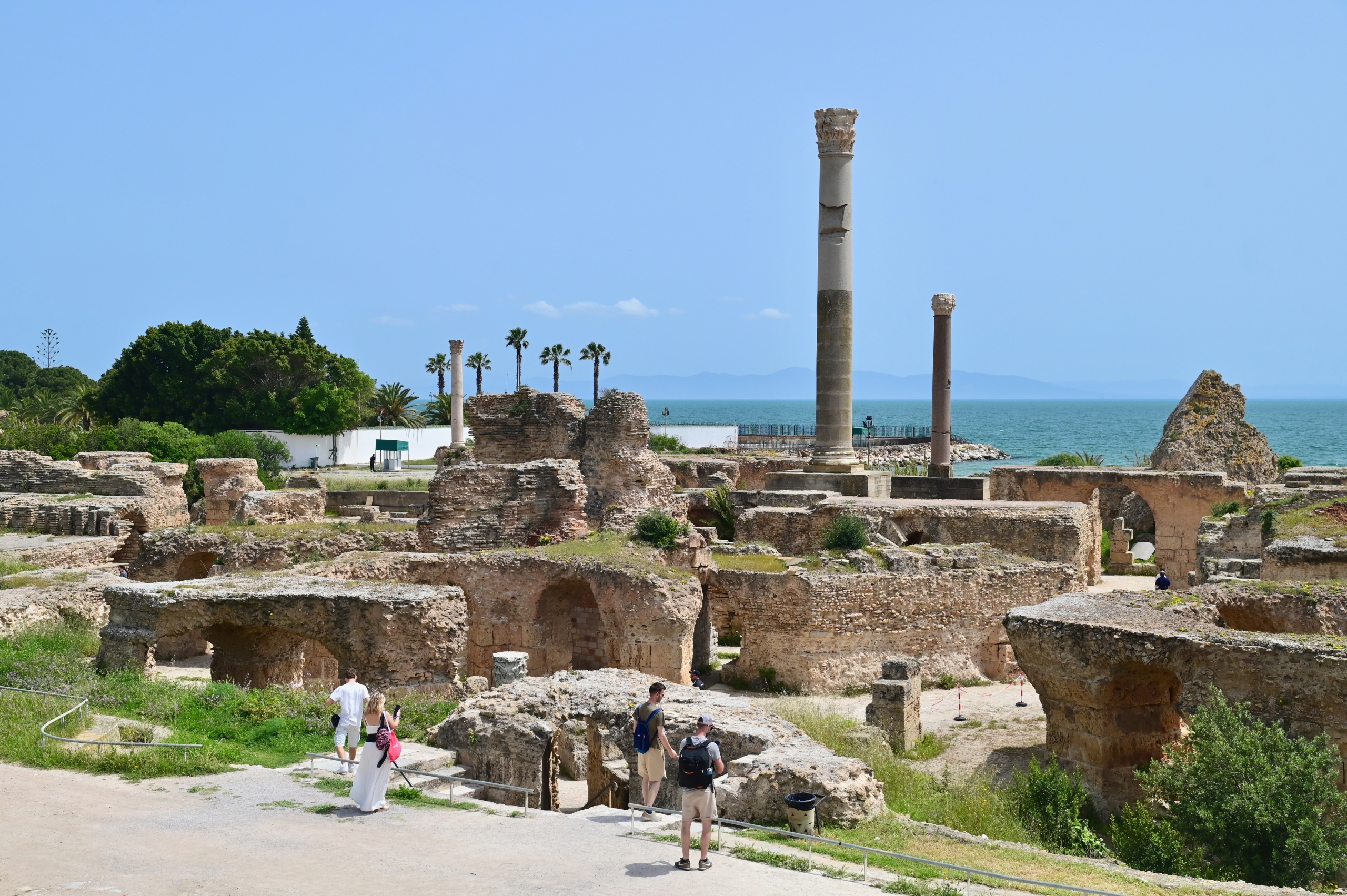
There is little in his account that celebrates the act of going from one place to another. Movement appears as interruption, even risk. His mother Monica’s anxiety over his departures underscores the emotional strain attached to these journeys. When Augustine later leaves for Rome, he does so covertly, avoiding confrontation—a detail that reveals not excitement but avoidance. Travel, in this sense, is entangled with evasion.
Carthage to Rome
The voyage from Carthage to Rome marks Augustine’s first major sea crossing. In Confessions (Book V), he recalls falling ill during the journey, an episode that strips away any romantic notion of travel. The sea is not a symbolic threshold but a site of vulnerability. His arrival in Rome does not resolve this unease; instead, he finds himself disillusioned with students and social conditions.
A recurring thread in these passages is the absence of attachment to place. Augustine does not describe landscapes or cities with the observational detail typical of travel writing. His attention remains inward, focused on states of mind rather than external environments. Travel is therefore not an expansion of perspective but a displacement that intensifies introspection.
Rome to Milan
Augustine’s relocation to Milan introduces a shift in trajectory. There he encounters Ambrose of Milan, whose rhetorical and intellectual presence reshapes Augustine’s engagement with Christianity. Yet even here, travel is not framed as purposeful pilgrimage. It remains a professional move, prompted by a teaching appointment.
In Confessions (Book VI–VIII), Augustine reflects on this period as one of internal conflict rather than geographic discovery. Milan becomes significant not as a destination but as a setting for transformation. The famous garden scene, where he hears the voice urging him to “take and read,” occurs in a moment of stillness, not motion. The decisive turn in his life happens after the journey, not because of it.
Milan to Ostia
If one extends the Augustinian Camino to Ostia, the narrative reaches a contemplative conclusion. In Confessions (Book IX), Augustine recounts a shared moment with his mother Monica in Ostia, where they reflect on the nature of time and eternity. This scene, often referred to as the “vision at Ostia,” is marked by stillness and dialogue rather than movement.
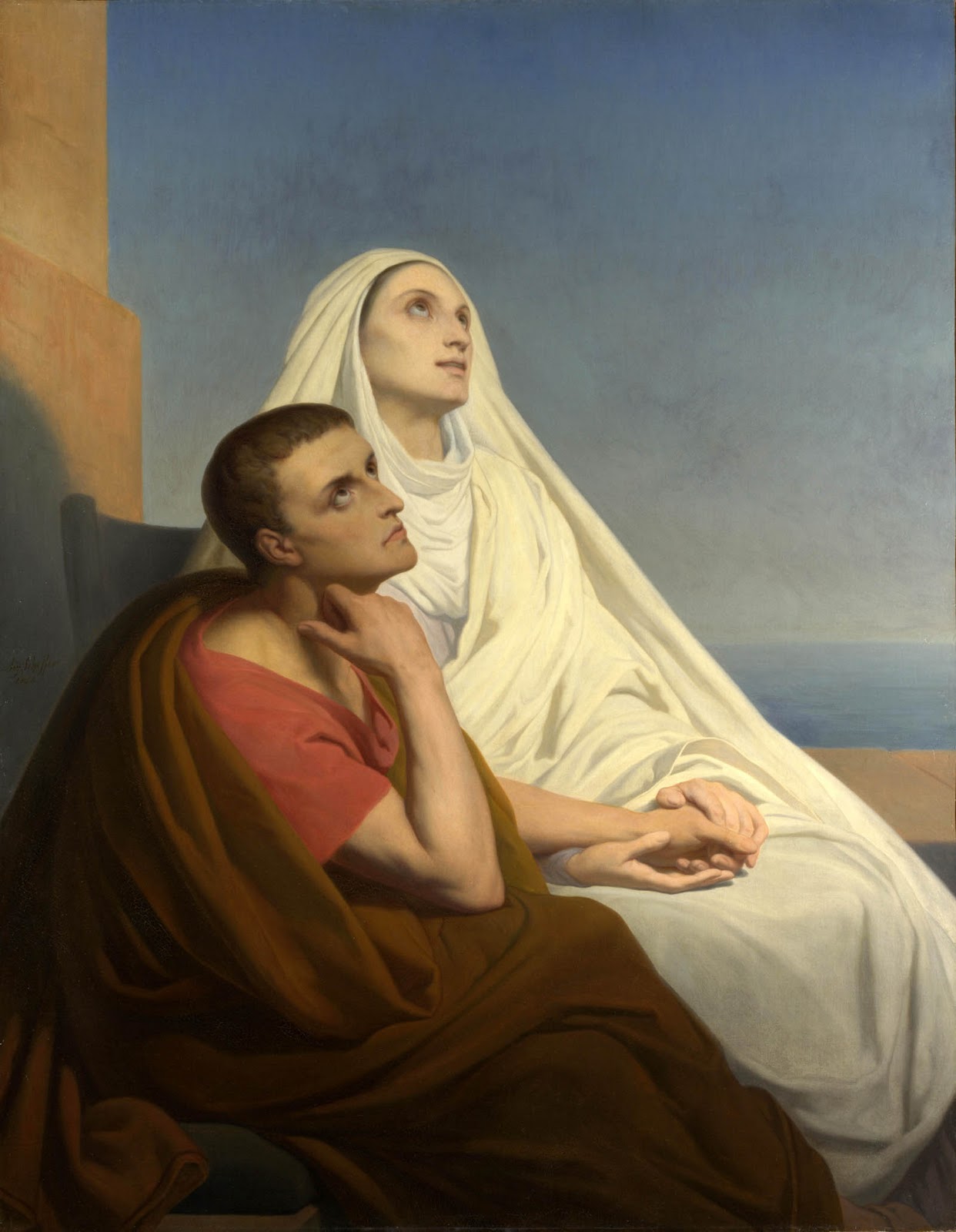
It is also in Ostia that Monica dies, transforming the journey into an experience of loss and closure. The road, which began without longing, ends without triumph. Travel dissolves into reflection; the physical itinerary gives way to memory.
Augustine on travel: Reluctance and restlessness
Throughout Confessions, Augustine offers scattered but telling remarks that suggest a general discomfort with travel. He associates movement with instability, distraction, and moral risk. In Book VI, he reflects on the restlessness that drove him from place to place, noting that external change did not resolve internal conflict. The famous opening line—“our heart is restless until it rests”—though not explicitly about travel, frames movement as a symptom rather than a solution.
In Book V, his illness at sea underscores the fragility of the traveling body. In Book III, his departure from home is linked to youthful excess rather than purposeful exploration. These passages collectively suggest that Augustine did not regard travel as inherently enriching. Instead, he viewed it as a condition of exile—necessary within the structures of late Roman society, but ultimately secondary to the inward journey.
Mapping an unmapped Camino
To reconstruct an Augustinian Camino from Tagaste to Milan or Ostia is to engage in a speculative exercise grounded in textual evidence rather than historical infrastructure. There is no marked trail, no continuous tradition of wayfaring associated with Augustine’s route. Yet the sequence of places—Tagaste, Carthage, Rome, Milan, Ostia—forms a coherent axis across the late antique Mediterranean.
This imagined camino differs fundamentally from established pilgrimage routes. It does not culminate in a shrine or relic, nor does it follow a path shaped by collective ritual. Its coherence lies in narrative continuity: the progression of a life documented in reflective prose. The traveler who follows this route engages less with sacred geography than with a historical text.
Travel as interior narrative
Augustine’s life invites a reconsideration of what constitutes a pilgrimage. His movements across North Africa and Italy were shaped by education, career, and circumstance rather than devotional intent. His own reflections suggest a persistent unease with travel, a sense that physical displacement did not yield clarity.
An Augustinian Camino, then, is not a path to be walked in expectation of revelation. It is a framework for reading—an itinerary that aligns geography with introspection. The road from Tagaste to Ostia exists not on maps but in the pages of Confessions, where travel is recorded as a series of reluctant steps toward stillness.
AI Transparency Notice
PilgriMaps uses artificial intelligence tools to assist in the research, drafting and translation of editorial content. All AI-assisted content is reviewed, edited and verified by our editorial team before publication. We contrast information against primary sources, specialist literature and on-the-ground knowledge to ensure accuracy, cultural sensitivity and editorial integrity.
AI is one tool among many in our workflow. The judgement, curation and responsibility for everything published on this platform remain entirely human.
Viator Media S.L. — in compliance with the EU Artificial Intelligence Act (Regulation EU 2024/1689).
This post is also available in: