Over centuries, the gallariji – Malta’s ornate, enclosed wooden balconies – have become symbols of Mediterranean architecture and the stage for countless unspoken stories. Behind their colored shutters lies a history of power, discretion, and everyday theatre.
The first window of surveillance
In 1679, a French traveler, Sieur de Bachelier, visiting the Grand Master’s Palace in Valletta, noted something remarkable. He wrote that Grand Master Nicholas Cottoner “would gladly walk through his glassed balcony unseen, observing all that happened in the two squares in front and beside his palace. If he saw two knights walking together, he immediately knew their thoughts and the object of their conversation, for he understood the minds and secret dealings of all those he ruled.”
That was Malta’s first gallarija – a balcony not built for beauty but for discretion. It was a 17th-century device of observation concealed within Baroque elegance. What began as a privilege of power evolved, within a century, into a defining feature of Maltese domestic life: the urban theater box from which anyone could watch the street’s unfolding drama.
The art of seeing without being seen
The gallarija (from the Italian galleria, “gallery”) descends from the Arabic mashrabiya, the latticed wooden enclosure found in North African architecture. The shared heritage is evident in their function – to experience the outdoors while remaining hidden. Yet, the Maltese version diverges in temperament.
The mashrabiya seeks invisibility; the gallarija invites notice. It projects forward, bold and expressive, as if declaring its presence over the street below. One conceals, the other performs. The contrast reflects Malta’s layered history – a blend of Arab restraint and European theatricality.
Some historians have speculated, with little documentary proof, that the inspiration may have come from the stern galleries at the sterns of 16th-century galleons. The similarities in proportion, decoration, and even color are striking. Perhaps Grand Master Cottoner, a man of the Order with access to skilled artisans and naval craftsmen, sought to recreate at his residence the architectural language of the ships that once dominated the Mediterranean.
Celibate knights and invisible women
The Order of Saint John was both religious and military – bound to celibacy, yet living within a society whose social fabric was anything but ascetic. The gallarija became an emblem of this paradox: a partition between public and private, between vow and desire.
According to some interpretations, the enclosed balcony’s design – influenced by Islamic models – also served to provide privacy for the Knights’ interactions with Maltese women, discreetly hidden from the scrutiny of their peers. Whether or not this motive was deliberate, the gallarija came to embody that tension between visibility and concealment.
The legend persists that a Grand Master commissioned his first enclosed balcony to observe the city unseen – or perhaps to conceal forbidden meetings. In wood and glass, the gallarija functioned as both instrument of control and quiet rebellion.
Silent sentinels
It was Maltese women who transformed these balconies into living social spaces. Within these sunlit enclosures, domestic culture took root. High chairs were placed by the windows, allowing those seated to look directly onto the street.
Here, women prayed, embroidered, and watched – often doing all three at once. As one historian quipped, they “prayed and spied in equal measure.” They sewed with one eye on their work and two ears on the gossip below. Cane blinds could be rolled up to let the light in or lowered to block the inquisitive neighbor’s gaze.
The gallarija became an informal intelligence network. Who walked with whom, which merchant stayed out late, which knight visited which house — nothing escaped notice. Even when unoccupied, the possibility that someone might be watching maintained a quiet discipline in the streets. It was a social panopticon – surveillance with a human face and wooden frame.
Anatomy of an icon
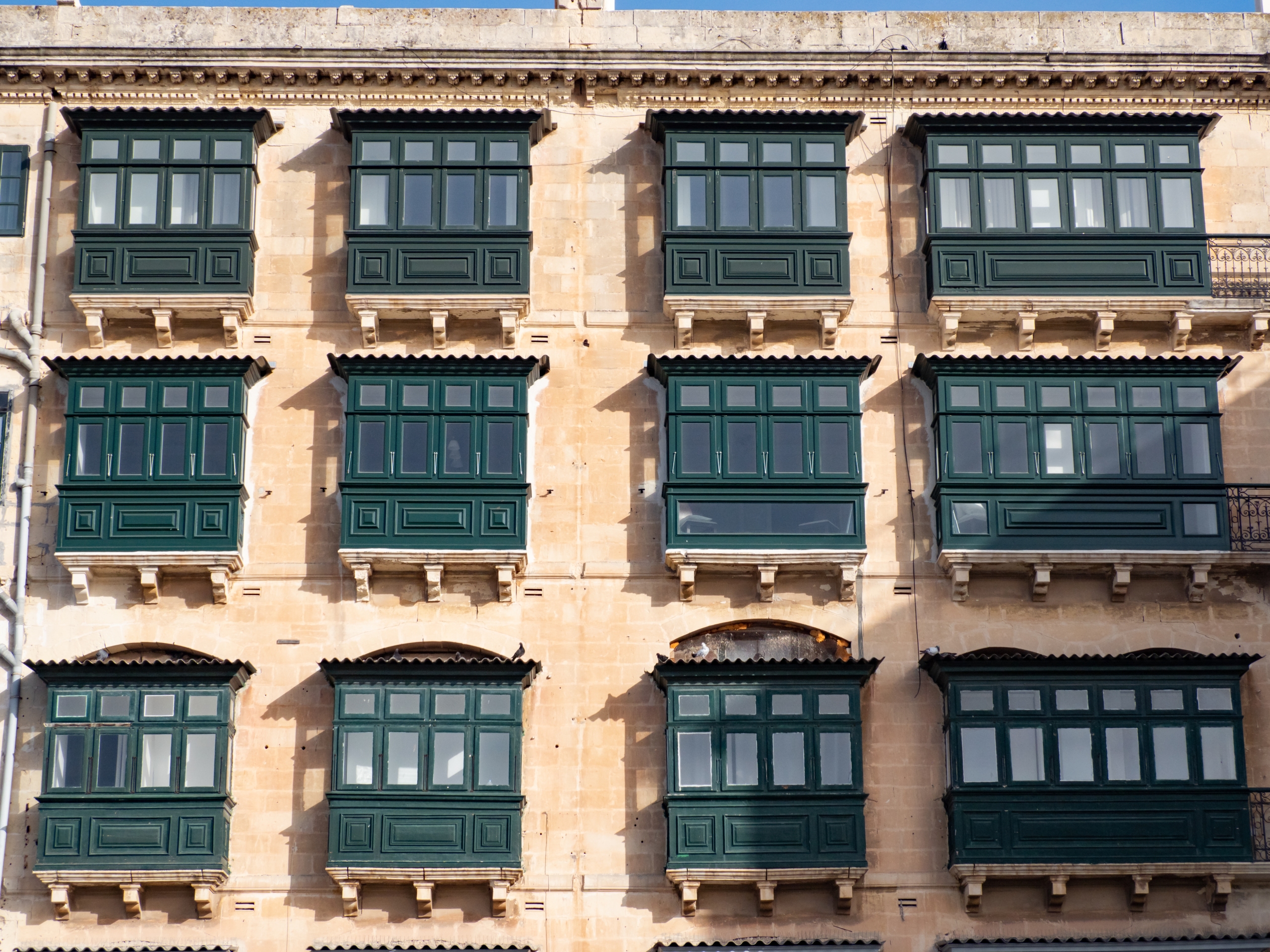
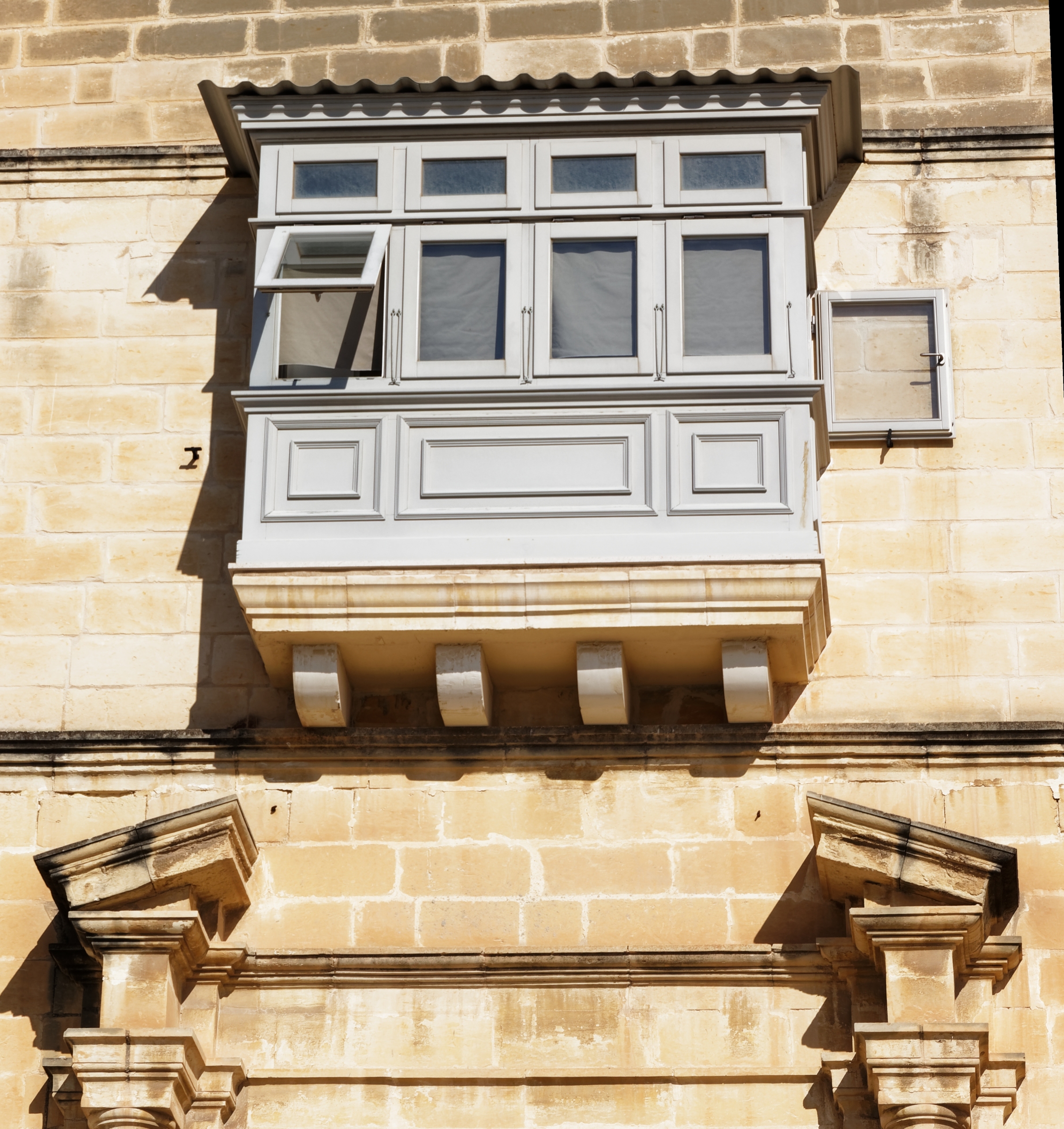
Structurally, each gallarija is a small feat of craftsmanship. The saljaturi – the carved stone corbels supporting it – range from simple ledges to elaborate baroque sculptures of lions, foliage, and grotesques. During the 18th century, as Valletta and the Three Cities embraced Baroque exuberance, each household sought to outdo its neighbors in ornamentation.
The purtelli – the wooden panels forming the balcony’s body – evolved from flat planks into intricately framed surfaces, eventually adopting the diamond-shaped pattern that still defines traditional designs. Wood was expensive on the treeless island; in the 17th and 18th centuries, it had to be imported from Sicily or mainland Italy. Thus, owning a gallarija was initially a mark of wealth. By the 19th century, trade expansion made timber more accessible, allowing even modest homes to adopt the feature.
Everyday innovations
The gallarija also adapted to practical needs. As Valletta grew denser during the 19th and 20th centuries, enclosed balconies became vital extensions of living space. Many served as improvised bathrooms or laundry rooms, their small windows allowing clothes to dry in the Mediterranean breeze. Some became miniature greenhouses filled with basil, tomatoes, and chili plants.
One invention remains distinctly Maltese: the basket delivery system. Even today, one can see wicker baskets lowered from balconies by rope to street level, where bakers or grocers place bread, vegetables, or newspapers. It is an early form of home delivery – efficient, sustainable, and community-based – that endures despite modern retail habits.
A perpetual stage
Walking through Valletta at sunset feels like crossing an open-air theater. The limestone façades glow honey-gold; the balconies cast patterned shadows on the pavement. Look up, and you might glimpse a figure behind the shutters – a faint movement, a reflection in the glass, someone watching as you look back.
The beauty of imperfection
The gallarija defies modern logic. It protrudes awkwardly, blocks sunlight, and demands constant maintenance. Yet no architect has seriously proposed removing them. Their value is not functional but human. They represent the Mediterranean balance between privacy and sociability, between the domestic and the communal.
They acknowledge human contradiction: our urge to observe without being observed, to judge without exposure, to participate while remaining apart. The gallarija is architecture’s concession to human imperfection — an honest expression of our ambivalence toward the world outside.
To understand their significance, stand on Republic Street or one of Valletta’s sloping side lanes. Look up. Count how many gallariji you can see — ten, twenty, fifty. Imagine the lives that have unfolded behind them: women sewing, children studying, elders praying, lovers exchanging glances, neighbors watching and being watched.
The gallarija proves that architecture is not only about shelter but about the spaces where humanity performs itself – its follies, vanities, and quiet dignity. It gives us a place to look out at the world while pretending the world is not looking back.
But the world always looks back. And perhaps that is the silent pact of city life: to be both spectator and spectacle, visible and concealed, private and public. The gallarija simply tells that truth – in wood, glass, and shadow.
Travel Note: To see Malta’s finest gallariji, visit Republic Street and Old Theatre Street in Valletta, where the Grand Master’s Palace still displays its original examples. For a more local perspective, explore the Three Cities — Vittoriosa, Senglea, and Cospicua — or the quiet streets of Mdina, where wooden and stone balconies coexist with medieval alleys. And if you see a basket dangling from a balcony, it isn’t an art installation — it’s just someone’s groceries arriving for the evening.
AI Transparency Notice
PilgriMaps uses artificial intelligence tools to assist in the research, drafting and translation of editorial content. All AI-assisted content is reviewed, edited and verified by our editorial team before publication. We contrast information against primary sources, specialist literature and on-the-ground knowledge to ensure accuracy, cultural sensitivity and editorial integrity.
AI is one tool among many in our workflow. The judgement, curation and responsibility for everything published on this platform remain entirely human.
Viator Media S.L. — in compliance with the EU Artificial Intelligence Act (Regulation EU 2024/1689).
This post is also available in: