Antônio Francisco Lisboa was born in 1738 in Minas Gerais to a Portuguese architect father and an enslaved African mother. He grew up in the mining towns of the gold rush, learned his craft largely from his father, and became, by the middle of his life, the most original artist in colonial Brazil. He designed churches, carved altarpieces, and worked with a formal inventiveness that absorbed the European Baroque and bent it into something recognizably his own — something more severe and more emotional, stripped of the decorative excess that characterized so much ecclesiastical art of the period.
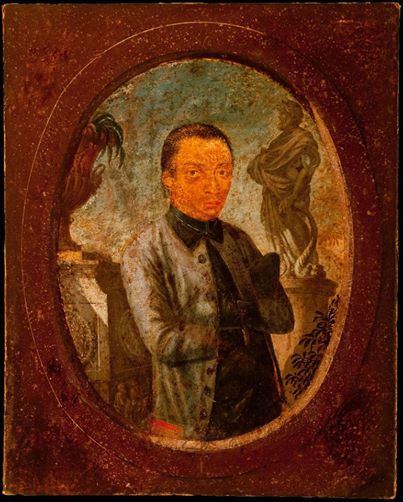
He was also, from roughly his forties onward, seriously ill. The disease — probably leprosy, possibly syphilis, possibly something else — progressively destroyed his extremities. He lost fingers. He lost the use of his feet. He continued to work by having his tools strapped to his wrists and his knees padded against the stone. The name history gave him, Aleijadinho — the little cripple — was not his own; it was the name others gave a body they saw as diminished. The work he left behind answers that diminishment without argument.
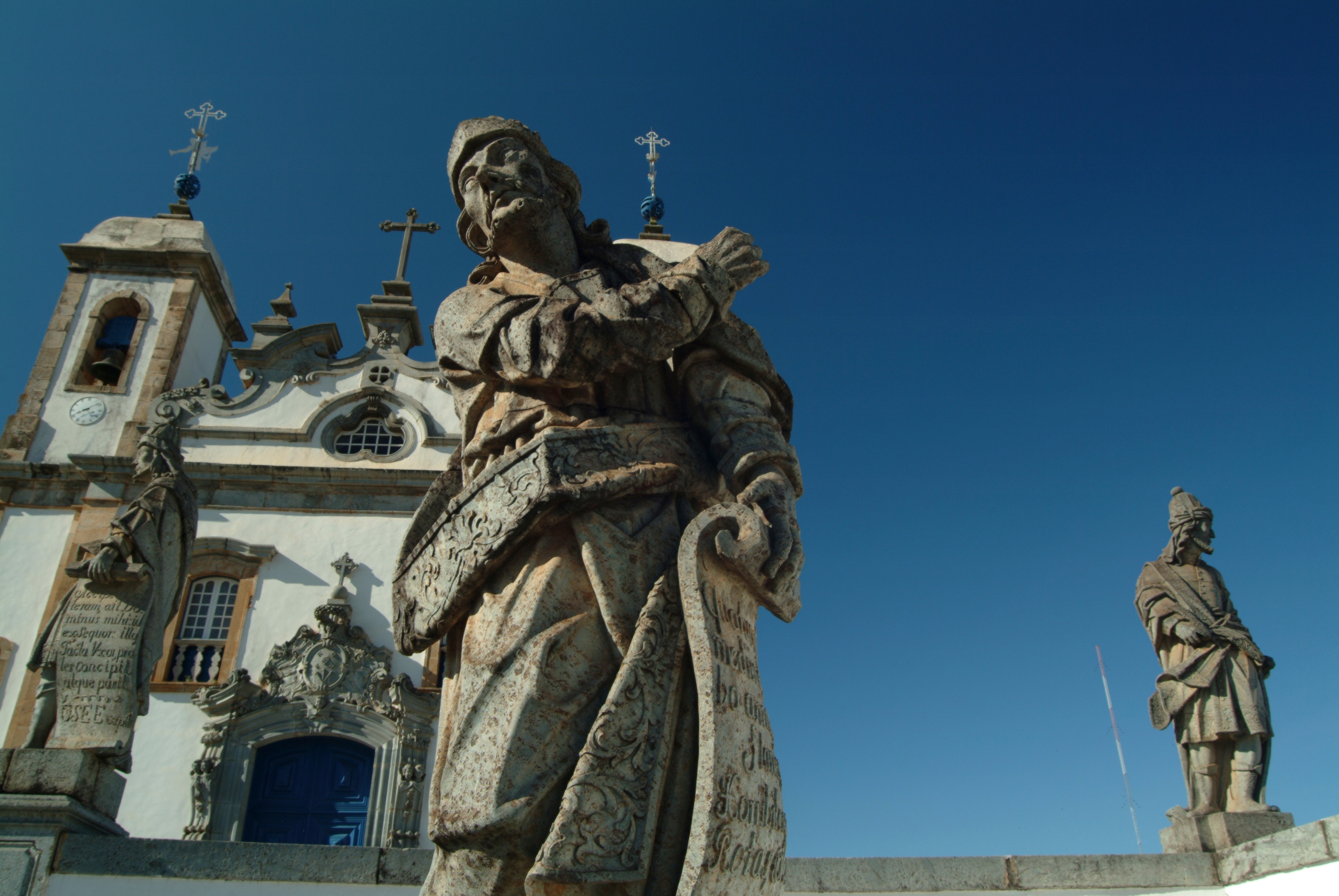
The centerpiece of that work stands at Congonhas do Campo, a small town in Minas Gerais, at the Sanctuary of Bom Jesus de Matosinhos. Between roughly 1796 and 1805, Aleijadinho carved sixty-four polychrome wooden figures depicting the Passion of Christ across seven chapels, and then carved twelve life-size soapstone prophets for the stairway leading to the church above.
The prophets are extraordinary. They are not serene. They gesture, they lean, they seem caught mid-speech, mid-anger, mid-grief. Each figure is distinct, with a weight of individual presence that makes the ensemble feel less like a decorative program than like a gathering of witnesses. That he produced them with crippled hands, working from his knees, is a fact that visitors have been repeating since the eighteenth century. What the repetition sometimes obscures is the simpler fact: they are among the greatest sculptures in the Americas regardless of the circumstances of their making.
UNESCO inscribed the Sanctuary as a World Heritage Site in 1985. But the pilgrimage to Congonhas had been running for generations before any institutional recognition arrived. Every September, people travel by foot, by bus, by any means available, to kiss the image of the dead Christ inside the church. The crowds reach into the hundreds of thousands. They come as pilgrims seeking grace, as art-travelers seeking Aleijadinho, and as Brazilians seeking something harder to name — a continuity with a past that is beautiful and brutal in equal measure.
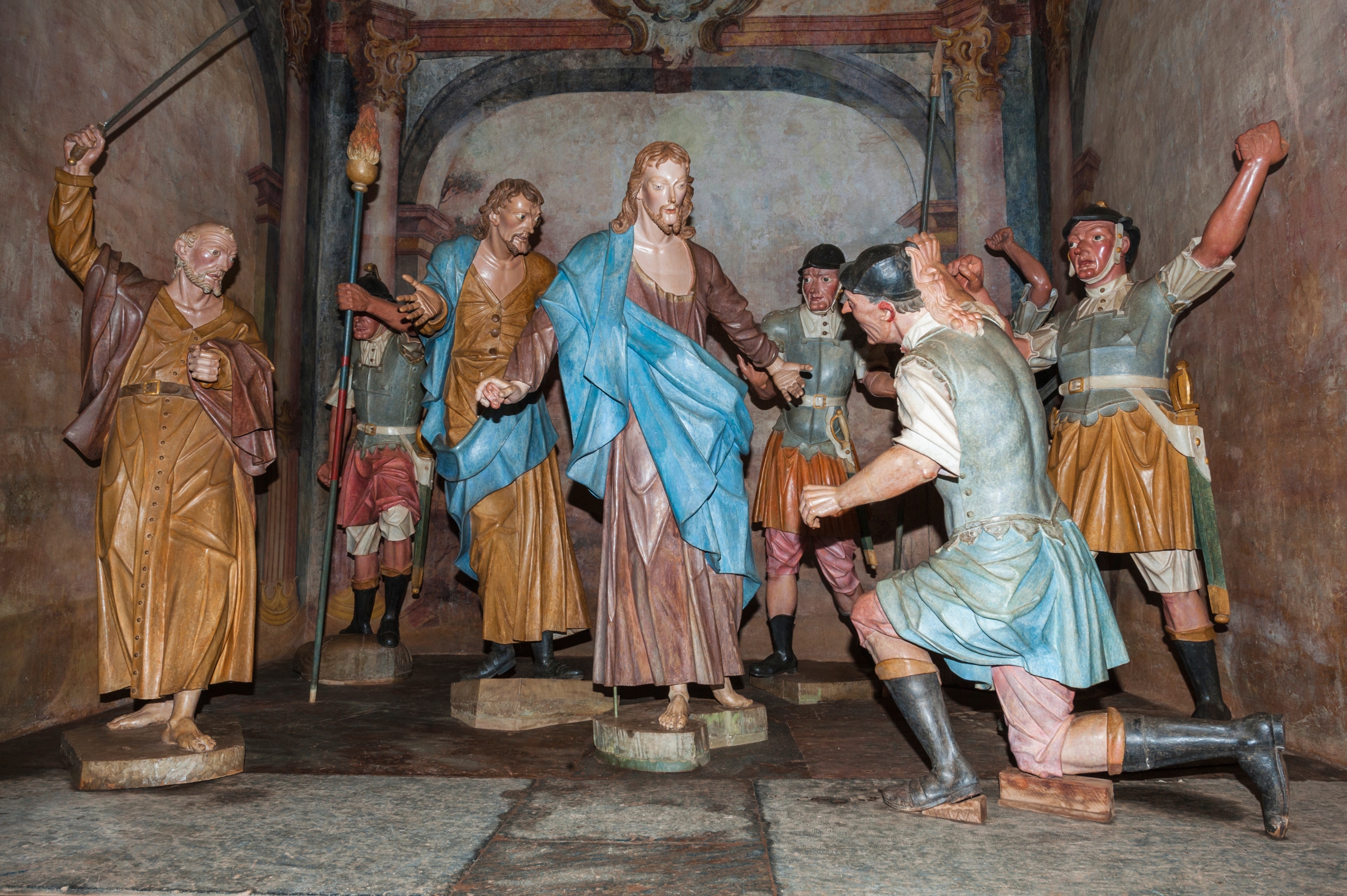
The myth and the man are not always easy to separate. Some Brazilian scholars have argued that Aleijadinho the heroic invalid was partly a construction of nationalist ideology in the 1920s and 1930s, when Brazilian modernism needed founding figures and found in him the perfect image: a mixed-race colonial artist who triumphed over his body and his marginalization to create something universally significant. The argument has merit as a caution against hagiography. It does not diminish the prophets standing on the stairway at Congonhas, which have been looking out over the hills of Minas Gerais for more than two centuries, and which reward the pilgrimage whether you arrive in devotion or in curiosity.
AI Transparency Notice
PilgriMaps uses artificial intelligence tools to assist in the research, drafting and translation of editorial content. All AI-assisted content is reviewed, edited and verified by our editorial team before publication. We contrast information against primary sources, specialist literature and on-the-ground knowledge to ensure accuracy, cultural sensitivity and editorial integrity.
AI is one tool among many in our workflow. The judgement, curation and responsibility for everything published on this platform remain entirely human.
Viator Media S.L. — in compliance with the EU Artificial Intelligence Act (Regulation EU 2024/1689).
This post is also available in: