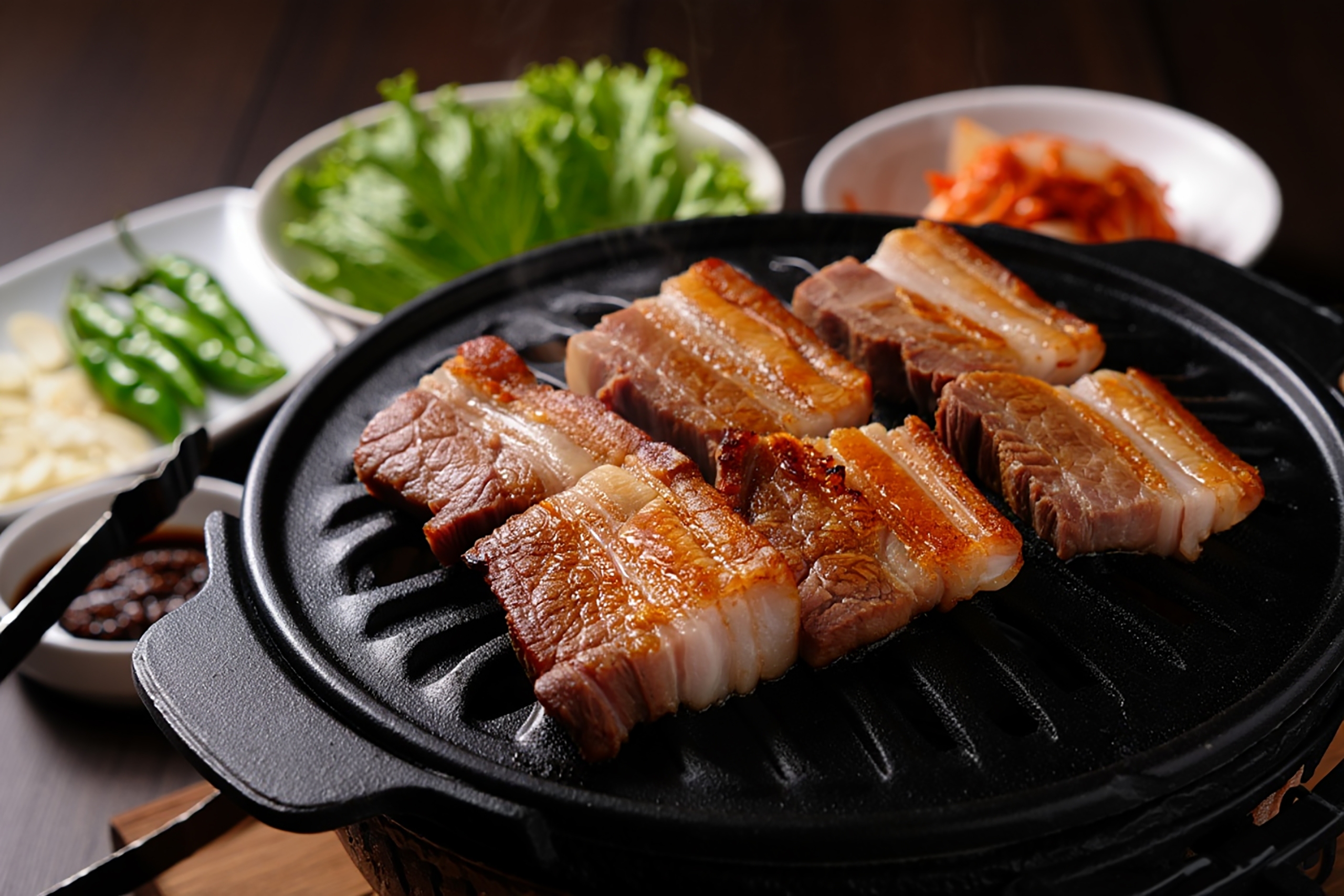
An experience with roots stretching back nearly two millennia, Korean grilling continues to circulate far beyond the peninsula where it emerged. Found today in cities across the world, it remains structured around fire, shared labor, and a carefully choreographed social setting.
There is a moment in a Korean restaurant when the pace of a meal shifts. Thin slices of marinated beef are placed on a built-in grill, the metal begins to sizzle, and the air fills with a sweet, savory aroma that draws everyone at the table into the process. Eating becomes participatory. The table turns into a site of coordinated action, where cooking, serving, and conversation unfold together.
Known collectively as gogi-gui (고기구이), literally “grilled meat,” Korean barbecue operates less as a single dish than as a social system organized around heat. Over centuries, it has developed into a form of culinary choreography in which each diner assumes an active role.
Two thousand years at the fire
Historical references to grilled meat on the Korean Peninsula can be traced to the period of Goguryeo (37 BCE–668 CE). Sources such as the Dongguk Sesigi, a 19th-century compendium of seasonal customs, describe maekjeok: beef marinated and grilled on wooden skewers, associated with the nomadic Maek populations of northern regions.
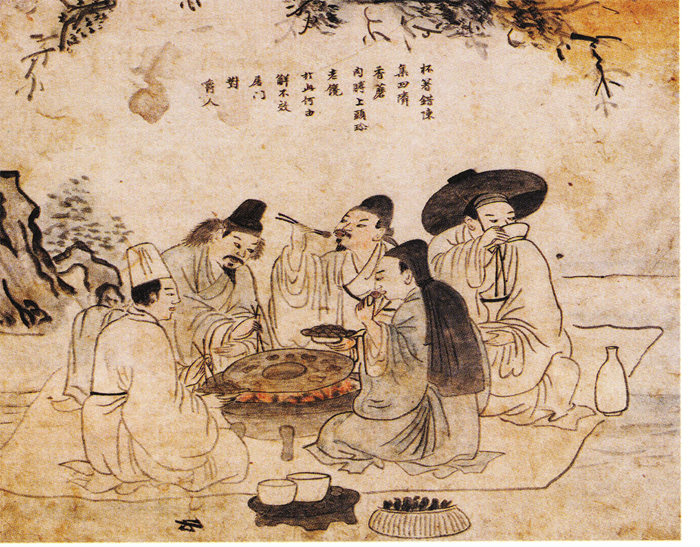
Dietary practices shifted as political and philosophical influences changed. When Buddhism gained prominence during the era of the Three Kingdoms, plant-based cooking became central to elite cuisine. It was during this period that banchan – the small vegetable side dishes served at every meal – took shape, including fermented preparations such as kimchi.
Meat consumption re-expanded following the Mongol incursions of the 13th century, which introduced new techniques and renewed emphasis on animal protein. By the time of the Joseon Dynasty, grilled meat had evolved into neobiani, thinly sliced beef prepared for court banquets and aristocratic households. Served over charcoal braziers known as hwaro, such meals signaled status and access rather than everyday nourishment.
The role of Asian pear
One ingredient distinguishes many Korean marinades from others worldwide: the Asian pear. Crisp and high in moisture, it contains natural enzymes that tenderize meat efficiently. When grated into a marinade, the fruit softens muscle fibers while contributing a restrained sweetness.
This balance supports rapid caramelization over high heat, producing the glossy, lightly charred edges associated with well-executed bulgogi. The term itself – bul meaning “fire” and gogi meaning “meat” – originated in northern dialects and entered standard South Korean usage only in the mid-20th century, when refugees brought regional cooking traditions to Seoul during and after the Korean War.
Ssam: A technique of assembly
Korean barbecue is rarely eaten on its own. Instead, it is integrated into ssam (쌈), meaning “wrapped.” A leaf of lettuce – often paired with perilla – is layered with freshly grilled meat, a small amount of ssamjang (a thick sauce made from fermented soybean paste), raw garlic, and sometimes seasoned scallions.
This assembly is eaten in a single bite. The practice is not simply a matter of etiquette but of sensory design. Consumed whole, the contrasting textures and flavors register simultaneously: crisp greens, rich meat, pungent aromatics, and heat from fermented condiments. Portion control and balance are implicit, reflecting broader cultural preferences for moderation and composure at the table.
Care at the grill
At each table, one person usually assumes responsibility for the grill. This role – often taken by an elder, host, or experienced diner – involves monitoring heat, turning the meat, cutting it with kitchen scissors, and serving others before serving oneself.
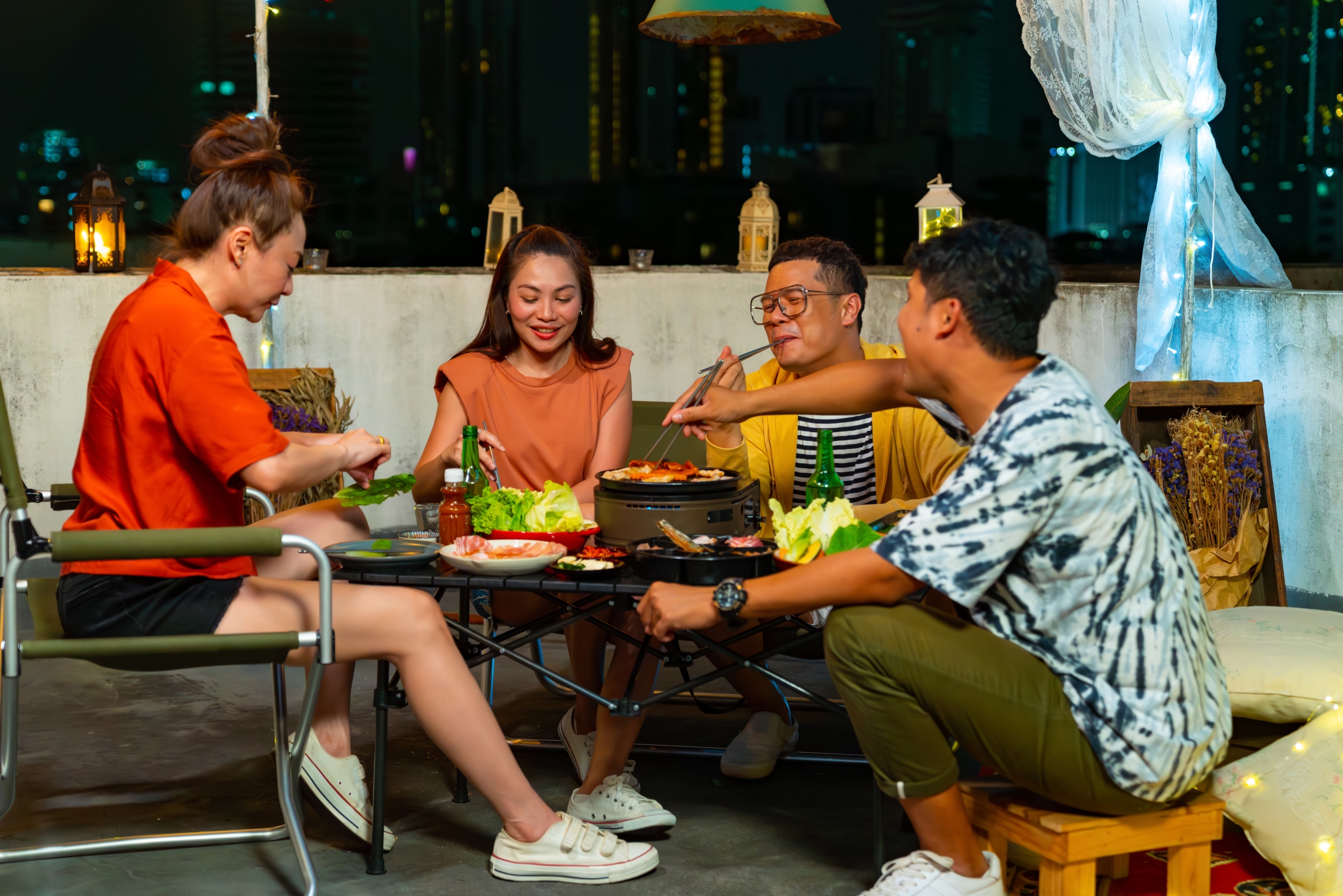
The exchange is reciprocal. Other diners commonly prepare a ssam and offer it to the grill attendant as a gesture of appreciation. These small acts of attentiveness structure the meal as a network of giving and receiving rather than individual consumption.
Anthropological research on commensality supports the social impact of such practices. Studies, including work by Robin Dunbar of the University of Oxford, suggest that shared meals activate bonding mechanisms similar to those involved in synchronized movement or collective music-making. Korean barbecue situates these dynamics around fire, repetition, and shared responsibility.
Global circulation
Over the past two decades, Korean grilling has expanded internationally alongside the broader cultural phenomenon known as Hallyu. Chefs such as Roy Choi and David Chang have adapted traditional techniques to new contexts, producing hybrid forms that circulate widely while retaining core elements of participation and heat-driven cooking.
As Korean restaurants proliferate in cities across Europe and North America, they transmit not only flavors but a particular model of eating together. The food arrives raw; diners complete the transformation themselves. Cooking becomes a shared task rather than a hidden process.
Fire as social space
What ultimately distinguishes Korean barbecue is not novelty of ingredients or technique, but the way it organizes time and attention. In a world oftentimes shaped by solitary meals and frictionless delivery, gathering around a grill reintroduces deliberateness, cooperation, and presence.
Fire, in this setting, is the organizing center of the meal. Around it, relationships are enacted through small, repeated gestures – turning meat, passing leaves, offering a prepared bite. Korean grilling persists because it continues to provide a framework for connection, sustained not by abstraction, but by shared heat and shared effort.
AI Transparency Notice
PilgriMaps uses artificial intelligence tools to assist in the research, drafting and translation of editorial content. All AI-assisted content is reviewed, edited and verified by our editorial team before publication. We contrast information against primary sources, specialist literature and on-the-ground knowledge to ensure accuracy, cultural sensitivity and editorial integrity.
AI is one tool among many in our workflow. The judgement, curation and responsibility for everything published on this platform remain entirely human.
Viator Media S.L. — in compliance with the EU Artificial Intelligence Act (Regulation EU 2024/1689).
This post is also available in: