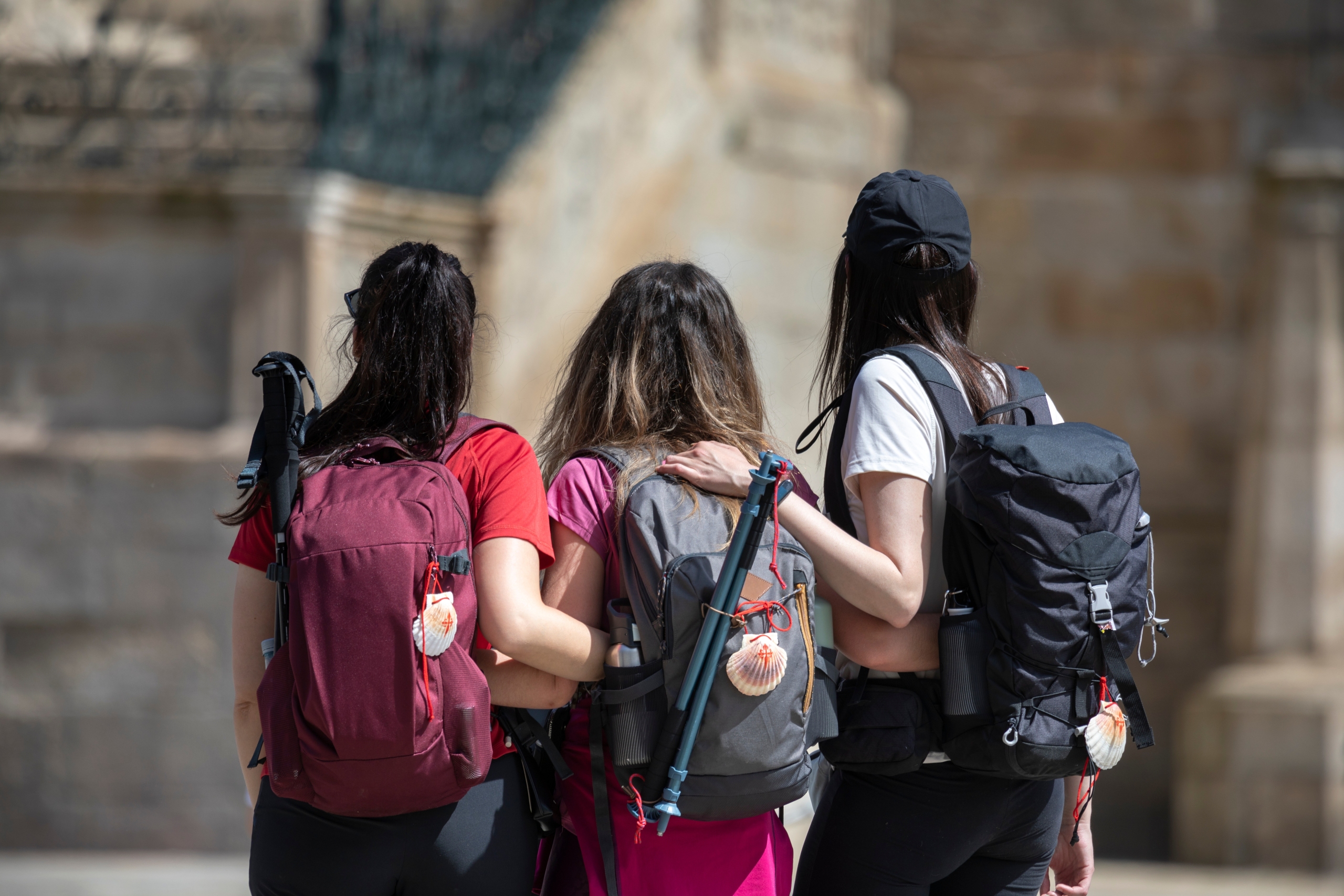
Each morning in Astorga, as dawn casts a rose hue across terracotta rooftops, dozens of walkers rise from creaking bunk beds, lace up worn-out shoes, and step into the unknown. Few realize they are participants in what may be the most expansive social neuroplasticity experiment ever observed. With every step, neural pathways are subtly altered.
The Camino de Santiago, now welcoming nearly 500,000 travelers annually, has inadvertently become an open-air research environment where modern science is uncovering deeply embedded human capacities: walking in community can reshape identity at the neurological level.
A discovery born of data, not devotion
In 2018, psychologist Javier García Campayo and his team at the University of Zaragoza launched the Proyecto Ultreya, borrowing its name from a medieval pilgrim exhortation. Their aim was straightforward: to examine whether walking the Camino had quantifiable effects on psychological wellbeing.
What they found went beyond mood elevation. Online surveys and interviews revealed something more profound—measurable biological transformation. Extended exposure to nature, fatigue, and shared environments produced tangible changes in brain function. The real insight came when the team began to investigate how these changes occurred.
Mirror neurons and the mechanics of empathy
At a hostel in Ponferrada, a retired woman from Japan stumbles on the stairs. A German engineer she’s never spoken to catches her instinctively. She smiles. He nods. In that fleeting moment, mirror neurons—discovered in the 1990s by researchers studying macaques—are triggered in both. These neurons activate both when a person performs an action and when they observe someone else doing the same.
On the Camino, this ancient neural architecture becomes socially amplified. Each witnessed act of support becomes a behavioral blueprint, replicated instinctively by others. The path becomes a behavioral chain reaction of compassion.
The chemistry of unexpected connection
Sarah, a London executive, once filtered every relationship through professional networks and competition. But halfway through her Camino, she finds herself sharing her last energy bar with a Spanish punk she’d typically avoid. Months later, the memory still puzzles her.
Biologically, however, the explanation is simple: oxytocin. Often dubbed the “bonding hormone,” oxytocin is released during physical touch, sexual intimacy—and communal walking. Each shared laugh, mutual challenge, and wordless gesture sparks microdoses of trust-building chemistry that binds strangers across cultural and personal divides.
 Communication beyond language
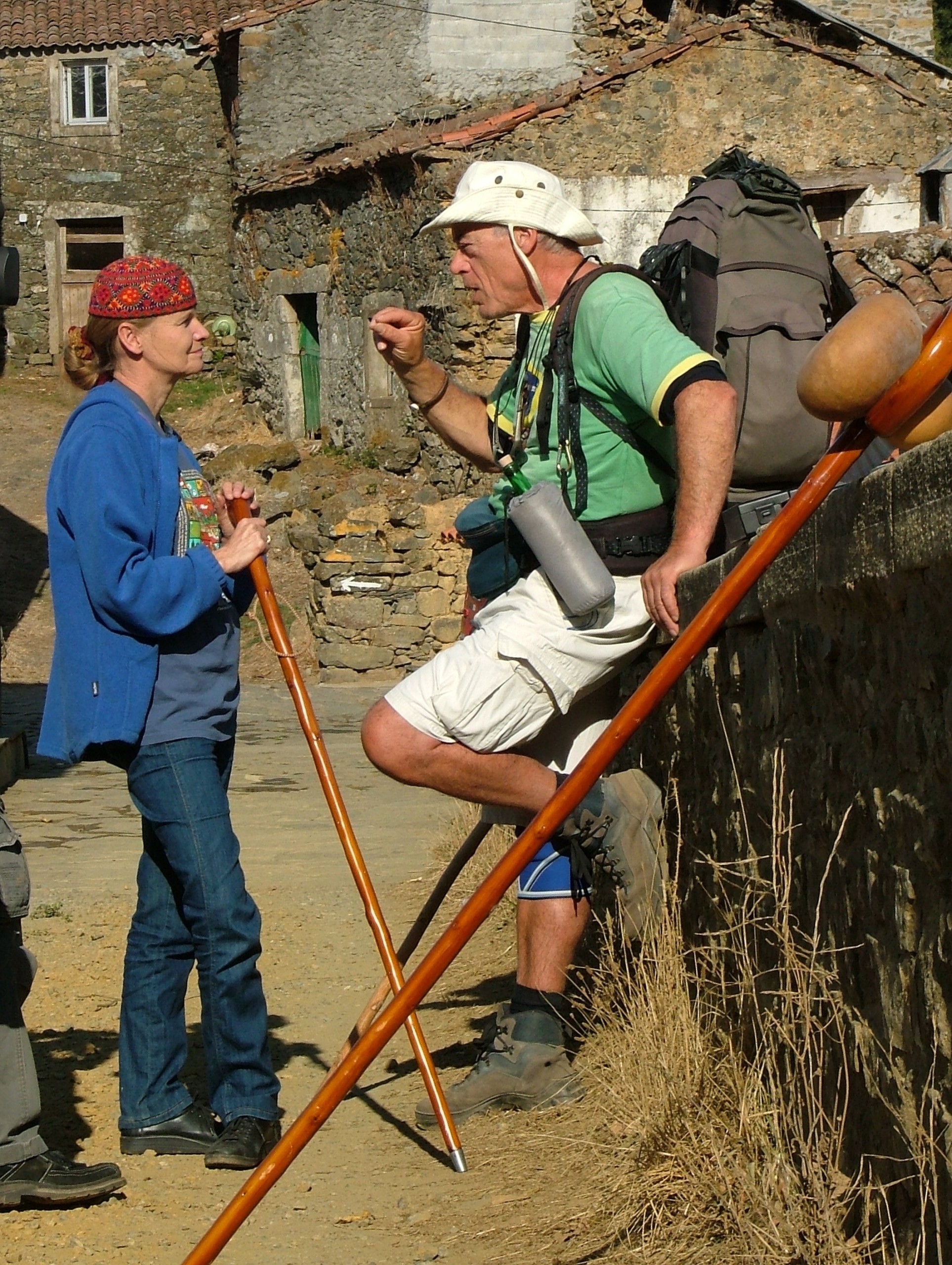
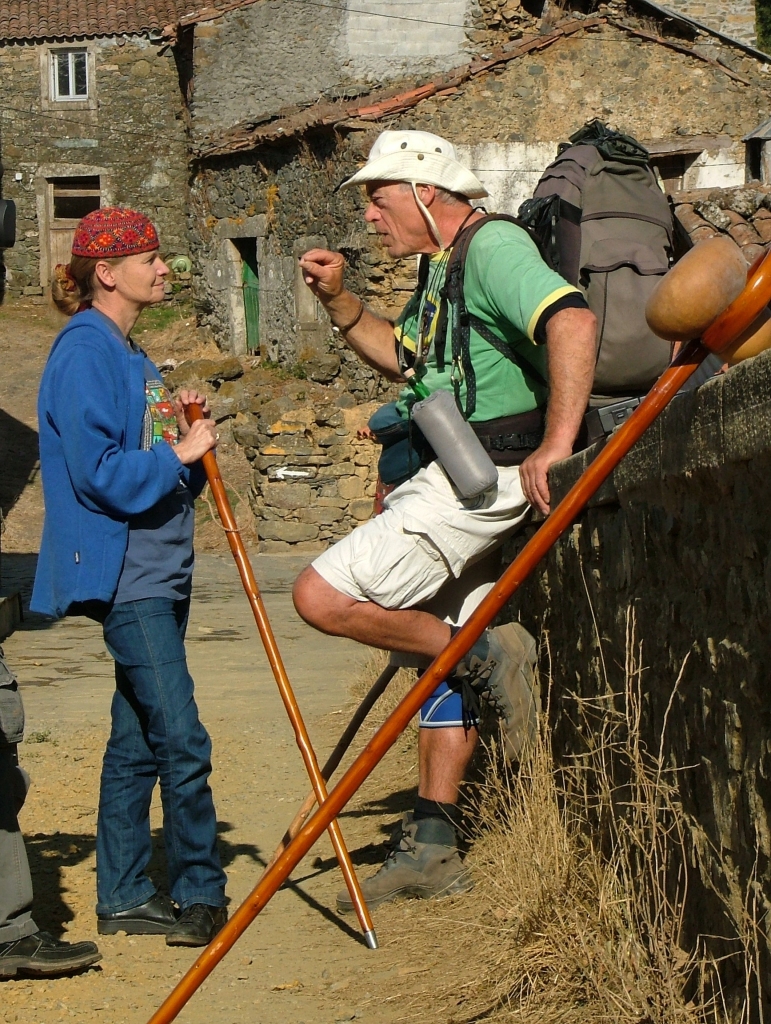
In Melide, a Brazilian and a South Korean spend half an hour deep in animated conversation. Neither speaks the other’s language, but gestures, laughter, and shared silences create a striking form of mutual understanding. Linguists describe this as pragmatic communication—the brain’s adaptive strategy for connecting when verbal language fails.
Here, facial expressions, body posture, and even breath patterns form an ancient form of communication—pre-verbal, pre-script—reawakened by shared effort and shared direction.
The egalitarianism of blisters
In pilgrim hostels, distinctions of wealth and status dissolve. CEOs share bunk beds with students, artists with academics, blue-collar workers with barristers. What enforces this collapse of social hierarchy? Foot pain.
Sociologically improbable, this leveling effect has a neurological basis. Without status cues, the brain’s usual defense mechanisms disengage. This fosters a rare openness to empathy, enabling altruistic behaviors that are otherwise suppressed in stratified societies.
Neurological synchrony on the path
At Cruz de Ferro, a cluster of pilgrims climbs in silence toward the Celtic iron cross. As they walk, their steps begin to align. Their breathing synchronizes. Unconsciously, they enter what neuroscientists call neural coupling—a measurable phenomenon where brain waves begin to harmonize during cooperative activity.
Using EEGs, researchers have found that groups engaged in synchronized tasks—like rowing, dancing, or walking—exhibit shared neural rhythms. The Camino, in this sense, becomes a kind of emotional metronome, syncing thousands of travelers into a temporary collective organism.
The evolution of a greeting
Medieval pilgrims cried, “Ultreia et Suseia“—“Beyond and upward.” Today’s walkers say simply, “Buen Camino.” It’s more than a change in phrase; it reflects a shift in paradigm. From sacred invocation to secular affirmation. From vertical transcendence to horizontal fellowship.
This greeting has become a linguistic bond, a portable ritual that crosses borders and belief systems. It’s a functional evolution—proof that tradition adapts, thrives, and transmits value in real time.
The road as social network
While digital platforms claim to connect us, many report increasing isolation. Yet along the unpaved roads of Galicia, a far older and more effective network persists: the shared path. There are no filters, no algorithms, no curated feeds—only human contact, dictated by pace and coincidence.
Here, glances replace notifications, whispered conversations supplant text messages, and smiles stand in for likes. The Camino reactivates multi-sensory communication circuits dulled by decades of screen-based interaction.
Memory engraved in chemistry
Ana, a pilgrim from Valencia, claims she remembers every face from her 800-kilometer journey. Her assertion isn’t exaggerated. Oxytocin enhances social memory by stimulating specific brain areas involved in recognition. These sharply vivid recollections are not sentimental illusions—they are chemically reinforced neural imprints.
This helps explain why pilgrims recognize one another in airports years later. The memory isn’t merely emotional—it’s biological.
Kindness as contagion
Near Palas de Rei, Marcus sees an elderly walker struggling with his pack. Without thinking, he stops to help. Marie, walking behind, observes this. Hours later, she instinctively lends her trekking poles to an injured stranger. Altruism propagates along the trail like a behavioral ripple.
Known in behavioral science as social transmission of empathy, this phenomenon shows that witnessing prosocial acts increases the likelihood of repeating them. The Camino becomes a conveyor belt of generosity, where kindness passes quietly from person to person.
The silent revolution
In sterile labs, fMRI scans confirm what generations of pilgrims have intuitively understood: walking together toward a common goal alters the human brain. Regions responsible for empathy, cooperation, and trust show measurable structural change.
This isn’t mysticism—it’s neuroplasticity. The Camino functions as a mental gym, strengthening interpersonal skills that daily life often weakens. Pilgrims return home not merely with souvenirs but with rewired brains—better equipped for connection.
The moving antidote
In an age of social fragmentation and algorithmic loneliness, the Camino unintentionally offers a remedy: collective movement toward a symbolic horizon. Pilgrims do not arrive seeking transcendence. Yet what they find—neurobiologically, socially—is a kind of repair.
What modern solitude erodes, the Camino rebuilds. Not through belief, but through biology. Not through doctrine, but through shared motion.
Buen Camino. And welcome to the lab that you are.
Solo or Together? Choosing the Right Pace for Your Pilgrimage
AI Transparency Notice
PilgriMaps uses artificial intelligence tools to assist in the research, drafting and translation of editorial content. All AI-assisted content is reviewed, edited and verified by our editorial team before publication. We contrast information against primary sources, specialist literature and on-the-ground knowledge to ensure accuracy, cultural sensitivity and editorial integrity.
AI is one tool among many in our workflow. The judgement, curation and responsibility for everything published on this platform remain entirely human.
Viator Media S.L. — in compliance with the EU Artificial Intelligence Act (Regulation EU 2024/1689).
This post is also available in: