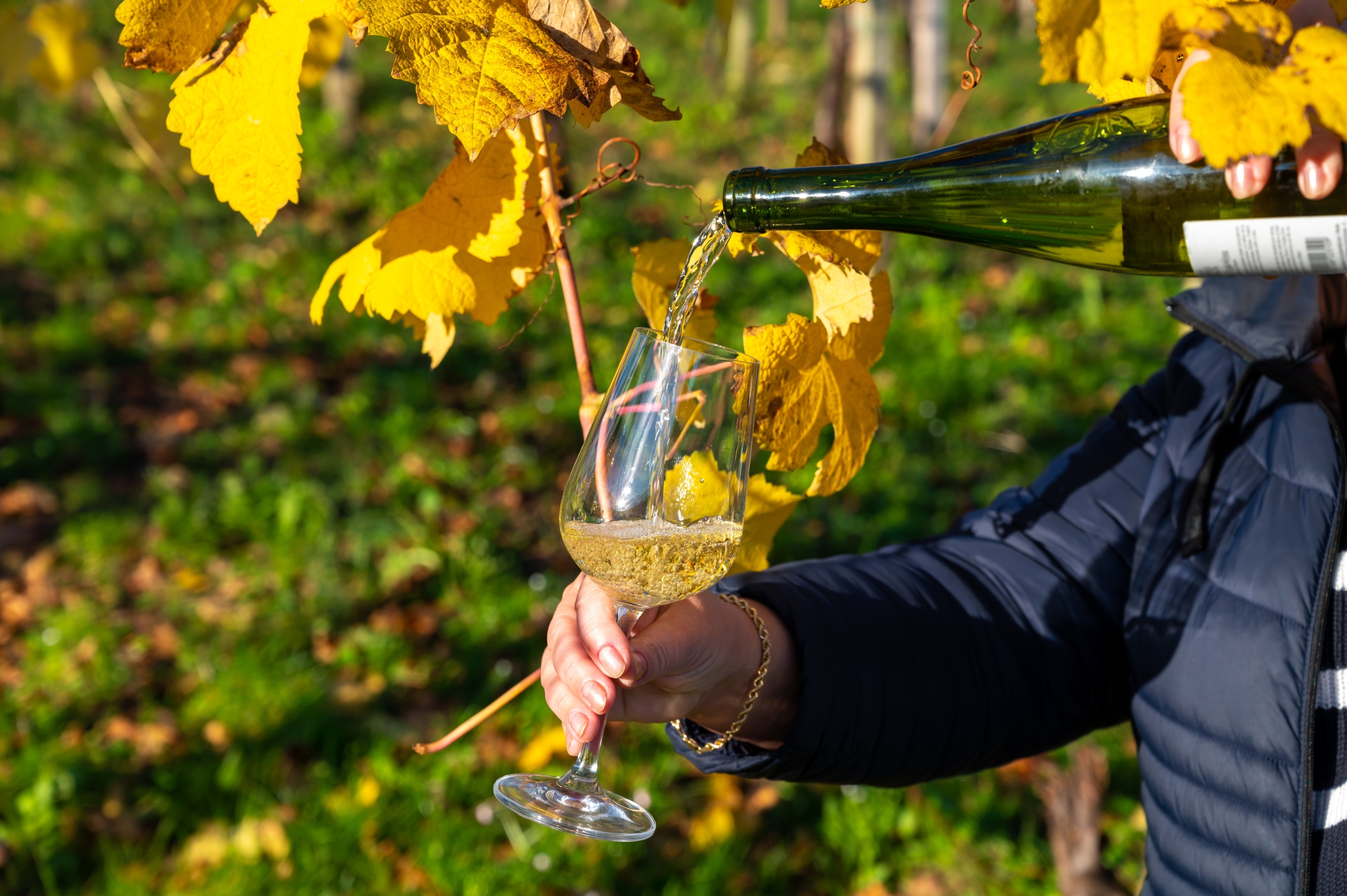
In the cider houses of San Sebastián, the act of pouring txakolí becomes a minor performance. A server raises the bottle high above their head—nearly a meter—and lets the golden liquid fall with practiced accuracy. This is not mere spectacle. It is a technique that aerates the wine and enhances its expression, echoing centuries-old customs in the Basque Country. Behind the display lies one of Europe’s lesser-known yet oldest wine traditions: txakolí.
A Local Wine with Defiant Character
The name “txakolí” likely derives from the Basque expression etxeko ain, meaning “just enough for the house.” For centuries, this lightly sparkling white wine was a staple in rural homesteads (caseríos), produced and consumed with the same regularity as bread. It remained a domestic, almost invisible product—until recently.
Today, amid a wine industry defined by scale and standardization, txakolí offers a counterpoint. Production remains small—around 3.5 million bottles annually—and concentrated within three appellations: Getariako Txakolina, Bizkaiko Txakolina, and Arabako Txakolina. This is not a wine of global branding but one deeply rooted in place, defined by its unyielding regional identity.
Hondarribi Zuri and the Quiet Transformation
“Ten years ago, txakolí was close to becoming a folkloric footnote,” says Juanjo Tellaetxe, winemaker at Tantaka. “It was sharp, fizzy, low in alcohol—often a challenge for modern palates.”
A generational shift changed that trajectory. Emerging producers began working with Hondarribi Zuri, the local white grape whose name simply means “white from Hondarribia” in Basque. First documented in 1783, the grape is well-suited to the cool, maritime conditions of the northern coast. Its small, tightly clustered berries deliver high acidity and subtle notes of citrus, flowers, and herbs—qualities prized in the evolving profile of txakolí.
The Atlantic Terroir
Txakolí’s distinctiveness stems from a unique terroir. Vineyards perch on hillsides facing the Bay of Biscay, where ocean breezes and mountain shelter create a humid, temperate microclimate. These conditions discourage vine disease and impart a saline minerality that defines the wine’s character.
In Getaria, a coastal village known also as the birthplace of fashion designer Cristóbal Balenciaga, viticulture dates back to at least the 16th century. The Etxaniz family has cultivated vines here since 1649. Their vineyards use a parra (trellis) system that protects grapes from strong Atlantic winds while optimizing sun exposure.
Pouring as Precision Craft
Txakolí’s serving method is as much part of its identity as its origin. Known as escanciar, the traditional high pour aerates the wine, releasing natural carbon dioxide and activating its aromas. A specialized pourer top (tapón escanciador) ensures a steady stream from the bottle, allowing the wine to strike the glass and form a signature frothy crown.
Rather than wine glasses, servers use broad tumblers that encourage oxygenation and allow the wine’s subtle aromatics to emerge. This presentation turns the act of pouring into a sensory experience—an ephemeral gesture that mirrors the wine’s freshness.
Three Regions, Three Identities
Each txakolí appellation reflects its specific landscape:
- Getariako Txakolina: The most historic and well-known. Produced near the coastal towns of Getaria, Zarautz, and Aia, these wines are intensely fresh, with pronounced acidity, light effervescence, and green apple and citrus notes. Around 85% of txakolí comes from this region.
- Bizkaiko Txakolina: Produced inland in the province of Biscay, these wines are softer, less acidic, and exhibit greater stylistic diversity. They include white, rosé, and red versions, with more expressive floral and fruity aromas and less carbonation.
- Arabako Txakolina: The smallest and most recent appellation, located in Álava. These wines tend to be fuller-bodied and fruit-forward, with balanced acidity and occasional tropical notes. Annual production remains under 500,000 bottles.
Gastronomic Pairings
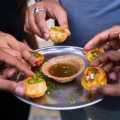
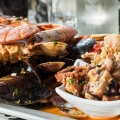
Txakolí aligns seamlessly with Basque culinary traditions, particularly pintxos—small bar snacks that reinterpret the tapas format. Its acidity and lightness complement shellfish and oily fish such as anchovies, sardines, and tuna. Mild cheeses, notably the semi-aged Idiazábal, also find a natural partner in txakolí.
The gilda, a skewer of anchovy, olive, and pepper, is an iconic pairing: the brininess of the snack mirrors the wine’s maritime freshness. In San Sebastián’s Michelin-starred restaurants, chefs use different txakolí expressions to pair with seasonal vegetables, poultry, and even fruit-forward desserts, highlighting the wine’s evolving gastronomic role.
From the Cantabrian Coast to Global Tables
Despite its modest scale, txakolí is expanding abroad. In Japan, its bright acidity and saline minerality pair well with the umami-rich cuisine. Álvaro Bujanda of Bodegas Astobiza notes that 85% of his winery’s output now goes to export markets, with Japan among the top destinations.
In the United States, txakolí has gained attention among sommeliers and natural wine enthusiasts. Its unfiltered expression of place—modest in alcohol, bold in character—resonates with drinkers seeking authenticity over polish.
A Tradition in Transition
Txakolí production is currently divided between two approaches. Some vintners continue the classic style: fresh, acidic, meant to be drunk within the year. Others are exploring aged versions with greater complexity, body, and aging potential. Rather than conflict, this divergence reflects a maturing culture adapting to broader tastes without abandoning its roots.
One Wine, Many Stories
In a homogenizing wine market, txakolí remains a product of its landscape—impossible to replicate, shaped by sea, slope, and tradition. Its modest scale belies its complexity. As Tellaetxe puts it, “It’s a wine that reflects our culture—rustic, restrained, shaped in the vineyard.”
While global brands chase volume and visibility, txakolí moves at its own pace. Every bottle speaks of intergenerational knowledge and landscapes that favor patience over production. For those who seek meaning in a glass, poured from the right height, txakolí offers something rare: a direct connection to place, history, and craft.
AI Transparency Notice
PilgriMaps uses artificial intelligence tools to assist in the research, drafting and translation of editorial content. All AI-assisted content is reviewed, edited and verified by our editorial team before publication. We contrast information against primary sources, specialist literature and on-the-ground knowledge to ensure accuracy, cultural sensitivity and editorial integrity.
AI is one tool among many in our workflow. The judgement, curation and responsibility for everything published on this platform remain entirely human.
Viator Media S.L. — in compliance with the EU Artificial Intelligence Act (Regulation EU 2024/1689).
This post is also available in: