
In the luminous stillness of an orchard in Misserghin, near Oran, a religious brother observes. There is no laboratory, no sophisticated instruments, no written protocols – only trees, white orange blossoms, and the constant hum of insects. A bee lands, then flies to another flower. He follows it with his gaze.
It is said that in that moment—part intuition, part patience—he marked a branch with a red ribbon, as if to fix in time a fleeting gesture of nature. Whether it happened exactly this way remains uncertain. Yet the scene has endured, along with the sense that the origin of the clementine belongs as much to history as to narrative.
That observer was Frère Clément (Vital Rodier), popularly known as “Father Clément,” though he was not a priest but a religious brother. Born in France in 1839 and sent to Algeria in the context of agricultural missions, his life unfolded far from academic centers and close to the land.
He was not a laboratory scientist nor a systematic experimenter in the modern sense, but something more direct: a master horticulturist, a man able to recognize in a slight variation the promise of a new form. His name would become linked to the clementine not so much for having “invented” it as for having seen it, cared for it, and brought it to wider attention.
Behind this image lies a broader story than that of a single individual. The clementine is not merely the result of personal intuition but the product of a specific place and time: colonial Algeria, where cultures, religions, and forms of knowledge intersected in complex ways. In that intersection—sometimes productive, sometimes unequal—a fruit emerged that now appears universal.
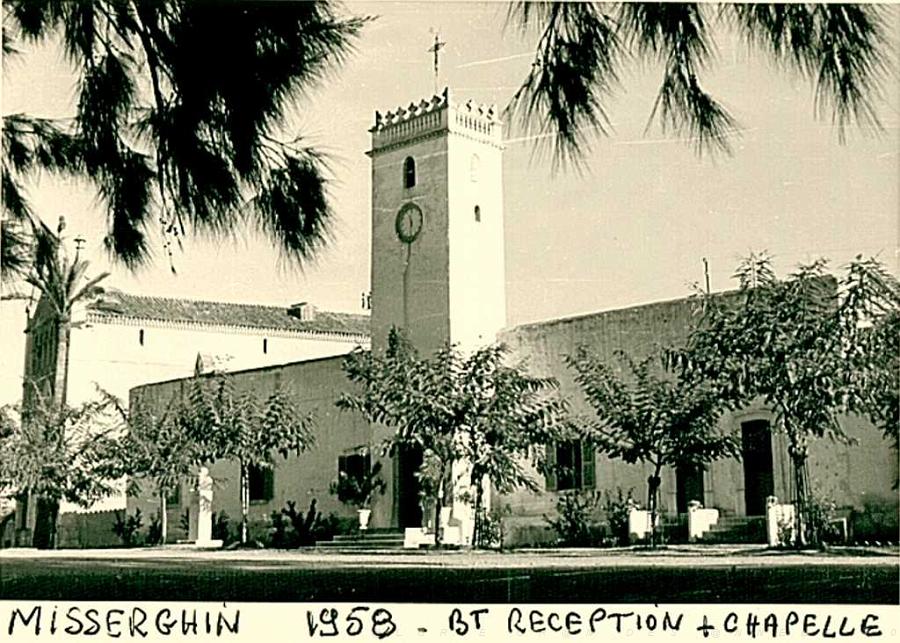
An orchard on the frontier
By the late nineteenth century, Misserghin was far more than an agricultural site. It functioned as an orphanage run by a religious community, but also as a space for botanical experimentation and practical education. There, children without families learned to work the land while cultivating species brought from different parts of the world.
Within this setting, the nursery played a central role. It was the point where empirical knowledge, economic necessity, and pedagogical purpose converged. Brother Clément oversaw these activities with steady attention: sowing, grafting, selecting, testing. His work did not aim at spectacular results but at sustaining a continuous, almost invisible process in which each plant might reveal a difference.
This hybrid character—part religious institution, part agricultural enterprise, part educational space—reflects the complexity of Algeria at the time. It was not only a colonized territory but also a setting of everyday encounters, where different traditions intersected in practical ways.
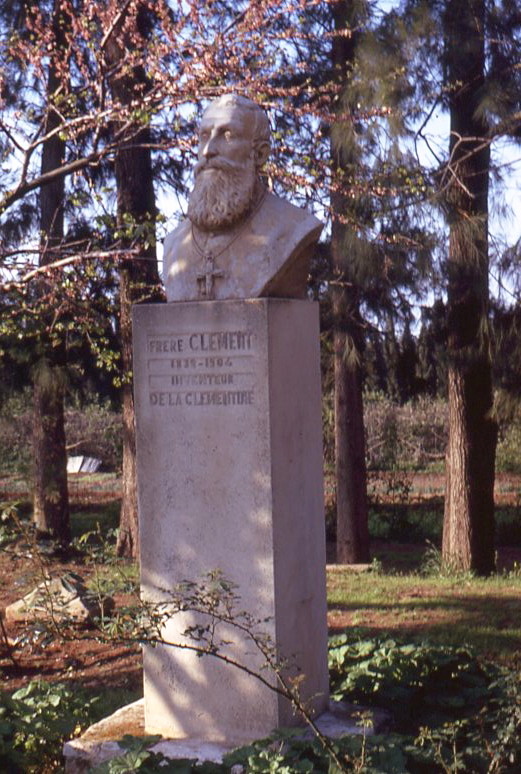
The discovery: Between chance and care
The emergence of the clementine does not correspond to a single moment of invention but to a sequence of gestures. In the orphanage’s mandarin seedbeds, a plant appeared with distinct characteristics: a sweeter fruit, easier to peel, with fewer seeds. There is no evidence that this was a controlled cross. All indications suggest a spontaneous variation—one of those silent anomalies produced by nature.
What proved decisive was that someone recognized it. Clément identified the difference, preserved it, and multiplied it through grafting. This act—apparently modest—is fundamental in the history of agriculture: turning the exceptional into something reproducible.
The encounter with Louis Trabut, a famous scientist, allowed the process to advance further. Trabut, a prominent botanist in Algeria, understood the value of the new variety and described it scientifically in 1902. He recorded that it was Brother Clément who had identified the plant in the seedbeds. Shortly thereafter, the Société d’horticulture d’Alger adopted the name “clementine” in his honor.
Between them, an implicit collaboration takes shape: the horticulturist who observes and cultivates, and the scientist who classifies and disseminates. These are not opposing forms of knowledge but complementary ones.
The moment when a fruit receives a name is also the moment it enters history. “Clementine” is not merely a label; it is a form of recognition. By associating it with Clément, a memory is fixed; by its adoption within a scientific society, legitimacy is conferred.
Algeria as a space of encounter
The story of the clementine highlights a defining aspect of Algeria: its condition as a crossroads. In Misserghin, people of different origins, languages, and traditions lived and worked side by side. Local memory even preserves accounts in which an Arab boy participates in the discovery of the plant. While such accounts cannot be fully verified, they point to a broader reality: a space where knowledge did not belong exclusively to one culture but emerged through interaction.
The clementine can be read as a metaphor for this process. It is a hybrid at the biological level, but also at the cultural one. Its existence depends on the combination of diverse elements: plant species, agricultural practices, and institutional frameworks.
From nursery to world
Within a few decades, the clementine followed a remarkable trajectory. From the seedbeds of Misserghin, its cultivation spread across the Oran region and later to other agricultural zones. By 1925, significant quantities were already being exported to markets in Paris, where they were highly valued.
Its expansion continued into Spain, where the fruit found ideal growing conditions, and into the United States, becoming integrated into new agricultural networks. This trajectory shows how a local innovation can become a global product when supported by effective systems of distribution.
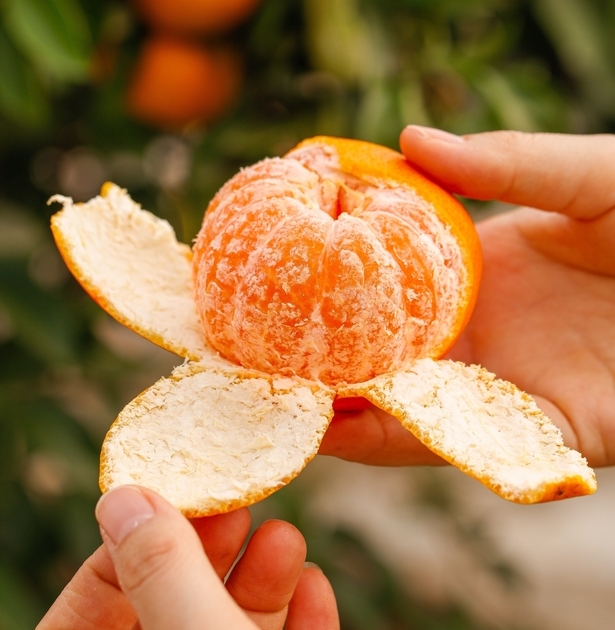 The clementine ceased to be a curiosity and became part of everyday life for millions of people. Its success is explained both by its qualities—flavor, ease of consumption—and by the networks that enabled its circulation.
Recent genetic studies have provided further insight into its origins. It is now known to be a hybrid between a Mediterranean mandarin and a sweet orange. This finding revises earlier hypotheses and situates the phenomenon within a broader framework of natural hybridization.
Science, however, does not resolve every question. It cannot determine precisely how the cross occurred or who was involved. What it does confirm is that Clément’s role in identifying and disseminating the variety was decisive.
A fruit as metaphor
Today, the clementine is a familiar presence. It is easy to peel, easy to share, embedded in everyday habits that appear simple. Yet its history reveals a complex web of encounters and transformations.
It is the result of a biological crossing, but also of a cultural one. It emerged in a place where religions, languages, and forms of knowledge converged. It grew within a historical context marked by tensions, but also by exchanges. And it spread through networks that connected continents.
Returning to the opening image—the bee moving from one flower to another—it can be read as a metaphor for this process. Whether or not it happened exactly as described is secondary. What matters is what it suggests: that life, in all its forms, advances through contact, mixture, and movement.
The clementine, in its apparent simplicity, contains this history—a history of Algeria as a place of encounter, where even a fruit can become a testimony to the complexity of the world.
AI Transparency Notice
PilgriMaps uses artificial intelligence tools to assist in the research, drafting and translation of editorial content. All AI-assisted content is reviewed, edited and verified by our editorial team before publication. We contrast information against primary sources, specialist literature and on-the-ground knowledge to ensure accuracy, cultural sensitivity and editorial integrity.
AI is one tool among many in our workflow. The judgement, curation and responsibility for everything published on this platform remain entirely human.
Viator Media S.L. — in compliance with the EU Artificial Intelligence Act (Regulation EU 2024/1689).
This post is also available in: