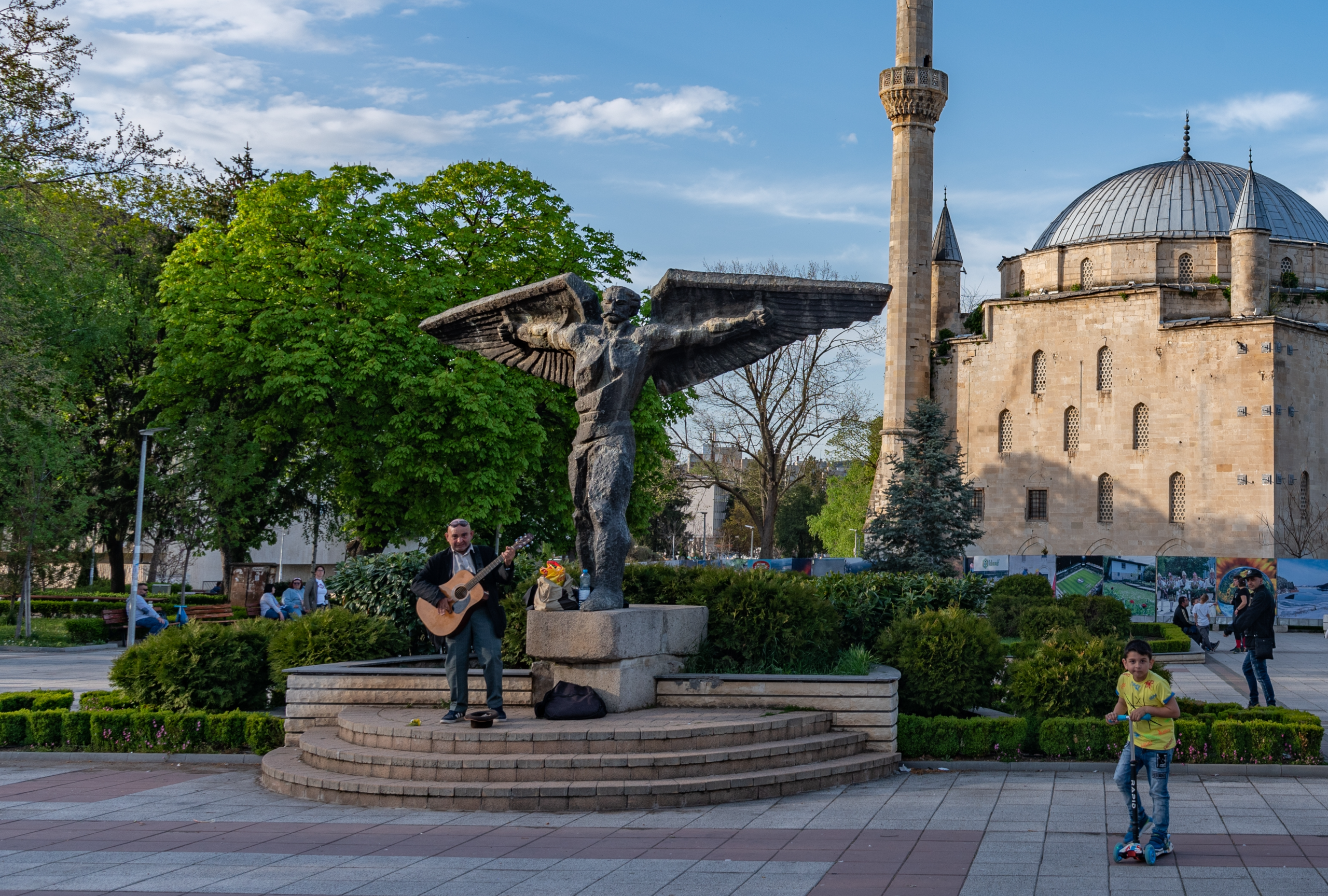
Romania’s landscape is marked not only by its monasteries, fortresses, and mountain passes but by the deep mythologies that infuse these places with cultural resonance. Pilgrimage here is not confined to saints’ shrines or holy relics; it often leads toward sites that hold narrative weight—places where folklore, architecture, and sacrifice intersect.
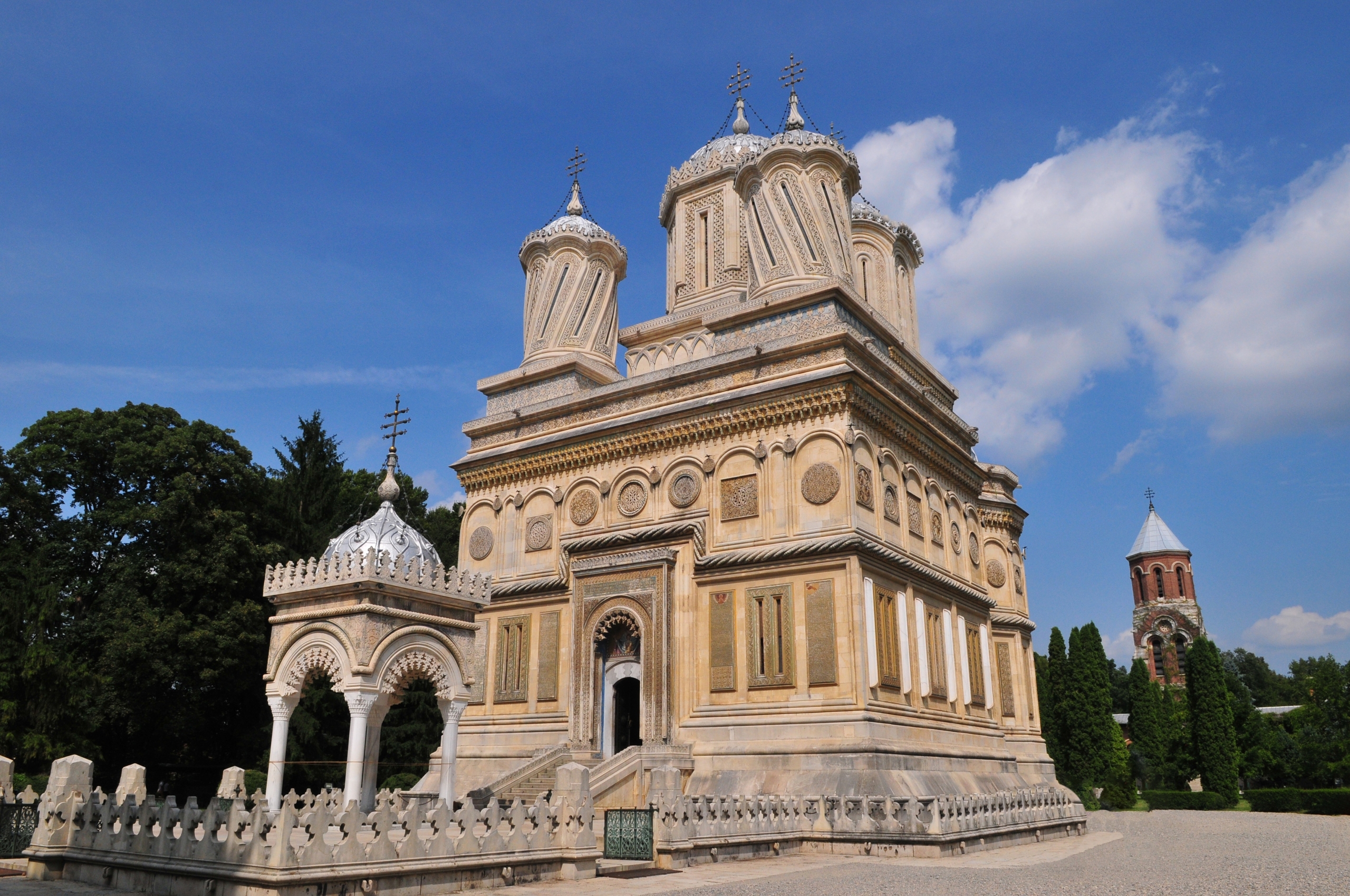
One such place is the Curtea de Argeș Monastery, at the foothills of the Făgăraș Mountains in southern Romania. Though it remains an important religious and architectural landmark, its significance is inseparable from one of Romania’s most enduring legends: the tale of Meșterul Manole, the master builder whose story reveals how memory, art, and loss are cemented—sometimes literally—into cultural identity.
A Monument of Myth
The Curtea de Argeș Monastery, founded in the early 16th century by Prince Neagoe Basarab, is famed for its exquisite stonework and Byzantine-influenced architecture. Yet for many Romanians, the building is remembered less as a royal foundation and more as the setting of an unsettling folk narrative preserved in the ballad Monastirea Argeșului.
In this tale, Meșterul Manole, the chief mason, is tasked by Prince Radu Negru with constructing the most beautiful monastery in the land. But each night, the walls collapse—defying logic, engineering, and the artisans’ skill. Threatened with death if he fails, Manole dreams that a human sacrifice is required: the first woman to appear the next morning must be immured within the monastery walls to appease unknown forces. Tragically, it is his pregnant wife Ana who arrives first, bringing lunch to her husband, unaware of the pact. Despite his grief, Manole fulfills the requirement. Ana is encased in stone, and the monastery finally stands.
The story concludes with another act of silencing. When the prince asks if Manole and his team could build a greater structure, they answer yes. Fearing they might surpass his monument elsewhere, he strands them on the roof. In a final gesture, they fashion wings to escape, but fall to their deaths—an echo of the Icarus myth uniquely localized in Romanian tradition.
A spring near the monastery, known as Fântâna lui Manole (Manole’s Well), is said to mark the place where Manole fell. For some, it is a pilgrimage site—not sacred in the formal sense, but significant as a locus of storytelling and national memory.
Myth as Aesthetic Sacrifice
The Meșterul Manole ballad is often described as an “aesthetic myth,” expressing a belief that true art requires personal sacrifice. Romanian literary critic George Călinescu placed the story alongside Miorița, Zburătorul, and Dochia și Traian as one of the four foundational myths of Romanian culture. In this reading, Manole’s sacrifice—personal, unwilling, and irreversible—mirrors a collective understanding of artistic legacy as both beautiful and tragic.

The motif of the “bricked-in wife” is not unique to Romania. Similar legends exist across the Balkans and even as far afield as Inner Mongolia and Japan. In Albania’s Rozafa legend, the youngest brother’s wife is sealed into the foundations of a castle. In Serbia, the Building of Skadar echoes the same narrative structure. These stories share an almost architectural fatalism: human life must be forfeited to stabilize human creation.
Yet the Romanian version is singular in its psychological nuance. Ana is not simply a passive figure—she resists, she pleads, she is met with silence. Her journey through storm and prayer complicates her role as victim. Her determination, whether read as wifely devotion or a grim symbol of gendered expectation, casts a long shadow. Some modern scholars interpret her fate as a feminist allegory: the woman sacrificed so that the man’s work may endure, her body becoming the invisible labor behind visible accomplishment.
Pilgrimage and Cultural Continuity
In Romania, pilgrimage often involves movement through a mythologized landscape rather than a strictly doctrinal one. Sites like the Curtea de Argeș Monastery, the Sarmizegetusa Dacian fortress, and the Babele rock formations in the Bucegi Mountains attract travelers seeking more than religious experience—they are drawn by the sediment of story.
The legend of Meșterul Manole deepens the experience of Curtea de Argeș. Visitors come to see the monastery not just as a relic of princely ambition, but as a monument to the cost of beauty. The well nearby, the stone walls, the ornate façade—all become narrative surfaces. In this sense, Romanian pilgrimage often folds history into fable, and fable into geography.
Modern Echoes
Writers such as Lucian Blaga reinterpreted the Manole myth in the 20th century, shifting its emphasis from state-imposed tragedy to internal existential struggle. In his theatrical version, the prince disappears; the sacrifice becomes Manole’s alone, an inner compulsion toward transcendence through destruction.
In post-communist Romania, the story continues to surface in art, literature, and education. It is taught as literature, remembered as folklore, and visited as place. The endurance of the legend reflects its malleability: it can serve nationalist symbolism, romantic tragedy, aesthetic theory, or feminist critique.
AI Transparency Notice
PilgriMaps uses artificial intelligence tools to assist in the research, drafting and translation of editorial content. All AI-assisted content is reviewed, edited and verified by our editorial team before publication. We contrast information against primary sources, specialist literature and on-the-ground knowledge to ensure accuracy, cultural sensitivity and editorial integrity.
AI is one tool among many in our workflow. The judgement, curation and responsibility for everything published on this platform remain entirely human.
Viator Media S.L. — in compliance with the EU Artificial Intelligence Act (Regulation EU 2024/1689).
This post is also available in: