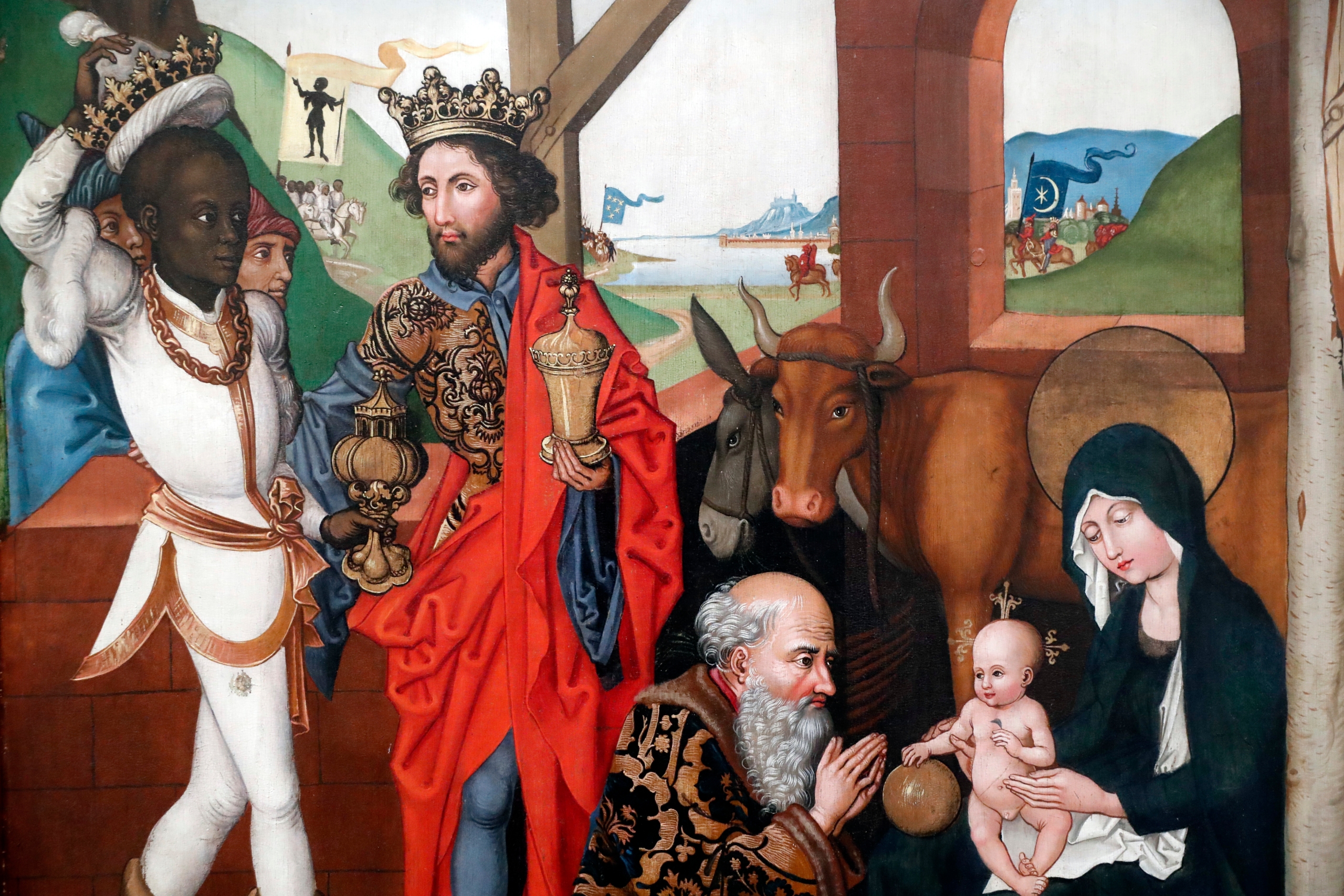
Legends surrounding the fourth wise man – a figure who journeys separately from the more familiar trio – circulate in several regions that host well-established pilgrimage routes. These stories vary widely in narrative detail, yet they share thematic ground: a traveler delayed, a path marked by diversions, and an enduring search that intersects with communities, landscapes, and historical routes. While the story is not part of canonical tradition, it remains influential in local lore, literature, and ritual practices that frame pilgrimage as an evolving cultural phenomenon.
Origins in narrative traditions
The earliest widely known literary treatment appears in the late 19th century, when writers in Europe and North America popularized the idea of a fourth traveler from the east who departs with the other three but fails to arrive on time. These narratives typically describe a scholar, healer, or astrologer who carries gifts intended for a sacred moment yet repeatedly diverts his journey to assist others in need. The motif resonates with older storytelling structures found across West Asia and the Mediterranean, where travelers often confront moral tests, geographic hazards, and shifting allegiances.
Although the figure does not correspond to historical evidence, the story gained momentum precisely because it offered narrative flexibility. Communities could adapt the motif to local landmarks, linking the traveler’s pauses, setbacks, and encounters to specific routes already used by merchants, scholars, and pilgrims.
Routes across the eastern Mediterranean
In regions such as southeastern Türkiye, northern Syria, and the Levant, local storytellers occasionally anchor the fourth wise man’s wanderings to long-standing caravan and pilgrimage corridors. These routes historically connected inland trading centers with Mediterranean ports, crossing landscapes characterized by fortified hills, river valleys, and market towns. Oral variants describe the traveler stopping to assist a family during winter migration or lingering at a remote caravanserai to care for travelers affected by illness. These settings echo historical conditions along routes such as the inland branches of the Silk Road, where hospitality networks shaped regional mobility.
Further west, along coastal stretches between Haifa, Acre, and Beirut, storytellers linked the tale to maritime communities. Here, the fourth traveler sometimes boards a ship to shorten the journey, only to be delayed by storms or diverted toward ports where his skills are needed. These episodes mirror the historical unpredictability of Mediterranean navigation, where winds, seasonal currents, and political boundaries influenced travel.
European circulation through pilgrimage culture
The legend took on new dimensions as it circulated in Europe, particularly along pilgrimage networks that developed in late antiquity and the medieval period. In Italy, some regional traditions situate the fourth wise man within landscapes associated with early hermits and monastic foundations. These stories often appear in local winter festivals or nativity-related displays, where artisans depict the traveler as a lone figure approaching a village or pausing at a crossroads. The setting underscores the symbolic weight of decision-making on pilgrimage routes: the traveler’s delays become part of the narrative rather than failures to reach a fixed destination.
In the Iberian Peninsula, storytellers occasionally adapt the legend to sites linked with routes toward Zaragoza, Montserrat, or the wider network that eventually connects with the Camino de Santiago. Here, the fourth wise man becomes a metaphor for continual search, echoing the experience of long-distance pilgrims whose journeys evolve through unplanned encounters. Handcrafted figurines in regional markets sometimes include a separate traveler who trails behind the standard set of three, emphasizing the idea of a journey marked by detours.
Material culture and local adaptations
Material interpretations of the legend appear in small museums, community festivals, and seasonal crafts. Figurines representing the fourth wise man often portray a figure in mid-movement rather than in ceremonial procession. Some carry medical instruments or bundles of food, reflecting the narrative emphasis on practical assistance rather than formal gift-giving. Others depict the traveler surrounded by people encountered along the route, linking the legend to local histories of hospitality.
In parts of Central Europe, open-air exhibitions present the fourth traveler as a reminder of the uncertain pathways that shaped medieval travel. Carved wooden scenes set against regional architectural backdrops place him near mountain passes, river crossings, or trade junctions—geographical contexts where historical pilgrims faced logistical challenges. These displays align the legend with broader cultural efforts to document historic mobility across the continent.
Pilgrimage contexts in the modern era
Modern pilgrimage tourism has renewed interest in the fourth wise man as a narrative companion for travelers exploring ancient routes. Guides, writers, and cultural centers occasionally incorporate the story into interpretive materials, framing it as a lens through which to reflect on themes of delay, hospitality, and the meaning of divergence. Along segments of the Via Egnatia, Via Francigena, and the Camino network, travelers encounter exhibitions or small plaques that reference literary versions of the legend. These markers highlight the historical entanglement of myth and movement, emphasizing how stories migrate and adapt across landscapes.
In some Mediterranean villages, seasonal processions include a figure representing the fourth wise man who appears at the margins of the event—arriving late, departing early, or pausing among spectators. This positioning reinforces the narrative character of the traveler as someone perpetually in transit. Such portrayals contribute to the continuity of the legend by situating it within communal practices that foreground movement and encounter.
A legend of perpetual travel
The global endurance of the fourth wise man tradition reflects its adaptability. It allows communities to address themes familiar to anyone who has undertaken a long route: detours, obligations, and the tension between intended destinations and immediate responsibilities. The figure’s delayed arrival transforms into an interpretive framework that emphasizes landscape, mobility, and human interaction.
As contemporary pilgrims move through regions connected by centuries of travel, the legend offers a narrative companion whose journey never fully resolves. This open-endedness aligns with the experience of pilgrimage itself—a process shaped by shifting terrain, local hospitality, and the many stories that follow travelers across borders and generations.
AI Transparency Notice
PilgriMaps uses artificial intelligence tools to assist in the research, drafting and translation of editorial content. All AI-assisted content is reviewed, edited and verified by our editorial team before publication. We contrast information against primary sources, specialist literature and on-the-ground knowledge to ensure accuracy, cultural sensitivity and editorial integrity.
AI is one tool among many in our workflow. The judgement, curation and responsibility for everything published on this platform remain entirely human.
Viator Media S.L. — in compliance with the EU Artificial Intelligence Act (Regulation EU 2024/1689).
This post is also available in: